
Code-Compliant Fire-Rated Doors in NYC
Our technicians install, repair, and replace fire-rated doors for commercial buildings, apartment properties, offices, and other code-sensitive entryways across New York City. A fire-rated opening is part of a building’s life-safety system — the slab, frame, hinges, closer, latch, lock hardware, and clearances all have to work together so the door closes and latches the way it should. We help property owners choose the right door and hardware, correct damaged components, and keep critical entrances reliable and compliant. Call (212) 204-1655.
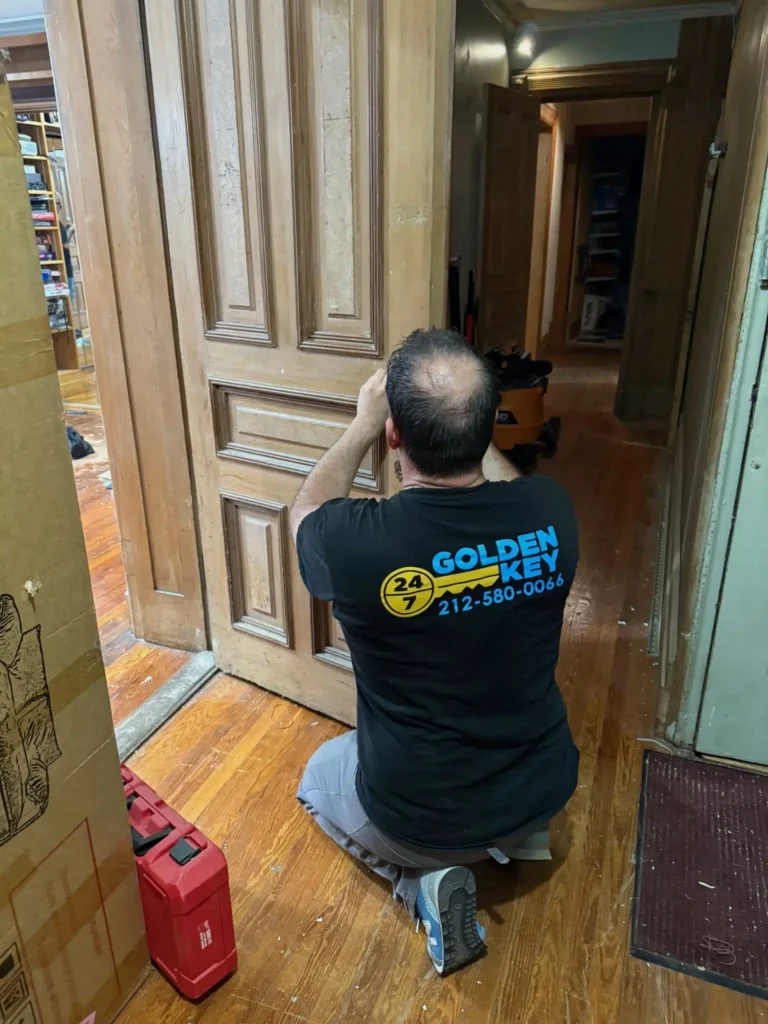
Fire-Rated Door Services
Fire-Rated Door Installation
UL-listed fire-rated doors and hardware for commercial and residential buildings need to match the wall assembly and occupancy, sized to the wall assembly and occupancy so the rating is correct for the opening. From the door slab and frame to the closer, latch, and lock, every component is matched to perform together. For the lock and access hardware side of the job, our commercial locksmith team works the same opening.
Repair Without Voiding the Rating
Fire-rated doors can often be repaired rather than fully replaced — as long as the door label and fire integrity are preserved. Minor work like hinge replacement, closer adjustment, or frame realignment is acceptable, while any modification that penetrates the door face or compromises the rating requires full replacement. We inspect the opening and advise on a case-by-case basis as part of our door repair and installation service.
Inspection & Compliance
NFPA 80 calls for annual inspection of fire-rated doors by a qualified inspector, and NYC buildings must keep inspection records and correct deficiencies promptly. We offer fire door inspection and maintenance and can provide a written report suitable for your building’s compliance records, plus documentation for NYC DOB inspections when needed.
Where Fire-Rated Doors Are Required
Under the NYC Building Code, fire doors are required in stairwells, mechanical rooms, and between occupancies with different fire ratings, with the required rating — 20, 45, 60, or 90 minutes — set by the wall assembly and occupancy type. We also service standard commercial doors and apartment doors in the same buildings, so one team can handle the whole property.
Fire-rated door installation, inspection and certification
A fire door only works as a complete assembly: the leaf, the frame, the hinges, the latch, the closer, any glazing and the seals are tested together, and the label on the door and frame edge is what certifies that assembly. That label — from UL, Intertek (Warnock Hersey) or another listed testing lab — states the rating: 20, 45, 60 or 90 minutes. The rating you need is set by the wall the door sits in and where it is in the building (a stair enclosure, a corridor, an apartment entry, a boiler or electrical room), not by the door you would prefer to buy. There is no paperwork that turns an unlabeled door into a rated one, so keeping the label legible is part of keeping the door compliant.
Why the frame and hardware matter as much as the leaf
The problems that fail an inspection are rarely about the door slab. They are gaps that have opened past the allowed clearance, a frame that has worked loose from its anchors, a closer that no longer pulls the door shut from a full swing, a latch that does not throw, or standard hardware fitted in place of rated parts. A rated leaf hung in a non-rated or damaged frame is not a fire door. When we install, we check frame anchoring and plumb, fit rated hinges, latch and closer as one set, add intumescent or smoke seals where the listing calls for them, and confirm the door self-closes and positively latches from any open position before we sign it off. The same applies to commercial doors in stair and corridor positions and to rated apartment entry doors in multifamily buildings.
NFPA 80 inspection and certification
NFPA 80 is the standard fire door assemblies are installed and maintained to, and it calls for a documented inspection at least once a year. An inspection checks that the labels are present and readable, that there are no holes or breaks in the door or frame, that glazing and glazing beads are intact, that clearances are within limits, that the door closes and latches on its own, and that nothing has been field-modified — no kick-down holders, wedges, extra hardware holes or non-rated replacement parts. NYC’s fire code follows the same standard for maintenance, and building owners are expected to keep the records and correct deficiencies. Mistakes in a fire door install are hard to spot without training — an oversized gap or a wrong hinge looks fine until an inspector or a fire tests it — which is why the installer’s job includes the paperwork. We provide a written record of what was installed and how it was tested, so the door passes on day one and you have the documentation when the annual inspection comes round or a label has faded.
What determines the cost of a fire-rated door
Every quote starts with the opening, not the door. The door itself is set by material and rating — hollow metal, solid-core wood with a mineral core, or composite — and by whether it is a standard size or a custom one. The frame is the second line: reusing a sound, labeled frame is the simplest case, repairing one is the next, and replacing a damaged, unlabeled or out-of-square frame is the biggest change to the scope. Then the hardware set, all of which must be rated to the same standard: hinges, latch or lockset, closer, any panic hardware, and a rated vision panel if one is wanted. Permits and a post-installation inspection apply where the work requires them, and site conditions matter — a stair door in an occupied building takes more planning than a ground-floor utility room, and several doors in one building are best surveyed and scheduled as a single project. We look at all of this on site before quoting, and the quote separates the door, the frame work and the hardware so you can see what is driving it. Larger frame and wall work is handled through our door repair and installation service.
Guides mentioned above
Keeping fire doors compliant day to day
Most fire doors that fail an annual inspection were installed correctly. They fail because of what happened afterward: a wedge left under the door after a move, a closer disconnected because it felt too strong, a lock added by a tenant, a cracked vision panel replaced with ordinary glass. This section covers those everyday problems and the hardware changes that most often put a rating at risk.
What inspectors find most often
- Doors wedged, tied or propped open, or fitted with kick-down holders
- Closers adjusted so the door no longer latches from full open, or disconnected entirely
- Latches taped, filed down or worn so they no longer catch the strike
- Empty holes left from old locks, deadbolts, peepholes or card readers
- Labels painted over or removed during repainting
- Dents and edge damage from carts and deliveries that push the gap at the frame out of limits
- Smoke and intumescent seals that are torn, missing or painted over
Most of these can be corrected on site as long as the door and frame themselves are sound. Holes and damage to the door or frame are judged against the door’s listing before anything is filled or patched.
Holding a fire door open the right way
If a stair or corridor door is propped open every day, it is because people need it open. Rather than fight that, fit a hold-open that releases on alarm: an electromagnetic holder on the wall, or a closer with a built-in electric hold-open, wired so the door is released when the fire alarm or a smoke detector trips. The door stays open for daily traffic and closes and latches on its own when it matters. The hardware and the alarm connection have to be coordinated with the building’s fire alarm contractor.
Panic hardware and electrified locks on rated doors
Exit devices on a fire door must be fire exit hardware, labeled for use on rated doors. Unlike standard panic bars, they cannot be mechanically dogged, meaning held retracted so the door pushes open freely; the latch has to project every time the door closes. Electrified hardware has the same constraint:
- Electric strikes on rated doors must be listed for fire doors and fail-secure, so the latch is still held when power is cut
- Electric latch retraction is acceptable only when the latches project and hold the door when the fire alarm activates
- A magnetic lock does not latch the door, so a rated door with a mag lock still needs its own listed latching hardware
Before adding a card reader or keypad to a stair or corridor door, check the listings for both the door and the new hardware. Our guide to panic bar code requirements in NYC covers the exit-device side in more detail.
Vision panels and replacement glass
Glass in a fire door is part of the rated assembly. Replacement glazing has to be fire-rated glass carrying its own permanent mark, set in the listed glazing beads, and within the size the door’s listing allows. Ordinary tempered or laminated glass does not keep the rating, even if it looks the same once it is in. Adding a vision panel to a door that has none is work for the manufacturer or a listed field-modification program, not a cutout made on site.
A monthly walk for building staff
The annual NFPA 80 inspection is the formal check, but a super or porter can catch most problems in between. Once a month, at each rated door:
- Open it fully and let go; it should close and latch without a push
- Look for wedges, hooks or anything else holding it open
- Check that the labels on the door edge and frame are visible and unpainted
- Look along the edges for gaps that have grown, rubbing or new dents
- Check hinges, the closer arm and the latch for loose screws, and the closer body for leaking fluid
- Note any new holes, stickers over seals, or hardware nobody remembers installing
Write down what you find and the date. That log, kept with the annual report, shows the building maintains its doors instead of reacting to violations, and it tells us what to look at first when we come to repair a door.
Recent Fire-Rated Door Work in NYC
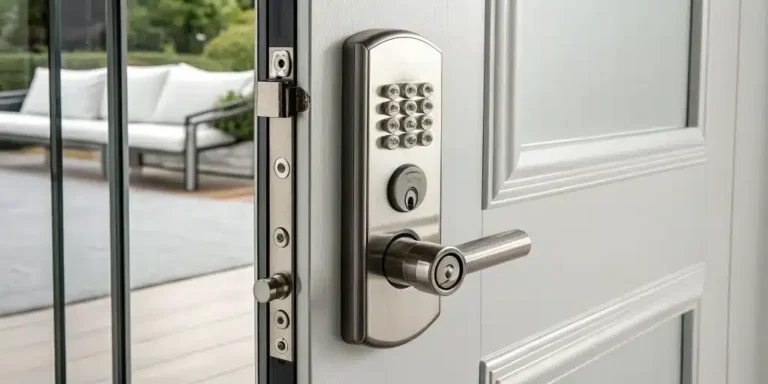
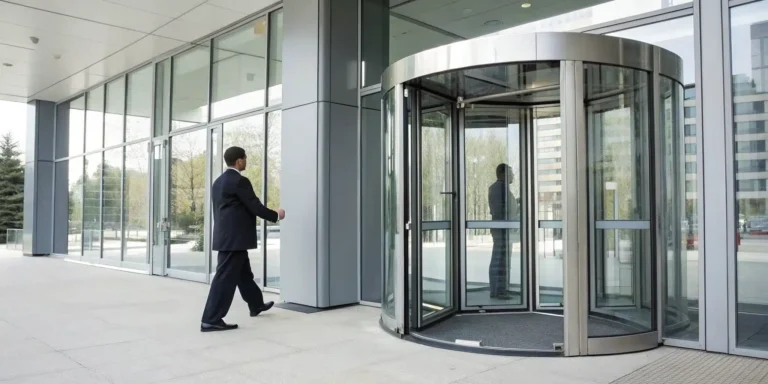
Fire-rated doors, push bars, and code-compliant hardware — recent installs and repairs for NYC buildings.

Trusted Since 1984
Golden Key Locksmith NYC is licensed, bonded, and insured, with more than 40 years of locksmith, door, and security service experience across New York City. Our mobile emergency service is available 24/7.
- 40+ years of NYC service
- Licensed, bonded, and insured
- Residential and commercial support
- 24/7 emergency service available
- Showroom at 328 Columbus Ave
Related Services
Service Areas
Frequently Asked Questions
Unlock our most frequently asked questions about fire doors in NYC.
What are the NYC code requirements for fire-rated doors?
The NYC Building Code requires fire-rated doors in stairwells, mechanical rooms, and between occupancies with different fire ratings. The required rating — 20-minute, 45-minute, 60-minute, or 90-minute — depends on the wall assembly and occupancy type. We install UL-listed fire-rated doors and hardware that meet NYC DOB requirements and can provide documentation for inspections.
Can fire-rated doors be repaired, or do they always need full replacement?
They can often be repaired rather than fully replaced — but only if the door label and fire integrity are maintained. Minor repairs such as hinge replacement, closer adjustment, or frame realignment are acceptable. Any modification that penetrates the door face or compromises the fire rating requires full replacement. We inspect and advise case by case.
How often should fire-rated doors be inspected in NYC?
NFPA 80 requires annual inspection of all fire-rated doors by a qualified inspector, and NYC buildings must keep inspection records and correct deficiencies promptly. We offer fire door inspection and maintenance and provide a written report suitable for your building’s compliance records. Call (212) 204-1655 to schedule.
Do you service fire-rated doors for both commercial and residential buildings?
Yes. We install, repair, and replace fire-rated doors for commercial and residential buildings in compliance with fire codes, and we carry a wide selection of both commercial and residential options. Whether it’s a stairwell door in an apartment building or a code-sensitive opening in an office, we can inspect the opening and recommend the practical next step.
Can a fire door be fitted to an existing frame?
Sometimes. The existing frame has to be labeled (or its rating has to be documentable), plumb, square, securely anchored and free of corrosion, splits or unapproved holes from old lock, hinge or access-control work — and the new door’s listing has to allow that frame and hardware preparation. Seals and rated hinges on their own do not make an unidentified frame rated. If the label is missing, the frame is damaged or out of square, or the listing does not cover it, replacing the complete door-and-frame assembly is the defensible route and usually the more reliable one. We inspect and photograph the existing opening before quoting either way, so the retain-or-replace decision is documented.
Need Fire-Rated Door Service in NYC?
Call Golden Key Locksmith NYC to install, repair, inspect, or replace a fire-rated door, or request a quote for your building’s code-sensitive openings.
The Perfect Solution For All Locksmith & Door Services
The team at Golden Key Locksmith NYC is always on the go. We have a fleet of mobile locksmiths that are ready to service you when and where you need it. Whether you`re locked out, need a new lock or want your security system upgraded, we can help! Give us a call today for all your locksmith needs.
- 40 YEARS EXPERIENCE
- CLIENT SATISFACTION GUARANTEED
Request a Quote
Tell us what you need — name, number, ZIP, and a few details — and Golden Key Locksmith NYC will get right back to you.
- 328 Columbus Ave New York, NY 10023
-
Mon - Fri : 8:30 AM - 5:00 PM (Showroom Hours).
Emergency Service : 24/7 - (212) 204-1655
We Are Trusted Over 40 Years
When New Yorkers need locksmith and door services they can trust, they turn to Golden Key Locksmith NYC — serving the city since 1984.