Commercial storefront door installation comes down to five stages: measure and check the opening (square, plumb, code-compliant), remove the old door and frame, set and anchor the new frame perfectly level and plumb, hang the door and tune the hardware to a consistent 1/8-inch gap, and add the security layer — high-security locks, reinforced strike plates, and access control. The frame anchoring is where most installations succeed or fail: a door is only as strong as the frame it hangs in. This guide walks through the full commercial process, the mistakes that cause failed inspections and break-ins, and where a contractor-grade job differs from a residential swap. If the door itself is sound and only the lock is worn, compare options in our storefront door lock replacement guide before replacing the whole entry.
Before you start: measurements, codes, and the opening
Measure the opening properly
Measure the rough opening’s width and height in at least two spots each (top and bottom for width, left and right for height) and use the smallest measurement — that accounts for imperfections in the opening. An ill-fitting door compromises both security and energy efficiency, so double-check before ordering.
Assess the existing frame
Check that the opening is square by measuring diagonally corner to corner (the two diagonals should be equal), and use a level to confirm the sides are plumb and the header and threshold are level. A warped, rotted, or out-of-square opening must be corrected first — forcing a new door into a flawed opening guarantees problems.
NYC building codes and ADA compliance
The NYC Department of Buildings has specific requirements for commercial entryways, and your storefront must meet Americans with Disabilities Act standards for door width, threshold height, and hardware. This isn’t just about avoiding fines and failed inspections — it’s about an entrance every customer can use.
Tools and materials for the job
You’ll need a heavy-duty drill, screwdrivers, a pry bar for the old frame, a caulk gun, a rubber mallet, and — critically — a quality level at least four feet long. The frame arrives in three main parts: two vertical stiles and the horizontal head. Match your anchors and extra-long screws to the building material (brick, concrete, or wood); the wrong fasteners compromise the entire installation. Storefront doors are heavy: work gloves, safety glasses, steel-toed boots, and a second set of hands are not optional.
The installation process, step by step
1. Remove the old door and frame
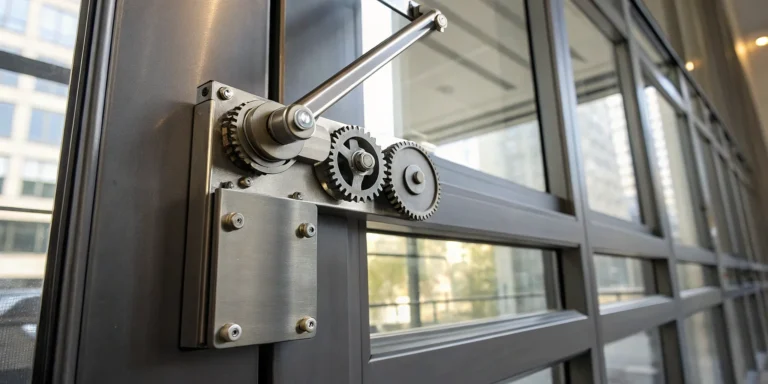
Detach the door closer arm, unscrew the top and bottom pivots or hinges, and lift the panel away with a partner. Cut through the old caulk around the frame perimeter and pry the frame sections out carefully. Then inspect the rough opening for rot, rust, or structural damage — finding it now is far cheaper than after the new door is in.
2. Set and anchor the new frame
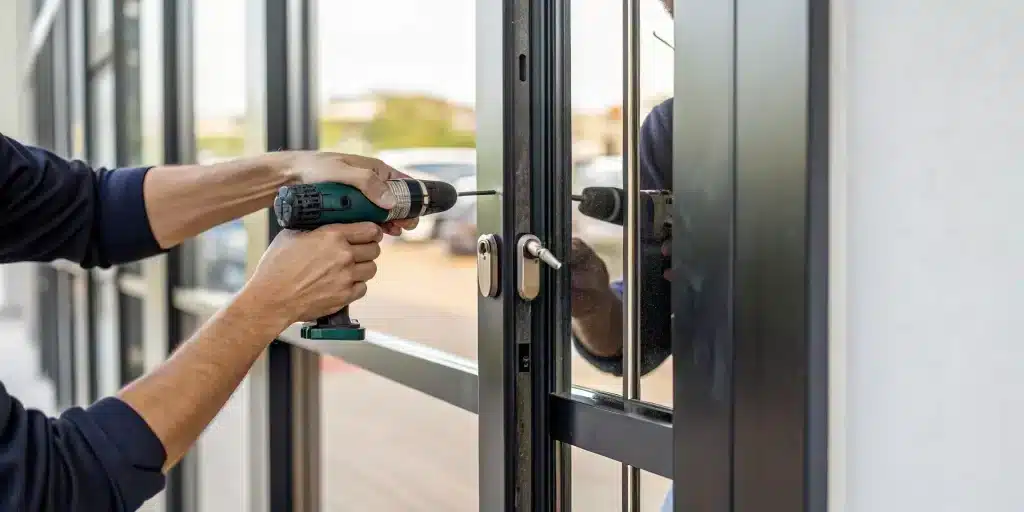
This is the most critical step. Place the frame, then use the level to get it perfectly plumb and level, adjusting with shims until it’s exact. A crooked frame makes the door swing on its own, stick, or leave security gaps. Anchor with multiple extra-long screws driven through the frame and deep into the building structure — short screws that grip only the rough opening can be kicked in. The goal is to make the frame an integral part of the building.
3. Hang the door and adjust
With a helper, attach the door to the pivots or hinges, then fine-tune until the gap is a consistent 1/8 inch all the way around so nothing rubs the frame or threshold. Install the door closer and tune its swing speed and latching action.
4. Seal and weatherproof
Run high-quality silicone caulk around the perimeter where frame meets building, inside and out, and apply weatherstripping. This blocks water that would cause rot and structural damage, cuts drafts, and lowers heating and cooling costs.
5. Test everything
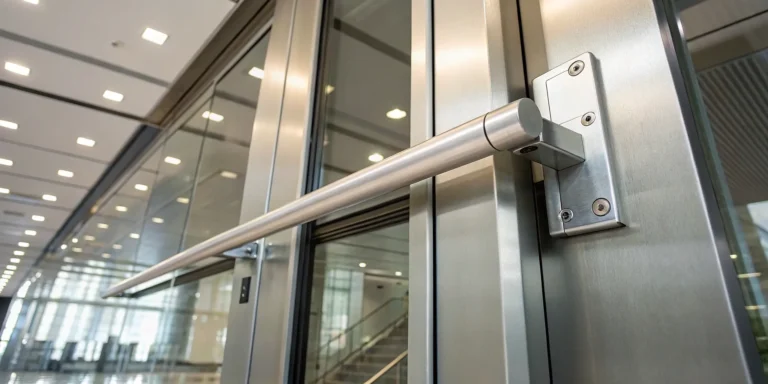
Open and close repeatedly, confirm the latch engages smoothly and the lock throws fully, then mount handles, push/pull bars, and remaining hardware.
The security layer: what to add during installation
Installation day is the cheapest time to harden the entrance, because everything is already open.
- High-security locks and a commercial-grade deadbolt. High-security cylinders resist picking, drilling, and bumping with hardened steel and complex pin systems; unlike a spring latch, a deadbolt can’t be slipped with a card or knife.
- Impact-resistant glass or security bars. Glass panels are the classic weak point — laminated or tempered glazing holds together even when cracked, delaying and frustrating a break-in. Security bars or a metal grille add a visible deterrent where aesthetics allow.
- Reinforced strike plates. Metal strike plates with extra-long screws anchored into the structure, not just the jamb — the overlooked upgrade that defeats kick-ins.
- Access control. Keypads, card readers, or fobs let you grant and revoke entry without ever changing a lock — the right move for staff turnover and multi-tenant storefronts.
The three mistakes that ruin storefront installations
Measurement and alignment errors: being off by a fraction of an inch produces a door that won’t close smoothly, drafts, and pry-friendly gaps. Weak fastening: too few anchors or short screws leave the frame as the entry point regardless of the lock’s quality. Ignoring codes: skipping DOB or ADA requirements means failed inspections, fines, and liability. These are the reasons most businesses hand the job to a pro — the doors are heavy, the tolerances are tight, and a mistake is a security hole with your inventory behind it. Our storefront door installation and repair team handles the full process — measurement, code compliance, frame anchoring, hardware, and locks — across Manhattan and all boroughs, alongside every other type of commercial door. Licensed NYC locksmith (DCA #2065742), showroom at 328 Columbus Ave. Call (212) 204-1655 for an estimate.
Maintaining the door after installation
Give the entrance a monthly once-over: smooth swing, intact weatherstripping, no cracks in glass or frame, no loose hardware. Twice a year, lubricate hinges and the lock mechanism with a silicone-based spray and tighten screws on handles, hinges, and lock plates. Call a professional when the door drifts out of alignment, the frame cracks, or the lock sticks after cleaning — forcing a binding commercial door only compounds the damage.
Frequently asked questions
Can I install a commercial storefront door myself?
Technically possible with the right tools and patience, but these doors are heavy and the frame must be perfectly level, plumb, and anchored for the door to operate and secure properly. For most business owners, professional installation is the smarter call — one mistake creates a sticking door or a break-in vulnerability.
What’s the single biggest installation mistake?
Rushing the frame. Failing to get it square, plumb, and level before anchoring is the root cause of most door problems — sticking, scraping, and locks that won’t engage. Shimming and adjusting until it’s exact is the most important part of the job.
My new door doesn’t close smoothly. What’s wrong?
Almost always a frame that wasn’t set level — the door’s weight makes it sag or bind. Minor hinge or pivot adjustments may help, but a crooked frame usually has to be reset by a professional.
Are high-security locks worth the extra cost on a storefront?
Yes. A standard lock can be bypassed in minutes; high-security locks use hardened steel and complex mechanisms that resist drilling, picking, and bumping. It’s the first line of defense for everything behind the door.
When does a storefront door need professional repair instead of maintenance?
Tighten screws and lubricate hinges yourself, but call a pro for a door that’s hard to open or close, cracks in the frame or glass, or a lock that repeatedly fails to latch — forcing it causes more expensive damage.