Skip to content

Written by Steven Grunstein, lead locksmith at Golden Key Locksmith NYC (DCWP License #2065742-DCA), 328 Columbus Ave, Manhattan — operating since 1984.
Need a fast, code-compliant commercial lock change or master-key cylinder swap for an NYC storefront or office? See our NYC commercial locksmith service or NYC lock change service.
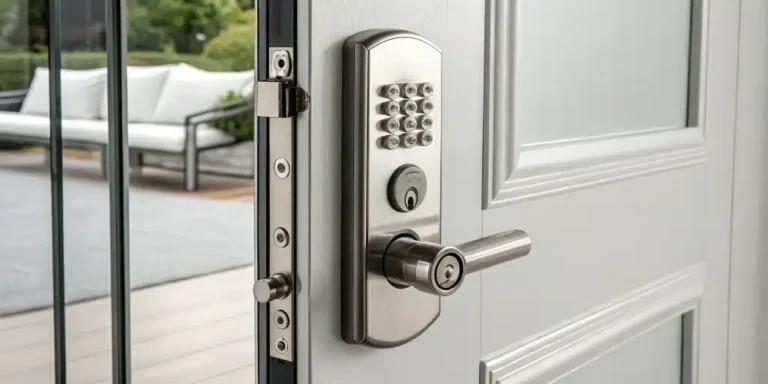
To change a commercial door lock cleanly, first identify your lock platform — mortise cylinder, rim cylinder, interchangeable core (IC), or Adams Rite storefront hookbolt — and decide whether swapping the cylinder alone achieves your security goal. Always verify door thickness, backset, cam profile, and NYC single-motion egress rules before buying replacement hardware.
Do you need a full commercial lock change or just a cylinder swap?
When a commercial tenant moves in, an employee leaves with keys, or a retail shop changes hands, business owners often assume they must replace the entire lock body. In practice, commercial hardware is modular:
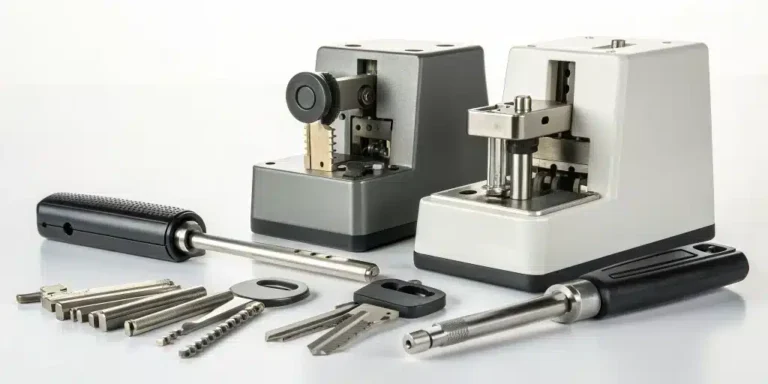
- Rekey or swap the cylinder only: Best when the existing Grade 1 lock body, lever springs, and bolt work smoothly and you simply want old keys invalidated (or want to upgrade to a high-security restricted keyway such as Medeco or Mul-T-Lock). See our lock rekeying service.
- Replace the complete lockset or mortise body: Necessary when the internal latch/deadbolt binds, the handle sags, the cylinder housing is damaged, or you are upgrading from light residential hardware to UL-listed Grade 1 commercial security or keyless access control.
Commercial door lock types compared
Most NYC commercial doors use one of four standard hardware architectures. Matching the right replacement part starts with identifying which one is on your door.
| Commercial Lock Type | Common NYC Doors | Can You Swap Just the Cylinder? | Key / Tools Needed | Critical Spec to Match |
|---|---|---|---|---|
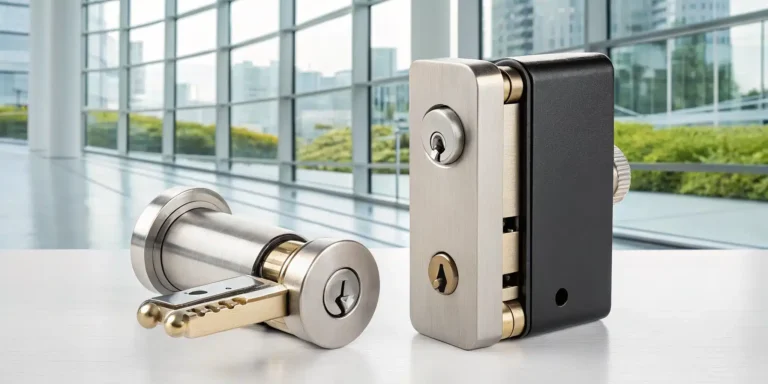
| Mortise Lock & Mortise Cylinder (e.g., Schlage L9000, Corbin Russwin ML2000, Yale 8800, Marks) | Office suites, pre-war residential lobbies, heavy steel & wood commercial doors | Yes — threaded cylinder unscrews after loosening edge set screw | Phillips screwdriver + operating key (to thread cylinder out smoothly) | Cylinder length (1″, 1-1/8″, 1-1/4″+) and exact rear cam profile (Schlage L, Yale, cloverleaf, straight) |
| Rim Cylinder & Panic-Bar Trim | Exit doors with panic bars, nightlatches, and rear service doors | Yes — mounts from interior through backplate | Phillips screwdriver, pliers/hacksaw (to score break-off tailpiece & screws) | Tailpiece orientation (horizontal vs. vertical) and length cut flush to door thickness |
| Interchangeable Core (SFIC Figure-8 / LFIC) | Multi-floor offices, retail chains, schools, medical facilities | Yes — fastest swap of all (seconds with zero disassembly) | Building control key only | Core format (6-pin vs. 7-pin SFIC, or brand-specific LFIC like Schlage/Corbin/Sargent) |
| Storefront Narrow-Stile Hookbolt / Deadlatch (Adams Rite MS series) | Aluminum-framed glass NYC retail storefronts and vestibule doors | Yes — threaded mortise cylinder held by hidden faceplate set screw | Phillips screwdriver + hex wrench (depending on lock body) | Narrow backset (31/32″ or 1-1/8″), Adams Rite MS cam, and exterior cylinder guard/collar ring |
Step-by-step: how to change a commercial cylinder or lockset
Always wedge the door open before removing any lock component so the latch cannot swing shut while you work.
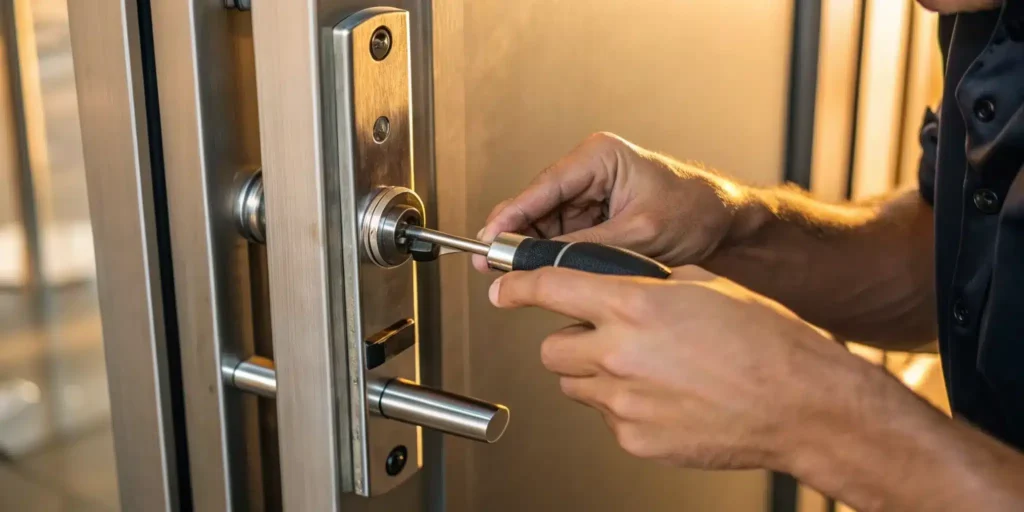
Option A: Swapping a commercial mortise or storefront cylinder
- Expose the cylinder set screw: On the vertical edge of the door, unscrew the two faceplate (armor-front) screws to reveal the hidden set screw positioned directly in line with the threaded cylinder.
- Loosen the set screw: Back the set screw out three to five turns (do not pull it completely out so it does not fall inside the lock body).
- Unthread the old cylinder: Insert the key slightly (or turn it a fraction to clear the cam) and rotate the cylinder counterclockwise until it unscrews cleanly from the lock case. Note the spacer ring / cylinder collar thickness.
- Match cam and length on the new cylinder: Compare the old and new cylinders side-by-side. Even a 1/8″ length mismatch or the wrong cam shape will prevent the deadbolt from throwing smoothly.
- Thread in, tighten, and test open-door first: Seat the cylinder collar, thread the new cylinder clockwise until the keyway sits vertically upright and flush, snug the edge set screw, reinstall the faceplate, and test locking/unlocking five times with the door open before shutting it.
Option B: Changing a full cylindrical commercial lever lockset
- Release the interior lever: Depress the retainer pin inside the interior lever neck poke-hole and slide the handle off the spindle.
- Remove the rose scalp and mounting bolts: Pop or unthread the decorative inside rose cover, hold the exterior chassis steady, and back out the two through-bolts.
- Remove chassis and latch: Pull the exterior lock body out of the 2-1/8″ bore, remove the two edge latch screws, and extract the latchbolt.
- Install the new Grade 1 latch and chassis: Verify the latch bevel faces the closing direction of the door jamb and matches your 2-3/4″ (standard commercial) backset. Seat the new chassis, tighten through-bolts evenly so the lever does not bind, snap the rose cover back on, and click the interior lever onto the retainer.
- Confirm strike alignment: Close the door and check that the latchbolt snaps effortlessly into the strike pocket while the secondary deadlocking plunger stops against the strike face.
Option C: Swapping an SFIC / LFIC interchangeable core
Insert the system’s control key, rotate roughly 15° clockwise to retract the control lug, and pull the core straight out of the figure-8 housing. Insert the pre-pinned replacement core with the control key turned 15°, seat it fully, turn back to vertical, and withdraw the control key. Always verify both the new operating key and any building master key turn smoothly.
NYC commercial lease, master-key, and fire-code rules
Commercial lock changes in New York City must follow strict life-safety and building rules — violating them leads to FDNY citations, insurance problems, or lease defaults:
- Single-motion free egress is mandatory: Never install double-cylinder deadbolts (keyed on both sides), padlocks, or slide bolts on occupied commercial doors or exits. NYC Building Code and FDNY rules require occupants to exit with one effortless motion — no keys, tools, or special knowledge.
- Preserve UL fire-door ratings: Corridor office doors, stairwells, and trash/mechanical rooms are typically fire-rated assemblies. Replacement locksets must be UL-listed with steel latches (minimum 1/2″ or 3/4″ throw as specified) and never require field-drilled holes that compromise the door core. Learn more on our fire-rated doors page.
- Respect master-key hierarchies and lease terms: Many NYC commercial leases require landlord or building-super emergency access via a building master key. Before swapping an office cylinder on your own, confirm whether your new cylinder must be pinned into the building’s master key system.
- Choose patented restricted keys for employee turnover: Standard open keyways (like Schlage C) can be duplicated at any corner hardware store. Upgrading to patented Medeco, Mul-T-Lock, or ASSA ABLOY cylinders stops unauthorized copies when staff change.
Work with Golden Key Locksmith NYC
If your commercial door uses an Adams Rite storefront hookbolt, a heavy mortise lockset, an SFIC master-key system, or a fire-rated office exit, getting the cam, backset, and code compliance right the first time protects both security and liability. Steven Grunstein and our licensed commercial locksmiths at Golden Key Locksmith NYC (DCWP License #2065742-DCA, 328 Columbus Ave, Manhattan — operating since 1984) carry Grade 1 cylinders, restricted high-security keyways, and storefront hardware on our service vans for upfront-quoted NYC commercial lock changes. Explore our commercial locksmith services, lock change service, storefront doors NYC, or call (212) 204-1655.
Frequently asked questions
Can I change a commercial storefront door lock without replacing the whole Adams Rite body?
Usually yes. If the hookbolt or deadlatch inside the narrow aluminum stile still throws smoothly, a locksmith only needs to loosen the edge set screw and swap (or rekey) the threaded mortise cylinder while keeping the Adams Rite lock body intact.
Why won’t my new commercial mortise cylinder lock the door even though it screwed in?
A mismatched rear cam is the most common reason. Mortise locks from Schlage, Yale, Corbin Russwin, Sargent, and Adams Rite each require a specific cam shape to engage the internal bolt actuator. Matching the exact cam fixes the problem.
Do I need my landlord’s permission to change my NYC commercial office lock?
Review your lease before changing locks. Most NYC commercial leases allow tenants to rekey or upgrade locks for security, provided they maintain UL fire-code compliance, keep corridor finishes uniform, and supply an emergency key or tie the cylinder into the building’s master-key plan.
How can I stop former employees from making copies of our store keys?
Switch from standard hardware-store keyways to a patented restricted keyway (such as Mul-T-Lock, Medeco, or Schlage Primus) where duplicate keys can only be cut by an authorized dealer with written approval from your registered signer — or install key-fob access control for instant digital revocation.
When should I choose rekeying over a full commercial lock replacement?
Rekey or swap cylinders when your existing Grade 1 lockset operates smoothly and only key control is compromised. Choose a full replacement when the handle sags, the latch sticks, the lock is light-duty residential hardware on a commercial door, or you need ADA lever/fire-code compliance.