

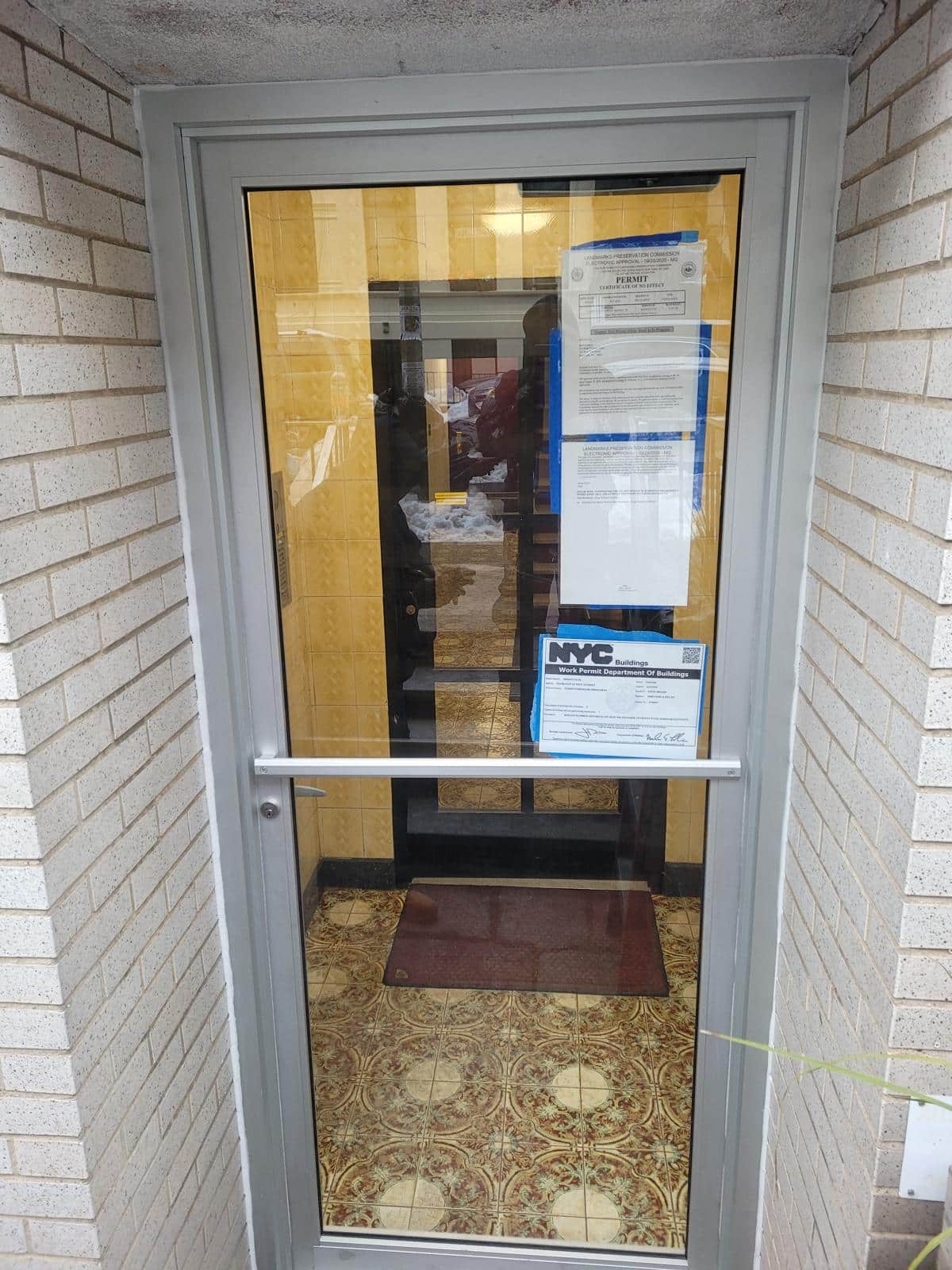
Your front door is the first thing customers see and the first thing a would-be intruder has to get past, so the choice matters more than most NYC business owners realize. The right commercial door handles heavy foot traffic, survives a brutal winter, meets city code, and still looks the part for your brand. The wrong one leaks heat, sticks in the summer, and becomes a weekly maintenance headache. This guide walks through how to pick a commercial door that actually fits your space, your security needs, and your budget.
Key Takeaways
- Match the door to the job: A storefront on a busy block, a back-of-house service entrance, and a fire-rated stairwell door each have different requirements, and using the wrong one costs you twice.
- Security lives in the frame and the lock, not just the slab: Even the heaviest steel door is only as strong as the jamb, strike, and hardware installed with it.
- NYC codes are not optional: Fire ratings, ADA clearance, and egress hardware all have to be right the first time, and a qualified commercial locksmith can flag problems before they become violations.
Why the Right Commercial Door Matters in NYC
A commercial door in New York gets punished in ways a suburban door never does. It opens and closes hundreds of times a day, gets slammed by the wind in a narrow side street, freezes in January, bakes in July, and has to stand up to the occasional delivery cart. On top of that, it has to keep intruders out and let your customers and staff move in and out comfortably. A door that is under-spec for the traffic and weather will sag, stick, and fail its hardware within a year or two.
Security, Energy, and Curb Appeal
Three things tend to drive the decision for most owners. Security comes first because an entry door is the line between your inventory and the sidewalk. Energy efficiency is close behind because a poorly sealed door can quietly drain your HVAC budget every month. Curb appeal rounds it out because your entrance sets the tone before a customer even walks in. A good door balances all three instead of winning on one and losing on the others.
What to Look For When You Choose a Commercial Door
Before you pick a material or a style, walk through the practical checklist that matters for a NYC business.
Security and Durability
Look for a solid-core slab, reinforced hinges, a heavy-gauge steel frame, and a commercial-grade lockset rated for high use. Hollow residential-grade hardware will chew itself apart on a storefront. If the door is a primary entry, pair it with a deadbolt and a high-security cylinder so a lost or copied key does not turn into a break-in.
Energy Efficiency
Insulated steel doors and thermally broken aluminum storefronts hold indoor temperatures far better than single-pane glass or uninsulated metal. Factor in a proper sweep at the bottom and fresh weatherstripping around the frame, because the gap around a door leaks more heat than the slab itself.
Fire Rating and Code Compliance
If your door sits in a fire-rated corridor, a stairwell, or a shared hallway in a commercial building, it has to be a labeled fire door with the right hardware, closer, and signage. Swapping in a regular steel door because it “looks the same” is one of the fastest ways to rack up violations.
Accessibility
ADA compliance covers clear opening width, hardware you can operate without grasping or twisting, opening force, and threshold height. Lever handles, push-pull paddles, and compliant closers are the usual fixes, and they cost far less than a complaint filed down the road.
Common Types of Commercial Doors
Each material has a sweet spot. The right choice depends on where the door sits and what it has to do.
- Hollow metal (steel) doors: The workhorse for service entrances, back-of-house doors, stairwells, and most fire-rated openings. Strong, affordable, and available in every fire rating.
- Aluminum storefront doors: The standard for retail and restaurant entries where you want glass and visibility. Lighter than steel and easy to match across a whole storefront.
- Glass doors with steel or aluminum frames: Great for offices, boutiques, and showrooms where light and sightlines matter. Pair with impact-rated glass on street-level entries.
- Wood doors: Reserved for interior offices, upscale lobbies, and conference rooms. Not a first choice for a street-facing commercial entry in NYC weather.
- Rolling steel gates: The overnight security layer for many storefronts. They are not a substitute for a proper entry door, but they add a strong deterrent after hours.
Installation Is Where Projects Go Wrong
The door you bought is only half the job. An out-of-plumb frame, a misaligned strike, or a closer set too loose will undo even the best hardware. Professional installation means the frame is shimmed square, the hinges carry the weight without dragging, the latch seats cleanly into the strike every time, and the closer pulls the door shut without slamming.
What a Proper Install Looks Like
A trained installer starts by checking the rough opening, not by fitting the door. The frame goes in level and plumb, the hinges are anchored into the jamb with long screws that reach the framing, and the lock body and strike are aligned so the bolt throws fully without forcing. On a fire-rated door, every piece of hardware has to be listed for that rating, and gaps around the slab are held to code.
Post-Install Support
A commercial door is not set-and-forget. Hinges loosen, closers drift out of adjustment, weatherstripping wears down, and cylinders need service. Working with a locksmith who installs the door and comes back to maintain it means small issues get caught before they become a call at 2 a.m.
Upgrading the Lock Is Half the Value
A new door is a perfect moment to upgrade the lockset. A commercial-grade mortise lock or a heavy-duty cylindrical lock with a high-security cylinder will outlast the door itself and give you real key control. If you run multiple doors, a master key system lets managers carry one key while limiting staff access to the spaces they actually need. See our guide to high-security locks for business for what to look for in a cylinder.
Working With a Local NYC Commercial Locksmith
Choosing a door is easier when the person helping you actually knows the city. A local team knows which fire ratings the NYC Department of Buildings inspectors flag most often, which storefront systems hold up on avenue-facing blocks, and which hardware brands have parts actually available when something breaks. Golden Key Locksmith NYC works with NYC business owners across Manhattan, Brooklyn, and Queens on entries, service doors, and master key conversions, and the same licensed technicians handle the follow-up service.
Final Thoughts
The right commercial door is the one that fits the opening, meets the code, handles the traffic, and carries the hardware your business actually needs. Spend the time up front on the spec and the install, and the door will quietly do its job for years. Cut corners on either, and you will be paying for the same door twice.
Need professional help in NYC? Contact Golden Key Locksmith NYC for Manhattan Locksmith Services or Apartment Lockout Help. Available 24/7 across Manhattan and all NYC boroughs.