

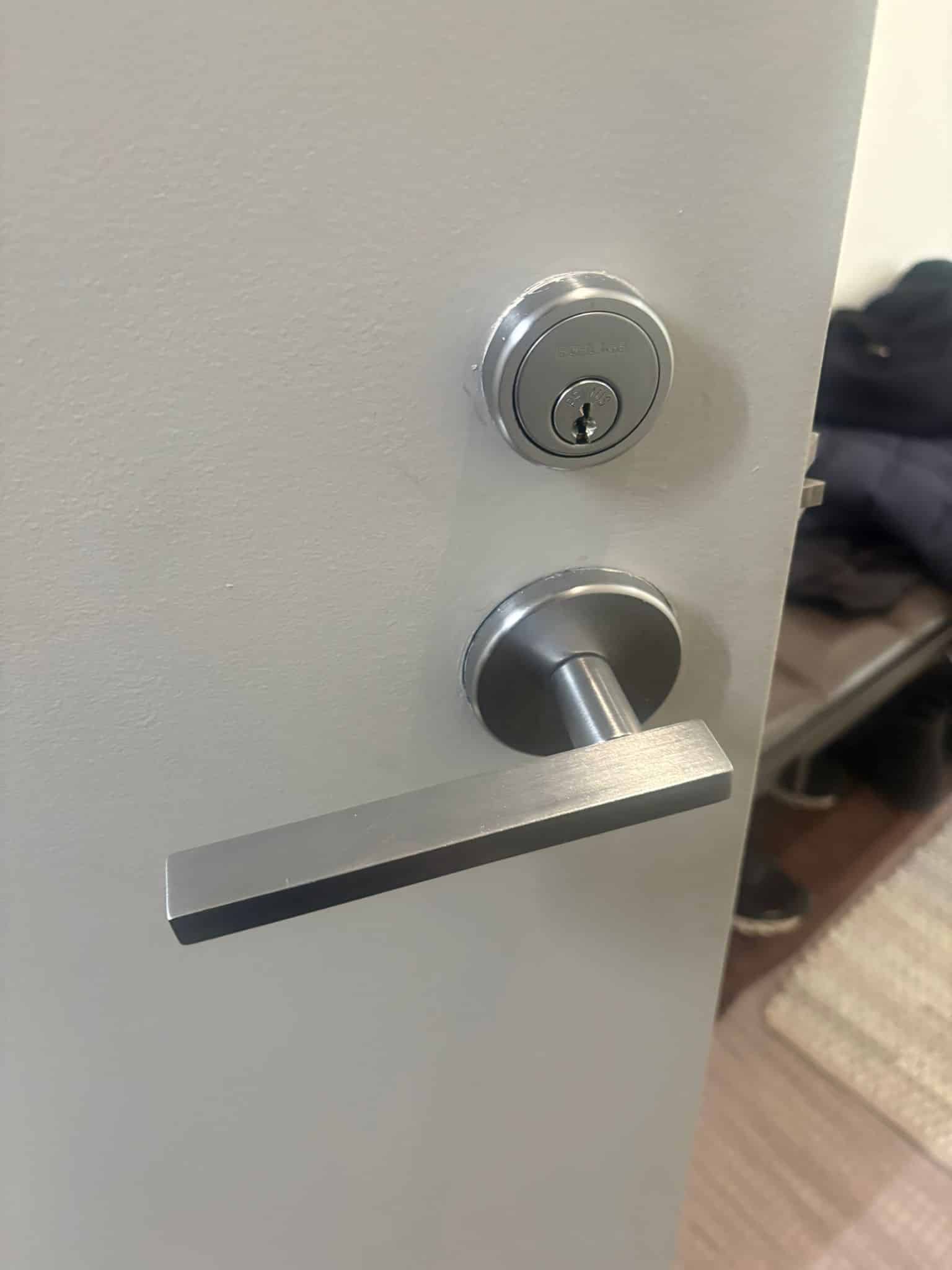
Running a building or business in NYC means handing out keys — to tenants, employees, cleaners, vendors, contractors — and most owners lose track of who has what within a year. A master key system fixes that. Instead of juggling a ring of mismatched keys or rekeying every door when someone leaves, you give each person a key that opens exactly what they need and nothing else, while managers carry a single key that opens everything. Here is how master key systems actually work in NYC buildings, which hardware holds up, and when the investment pays off.
Key Takeaways
- Tiered access without the chaos: A properly designed master key system gives tenants, staff, and vendors access only to their zones while a single top-level key opens every door in the building.
- Patented keyways stop casual copying: Systems built around high-security cylinders use restricted blanks that a corner hardware store cannot duplicate, so you control who gets copies.
- The math works in your favor: Once you have more than a handful of doors, a master key plan costs less to run than constantly rekeying locks and reprinting keys every time a tenant or employee turns over.
What a Master Key System Actually Is
A master key system is a set of locks engineered to recognize more than one key per cylinder. Each door is pinned so that a specific “change key” opens only that lock, while a higher-level “master key” opens a whole group of doors, and a top-level “grand master” opens everything. It is a mechanical hierarchy, cut into the pins, that mirrors the access hierarchy you already have on paper.
How the Hierarchy Is Laid Out
In a typical office, the cleaning crew might carry a key that opens the front door and the utility closets, the manager carries one that opens every office, and the owner carries a grand master that opens the whole suite plus the server room. In a residential building, tenants each get a key to their own unit and the front door, the super carries a master to every apartment, and the owner holds the grand master. Every level of access is a separate pin configuration inside the same lock.
Where It Fits in NYC
Master key systems are standard in Manhattan office buildings, pre-war co-ops, retail plazas, clinics, schools, and any multi-tenant property where the same manager needs access to dozens of doors. If you have more than four or five doors and more than one person who needs varying levels of access, you are probably already a candidate.
Benefits for Businesses and Property Managers
The reason building owners keep coming back to master key systems is not just convenience — it is control. A well-designed plan shrinks the key ring, tightens who can go where, and makes turnover a minor event instead of a project.
- One key per person instead of five, which cuts lost-key incidents dramatically.
- Clear records of which keys were issued to whom, so you know exactly what to rekey when someone moves on.
- Emergency access for supers, facility managers, and first responders without handing out a ring of every key.
- Restricted key blanks that cannot be copied at a neighborhood hardware store.
- The ability to add or remove individual doors from the plan without redoing the whole system.
The Best Master Key Hardware for NYC Properties
Not every lock is built for a serious master key plan. The systems we recommend and install across Manhattan all share the same traits: patented keyways, strong pick and drill resistance, and a paper trail on every key that gets cut.
Mul-T-Lock
Mul-T-Lock is the workhorse of NYC multi-tenant buildings. The telescoping pin design is genuinely difficult to pick, the key blanks are patent-protected, and the platform scales cleanly from a single storefront to a full apartment complex. It is our most common recommendation for residential buildings and mixed-use properties.
Medeco
Medeco cylinders rotate the pins as well as lifting them, which adds a second axis of security on top of a strong key-control program. Banks, law firms, medical offices, and government buildings lean on Medeco when pick resistance and duplication control matter more than price.
Schlage Primus
Schlage’s Primus line sits at a friendlier price point while still offering restricted keyways and solid commercial durability. It is a good fit for office suites, retail chains, and smaller commercial properties where the threat model is reasonable but budget matters.
Master Keying for Multi-Tenant Residential Buildings
Apartment buildings and co-ops have the trickiest key situation in the city. Tenants come and go, supers change, contractors need temporary access, and every unit still has to be individually secure. A master key plan gives landlords one key that opens every unit for emergencies and inspections while each tenant’s key opens only their own apartment and the common doors.
On the residential side, a residential locksmith can fold individual apartment cylinders into a building-wide plan without replacing every door’s hardware, as long as the existing cylinders are compatible. When they are not, upgrading to a restricted-keyway system is usually cheaper than rekeying the building twice a year every time a tenant loses a key.
When a Master Key System Pays Off — and When It Does Not
Master keying is not automatic. For a two-door storefront with one owner and one employee, it is overkill. The sweet spot starts around five to ten doors, or any property where more than one person needs a differentiated level of access.
- Office suites with multiple private offices, a reception area, and shared utility rooms.
- Medical and dental practices with exam rooms, file storage, and drug storage under different access rules.
- Apartment buildings with a super, a landlord, and individual tenants.
- Retail plazas or mixed-use buildings with separate tenants under one roof.
- Schools, houses of worship, and nonprofits with staff tiers and volunteer access.
If you mostly need one key for one owner on a single door, a straight commercial locksmith rekey is cheaper and faster. Master keying is the answer when the access chart starts to look like an org chart.
How Installation Works in an Occupied Building
A good locksmith does not ask you to clear the building for a day. The work happens one cylinder at a time. A technician pulls each existing cylinder, either rekeys it to the new plan or swaps it for a compatible high-security cylinder, and hands you the new keys on the spot. For a small office this is a single appointment. For a larger building, we schedule it across a few visits so no tenant is ever locked out of their own door.
Every key cut as part of the plan is logged, tied to a person, and issued with a signed receipt so you always know who holds what. When someone leaves or a key goes missing, you know exactly which cylinder to pull and repin instead of guessing.
Final Thoughts
A master key system is not a luxury upgrade. For any NYC building or business with more than a few doors and more than one person who needs access, it is the quietest, most cost-effective way to run keys without losing track of them. Pick hardware with a restricted keyway, work with a locksmith who documents every key they cut, and you will spend less time thinking about keys and more time running your business.
Need professional help in NYC? Contact Golden Key Locksmith NYC for Manhattan Locksmith Services or Apartment Lockout Help. Available 24/7 across Manhattan and all NYC boroughs.