There are six main types of door locks you’ll meet on NYC doors: deadbolts (the security workhorse), cylindrical knob and lever locks (convenience, not protection), mortise locks (the heavy-duty standard on pre-war apartments and commercial entries), smart and electronic locks (keypads, fobs, and app control), high-security locks (pick-, drill-, and copy-resistant cylinders), and padlocks for gates and storage. Each solves a different problem — the right choice depends on the door, the threat you’re actually worried about, and how often you hand out access. This guide covers every lock type we install and service daily across Manhattan, with a comparison table so you can pick what fits instead of what’s flashiest.
Types of door locks at a glance
| Lock type | Security level | Best for | Watch out for |
|---|---|---|---|
| Deadbolt | High (Grade 1–2) | Primary entry doors, apartments, homes | Only as strong as the strike plate and frame |
| Cylindrical knob/lever | Low | Interior doors, offices, closets | Never rely on one alone for an entry door |
| Mortise lock | High | Pre-war apartments, commercial entries | Non-standard sizing; professional replacement |
| Smart / keypad lock | Medium–High | Rentals, frequent guest access, audit trails | Depends on a solid door, frame, and deadbolt |
| High-security cylinder | Very high | Street-level doors, businesses, key control | Higher cost; keys copied only by authorized dealers |
| Padlock | Varies widely | Gates, storage cages, roll-down gates | Thin shackles fall to bolt cutters in seconds |
Deadbolts: the one lock every entry door needs
If you upgrade only one lock, make it the deadbolt. It throws a solid bolt deep into the frame and, unlike a spring-latch knob, cannot be shimmed or popped with a credit card. For most NYC apartments and homes, a Grade 1 or Grade 2 single-cylinder deadbolt paired with a reinforced strike plate and three-inch screws into the stud is the real security story.
Single-cylinder vs. double-cylinder
A single-cylinder deadbolt takes a key outside and a thumb turn inside. A double-cylinder needs a key on both sides — sometimes specified near glass panels so a burglar can’t break the glass and reach the thumb turn. The trade-off is emergency egress, and NYC fire code restricts where double-cylinders can be used in multi-family buildings, so check with a locksmith before installing one.
Cylindrical knob and lever locks
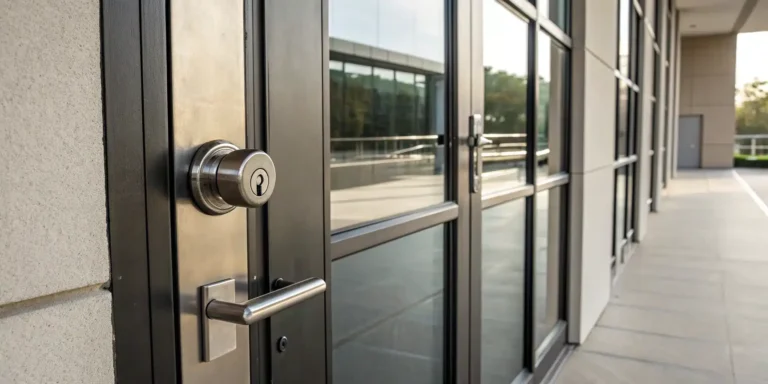
The keyed knob or lever is the backbone of interior doors — a key rotates pins inside a cylinder, the spring latch retracts, done. The design has been refined for over a century: parts are easy to source, and a locksmith can service or rekey one in minutes. But builder-grade cylinders are easy to pick or bump, and the spring latch alone is not entry-door security. Use them for interior offices, bedrooms, and back rooms, and always pair them with a real deadbolt on any primary entry.
Mortise locks: the pre-war NYC standard
A mortise lock is a heavy-duty lock body that sits inside a pocket cut into the door’s edge, typically combining the latch and deadbolt in one solid case. They’re standard on older Manhattan apartment doors and most commercial entries because the hardware is simply sturdier. The catch: mortise (and surface-mounted rim) hardware is often non-standard, and sizing a replacement means matching the exact pocket or backplate the old lock left behind — not a big-box swap. A locksmith who works on pre-war buildings saves you real guesswork here.
Keypad, combination, and cipher locks
Combination locks skip the key: you enter a sequence on a dial or keypad and the lock opens. Mechanical versions live on safes and lockers; electronic keypad locks are what most New Yorkers see on apartment doors, short-term rentals, and small offices. A cipher lock is the push-button version of the same idea — a keyless lock opened by pressing a programmed button sequence, common on office and utility doors. The upside: no keys to lose or copy, and codes change in seconds. The catch: a code is only as secret as the people who know it. Rotate codes on a schedule and give visitors temporary codes rather than sharing the master.
Smart and electronic locks
Electronic locks replace the physical key with a credential the lock verifies — a code, fob, fingerprint, or phone. A good smart lock lets you unlock remotely, issue digital keys to family or a cleaner, and review a log of who came and went; many keep a physical key backup, which is the configuration we recommend for most NYC apartments. One rule before you buy: the door and frame must be solid. A smart lock on a hollow-core door with a bent strike plate isn’t secure — it’s just convenient. For offices and multi-tenant buildings, step up from a single smart lock to a proper access control system with centralized user management and audit logs.
High-security locks
High-security cylinders from makers like Medeco and Mul-T-Lock add hardened, drill-resistant components, pick- and bump-resistant pin designs, and patented key control — keys can only be duplicated by authorized dealers with ID. They’re the right call for street-level doors, businesses, and anyone worried about floating key copies. For a ranked comparison with prices, see our top 5 high-security locks for NYC apartments.
Padlocks
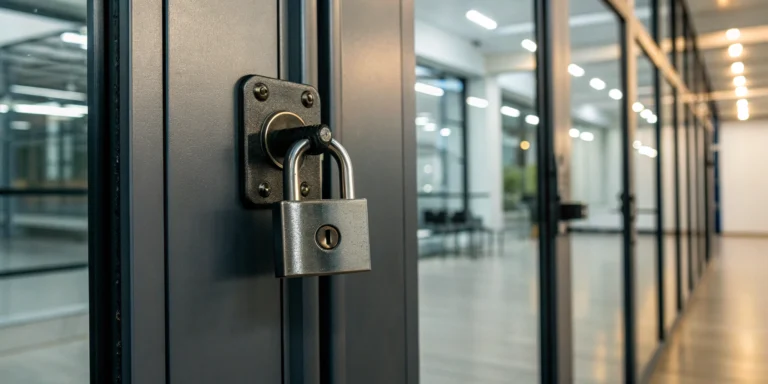
Padlocks secure anything you can’t bolt a lockset onto — roll-down gates, storage cages, sheds, bikes. Quality varies enormously: a hardware-store padlock with a thin shackle falls to bolt cutters in seconds, while a hardened-steel or boron-carbide shackle with a shrouded, anti-pry body resists the tools burglars actually use on NYC sidewalks. For storefront roll-down gates we typically install disk-style or high-security padlocks.
How to choose the right lock type
Start with the door, not the lock. Main apartment or house entry: Grade 1–2 deadbolt, reinforced strike plate, optionally a smart lock layered on top. Storefront with glass: mortise deadbolt or commercial lockset, plus a hardened padlock on the gate. Interior office or closet: a keyed cylinder is enough. Then think about access: if keys keep getting copied or lost, a keypad or smart lock with rotating codes beats endless rekeying — though if the hardware itself is fine and you just need old keys dead, a quick lock rekey is cheaper than new hardware. If the lock is worn, low-grade, or you’re upgrading security levels, a lock change is the better investment. There’s no single best lock — match the mechanism to the risk, pair it with a strong door and frame, and have it professionally installed so the hardware performs to its rating. Golden Key Locksmith NYC (licensed, DCA #2065742, showroom at 328 Columbus Ave on the Upper West Side) installs every lock type on this page — call (212) 204-1655.
What lock grades and keyways actually tell you
An ANSI/BHMA grade is a performance rating for tested door hardware, not a general claim that a lock is “high security.” Testing covers factors such as operating cycles, resistance to force and how well the hardware continues working under repeated use. Grade 1 is intended for the heaviest service, Grade 2 suits many residential and light-commercial entrances, and Grade 3 is the lightest duty. Check that the exact product is certified; a manufacturer using “commercial grade” in its advertising is not the same thing as a listed certification.
The keyway is a separate decision. Common residential families such as Schlage and Kwikset use different key shapes and usually cannot share a key. Restricted or patented keyways add control over who may obtain blanks and authorize duplicates. That helps when keys circulate among staff, contractors, cleaners or former occupants, but it does not repair a weak strike, worn latch or split frame.
On an NYC apartment door, the lock must also fit the opening’s safety requirements. Do not drill new preparations into a labeled fire-rated door or install hardware that prevents required egress without approval from the building and, when necessary, a code-qualified professional. A keyed cylinder on the outside can provide security while the inside remains operable for exit. The correct lock is therefore a combination of certified hardware, a suitable key-control system, a sound door and frame, and an installation that preserves the door’s required function.
Frequently asked questions
What are the main types of door locks?
Deadbolts, cylindrical knob/lever locks, mortise locks, keypad/combination locks, smart and electronic locks, high-security cylinders, and padlocks. Most secure doors combine two: a latch-based lock for convenience plus a deadbolt for security.
What is a cipher lock?
A cipher lock is a keyless lock opened by entering a code on push buttons or a keypad instead of using a key. Mechanical cipher locks are common on office and utility doors; electronic versions add features like temporary codes and audit logs.
Which lock type is most secure for an NYC apartment?
A Grade 1 or Grade 2 deadbolt with a reinforced strike plate — upgraded to a high-security cylinder (Medeco, Mul-T-Lock) if you want pick, drill, and key-copy protection. On pre-war doors with mortise hardware, upgrade the mortise cylinder rather than swapping the whole lock body.
Are smart locks as secure as traditional locks?
A quality smart lock built on a solid deadbolt is comparably secure and adds control — temporary codes, activity logs, instant revocation. The weak point is never the electronics; it’s a flimsy door, frame, or strike plate underneath.
Should I rekey or replace when moving into a new place?
If the existing hardware is decent, rekeying kills every old key for a fraction of replacement cost. Replace when the lock is builder-grade, worn, or you want a higher security grade.