

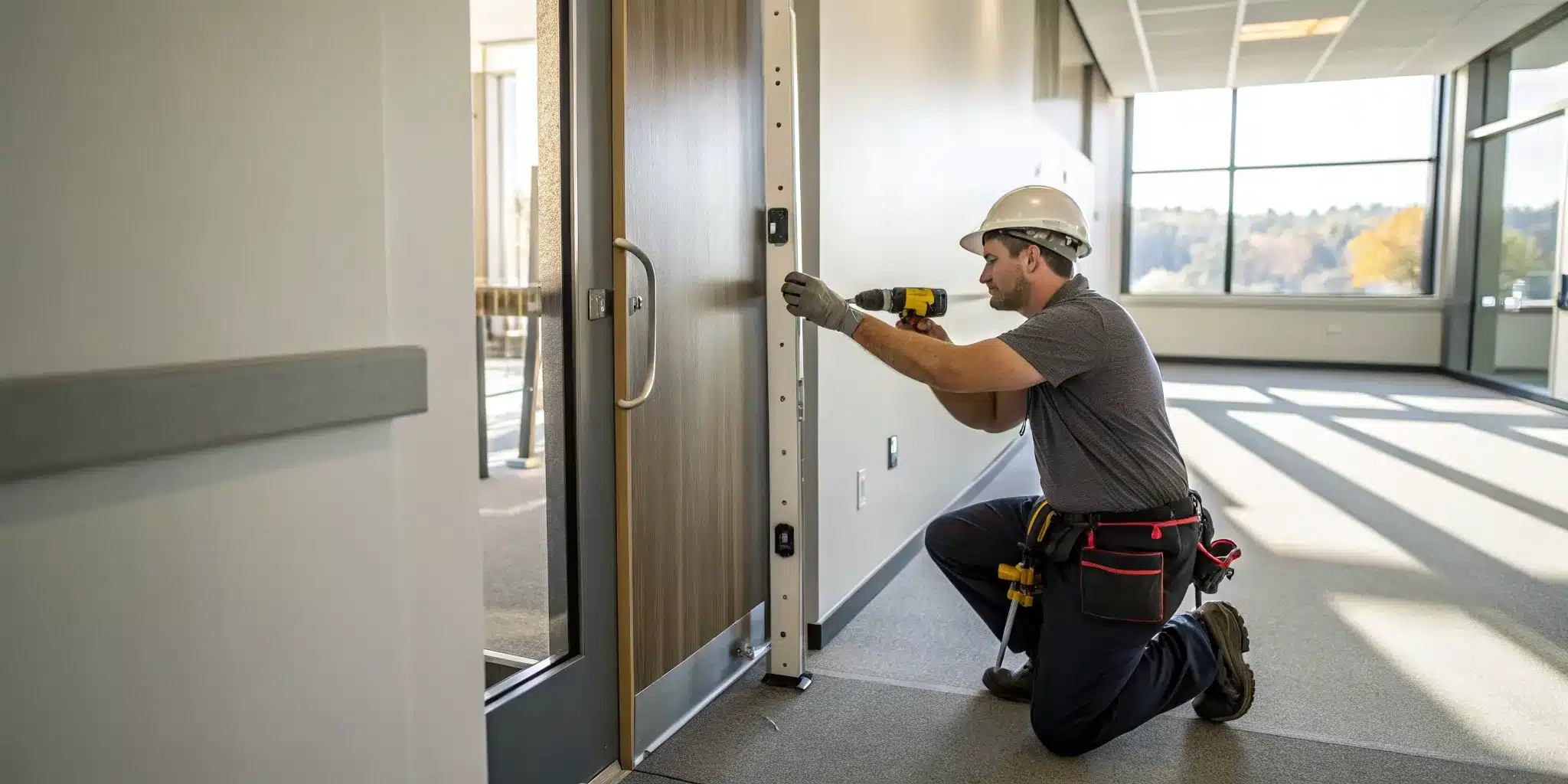
A fire door’s effectiveness can be compromised by the smallest mistakes—a gap that’s a fraction of an inch too wide, the wrong type of screw, or a missing seal. These details, often invisible to an untrained eye, can be the difference between a door that holds back smoke and flames and one that fails completely. Fire door installation is a job of absolute precision, leaving no room for guesswork or shortcuts. This is precisely why the expertise of a certified fire door installer is non-negotiable. They are trained to recognize and avoid these common but critical errors, ensuring your fire door is installed correctly and functions as the reliable safety barrier it was designed to be.
Key Takeaways
- A Certified Installer Is Your Proof of Compliance: Their specialized training ensures every detail of the installation meets strict fire codes, protecting your property from failed inspections and serious liability.
- A Fire Door Is an All-or-Nothing System: The door, frame, hinges, and latches must all be fire-rated and work together perfectly. A single non-compliant component can compromise the entire assembly’s ability to stop a fire.
- Prioritize Ongoing Maintenance and Record-Keeping: A fire door’s job isn’t done after installation. Regular checks for proper closure and detailed maintenance logs are essential to guarantee it works when needed and to prove you’re meeting safety standards.
What Is a Certified Fire Door Installer?
A certified fire door installer is a specialist who has been formally trained to install fire-rated doors and their components correctly. These doors are a critical part of a building’s passive fire protection system, designed to compartmentalize and slow the spread of fire and smoke. Think of them as a crucial line of defense that gives people vital time to evacuate safely during an emergency.
Their certification is proof that they have the specific knowledge to install these complex systems according to strict safety standards. An improperly installed fire door can fail when you need it most, offering little more protection than a standard door. That’s why understanding what a certified installer does—and why their expertise is non-negotiable—is so important for any property owner or manager. From residential buildings in Brooklyn to commercial high-rises in Manhattan, proper door repair and installation by a certified professional is key to keeping people safe and properties compliant.
Key Certifications and Training
A certified fire door installer has completed specialized programs to validate their skills. This isn’t just informal, on-the-job learning; it’s a structured process that ends with a certificate of achievement. For instance, completing a course like the Q-Mark fire door installation certification is a mandatory requirement for installers seeking certain industry credentials. These courses cover everything from installation and maintenance to inspection, ensuring the installer understands every facet of the job. Upon passing, they receive a certificate that is often valid for a set number of years, confirming they have the skills to install fire doors correctly and according to the latest safety standards.
What a Certified Installer Does
A certified installer’s job goes far beyond simply hanging a door. They are responsible for the entire fire door assembly—the door, frame, hardware, and seals—and ensuring it functions as a complete, life-saving system. Their comprehensive fire door training provides them with a deep understanding of different door types, materials, and the specific standards that govern their use. They know how to measure for correct gaps, install intumescent seals that expand with heat to block smoke, and fit the right hardware so the door latches securely during a fire. Essentially, they make sure every component works together perfectly to contain a fire, protecting escape routes and giving occupants precious time to get to safety.
Why Hire a Certified Professional?
Hiring a certified professional is essential for safety, compliance, and your own peace of mind. An improperly installed fire door can fail during an emergency, and the mistakes are often difficult for an untrained eye to spot. Common issues include oversized gaps around the door, the use of incorrect hardware, or missing certification labels, all of which can render the door ineffective. Beyond the immediate safety risks, improper installation can lead to failed building inspections and serious liability issues. A certified installer not only gets the job done right but also provides the necessary documentation to prove compliance. This prevents major headaches, especially when installation records disappear or labels fade over time, making it easy to pass audits and keep your building secure.
Essential Skills for a Fire Door Installer
Installing a fire door is a job that demands precision and a deep understanding of safety protocols. It’s not just about fitting a door into a frame; it’s about creating a barrier that can save lives and protect property during a fire. A certified installer brings a specific set of skills to the table, ensuring every component works exactly as it should when it matters most. From technical know-how to meticulous record-keeping, these abilities are what separate a professional from an amateur and guarantee the installation is fully compliant and effective.
Technical Expertise
At its core, fire door installation is a highly technical craft. A certified installer needs more than basic carpentry skills; they must understand the specific mechanics of fire door assemblies. This includes knowing how different materials behave under heat and how each component contributes to the door’s overall fire resistance. Many certification programs, such as the Q-Mark fire door installation scheme, require installers to complete specialized training. This ensures they have the hands-on expertise to handle complex installations and perform precise adjustments, guaranteeing the door functions as a complete, life-saving system.
Knowledge of Safety Standards
A certified installer must be fluent in the language of fire safety regulations. This means having a thorough knowledge of national and local building codes that govern fire door installations. Common and dangerous mistakes often stem from a lack of this knowledge, leading to issues like oversized gaps between the door and frame, missing certification labels, or the use of improper hardware. An expert understands that every detail matters for compliance. They can spot potential violations and ensure every installation meets the strict standards required to pass a fire inspection, protecting both people and property.
Hardware Proficiency
Every piece of hardware on a fire door is critical to its performance. A proficient installer knows that you can’t use standard hinges or locks; every component, from the closers to the latches, must be fire-rated and compatible with the door itself. One of the most frequent installation mistakes is the failure to use fire-rated components, which completely undermines the door’s integrity. A professional is skilled in selecting and installing the correct hardware, ensuring the door closes and latches securely every time without compromising its ability to block fire and smoke. This expertise is essential for any secure door repair and installation.
Proper Documentation
The job isn’t finished once the door is installed. Proper documentation is a crucial final step that a certified professional never overlooks. This includes ensuring the fire door has the correct certification labels and providing the building owner with all necessary records of the installation. Over time, certificates get misplaced and labels can fade, making it difficult to prove compliance during an audit. A skilled installer understands the importance of meticulous record-keeping and provides clear, organized documentation. This paperwork is your proof that the installation was performed correctly by a qualified professional, giving you peace of mind.
The Path to Certification
Becoming a certified fire door installer is a significant step that demonstrates your commitment to safety and professionalism. It’s a process that combines hands-on experience with specialized knowledge of building codes and installation standards. Think of it less as a single test and more as a structured journey to becoming a trusted expert. This path ensures you have the skills to install fire doors correctly, so they function exactly as needed during an emergency. It involves finding the right training, passing an exam, and committing to ongoing education to stay sharp.
What You Need Before You Start
Before you even think about signing up for a certification course, it’s important to have a solid foundation. Most certification bodies require you to have a couple of years of field experience in a related trade, like carpentry or general door installation. This practical background is invaluable because it means you’re already comfortable with the tools and basic principles of fitting a door. The certification training will build on that existing knowledge, adding the critical fire safety specifics. Having this hands-on experience makes the technical aspects of the training much easier to grasp and apply correctly on the job.
Finding the Right Training Program
Once you have the experience, the next step is to find a reputable training program. Look for courses that are approved by recognized industry organizations, as this ensures the curriculum meets current standards. A quality fire door training course will cover everything from the different types of fire doors and materials to the specific installation and maintenance requirements outlined in safety codes. These programs are designed to give you a deep understanding of how every component works together to create a life-saving barrier. Many certifications are valid for a set period, often around five years, so choose a program that also offers clear paths for recertification.
The Certification Process and Exam
After completing your training, you’ll need to pass a certification exam. This exam is designed to test your comprehensive knowledge of fire door assemblies. It will likely include questions about installation techniques, required hardware, and maintenance protocols. The goal is to verify that you can not only install a fire door but also ensure it meets all legal and safety requirements. The process typically involves both a written test and sometimes a practical assessment. Passing the exam is your official validation, proving to clients and inspectors that you have the verified skills to do the job right.
Overcoming Common Hurdles
The path to certification isn’t just about passing an exam; it’s also about avoiding common pitfalls in the field. One of the biggest challenges is documentation. Misplaced certificates, faded product labels, or incomplete installation records can create major compliance issues during an audit. On the job, installers often face issues like improper gaps around the door, using non-rated hardware, or missing seals. A great training program will prepare you for these real-world scenarios. Understanding these hurdles is key to providing a professional door repair and installation service that stands up to scrutiny.
The Importance of Continuing Education
Earning your certification is a milestone, but it’s not the final destination. Fire codes, standards, and product technologies are constantly evolving, which makes continuing education essential. Staying informed helps you avoid common but critical installation mistakes, such as using incorrect gap sizes or failing to use fire-rated components for the entire assembly. Regularly updating your knowledge ensures you remain compliant and protects you from liability. More importantly, this commitment to ongoing learning reinforces your expertise and builds trust with your clients, showing them you’re dedicated to the highest standards of safety.
Fire Door Standards and Compliance: What to Know
Getting a fire door installed correctly is more than just a technical skill—it’s a responsibility. As an installer, you’re the one ensuring the door will function as a life-saving barrier during an emergency. This means you have to be an expert on the rules. Understanding the web of standards, codes, and legal requirements is a non-negotiable part of the job. It protects you, your clients, and everyone who uses the building. Think of compliance as the foundation of your work; without it, even the most technically perfect installation is a failure. From national guidelines to local city ordinances, knowing what’s required is what separates a true professional from someone just hanging a door.
A Look at NFPA 80 Guidelines
Think of NFPA 80 as your main rulebook. The National Fire Protection Association’s Standard for Fire Doors and Other Opening Protectives, or NFPA 80, provides the comprehensive guidelines for the installation and maintenance of fire door assemblies. This standard covers everything from the specific types of hardware you can use to the maximum allowable gaps around the door. It also details the requirements for labeling, inspection, testing, and maintenance to ensure the door performs exactly as it should in a fire. Mastering these guidelines is essential for any installer, as they form the basis of fire door safety compliance across the country.
Meeting Local Building Codes
While NFPA 80 sets the national standard, you must also follow your local building codes, which can be even more specific. For anyone working in New York City, this means getting familiar with the NYC Department of Buildings (DOB) regulations and the Fire Code. Local codes often dictate specific requirements based on a building’s age, use, and location. They can sometimes be stricter than the national standard. Always check with the local authority having jurisdiction (AHJ) before starting a project. Failing to meet these local requirements can result in failed inspections, fines, and the need to redo the work. When in doubt, always consult a professional familiar with the area’s codes.
Insurance and Liability
Properly installed and certified fire doors are critical for preventing the spread of fire and smoke, but they also carry significant legal weight. Building owners are legally responsible for ensuring their fire doors are compliant. As the installer, you share in that responsibility. If a fire occurs and a door you installed fails due to improper installation, the liability could fall on you. This could lead to devastating legal and financial consequences. This is why certification is so important—it demonstrates your expertise and commitment to safety. It also underscores why meticulous, by-the-book work is the only way to operate in this field.
Essential Documentation
If you can’t prove it, it didn’t happen. Proper documentation is a critical part of fire door installation and compliance. From the moment you start a job, you should keep detailed records of everything. This includes the door’s certification labels, the hardware used, installation reports, and inspection results. Too often, these records get misplaced, making it impossible to prove compliance during an audit or after an incident. There are many common documentation pitfalls, including missing labels, incomplete installation records, and a lack of inspection history. Keeping organized, thorough files for every project isn’t just good practice—it’s your professional shield.
Best Practices for a Professional Installation
A perfect installation is more than just hanging a door. It’s a precise process that ensures the door will perform exactly as designed during an emergency. Following best practices isn’t just about meeting code; it’s about protecting lives and property. From the initial assessment to final quality checks, every step matters. Here’s what a professional installation looks like.
The Pre-Installation Assessment
Before any tools come out, a thorough assessment of the door opening is essential. This isn’t a step you can rush. A professional installer will measure the opening to confirm it meets the exact specifications required for the fire door. They’ll check the frame, the surrounding wall structure, and ensure everything is plumb and square. This initial check prevents major headaches down the line and is crucial for the door’s integrity. A proper door installation always begins with a detailed evaluation to ensure a secure and compliant fit from the very start. This groundwork guarantees that the door assembly will function correctly when it matters most.
Proper Installation Techniques
Once the assessment is complete, the focus shifts to the installation itself. This is where precision is key. One of the most common installation mistakes is getting the gap sizes wrong. The space between the door and the frame must be exact—too large, and it compromises the door’s ability to block smoke and flames. It’s also critical to use only fire-rated components, from the hinges and latches to the door closer. Every piece of hardware plays a role in the door’s performance. A certified installer knows how to fit the door correctly within the frame, ensuring a tight seal that provides maximum protection.
How to Ensure Quality Control
A professional installation doesn’t end when the last screw is tightened. Quality control is an ongoing process. After installation, a certified technician will conduct a series of tests to verify that the door operates smoothly, closes completely, and latches securely every time. But the job isn’t over. Regular inspections and maintenance are vital to keep the fire door in working order. For businesses, setting up a maintenance plan with a commercial locksmith can ensure your doors remain compliant and functional year after year. This proactive approach catches small issues before they become serious safety risks.
Troubleshooting Common Problems
Even with a great installation, issues can arise over time. Knowing how to spot them is crucial. During inspections, professionals often find problems like excessive clearance around the door’s edges or hardware that’s missing, broken, or improperly installed. These gaps can prevent the latch from engaging, which could allow the door to swing open during a fire. If you notice the door isn’t closing properly or the latch feels loose, it’s a sign that something is wrong. Addressing these issues quickly is essential for safety. If a fire door is malfunctioning, it’s an urgent situation that requires an emergency locksmith to restore its protective function.
A Guide to Fire Doors and Their Components
Understanding the different types of fire doors and their parts is the first step in making sure your property is safe and compliant. A fire door isn’t just a single slab of material; it’s a complete assembly where every component works together to stop the spread of fire and smoke. From the door itself to the frame and hardware, each piece has a specific job to do. When one part fails, the entire system is compromised. Knowing the basics will help you make informed decisions, whether you’re upgrading your home’s safety or ensuring your business meets all the necessary codes. Let’s walk through the most common types of fire doors and the essential components that make them effective.
Timber Fire Doors
Timber fire doors are a popular choice, especially in residential buildings, because they blend safety with style. These doors are built from solid wood or a composite material specifically engineered to resist fire for a set period. You don’t have to sacrifice aesthetics for safety; timber doors come in various finishes and designs to match your interior decor. While they look like standard doors, they have a solid core construction that provides a crucial barrier against fire and smoke. This makes them an excellent option for apartment buildings and homes where you want effective fire protection without an industrial look. Proper door repair and installation is key to ensuring they function correctly in an emergency.
Steel Fire Doors
When you need maximum durability and strength, steel fire doors are the answer. You’ll typically find them in commercial and industrial settings like warehouses, factories, and high-traffic public buildings. Their robust construction is designed to handle heavy use and harsh conditions while providing superior fire resistance. Unlike timber, steel doors don’t warp or crack easily, ensuring they maintain their integrity over time. They are a practical, heavy-duty solution for areas that need the highest level of protection. If you’re a business owner, choosing the right steel fire doors is a critical part of your overall commercial locksmith and security strategy, helping you protect both your property and your people.
Glazed Fire Doors
Glazed fire doors offer the best of both worlds: fire protection and visibility. These doors feature special fire-rated glass panels that allow light to pass through, creating a more open and bright environment. They are commonly used in office buildings, schools, and hospitals where maintaining sightlines and a sense of space is important. The glass used in these doors has been rigorously tested to withstand high temperatures and prevent the passage of flames and smoke, just like the rest of the door. Following key guidelines for fire door safety ensures that even these transparent barriers provide the necessary protection when it matters most.
Essential Hardware
A fire door is only effective if its hardware is up to the task. Every component, from the hinges and locks to the latches and closers, must be fire-rated. Using standard hardware on a fire door will compromise the entire assembly, as it can fail under high heat, allowing the door to warp or open. Fire-rated hardware is specifically designed to withstand extreme temperatures and ensure the door remains securely closed and latched during a fire. This is non-negotiable for compliance and safety. When you’re having a fire door installed, always confirm with your professional that every single piece of hardware meets the required fire-resistance standards.
Door Frame Specifications
The door frame is just as important as the door itself. A fire-rated door installed in a non-rated frame won’t provide the protection you need. The frame must be constructed from appropriate materials and be certified to match the door’s fire rating. It needs to be installed perfectly, with minimal gaps between the frame and the door, to block smoke and fire from seeping through the cracks. Regulations like NFPA 80 have very specific requirements for frames to ensure they support the door and maintain the integrity of the fire barrier. A professional fire door installation will always include a thorough assessment and fitting of the frame to ensure it performs as expected.
Fire Door Maintenance and Inspection
A fire door is only effective if it’s in perfect working order. Proper installation is the first step, but ongoing maintenance and regular inspections are what ensure it will perform as expected during an emergency. Think of it as a crucial piece of safety equipment that needs routine check-ups. Neglecting a fire door can compromise its integrity, putting property and lives at risk. By creating a simple maintenance schedule, you can stay on top of compliance requirements and ensure your doors are always ready to do their job: slowing the spread of fire and smoke to allow for a safe evacuation.
Your Regular Maintenance Checklist
Keeping your fire doors functional doesn’t have to be complicated. A consistent checklist can help you spot issues before they become serious problems. Regularly walk through your property and check each fire door for common problems like misalignment, which can prevent it from closing and latching properly. Inspect the seals around the door to ensure they aren’t damaged or peeling, as these are critical for stopping smoke. Also, test the hardware—does the door close and latch securely on its own every time? Following National Fire Protection Association (NFPA) codes is non-negotiable, and this simple routine helps maintain compliance. If you find any issues, it’s best to call for professional door repair and installation to get them fixed correctly.
How to Conduct a Safety Inspection
A thorough safety inspection goes a bit deeper than a quick visual check. The integrity of a fire door is often compromised by subtle alignment issues or problems stemming from the initial installation. During an inspection, open the door fully and let it close on its own. It should shut firmly and engage the latch without any assistance. Check the gaps between the door and the frame; they should be consistent and within the manufacturer’s specified tolerances (typically under 1/8 inch). Look for any unapproved modifications, like extra holes or non-rated hardware, that could void its fire rating. Identifying these problems early ensures your fire doors will function as a complete, effective system when you need them most.
Handling Common Repairs
Some of the most frequent faults with fire doors are also the most dangerous. Gaps that are too wide between the door and the frame are a major concern, as they can allow smoke and flames to pass through, defeating the door’s purpose. Another common issue is faulty or improperly maintained closing mechanisms that prevent the door from latching securely. While it might be tempting to try a quick fix, fire door repairs require specific knowledge to ensure the door’s fire-resistant properties aren’t compromised. For anything beyond a simple cleaning, it’s wise to bring in a commercial locksmith who understands the strict requirements for fire-rated hardware and components.
The Essentials of Record Keeping
Proper maintenance is only half the battle; you also need to be able to prove it. Keeping detailed records is essential for demonstrating compliance during official audits or inspections. Labels on doors can fade, and installation certificates can get misplaced over time. Create a dedicated log for each fire door that tracks inspection dates, notes any issues found, and documents all maintenance or repair work performed. This paperwork is your proof that you are adhering to fire safety regulations. Maintaining accurate and organized records not only protects you from liability but also provides a clear history of the door’s condition, making future inspections and maintenance much more efficient.
Helpful Resources and Organizations
Getting certified involves connecting with the right groups that offer training, issue credentials, and provide ongoing support. Whether you’re just starting or looking to deepen your expertise, these organizations are key players in the industry. They provide the foundation for a successful career in fire door installation and help you stay current with the latest standards and techniques. Think of them as your professional support system, ready to help you build your skills and credibility.
Training Providers
Your journey begins with solid training. You’ll find many programs designed to teach you everything from installation basics to the finer points of fire door functionality. These courses are hands-on and provide the knowledge you need to work safely and effectively. For example, some providers offer a Firequal-approved certificate upon completion, which is a great credential to have. Other programs focus on building skills through videos and job aids to help you become a certified installer. A comprehensive fire door training program is the best first step toward a professional career.
Certification Bodies
Once you have the training, the next step is getting certified. Certification bodies are the organizations that officially validate your skills and knowledge. Earning a certification shows clients and employers that you meet high industry standards. Some credentials, like the Q-Mark certification, require you to complete a specific training course as part of the process. Others may require a certain amount of field experience, such as two or more years of installing and servicing rolling steel fire doors, before you can even apply. These bodies ensure that certified professionals are truly qualified for the job.
Industry Associations
Joining an industry association is a fantastic way to connect with other professionals and stay informed about changes in the field. These groups offer networking opportunities, continuing education, and access to valuable resources. The Institute of Door Dealer Education and Accreditation (IDEA), for instance, provides certifications for a wide range of professionals, including those who work with residential doors, commercial doors, and rolling steel fire doors. Being part of an association demonstrates a commitment to your profession and helps you build a strong network of peers and mentors who can support your career growth.
Educational Materials
Learning doesn’t stop once you’re certified. The best installers are always brushing up on their knowledge to stay sharp. Plenty of online resources can help you understand best practices and avoid common pitfalls. It’s helpful to review materials on common fire door issues to know what to look for during inspections and maintenance calls. You can also find guides that detail frequent installation mistakes, like using incorrect gap sizes or non-rated components. Staying educated ensures you consistently deliver high-quality, compliant work for every client.
The Business Side of Fire Door Installation
Once you have the technical skills down, it’s time to think like a business owner. Being a certified installer is about more than just fitting doors; it’s about managing your finances, protecting yourself from liability, and building a reputation for quality work. Handling the business side of things correctly from the start will set you up for long-term success and help you build a trusted company that clients can rely on for their safety needs.
How to Set Your Service Rates
Figuring out what to charge can feel tricky, but it starts with understanding your value and your costs. Your rates should cover your materials, labor, insurance, transportation, and other overhead while still leaving room for profit. Research what other certified installers in your area are charging to get a baseline. Many professionals offer free estimates, which is a great way to build trust with potential clients. This allows you to assess the job’s complexity and provide an accurate quote, ensuring there are no surprises for you or your customer. This transparent approach is key for any door repair and installation service.
What Factors Influence Pricing
The cost of a fire door installation isn’t one-size-fits-all. Several key factors will influence your final quote. The door’s material, size, and fire-resistance rating all play a significant role in the material cost. For example, a 90-minute rated steel door will cost more than a 20-minute rated wood door. The complexity of the installation also affects the price. A straightforward replacement is simpler than a new installation that requires structural changes to the door frame. Be prepared to explain these variables to your clients so they understand the value behind your pricing.
Getting the Right Insurance
As a fire door installer, you carry a significant responsibility, and having the right insurance is non-negotiable. Building owners and managers are legally required to ensure their fire doors are compliant, and they rely on your expertise. If a door you installed fails during a fire, you could be held liable for property damage or injuries. General liability insurance is essential to protect your business from these risks. This is especially critical when working with businesses that need a reliable commercial locksmith and installer who is fully insured and bonded, giving them peace of mind.
Understanding Professional Liability
Your professional liability extends beyond the installation itself. Common mistakes can put you at risk, even if the door seems to be installed correctly. Issues like using improper hardware, leaving gaps that are too large, or having missing certification labels can cause a door to fail an inspection. Meticulous record-keeping is your best defense. Always document every step of the installation, keep copies of certifications, and ensure all hardware is compliant. This diligence protects you and your client and proves your commitment to safety and professional standards for all security systems.
Related Articles
- Fire Door Installation: A Complete Guide
- The Ultimate Guide To Storefront Door Installation
- The 6-Step Balanced Door Hardware Installation Guide
- A Guide To Balanced Doors For Historic Buildings
- Fire Safety Essentials: Every Homeowner Should Know
Frequently Asked Questions
How can I be sure the installer I’m hiring is actually certified? The most direct way is to ask them for a copy of their certification credentials. A true professional will be happy to provide this. You can also check with the organization that issued the certificate, as many have online databases where you can verify a professional’s status. Don’t hesitate to do this quick check for your own peace of mind.
After a new fire door is installed, how often does it need to be inspected? According to the National Fire Protection Association (NFPA) standards, fire doors should be professionally inspected and tested at least once a year. This annual check ensures that all components are still working correctly and that the door will function as a life-saving barrier during an emergency. Regular inspections are a critical part of maintaining a safe and compliant building.
What’s the real difference between a fire-rated door and a standard solid-core door? While a solid-core door is dense, a fire-rated door is an entire engineered system designed to contain a fire for a specific period. It includes special features like intumescent seals that expand with heat to block smoke, a core made of fire-resistant materials, and certified hardware that won’t fail under high temperatures. Every part works together to create a protective barrier that a standard door simply can’t provide.
Can I just replace the lock or hinges on my fire door myself? It’s best to leave all fire door hardware replacements to a professional. Every component of a fire door assembly, including the hinges, latches, and closers, must be fire-rated and compatible with that specific door. Using standard, off-the-shelf hardware can compromise the door’s integrity and void its fire rating, making it ineffective when you need it most.
Is certification necessary for installing fire doors in homes, or is it just for commercial buildings? While local codes for residential properties can vary, using a certified installer is always the safest choice for any fire door installation. The life-safety function of the door is the same whether it’s in an apartment or an office. For commercial buildings, especially in a city like New York, using a certified professional is often a strict legal requirement to pass inspections and maintain compliance.
Need professional help in NYC? Contact Golden Key Locksmith NYC for Commercial Door Services or Metal Door Installation. Available 24/7 across Manhattan and all NYC boroughs.