

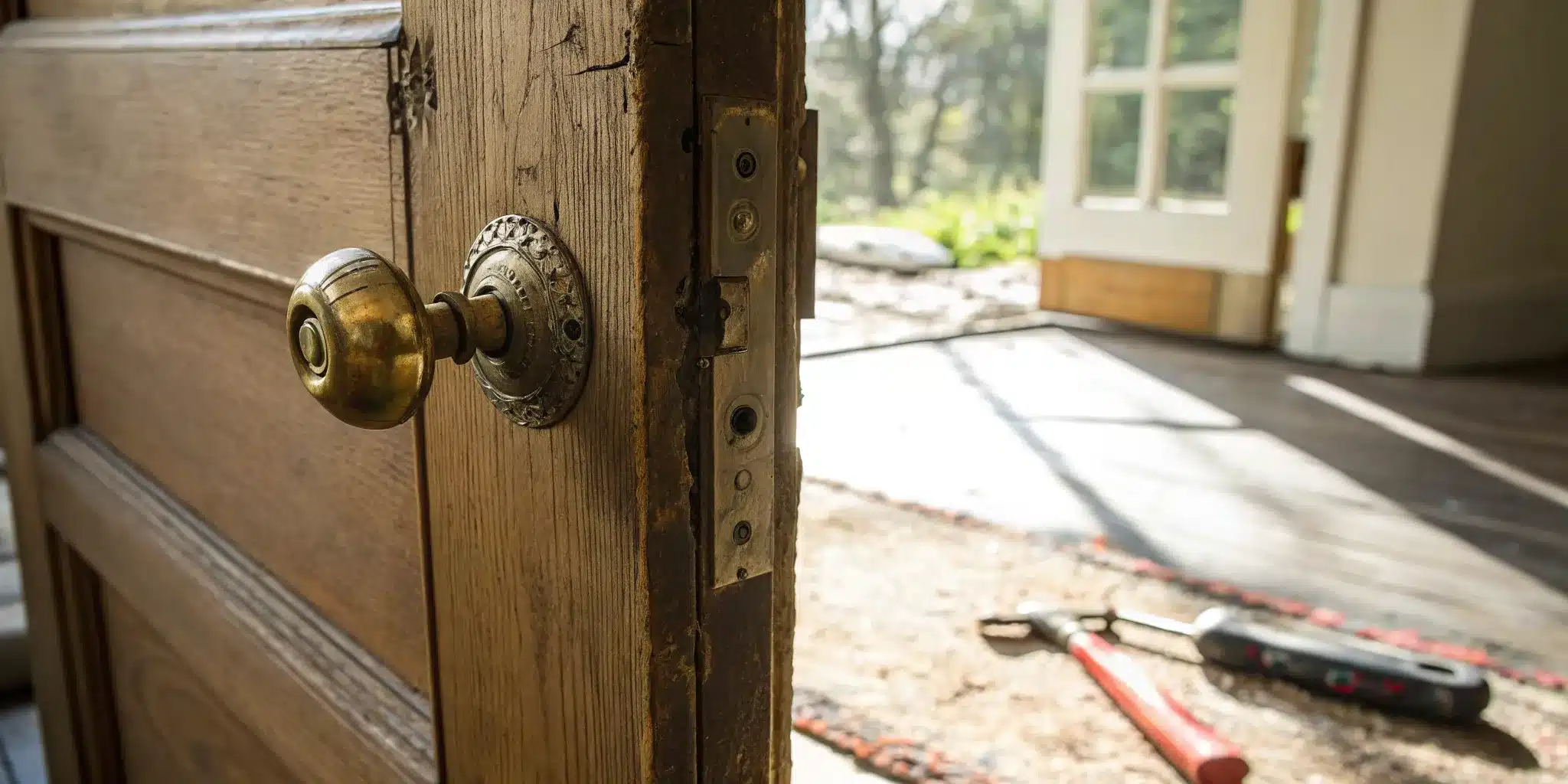
Living in New York City often means dealing with hardware that has seen decades of use. That charming pre-war apartment might come with a doorknob that’s been painted over a dozen times, and even newer places have generic knobs you’re dying to replace. As a fellow New Yorker, let me tell you, door knob removal in an old building can have its quirks, but it’s totally doable. This guide is made for you. We’ll address the specific challenges you might face, like dealing with rust from bathroom humidity or carefully removing hardware without damaging old, delicate doors. Let’s get it done.
Key Takeaways
- Figure Out Your Doorknob Type First: Before you begin, check for visible screws on the interior side. If you don’t see any, look for a small pinhole or slot on the knob’s neck, which means you’ll need a paperclip or small screwdriver to press a release pin.
- Master the Two Main Removal Methods: For knobs with visible screws, just unscrew them to pull the handles apart. For hidden-screw styles, press the release pin to slide the knob off, then pop off the decorative plate to access the screws underneath.
- Don’t Force a Stuck Knob: If you encounter a rusted screw, use penetrating oil instead of brute force to avoid damage. If the mechanism is truly stuck or you feel you might break something, it’s smarter to call a professional locksmith.
What Tools Do You Need to Remove a Doorknob?
Before you can swap out that old doorknob for a shiny new one, you’ll need to get it off the door first. The good news is that you don’t need a professional-grade workshop to get the job done. Most doorknob removals require just a few common household tools, whether you’re doing a simple style update or a more involved door repair and installation. The key is figuring out what kind of knob you’re working with and gathering your supplies before you start. A little prep work makes the whole process go much smoother.
Your Essential Toolkit
For most standard doorknobs, your go-to tool will be a simple screwdriver. It’s a good idea to have both a Phillips head and a flathead screwdriver on hand, as screw types can vary. A power drill with a screwdriver bit can also speed things up, but be gentle to avoid stripping the screws. Before you begin, take a close look at the doorknob, specifically the side that’s inside the room. You’ll usually find the exposed screws you need to remove on the rosette, which is the circular plate sitting flush against the door. Having these basic tools ready will prepare you for a quick and easy removal.
What to Use in a Pinch
What if you don’t see any screws? Don’t worry, they’re just hidden. Many modern doorknobs have a more streamlined look, hiding the screws under the rosette or using a small, spring-loaded button (called a detent) to hold the knob in place. Look for a tiny slot or hole on the side of the doorknob’s neck. You can press the pin inside using a small flathead screwdriver, an Allen key, or even a sturdy paperclip. Once you press it, the knob should slide right off. If you can’t find a pin, try twisting the rosette itself—sometimes it’s threaded on and will unscrew to reveal the mounting plate and screws underneath.
First, Identify Your Doorknob Type
Before you grab a screwdriver, take a moment to figure out what kind of doorknob you’re working with. Not all knobs are created equal, and knowing the type will tell you exactly what to look for and how to approach the removal. Most residential doors use one of three common types: privacy, passage, or keyed entry. Each one comes apart a little differently, so a quick inspection now will save you a lot of frustration later. Let’s walk through how to spot each one and what makes it unique.
Privacy Doorknobs
You’ll typically find privacy doorknobs on bedroom and bathroom doors, where a little solitude is needed. Their defining feature is a lock on the inside—usually a small push-button in the center of the knob or a turn-button that prevents the outside handle from turning. For safety, they also have a way to be opened from the outside in an emergency. Look for a tiny, pin-sized hole on the exterior knob. This is where you can insert a generic key or even a straightened paperclip to pop the lock open. This same pinhole often doubles as the access point for the release pin you’ll need to press to remove the handle itself.
Passage Doorknobs
Passage doorknobs are the simplest of the bunch because they don’t have any locking mechanism at all. Think of them as the handles that get you from one place to another, which is why you’ll see them on hallway, pantry, and closet doors. Their only job is to latch the door closed and allow it to be opened easily from either side. Because they don’t need complex locking parts, they are usually the easiest to remove. In most cases, you’ll find two visible screws on the interior side of the door, holding the entire assembly together. It’s a straightforward design for a straightforward job, making them a great starting point for a DIY project.
Keyed Entry Doorknobs
Keyed entry doorknobs are your first line of defense and are used on exterior doors that need to be secured with a key. Because they are designed for security, their construction is more robust, and the screws are often hidden to prevent tampering. Removing one might take a few extra steps compared to an interior knob, but it’s completely manageable. If you’re replacing an old or malfunctioning lock, it’s a great opportunity to assess your overall residential security. These knobs are built to be tough, so just be patient as you work through the process of taking one apart. A little extra care here goes a long way.
How to Spot Hidden Screws and Release Pins
Modern doorknobs often have a sleek design that hides all the mounting hardware for a clean look. If you don’t see any screws, don’t worry—they’re just concealed. The key is usually a small, spring-loaded button or pin called a detent. Look for a tiny hole or slot on the side of the knob’s shaft (the part connecting the knob to the door). You’ll need to press this pin with a thin tool like a paperclip or a small flathead screwdriver while pulling on the knob. Once the knob is off, you can typically pry off the decorative cover plate, called the rosette, to reveal the screws underneath.
How to Remove a Doorknob, Step by Step
Alright, you’ve identified your doorknob and have your tools ready. Now for the fun part! Removing a doorknob is usually a straightforward project, but the exact steps depend on whether the mounting screws are visible or hidden. We’ll walk through each scenario so you know exactly what to do.
Remember to work carefully and keep all your small parts in one place—a magnetic bowl or even just a small cup will do the trick. While this is a great DIY task, sometimes a knob that seems simple can hide a rusted screw or a stubborn internal mechanism. If you find yourself stuck or feel like you might damage the door, don’t force it. Our emergency locksmith team is available 24/7 throughout NYC to help you out of a jam without causing any extra damage. Let’s get started.
For Knobs with Visible Screws
This is the most common and simplest type of doorknob to remove. If you can see the screw heads on the interior side of the door, you’re in luck. Start by grabbing your Phillips head screwdriver. You’ll find two screws on the round plate (called the escutcheon) that sits flush against the door. Simply turn them counter-clockwise until they are completely loose.
Once both screws are out, you should be able to pull the knobs apart, one from each side of the door. Next, move to the edge of the door and unscrew the two small screws holding the latch plate in place. After that, the entire latch assembly should slide right out of the door. It’s really that easy.
For Knobs with Hidden Screws
Many modern doorknobs hide their screws for a sleeker, more polished look. To get to them, you first need to remove the knob itself. Look closely at the shaft of the interior knob—you should see a tiny slot or pinhole. Inside this hole is a small, spring-loaded pin, often called a detent.
Using a small flathead screwdriver, an awl, or even a sturdy paperclip, press down firmly on this pin. While keeping it depressed, wiggle and pull the doorknob until it slides off the spindle. With the knob out of the way, you can now pry off the decorative cover plate, which will pop off to reveal the mounting screws underneath. From here, just follow the steps for removing a knob with visible screws. This is a common setup for many residential locksmith projects.
Handling Spring-Loaded Latches
Some doorknobs, particularly lever-style handles, use a slightly different spring-loaded mechanism to hide the screws. Instead of a small pinhole, you might find a small, thin slot on the side of the handle’s base. If you push a small flathead screwdriver into this slot, you’ll feel a spring compress.
Once you press it in, the tension holding the handle in place will release, allowing you to pull the lever straight off. Just like with the hidden pin style, removing the handle lets you pop off the decorative rose or escutcheon. This exposes the mounting screws, which you can then easily remove to take apart the rest of the assembly. If the spring feels jammed or the mechanism is broken, it might be a sign of a bigger issue requiring professional door repair and installation.
A Quick Tip: Take Pictures as You Go
Here’s a piece of advice that has saved me more than once: take photos with your phone at every step. It might seem silly for such a small project, but you’ll thank yourself later. Snap a quick picture of the knob before you start, another after you remove the handle, and one more showing how the latch assembly sits in the door.
Taking pictures as you go creates a simple visual guide for reassembly. When it’s time to put the new knob on or reinstall the old one, you won’t have to guess which way a certain part faces or where that tiny screw goes. It’s a two-second step that ensures everything goes back together smoothly and correctly.
Common Problems You Might Face (and How to Fix Them)
Even the most straightforward DIY project can throw you a curveball. Removing a doorknob is usually simple, but you might hit a few snags along the way. Don’t worry—most of these issues are common and have simple fixes. From screws that won’t budge to parts that just don’t want to cooperate, a little patience and the right technique can get you through it. Below are some of the most frequent hurdles you might encounter and exactly how to clear them so you can get on with your project.
Dealing with Stuck or Rusted Screws
It’s a classic DIY moment: you’re ready to go, but the screws are completely frozen in place. This often happens with older hardware, especially in bathrooms where moisture can cause rust. Before you get frustrated and strip the screw head, take a breath and grab some penetrating oil (like WD-40). Spray a small amount on the screw and let it sit for about 15 minutes to work its magic. Then, make sure you’re using a screwdriver that fits the screw head perfectly. A snug fit gives you the best leverage. Apply firm, steady pressure as you turn. Sometimes, gently tightening the screw a tiny bit first can help break the rust’s seal before you loosen it. If the screw is part of a larger issue, a professional door repair might be needed.
When the Hidden Release Won’t Budge
Many modern doorknobs have a sleek, screwless look, which means there’s a hidden release pin you need to press. You’ll typically find it in a tiny hole on the side of the knob’s shaft. But what if you press it and nothing happens? First, make sure you’re pushing the pin in far enough. You should feel a little click or give. Try using a small, sturdy tool like an awl, a small Allen key, or a precision screwdriver. While keeping the pin depressed, gently wiggle and pull the knob. Sometimes it just needs a little persuasion to come loose. If you’re truly stuck and can’t get the door open, our emergency locksmith team is always ready to help.
Fixing a Twisted Base or Misaligned Parts
If you’ve removed the screws but the doorknob assembly still won’t come off, you might be dealing with a twisted base. The “rosette,” which is the decorative plate sitting flush against the door, can sometimes get twisted out of alignment. This binds the internal mechanism, preventing it from sliding out. Take a look to see if it’s crooked. You can often fix this by gently twisting the rosette back into its correct position with your hands. Once it’s aligned, the lock mechanism should have the clearance it needs to be removed. This is a common issue that can affect all kinds of locks, so it’s a good trick to know for any residential locksmith project you tackle.
What to Do if a Screw Falls Inside the Door
It happens to the best of us. You’re carefully removing a screw, it slips, and you hear that dreaded clink as it falls down into the hollow part of your door. First off, don’t panic. It’s not lost forever. Once you get the rest of the doorknob assembly removed, you’ll have a clear opening to the inside of the door. Often, the screw is sitting right at the bottom of the cavity, within reach. If you can’t grab it with your fingers, a magnetic pickup tool or a flexible grabber tool works wonders. You can find these at any hardware store. In a pinch, even a piece of tape on the end of a screwdriver can do the trick.
What to Do When the Doorknob Is Stuck
It’s a frustrating moment: you’re ready to swap out that old doorknob, but it just won’t come off. Whether it’s due to age, rust, or a stripped screw, a stuck doorknob can bring your project to a screeching halt. Before you get too frustrated, take a deep breath. Most of the time, a little patience and the right technique are all you need to get things moving again. These issues are common, especially in older homes, and there are a few simple tricks you can try before calling for backup.
If the internal mechanism seems completely frozen or broken, it might be more than just a stuck knob. In that case, our residential locksmith team can diagnose the problem without damaging your door. But if you think it’s just a matter of rust or a stubborn screw, here are a few methods to try first.
Try Penetrating Oil for Rust
If your doorknob hasn’t been turned in years, rust is the likely culprit. Metal parts can corrode over time, essentially fusing together. Your best friend in this situation is a can of penetrating oil like WD-40. Give the keyhole, the base of the knob, and any visible part of the latch mechanism a good spray. Let the oil sit for at least 15 minutes to work its way into the tight spaces and dissolve the rust. Don’t be afraid to reapply a second coat if the knob is still stiff. A little jiggling after it has soaked can help break the rust’s grip.
How to Handle Stripped Screws
There’s nothing more annoying than a screw that won’t turn because the head is stripped. Luckily, you don’t have to give up. A classic trick is to place a wide rubber band flat over the screw’s head before inserting your screwdriver. The rubber provides extra grip, often giving you just enough traction to turn the screw. If that doesn’t work, a dedicated screw extractor tool is a great investment for any DIYer. For especially stubborn screws, applying a bit of penetrating oil around the head can also help loosen things up before you try again.
Using a Little Force (the Right Way)
Sometimes, a stuck doorknob needs a little persuasion, but it’s crucial to apply force carefully to avoid damaging the door or the knob itself. One effective method is to gently heat the spindle (the metal bar connecting the two knobs) with a heat gun. The heat causes the metal to expand slightly, which can break it free. If you’re still having trouble and you’re worried about cracking the wood or bending the hardware, it’s probably time to stop. A botched removal can lead to a bigger problem, so if you feel out of your depth, our emergency locksmith service is available 24/7 to help.
Prepping Your Space and Staying Safe
Before you grab your screwdriver, let’s talk about setting yourself up for success. Taking a few minutes to prep your workspace can make the difference between a quick, easy project and a frustrating afternoon. A little preparation helps you work efficiently, prevents accidental damage to your door, and, most importantly, keeps you safe. Think of it as the essential first step that makes all the other steps go smoothly.
Protect Your Hands and the Door
First things first, protect your hands. A simple pair of work gloves can save you from scrapes and pinches. Next, think about your door. It’s easy to accidentally scratch the paint or wood with a slipping screwdriver. To prevent this, place a soft cloth or some painter’s tape on the door around the base of the knob. This creates a buffer zone. Remember, the goal is to remove the knob, not create a bigger project. A careless slip can easily dent or gouge the wood, leaving you in need of a door repair. A little caution now will save you a headache later.
Set Up a Well-Lit Workspace
You can’t fix what you can’t see. Working in a dim hallway or a poorly lit room is a recipe for frustration, especially when you’re hunting for tiny, hidden release pins or stubborn screws. Make sure your area is well-lit. If you can, work during the day with the door open to let in natural light. Otherwise, bring in a floor lamp or ask someone to hold a flashlight for you. A headlamp is also a fantastic, hands-free option that directs light exactly where you need it. Good lighting helps you work safely and accurately, preventing you from stripping a screw or missing a key component.
Keep the Door Stable While You Work
There’s nothing more annoying than a door that swings back and forth while you’re trying to apply steady pressure. To keep it still, wedge a doorstop firmly underneath it. If you don’t have one, a folded-up piece of cardboard or a rubber-soled shoe can work in a pinch. For the best results, ask a friend or family member to hold the door steady for you. A stable door allows you to focus completely on the task at hand, ensuring you can handle your tools properly without the door shifting unexpectedly. This simple step makes the entire removal process much safer and less of a hassle.
Putting It All Back Together: Reinstalling Your Doorknob
You’ve successfully removed the old doorknob—great job! Now it’s time to install the new one or put the old one back in place. This part is all about careful alignment and making sure everything fits together just right. Take a deep breath and work slowly. With a little patience, you’ll have a fully functional doorknob in no time. This process is generally the same whether you’re replacing a simple passage knob or upgrading your home’s security.
Line Everything Up Correctly
Proper alignment is the key to a doorknob that works smoothly. Start with the outside part of the knob—the side with the keyhole or the longer spindle. Slide it through the latch mechanism that’s already in the door. Next, take the inside part of the knob and line it up. You’ll notice a small notch or a specific shape on the spindle that needs to fit perfectly into the corresponding slot on the inside knob. Wiggle it gently until you feel it click or slide into place. If you’re struggling, don’t force it. Just pull it back and try again. Getting this right is the most important step for any residential locksmith project.
Secure the Knob and Give It a Test
Once both sides of the doorknob are in place and aligned, it’s time to secure them. Find the mounting screws and start threading them in by hand. This helps prevent cross-threading, which can damage the knob. After they’re hand-tight, use a screwdriver to finish the job, alternating between screws to ensure even pressure. Tighten them until they’re snug, but avoid over-tightening, as this can warp the housing and cause the mechanism to bind. Before you even think about closing the door, give the knob a test. Turn it, make sure the latch retracts and extends fully, and check that it feels solid. This simple check can save you from getting accidentally locked in or out.
Final Checks for a Smooth Operation
With the knob installed, do a few final checks to make sure your work is solid. Make sure there’s no excessive wiggling or looseness in the handle. If it’s a keyed entry, insert the key and test the lock from both the inside and outside. Now, open and close the door a few times to ensure the latch catches properly in the strike plate on the doorframe. If it sticks or doesn’t close smoothly, the issue might be with the door’s alignment itself. A perfectly installed knob won’t work right if the door has shifted over time. If everything feels secure and operates without a hitch, you’re all done.
When Should You Call a Professional Locksmith?
Tackling a home project like removing a doorknob can be really satisfying. But sometimes, what seems like a simple task can turn into a major headache. Knowing when to put down the screwdriver and pick up the phone is a skill in itself. While some lock issues are perfect for a DIY approach, others really do need the touch of an expert to avoid causing more damage or compromising your security.
So, when is it time to call for backup? Here are a few clear signs that you should reach out to a professional. If you find yourself locked out of your home or car, that’s a definite time to call for emergency locksmith services. Trying to force your way in can damage the lock and the door, leading to a much more expensive fix. Another key moment is when a lock is visibly damaged or broken. If the key breaks off inside, or the internal mechanism feels gritty and won’t turn, a professional has the specialized tools to solve the problem without wrecking your door.
It’s also wise to call an expert when your security is the main concern. If you’ve recently moved into a new place, had your keys stolen, or simply want to upgrade to a more secure system, a residential locksmith can provide advice and install everything correctly. They can rekey your existing locks so old keys no longer work or help you choose and install high-security locks that offer better protection. Trying to install complex locking mechanisms on your own can leave your home vulnerable if not done perfectly. Ultimately, a professional ensures the job is done right, giving you peace of mind.
Related Articles
- Artificial Intelligence In Security (Guide)
- Beware Of Scams: Common Tricks Targeting Homeowners
- Locksmith Services
Frequently Asked Questions
What if I can’t find a release pin or slot on my doorknob? If you’ve searched the knob’s shaft and can’t find a pinhole, you might have a different type of hidden mechanism. Try gripping the round decorative plate that sits against the door (the rosette) and turning it counter-clockwise. Some models are threaded on like a jar lid and will unscrew to reveal the mounting screws underneath. If it doesn’t twist, it might be a pop-on cover that you can gently pry off with a flathead screwdriver.
My doorknob is just wobbly. Do I have to remove the whole thing to fix it? Not necessarily! A wobbly knob is usually just a sign that the mounting screws have loosened over time. Before you take everything apart, look for the two screws on the interior side of the door. Use a Phillips head screwdriver to tighten them, alternating between the two to ensure they are evenly secured. This simple fix often solves the problem without needing a full replacement.
Is it okay to reuse the old screws when I install a new doorknob? It’s always best to use the new hardware that comes with your new doorknob. Manufacturers provide screws that are the correct length and thread for that specific model. Using old screws could lead to a poor fit, causing the knob to feel loose or bind up. Plus, the finish on the new screws will perfectly match your new knob, giving you a clean, professional look.
I got the old knob off, but the new one doesn’t seem to fit. What now? This can happen, especially in older homes where door hardware wasn’t always standardized. The issue could be the size of the hole in the door (the bore hole) or the distance from the edge of the door to the center of the knob (the backset). If the new latch assembly or knob housing doesn’t line up, it’s best not to force it. Forcing a fit can damage your door. This is a good time to call a professional who can assess the situation and make the right adjustments.
What’s the difference between replacing my doorknob and just rekeying the lock? Replacing the doorknob means you are swapping out the entire piece of hardware for a new one, which is great for a style update or if the mechanism is broken. Rekeying, on the other hand, is a process where a locksmith changes the internal pins of your existing lock so that it works with a new key. This is a perfect solution if you want to keep your current hardware but need to ensure old keys no longer grant access, like after moving into a new home.
Need professional help in NYC? Contact Golden Key Locksmith NYC for Commercial Door Repair or Metal Door Repair. Available 24/7 across Manhattan and all NYC boroughs.