

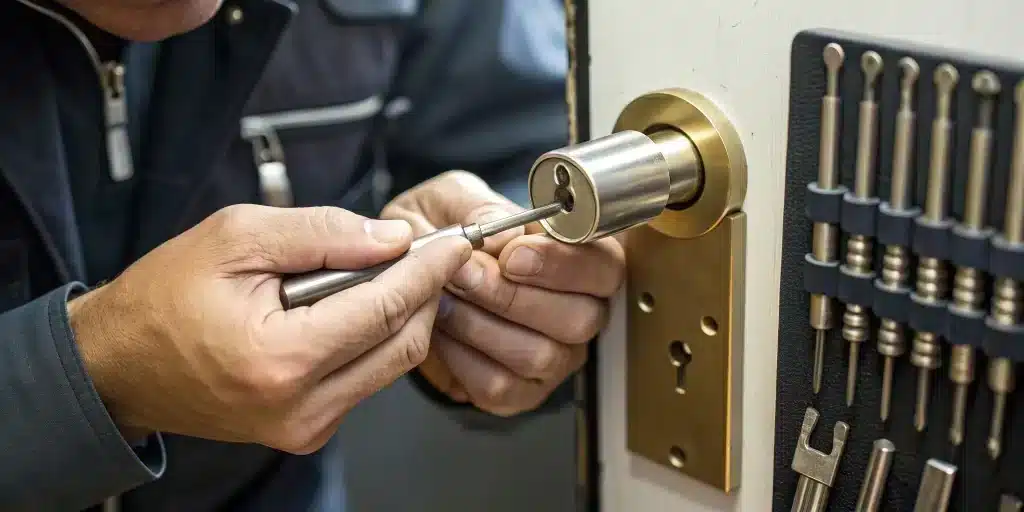
We’ve all felt it: that frustrating grind when a key just doesn’t want to turn. It’s easy to jiggle it and move on, but that sticky lock is often a warning sign that its internal components are failing. Before you find yourself locked out or dealing with a lock that won’t secure at all, consider replacing the core component. This guide breaks down exactly how to change a lock cylinder on a commercial door into simple, actionable steps. For warning signs, hardware choices, and when to call a pro, see our commercial door lock cylinder replacement guide. We’ll cover everything from identifying your lock type to avoiding common mistakes, empowering you to fix the problem before it becomes an emergency.
Key Takeaways
- Customize your new hardware for a perfect fit: Your new cylinder’s tailpiece and screws are likely too long by design. Measure them against your old parts and trim them to the correct size to ensure the lock functions smoothly and sits flush with your door.
- Upgrade your defense, not just your lock: Use this replacement as an opportunity to add modern security features. Prioritize cylinders with anti-pick, anti-bump, and drill-resistant components to better protect your property from common threats.
- Know when to call a professional: While a standard cylinder swap is a great DIY project, always leave high-security locks, master key systems, or emergency situations to an expert to avoid costly mistakes and ensure your business remains secure.
What Is a Commercial Door Lock Cylinder?
Before we get our hands dirty, let’s talk about what we’re actually working with. Think of your door lock as a team of parts working together. The commercial door lock cylinder is the heart of that team—it’s the part where you insert your key. This simple-looking component is a powerhouse of security. When you turn the key, the cylinder’s internal pins align, allowing the mechanism to turn and operate the bolt that locks or unlocks your door. It’s the gatekeeper that decides who gets in and who stays out.
For any business, the lock cylinder is a critical line of defense. It protects your assets, your employees, and your peace of mind. But like any hard-working component, it can wear out, get damaged, or become outdated. Understanding what it is and how it works is the first step toward keeping your property secure. Whether you’re upgrading for better security or replacing a faulty part, knowing the basics will help you make the right choices for your business. If you ever feel out of your depth, our commercial locksmith services are always here to help you secure your premises properly.
Common Types of Lock Cylinders
Not all locks are built the same, and the type of cylinder you have depends on the lock itself. You’ll typically find a few common types on commercial doors, each suited for different security needs. These include sturdy deadbolts for extra reinforcement, cylindrical lever locks that are common on interior and exterior doors, and heavy-duty mortise locks that are recessed into the door for a more robust setup. More modern businesses might even use electronic locks that integrate with key cards or codes. Knowing which type you’re dealing with is essential before you start the replacement process, as each has its own unique removal and installation method.
Decoding Security Ratings and Standards
When you’re choosing a new lock cylinder, you might see labels like “ANSI/BHMA Grade 1.” These aren’t just random numbers; they’re a big deal for your security. The American National Standards Institute (ANSI) and Builders Hardware Manufacturers Association (BHMA) test and grade locks on their strength, durability, and security. Grade 1 is the highest rating, designed for heavy-duty commercial use and able to withstand significant force. Grade 2 is for high-traffic residential or light commercial use, while Grade 3 is standard for most homes. For your business, you should always aim for a Grade 1 lock to ensure you have the best protection available.
Telltale Signs You Need a New Cylinder
Your lock will usually give you a few hints when it’s time for a replacement. One of the most common signs is your key becoming difficult to insert or turn—that sticky, grinding feeling is a major red flag. You might also notice visible rust or wear on the cylinder itself. If the lock is old and starts to malfunction frequently, it’s a clear sign that its internal parts are worn out. Don’t wait for it to fail completely. Addressing these issues early prevents a lockout and keeps your business secure. If you’re suddenly stuck, our emergency locksmith team can get you back in business quickly.
Gather Your Tools and Safety Gear
Before you start unscrewing anything, let’s get you set up for success. Taking a few minutes to gather your tools and safety equipment will make the entire process smoother and safer. Think of it as your pre-flight check. Having everything you need within arm’s reach means you won’t be scrambling to find a screwdriver while holding a lock in place. A little preparation now will save you a lot of headaches later.
Your Essential Toolkit
You don’t need a massive toolbox for this job, but having the right tools is key. For most commercial lock cylinder replacements, you’ll need a basic set of screwdrivers (both Phillips head and flat-head) and an adjustable wrench. Some lock models, especially those on metal doors, might also require a drill to remove rivets or modify the door slightly. It’s also a good idea to have a measuring tape handy to double-check your new cylinder against the old one. Lay everything out on a towel or cloth on the floor to protect the door finish and keep small screws from rolling away.
Don’t Forget Your Safety Gear
This step is non-negotiable. When you’re working with metal parts and tools, protecting yourself is just as important as protecting your property. Grab a pair of safety goggles to shield your eyes from any dust, metal shavings, or debris that might come loose, especially if you end up needing to drill. A good pair of work gloves will also protect your hands from sharp edges on the lock components or a slip of the screwdriver. It only takes a second to put them on, and it’s a simple way to prevent a trip to the first-aid kit.
Quick Safety Checks Before You Start
Before you remove the old lock, take a moment to inspect your new cylinder. Unpack it and make sure all the parts are there. A critical step is to check that the included screws and tailpiece (the flat metal bar that extends from the back of the cylinder) are the correct length for your door’s thickness. Often, these parts are made to be trimmed to size. If they’re too long, the lock won’t function correctly. If you’re not comfortable cutting metal components, it might be time to call for commercial locksmith services to ensure a perfect fit.
How to Remove the Old Lock Cylinder
Before you can install your new lock cylinder, you have to get the old one out. This part of the process can feel a bit intimidating, but with the right approach, it’s completely manageable. The key is to be methodical and pay close attention to how everything comes apart—it will make putting the new one in much easier. We’ll walk through exactly what you need to do, from figuring out what kind of lock you have to dealing with those little hiccups that can pop up along the way. Just take it one step at a time, and you’ll have that old cylinder out in no time.
First, Assess Your Door
Take a moment to look at your door and identify the type of lock you’re working with. This first step is the most important because it dictates the tools and techniques you’ll need. Is it a standard mortise lock, a rim cylinder, or something else? Knowing what you have helps you prepare for the specific steps involved. If you’re unsure, a quick search online for the brand name on the lock can give you some clues. Getting this right from the start prevents a lot of frustration and ensures you have the correct replacement cylinder on hand. For businesses, understanding your hardware is a core part of your security, and our commercial locksmith services can help you identify and upgrade any lock.
A Step-by-Step Removal Guide
Ready to get started? Here’s a straightforward guide to removing the most common type of commercial lock cylinder. First, insert the old key into the lock and turn it about 45 degrees, as if you were unlocking it. For some door handles, you’ll need to find a small hole on the side. Use a push pin or a small Allen wrench to press into this hole, which will release the latch and allow you to pull the handle off. With the handle out of the way, you should be able to access the cylinder. Simply turn the key back to its original position and gently pull. The entire cylinder should slide right out with the key.
Handling Different Lock Types
Commercial doors can have several types of locks, such as a deadlock, hookbolt, or deadlatch. While they sound different, many use a standard-sized lock body, which simplifies finding a replacement. The main thing to confirm is that your new cylinder is compatible with your existing hardware. Before you even start the removal process, measure the old cylinder and compare it to the new one. This simple check ensures you won’t run into compatibility issues halfway through the job. If your lock is part of a more complex system, our team is experienced with all kinds of door repair and installation projects and can ensure everything fits perfectly.
Troubleshooting Common Removal Issues
Sometimes, things don’t go as smoothly as planned. A common issue is finding that the set screws or the tailpiece (the metal bar extending from the back of the cylinder) are stuck or seem too long. New cylinders often come with longer pieces that need to be trimmed to fit your door’s thickness. If the cylinder won’t budge, check for hidden set screws along the edge of the door that might be holding it in place. If you’ve tried everything and the lock still won’t come out, don’t force it—you could damage the door itself. That’s a perfect time to call an emergency locksmith to get the job done without any extra damage.
How to Install Your New Lock Cylinder
With the old cylinder out, you’re ready for the main event: installing the new one. This part requires precision, but it’s completely manageable when you take it one step at a time. Getting the installation right ensures your lock functions smoothly and provides the security you need for your business. Let’s walk through the process, from double-checking your new hardware to that final, satisfying key turn.
Check Compatibility and Measure Twice
Before you even think about installation, confirm that your new lock cylinder is the right match for your door. Commercial doors and locks aren’t one-size-fits-all, so compatibility is key. Start by identifying the type of lock you have—is it a mortise, rim, or key-in-knob cylinder? The replacement must be the same type.
Next, measure your door’s thickness and the length of the old cylinder. Your new cylinder needs to fit these dimensions perfectly. A cylinder that’s too long or too short can compromise your security and won’t work correctly. If you’re unsure about finding the right hardware, our commercial locksmith team can help you source the perfect fit for your specific door and security needs.
A Step-by-Step Installation Guide
Most new commercial lock cylinders come with a tailpiece and screws that are longer than you’ll need. This is intentional, allowing them to fit a variety of door thicknesses. Your first step is to measure and cut the tailpiece to match the length of your old one. A pair of pliers or cutters will usually do the trick.
Once the tailpiece is sized correctly:
- Insert the key into the new cylinder and turn it slightly. This retracts the cam, making it easier to slide into the lock housing.
- Carefully guide the cylinder into the opening in the door, ensuring the tailpiece engages with the lock mechanism inside.
- Screw the cylinder into place until it’s snug. Don’t overtighten, as this can cause alignment issues.
How to Get the Alignment Perfect
Proper alignment is the secret to a lock that operates smoothly for years. If the cylinder is crooked or the tailpiece doesn’t engage correctly with the lock’s internal mechanism, you’ll feel it immediately—the key will be difficult to turn or won’t work at all. As you tighten the cylinder, make sure it sits flush and straight within the door hardware.
The tailpiece should slot directly into the lock’s actuator. If you feel resistance when inserting the cylinder, pull it back out and check that the cam and tailpiece are positioned correctly before trying again. Sometimes, the issue isn’t the lock but the door itself. If your door is sagging or warped, it can make proper lock alignment impossible, a problem that often requires professional door repair and installation.
Final Check: Test Your New Lock
Never walk away from the job without thoroughly testing your new lock. This final step is non-negotiable and will save you from discovering a problem at the worst possible moment, like when you’re trying to close up for the night.
First, test the lock with the door open. Turn the key from the outside to extend and retract the bolt. Do the same with the thumbturn on the inside, if you have one. The mechanism should move smoothly without any grinding or catching. Next, close the door and test it again. Make sure the bolt fully extends into the door frame and retracts without any force. If everything feels right, you’ve successfully installed your new lock cylinder.
Avoid These Common Installation Mistakes
Changing a commercial lock cylinder seems straightforward, but a few common slip-ups can turn a simple task into a security risk. Even a small mistake can leave your business vulnerable or result in a lock that’s frustrating to use every day. Getting it right the first time saves you from future headaches and ensures your property remains secure. Let’s walk through the most frequent installation errors so you can sidestep them completely.
The Problem: Misaligned Cylinders
One of the most common issues is a misaligned cylinder. This happens when the new cylinder doesn’t sit perfectly straight and flush within the lock housing. It’s often caused by choosing a lock that isn’t the right size or type for your specific door. When the cylinder is even slightly off-kilter, it can make the key difficult to insert and turn. More importantly, a poorly fitted cylinder can create a weak point in your security, making the lock easier to tamper with. Always double-check your measurements and ensure the new cylinder is an exact match for the old one to prevent this. If you’re unsure about compatibility, our commercial locksmith team can help you select the right hardware.
The Problem: Incorrect Set Screws
New lock cylinders typically come with a “one-size-fits-all” approach, meaning the included set screws and tailpiece are often too long for a standard door. It’s your job to trim them to the correct length. If the tailpiece is too long, it can jam the internal mechanism. If the set screws are too long, they can prevent the cylinder from sitting flush. On the other hand, if you cut them too short, the cylinder won’t be secure and could potentially be pulled out. The best practice is to carefully measure the old screws and tailpiece and use them as a guide to cut the new ones to the perfect length.
The Problem: Wrong Key Position
Before you tighten the final screws, pay close attention to the position of the key and the cam on the back of the cylinder. The cam is the small lever that retracts the latch when you turn the key. If you install the cylinder with the cam in the wrong orientation, the lock simply won’t work. You might find the key won’t turn at all, or it gets stuck in the lock. To avoid this, make sure the key is in the neutral (usually vertical) position before inserting the cylinder. Once it’s in place, do a few test turns to ensure the bolt retracts and extends smoothly before you call the job done.
A Quick Troubleshooting Guide
What if you’ve finished the installation and the key feels stiff or gritty? Don’t panic. Before you take everything apart, try a simple fix. Often, a bit of graphite or a silicone-based lubricant sprayed directly into the keyway is all it takes to get things moving smoothly. Also, check that you haven’t overtightened the mounting screws, as too much pressure can cause the mechanism to bind. If lubrication doesn’t help and the screws are fine, the issue might be with the door itself. Sometimes, door frame issues can affect the lock, a problem our door repair and installation services can easily address.
Upgrading Your Security: Key Features to Consider
When you’re replacing a lock cylinder, you’re doing more than just swapping out a part—you have a golden opportunity to seriously level up your business’s security. Instead of just finding a direct replacement, think about what modern features can give you better protection and peace of mind. The lock on your front door is your first line of defense, and choosing one with outdated technology is like leaving a welcome mat out for intruders. The right cylinder can defend against common break-in techniques, stand up to physical attacks, and give you greater control over who has access to your space.
Today’s locks are engineered to counter specific threats. From high-security pins that stop lock picking to electronic systems that let you manage access from your phone, the options available are designed to meet the specific challenges businesses face. Upgrading isn’t just about getting a new, shiny lock; it’s about investing in technology that actively protects your assets, your employees, and your livelihood. Let’s walk through some of the most important features to look for in a new commercial lock cylinder so you can make an informed decision.
Anti-Pick and Anti-Bump Protection
You’ve probably seen lock picking in movies, but lock “bumping” is another common and surprisingly simple technique burglars use. Both methods exploit weaknesses in standard pin-tumbler locks. That’s why choosing a cylinder with anti-pick and anti-bump features is so important. Anti-pick locks are designed with complex, paracentric keyways and extra security pins that make it incredibly difficult for picking tools to manipulate the lock. Anti-bump locks work similarly, using a unique pin system that won’t respond to a “bump key.” Investing in a lock with these protections is a foundational step in securing your property against covert entry. Our commercial locksmith services can help you select and install the right high-security locks for your needs.
Drill-Resistant Cylinders
If a burglar can’t pick or bump a lock, they might resort to brute force, and drilling is a go-to method. They simply drill through the cylinder to destroy the internal pins and unlock the door. A drill-resistant cylinder is your best defense against this kind of attack. These locks are built with hardened steel inserts and other reinforced materials strategically placed to protect the shear line and internal mechanisms. When a drill bit hits this hardened plate, it can’t penetrate the lock’s core, stopping the attack in its tracks. It’s a simple but highly effective feature that adds a critical layer of physical strength to your door’s security.
Understanding Key Control Systems
How many copies of your business keys are floating around? If you don’t know the answer, you need a key control system. Key control is a system that prevents unauthorized key duplication. With a high-security, patented lock, keys can only be copied by an authorized locksmith with proper identification and your approval. This means a disgruntled ex-employee or someone who finds a lost key can’t just walk into a hardware store and make a copy. It gives you complete control over who has access to your building, which is essential for any business. This system is a cornerstone of a comprehensive security plan, ensuring your keys remain in the right hands.
Options for Electronic Integration
In a world where you can manage so much from your phone, your business’s security should be no different. Integrating electronic options into your locking system offers incredible flexibility and control. Electronic locks and access control systems allow you to grant or revoke access remotely, issue temporary codes for visitors or contractors, and even see an audit trail of who entered and when. This eliminates the hassle and expense of rekeying locks every time an employee leaves. Whether you opt for a simple keypad lock or a fully integrated security system, going electronic can streamline your security management and provide a level of oversight that traditional keys just can’t match.
Pro Tips for Maintenance and Long-Term Security
Once your new cylinder is in place, a few smart habits can extend its life and keep your business secure for years to come. Proper maintenance and a strategic approach to security are just as important as the installation itself. Think of your locks as an investment—one that pays off when you give it the right attention. These tips will help you maintain your hardware and build a stronger security posture for your entire property.
Simple Maintenance for a Longer Lifespan
A little upkeep can make a huge difference in how long your lock cylinders last. If your key becomes difficult to insert or turn, don’t force it. The first step is to clean and lubricate the lock cylinder, as dust and grime are common culprits. A quick spray of a graphite-based or dry lubricant can often solve the problem instantly. Make it a habit to check your most-used locks every six months. This simple routine prevents wear and tear, saving you from a frustrating lockout or an unexpected replacement. Regular maintenance ensures your locks function smoothly and securely day in and day out.
Best Practices for Business Security
Not all locks are created equal, and choosing the right one for each door is fundamental to your business’s security. A lock suitable for a low-traffic storage closet isn’t the right choice for your main entrance. Think about the purpose of each entry point. High-traffic doors need durable, heavy-duty locks, while doors to sensitive areas like server rooms may require high-security options. A professional commercial locksmith can help you assess your property’s unique needs and identify the best hardware for each location, ensuring you don’t have any weak links in your security chain.
Why You Should Document Your Keys
Knowing who has access to your business is just as important as the locks on your doors. When an employee leaves, you need to be certain they no longer have access. This is why a key control policy is essential. Keep a simple log of every key, noting who it was assigned to and when. If a key is lost or not returned, you should immediately rekey the affected locks. This process changes the internal pins so the old key no longer works, which is much more cost-effective than replacing the entire lock. It’s a critical step for maintaining control over your property’s security.
Integrating with Access Control
For a truly robust security plan, your locks shouldn’t work in isolation. Modern security involves integrating your physical locks with broader electronic systems. Consider cylinders that can connect with your alarms and cameras for better overall protection. These integrated security systems can provide real-time alerts, create access logs, and allow you to manage permissions remotely. By linking your locks to a central system, you create a smarter, more responsive security network that gives you a complete picture of who is entering your property and when, adding a powerful layer of oversight and control.
Know When to Call a Professional Locksmith
While tackling a lock cylinder replacement yourself can feel empowering, there are times when it’s smarter and safer to step back and call in a professional. Knowing your limits is key to ensuring your business stays secure. Some lock systems are surprisingly complex, and a small mistake can lead to bigger problems, like a damaged door or a compromised security system. If you find yourself feeling unsure at any point, or if you run into one of the situations below, it’s the perfect time to contact a trusted locksmith.
When the Job Is More Complex Than It Looks
Sometimes a task that seems simple on the surface is hiding a few complications. Changing a commercial storefront door’s key cylinder might look straightforward, but it can involve intricate mechanisms that require specialized knowledge. You might remove the cylinder only to find an unexpected part or a configuration you don’t recognize. If you encounter anything that makes you pause or feel uncertain, it’s wise to consult a professional. A commercial locksmith has the experience to identify different lock types and handle any surprises, ensuring the job is done correctly without damaging your door or lock.
For High-Security or Master Key Systems
Not all locks are created equal. If your business uses high-security locks (like Medeco or Mul-T-Lock) or a master key system, a DIY replacement is not the way to go. These systems require specific tools and expertise to install or replace correctly. Attempting to change these types of locks without professional training can easily lead to security vulnerabilities or an improper installation that fails when you need it most. To protect your investment and maintain the integrity of your building’s security, always leave work on these advanced security systems to a qualified locksmith who understands their unique complexities.
If You’re Facing an Emergency
In an emergency, time and safety are your top priorities. If you’re dealing with a key broken off in the lock, a cylinder that has completely failed, or a security breach that requires an immediate lock change, it’s crucial to call a professional. An emergency locksmith has the right tools and skills to resolve the issue quickly and efficiently, minimizing downtime for your business and preventing potential damage to your property. Instead of risking further complications by trying to force a fix, a quick call will bring an expert to your door who can handle the situation safely and get your business secure again.
Related Articles
- Commercial Door Lock Cylinder Replacement: Your Guide
- How To Change A Commercial Door Lock: A Pro Guide
- Local NYC Locksmith Services
- Professional Locksmith Dyckman Street – Fast Response
Frequently Asked Questions
Should I replace the entire lock or just the cylinder? This really depends on the situation. If your lock’s hardware is in good shape but the key mechanism feels worn out or you’ve lost a key, replacing just the cylinder is a great, cost-effective solution. However, if the entire lock assembly is old, rusted, or damaged, or if you’re looking to upgrade to a much higher security level, it’s best to replace the whole unit.
What’s the difference between rekeying a lock and replacing the cylinder? Think of it this way: rekeying is like changing the password, while replacing the cylinder is like getting a new computer. Rekeying is the right choice when the lock is perfectly functional, but you need to invalidate old keys—for instance, after an employee leaves. The process involves changing the internal pins so a new key works. You should replace the cylinder when the hardware itself is broken, worn out, or you want to install a lock with better security features like anti-pick technology.
How do I know which security grade is right for my business? For any exterior door on a commercial property, you should always choose an ANSI/BHMA Grade 1 lock. This is the highest rating available and it’s specifically tested to withstand the heavy use and higher security risks that businesses face. While a Grade 2 lock might be acceptable for some interior office doors, sticking with Grade 1 for your main entry points gives you the best possible protection against physical attacks.
My key has started to stick in the lock. Do I need to replace the cylinder immediately? Not necessarily. Before you jump to a full replacement, the issue might just be dirt and grime buildup inside the keyway. Try spraying a small amount of a dry, graphite-based lubricant into the cylinder and working the key in and out a few times. This often clears up the problem. If the lock still feels gritty or difficult to turn after cleaning, that’s a clear sign the internal parts are worn and it’s time for a replacement.
What should I do if I start the replacement process and get stuck? The most important thing is not to force any parts, as you could end up damaging your door, which is a much more expensive fix. If the old cylinder won’t budge or the new one doesn’t seem to fit right, it’s a good time to pause and call a professional. A locksmith has the right tools and experience to handle unexpected issues and can get the job done correctly without any extra damage.
Need professional help in NYC? Contact Golden Key Locksmith NYC for Commercial Door Repair or Metal Door Repair. Available 24/7 across Manhattan and all NYC boroughs.
If upgrading to high-security, read our Medeco lock installation guide before you start.