

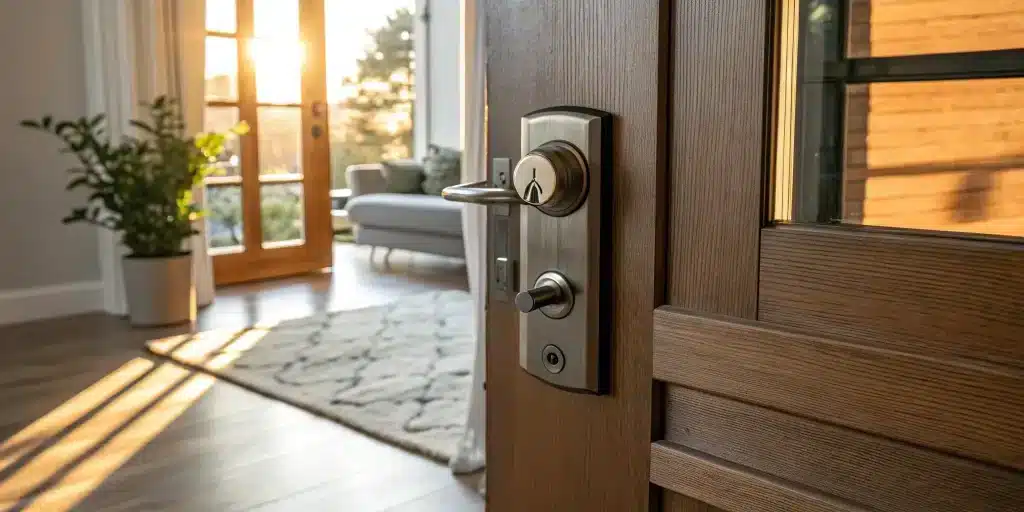
The keys to your new apartment are in your hand, but who else has a copy? It’s an unsettling question that can keep you from feeling truly at home. The previous tenants could have given out spares you’ll never know about, leaving a serious gap in your security. This is why changing locks when moving apartments is a non-negotiable first step. It’s not just about preventing a worst-case scenario; it’s about gaining the invaluable peace of mind that comes from knowing you are the only one with access. We’ll cover the essential details, including the difference between rekeying and replacing, who is responsible for the cost, and how to get it done right. For lease and landlord-request steps, see our apartment lock changes tenant guide.
Key Takeaways
- Prioritize Communication Over Assumption: Your lease is your guide, but a written request to your landlord is the essential first step. This clarifies responsibility for payment and ensures you get the security you need without violating your rental agreement.
- Choose the Right Solution for Your Situation: Rekeying is a fast, affordable way to secure your home if the existing locks are in good shape. Opt for a full replacement if the hardware is old or damaged, or if you want to upgrade your home’s overall security.
- Treat a Lock Change as a Security Investment: An improperly installed lock offers a false sense of safety. Hiring a professional ensures the job is done correctly, protecting your home from potential risks and giving you genuine peace of mind.
Why You Should Change Your Locks When You Move
Moving into a new apartment is exciting. You’ve got a blank canvas to decorate and a new neighborhood to explore. But before you start unpacking the boxes, there’s one crucial task that should be at the top of your to-do list: changing the locks. It might seem like a small detail, but it’s one of the most important steps you can take to secure your new home. Beyond just the practical security benefits, it gives you the invaluable peace of mind that comes with knowing you’re in complete control of who has access to your space. It’s the official first step in making a new apartment truly feel like your own.
The Security Risks of Keeping Old Locks
When you get the keys to your new place, you have no way of knowing who else has a copy. The previous tenants could have given spares to family members, friends, a dog walker, or a cleaning service. Even if the landlord collected the keys they were aware of, there’s no guarantee that other copies aren’t still floating around. This leaves a significant gap in your home’s security. By not changing the locks, you’re essentially trusting strangers with access to your home and belongings. A professional residential locksmith can quickly change or rekey your locks, instantly making any old keys useless and ensuring you’re the only one who can open your front door.
Gaining Peace of Mind in Your New Home
The feeling of safety in your own home is priceless. Worrying about who might have an old key can create unnecessary anxiety and prevent you from fully settling in. Changing the locks is a simple action that removes that “what if” feeling. It’s about more than just preventing a potential break-in; it’s about creating a sanctuary where you can relax and feel completely secure. Knowing that you and the people you trust are the only keyholders allows you to breathe a sigh of relief. This simple step helps transform your new apartment from just a place you’re renting into a space that is truly and securely yours.
Who’s Responsible for Changing Apartment Locks?
Figuring out who handles the locks in a rental can feel like a gray area. Is it your job or your landlord’s? The answer usually depends on the situation, your lease, and local laws. Generally, the responsibility is shared, but it’s important to know when to take the lead and when to let your landlord handle it. Understanding this distinction is the first step to ensuring your new home is secure from day one.
Your Landlord’s Responsibility
Your landlord’s primary job is to provide a secure home, and that absolutely includes the locks. In many places, including New York, landlords are required to change or rekey the locks between tenants. This is a crucial safety measure that ensures no copies of the old key are floating around with the previous resident or anyone they might have given one to. When you move in, you should feel confident that you’re the only one with access. If the locks seem old or flimsy, you have every right to bring this up as a basic residential security concern.
When It’s Up to You to Change the Locks
Sometimes, the need for a lock change comes up mid-lease. Maybe a roommate moved out, you lost a key, or you broke up with a partner who still has a copy. In these cases, the responsibility often shifts to you. Most leases state that you can’t change the locks without permission, so your first step should always be to contact your landlord. If they approve the change, you’ll likely be responsible for the cost. You’ll also need to provide them with a copy of the new key right away. For urgent situations, an emergency locksmith can help you secure your apartment quickly.
How Local Laws Affect Lock Changes
While your lease is a good starting point, it isn’t always the final word. Tenant rights and landlord responsibilities are heavily guided by state and local laws, which can sometimes override the terms of your lease agreement. Rules about who can change locks, when, and who pays for it can vary significantly from one city to another. It’s always a smart move to familiarize yourself with your local tenant laws. This knowledge empowers you to have a productive conversation with your landlord and ensures you’re handling the situation correctly and legally.
Can You Change Locks Without Your Landlord’s Permission?
It’s a tempting thought—swapping out the locks on your new apartment for immediate peace of mind. While the impulse is understandable, acting without talking to your landlord can cause major headaches. In most cases, you can’t change the locks without permission. Landlords need access for maintenance and emergencies, and unauthorized changes can violate your lease agreement. The good news is that you have options. Understanding the proper steps helps you get the security you need without putting your tenancy at risk. It all starts with clear communication.
Check Your Lease First
Before you do anything, grab your lease agreement. This document is the official rulebook for your tenancy, and it almost certainly has a clause about alterations to the property. Look for sections on “locks,” “keys,” or “modifications.” Most leases state that tenants cannot change locks without the landlord’s explicit consent. Some may even specify the process for requesting a lock change. Reading your lease first tells you exactly where you stand and prevents you from accidentally violating your agreement.
Notifying Your Landlord: What the Law Says
While specific landlord-tenant laws vary, the general principle in New York is that landlords must have access to their property. This isn’t about spying; it’s for practical safety reasons. They need a key for scheduled inspections, urgent repairs, and emergencies like a fire or a major leak. If you change the locks and don’t provide a key, you prevent them from performing their duties and responding to situations that could damage the property. That’s why you’re almost always required to get approval before calling a residential locksmith.
The Risks of Changing Locks Without Approval
Making a unilateral decision to change your locks can backfire. If you proceed without permission, you could be in breach of your lease, leading to several negative consequences. Your landlord could charge you the cost of changing the locks back, often deducting the fee from your security deposit. In more serious cases, it could be grounds for eviction. Open communication is the best way to avoid these issues. Explaining your security concerns to your landlord often leads to a simple, approved solution that keeps your apartment secure.
How to Ask Your Landlord for a Lock Change
Approaching your landlord about changing the locks can feel a little awkward, but it’s a completely reasonable request. Your safety is the priority, and most landlords understand that. The key is to be clear, polite, and professional in your communication. Putting your request in writing (like an email) is always a good idea because it creates a record for both of you. Before you hit send, take a moment to review your lease agreement. It often outlines the specific rules about lock changes, which can help you frame your request in a way that shows you’ve done your homework. This simple step can make the whole process smoother and show your landlord you’re a responsible tenant.
How to Write a Clear Request
When you’re ready to write your request, start with a friendly and direct tone. Explain that you’re moving in and would like to have the locks changed for your security. It’s perfectly fine to mention your concern that previous tenants might still have keys—this is a common and valid reason. To make the request even more agreeable, you can offer to cover the cost of the lock change service. This proactive approach often gets a positive response because it shows you’re serious about your security and willing to invest in it, which makes things easier for your landlord.
What to Include in Your Message
In your email or letter, clearly state why you’re making the request. You can say something like, “For my peace of mind and to ensure the security of the apartment, I would like to request a lock change.” It’s also crucial to mention that you will provide them with a copy of the new key immediately. Landlords need access for emergencies and maintenance, so reassuring them that they’ll have a key is non-negotiable. This shows you respect their role and are committed to maintaining a good landlord-tenant relationship while prioritizing your own safety at home.
How to Follow Up Effectively
If you don’t hear back within a few business days, don’t hesitate to send a polite follow-up. A simple message like, “Just wanted to follow up on my request to change the locks,” is usually enough to get a response. In your follow-up, you can gently reiterate the importance of the lock change for your sense of security. Keeping the lines of communication open and respectful is the best way to handle the situation. If you’re facing an urgent security concern and aren’t getting a response, remember that emergency locksmith services are available 24/7 to help secure your home quickly.
Rekeying vs. Replacing: What’s the Difference?
When you want to secure your new apartment, you have two main choices: rekeying the existing locks or replacing them entirely. Both achieve the goal of making old keys useless, but they differ in cost, process, and when they’re the right fit. Understanding the distinction will help you make the best decision for your home and your budget. Let’s break down what each option means for you so you can feel confident about your apartment’s security from day one.
Option 1: Rekeying Your Locks
Think of rekeying as giving your lock a new brain without changing its body. A locksmith simply adjusts the small pins inside the lock cylinder so it works with a brand-new key. Once that’s done, any old keys become useless pieces of metal. This is a fantastic, budget-friendly choice if you’ve just moved in and the locks themselves are in perfectly good condition. Rekeying maintains the lock’s existing security level—it doesn’t make it weaker or stronger, it just resets who has access. It’s the quickest way to get peace of mind, knowing you’re the only one with a working key. Our residential locksmith services can handle this for you quickly and efficiently.
Option 2: Replacing Your Locks
Replacing a lock is exactly what it sounds like: taking out the entire lock mechanism and installing a completely new one. While it’s a more involved and often more expensive process, it’s sometimes the necessary choice. Replacing your locks gives you a fresh start and is your chance to upgrade to a more secure model, like a high-security or smart lock. If the current locks are old, rusty, or just don’t feel sturdy, replacement is the way to go. You get the benefit of brand-new hardware and the opportunity to select from a wider range of features and styles that fit your needs. This is also a great time to explore modern security systems for even greater protection.
Which Option Is Right for You?
So, how do you choose? It really comes down to the condition of your current locks and your personal security goals.
Rekey your locks if:
- You’re happy with the current hardware.
- The lock is in good working order.
- Your main goal is to block access from previous keyholders without spending a lot.
Replace your locks if:
- The existing mechanism is broken, sticking, or faulty in any way. You can’t rekey a broken lock.
- You want to improve your home’s security with a better, stronger lock.
- You want to change the style or finish of your door hardware.
If you’re unsure, a professional can give you the best advice after inspecting the lock. An experienced locksmith can assess its condition and help you decide on the most practical solution for your new home.
Who Pays for the Lock Change?
Figuring out who foots the bill for a lock change can feel a bit tricky, but it usually comes down to one simple question: why is the lock being changed? The answer determines whether the cost falls on you or your landlord. In most cases, the lease agreement is your best guide, but there are some standard practices that can help you understand what to expect. Knowing who is financially responsible ahead of time can save you a lot of back-and-forth and ensure your new home is secured quickly.
It’s always a good idea to have a clear conversation with your landlord about costs before any work begins. This prevents surprises and keeps your relationship positive. If you need a professional to handle the job, getting a quote for a lock change can give you a clear idea of the expense involved, making it easier to discuss with your property manager.
When Your Landlord Covers the Cost
Typically, your landlord is responsible for paying to change or rekey the locks between tenants. When you first move in, it’s a standard security measure to ensure that previous residents, their friends, or anyone else who had a key can no longer access the apartment. This is a fundamental part of providing a safe and secure living space. Most landlords see this as a routine cost of turning over a unit.
Your lease should outline the policy on lock changes. If it doesn’t, it’s still reasonable to expect your landlord to cover this initial security step. It’s in their best interest, too, as it protects their property and their new tenant—you.
When You Have to Pay
There are a few situations where the cost of changing the locks will likely fall on you. If you request a lock change for personal reasons during your tenancy, you should expect to pay for it. For example, if a roommate moves out, you lose your keys, or you give a copy to someone you no longer trust, the responsibility for the change is yours.
You’ll also have to cover the cost if you or a guest accidentally damages the lock, like if a key breaks off inside. Essentially, if the need for a new lock arises from your actions or personal circumstances rather than routine turnover or a fault in the original hardware, the bill will be yours.
How to Handle Payment Disputes
The best way to avoid a payment dispute is to prevent it from happening in the first place. A clear “lock policy” in your lease agreement is the ultimate source of truth. Before signing, make sure you understand the rules. If you and your landlord disagree on who should pay, refer back to the lease. If the lease is vague, try to have an open conversation to find a fair solution.
If you change the locks without permission, your landlord might be able to deduct the cost of restoring the original locks from your security deposit when you move out, depending on local laws. To avoid this, always communicate in writing and get approval before making any changes. This creates a paper trail that protects both you and your landlord.
When Should You Call a Professional Locksmith?
Once you’ve figured out who is paying for the lock change, the next step is getting it done right. While it might be tempting to try a DIY approach to save a few dollars, handling locks and security is a job best left to the experts. A professional locksmith not only ensures the job is done correctly but also provides peace of mind that your new home is truly secure. They have the right tools and experience to handle any situation, from a simple rekey to a full replacement, without damaging your door or compromising the lock’s integrity.
The Benefits of Hiring a Pro
Hiring a professional for your residential locksmith needs is a smart move. For one, it can be more cost-effective. An expert can assess your locks and see if they can be rekeyed—a process that changes the internal pins so old keys no longer work. Rekeying is often cheaper than a full replacement and is just as secure. A pro can also spot a faulty lock that needs to be replaced entirely, saving you from future trouble. They get the job done quickly and correctly, ensuring your new apartment is secure from day one.
How Golden Key Locksmith NYC Can Help
If you’re in Manhattan, Brooklyn, or Queens, you don’t have to handle this alone. Our team at Golden Key Locksmith NYC is available 24/7 to help you secure your new home. We understand the urgency of feeling safe, which is why we offer fast and reliable emergency locksmith services. Our experts can rekey your existing locks, giving you a new set of keys and the assurance that no one else has access. We’ll assess your locks and provide the most efficient solution, giving you professional service you can trust.
The Dangers of a DIY Lock Change
Trying to change or rekey a lock yourself can lead to bigger problems. Without experience, you could easily damage the lock or the door, leading to more expensive repairs. It’s also important to know that you can’t rekey a faulty lock; it must be replaced, and a professional can identify this immediately. An improperly installed lock can often be easily bypassed, defeating the purpose of the change. A professional ensures your new hardware is installed correctly and functions smoothly, keeping your home secure without the risk of costly mistakes.
What to Do if Your Landlord Refuses a Lock Change
So, you asked your landlord to change the locks, and the answer was no. It’s a frustrating spot to be in, but you still have options for securing your new home. While a flat-out refusal can feel like a roadblock, it’s often just the start of a conversation. Landlords have their own responsibilities and concerns, like needing access for emergencies, but your safety is paramount. The key is to understand your rights, explore alternative security measures, and know when it’s time to seek more formal advice. Feeling safe in your apartment is non-negotiable, and there are several paths you can take to make sure your new space is truly secure.
Know Your Rights as a Tenant
Your first move is to pull out your lease agreement and read it carefully. Most leases include a clause that prevents tenants from making alterations to the property without permission, and this almost always includes changing the locks. Landlords need to maintain access for maintenance, inspections, and emergencies like a fire or a major leak. However, they also have a duty to provide a safe and habitable environment. While laws vary, many areas require landlords to change or rekey locks between tenants. You can learn more about your specific protections by reviewing New York City’s tenants’ rights. Understanding what’s in your lease and what local laws mandate will give you a solid foundation for your next conversation with your landlord.
Other Ways to Secure Your Apartment
If a full lock replacement is off the table, you can still improve your apartment’s security. Consider discussing smaller, less permanent upgrades with your landlord. For instance, you could request the installation of a new chain lock, a swing bar lock, or a high-quality deadbolt. These add an extra layer of protection from the inside. You can also use temporary, non-damaging devices like a door jammer or a portable door lock, which are great for when you’re home. For a more comprehensive solution, you might suggest upgrading the building’s overall security systems. Pitching it as a benefit to the entire property could make your landlord more receptive to the idea.
When to Consider Legal Advice
If your request was denied despite a valid security concern—like a recent neighborhood break-in or a domestic violence situation—it’s time to take more formal steps. Always keep a written record of your communication with your landlord. Emails are perfect for this, as they create a clear timeline of your requests and their responses. If you feel your safety is at risk and your landlord is unresponsive, you may want to consult with a local tenant advocacy group or an attorney who specializes in housing law. They can help you understand your options, which might include sending a formal letter or, in serious cases, taking legal action. Your safety is the priority, and sometimes you need professional support to ensure it’s protected.
Related Articles
- Lock Change Guide For NYC Apartments
- 7 Things to Know Before Choosing a Smart Lock for Apartment
- Apartment Lock Change After A Break-In: A Tenant’s Guide
- The 4 Best Smart Locks For Apartments (2025)
- 24/7 Emergency Locksmith NYC: Why Golden Key Is Manhattan's Fastest Response Team
- Artificial Intelligence In Security (Guide)
Frequently Asked Questions
What’s the very first thing I should do about my locks after signing a lease? Before you even move your first box in, review your lease for any clauses about locks or alterations. Then, send a polite, written request to your landlord asking to have the locks changed or rekeyed. Getting this conversation started right away sets a professional tone and makes your security a day-one priority.
Is rekeying really as safe as getting a brand new lock? Yes, when it comes to preventing old keys from working, rekeying is just as effective as a full replacement. The process changes the inner workings of the lock to fit a new key, making any previous copies useless. If your current lock is sturdy and in good shape, rekeying is a fantastic and cost-effective way to secure your home.
My landlord said the locks were changed, but how can I be sure? It’s perfectly reasonable to want confirmation. You can politely ask your landlord if they have a receipt from the locksmith service or simply request to see that the new keys are fresh and not worn copies. A good landlord will understand your concern for safety and should be willing to provide that peace of mind.
What happens if I need a lock change in an emergency, like after a breakup or losing my keys? In an urgent situation, your safety comes first. You should contact your landlord immediately to explain the situation and get permission for an emergency lock change. If you can’t reach them, a 24/7 emergency locksmith can secure your apartment quickly, but you must inform your landlord and provide them with a new key as soon as possible to avoid violating your lease.
Can I just install an extra deadbolt or chain lock myself? Even though it seems like a simple addition, adding any new lock is usually considered an alteration to the property. You should treat it the same as a request to change the main lock—check your lease and get written permission from your landlord first. Proposing it as a security upgrade they might even appreciate is often the best approach.
Need professional help in NYC? Contact Golden Key Locksmith NYC for Manhattan Locksmith Services or Apartment Lockout Help. Available 24/7 across Manhattan and all NYC boroughs.