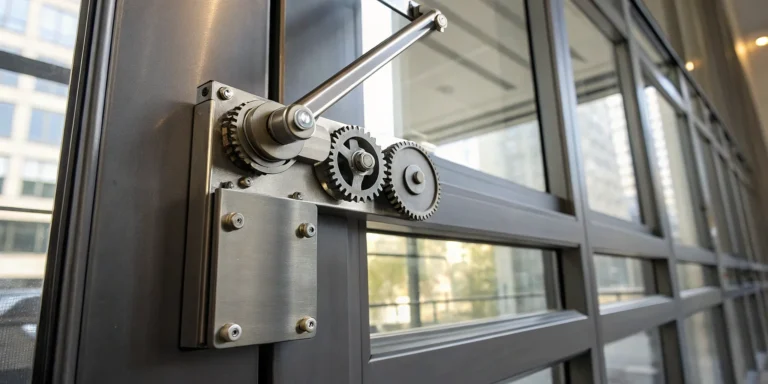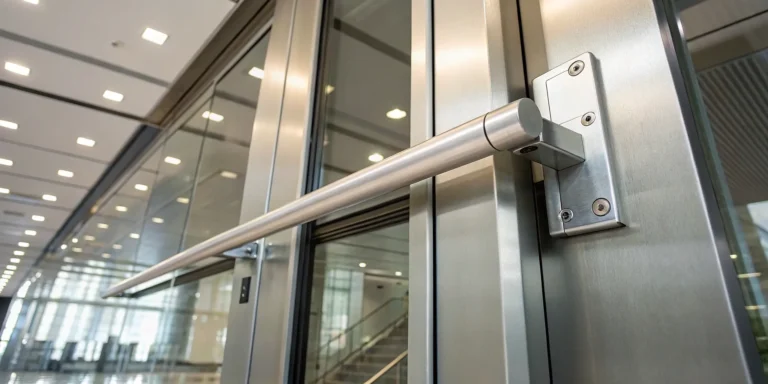

Fire rated door installation cost in NYC comes down to three levers: the door material, the labor hours your opening requires, and how much of the surrounding assembly needs work — jobs that need a new frame, specialized hardware, or structural changes cost the most. A fire-rated door isn’t just a heavier version of a standard door; it’s a complete, engineered safety system — door, frame, certified hardware, and seals tested to work together. That’s why the quote covers more than a slab of steel or wood. Here’s what drives each line of the price in Manhattan, Brooklyn, and Queens.
Want it handled end to end? Golden Key provides code-compliant fire-rated door installation across NYC, including labeled frames and hardware — call (212) 204-1655 for an on-site assessment.
Fire-rated door costs at a glance
| Item | What drives the price |
|---|---|
| Standard fire door (door only) | Material and fire-rating duration |
| Hollow metal fire door | Steel gauge and door size |
| Solid core wood fire door | Core type and finish quality — the widest spread |
| Installation labor, hourly | Condition of the opening and frame prep needed |
| Typical total project | Door choice plus labor; frame work pushes it up |
| Fire-rated hardware (hinges, closer, latch) | Every component must carry its own rating |
| Fire-rated glass insert | Size of the vision panel |
| New frame, if required | Only when the existing frame is damaged or out of code |
| Permits | Set by the city; varies with job scope |
| Post-installation inspection | Required for life-safety sign-off |
Always ask for a quote that separates materials from labor before work begins. For what a compliant install involves door-by-door, see our fire rated doors service page.
What you’re actually paying for
A fire-rated door is part of a full assembly — the door, frame, hardware, and seals — tested and certified to withstand fire for a specific period. Ratings come in 20, 45, 60, or 90 minutes, and a higher rating means more robust construction and a higher price. By compartmentalizing a building, these doors slow the spread of fire, smoke, and toxic fumes, buying occupants time to escape and giving firefighters a safer window to work. Every component matters: if the gap around the door is too wide or the wrong hardware is fitted, the entire system can fail. That’s why professional door repair and installation isn’t optional here — it’s what makes the rating real.
Where NYC requires them
New York City building codes require fire-rated doors in specific locations: stairwells of apartment buildings, doors connecting a garage to a house, and doors separating commercial units within the same building are the common ones. The required rating depends on the location — the door between your apartment and the public hallway carries a different requirement than a boiler room door. For business owners, compliance protects employees, customers, and your investment, not just your inspection record.
Cost by door material
- Steel / hollow metal (the budget-friendly tier): strong, naturally fire-resistant, and extremely durable — the standard pick for commercial entryways, utility rooms, and garage doors. Modern profiles are slimmer than the old industrial look.
- Solid core wood (mid-grade to premium, the widest spread): safety without the industrial aesthetic. These are engineered doors with fire-resistant cores designed to swell and char under heat — not ordinary wooden doors — and can match your existing interior. Popular for apartment entry doors that need a rating.
- Composite: a mix of wood, mineral core, and steel that balances durability, fire resistance, and finish quality — often more affordable than solid wood with a comparable look.
What pushes the total up
- Installation complexity. Dropping a pre-hung door into a sound, correctly sized existing frame is the cheapest scenario. Frame modifications, wall adjustments, or custom sizes add labor at NYC rates.
- Frame condition. Fire doors are thicker and heavier than standard doors. A damaged or out-of-code frame must be repaired or replaced — a separate line on the quote.
- Permits and inspection. Because these are life-safety installations, expect a city permit and an official post-installation inspection, each billed as its own item.
- Hardware and glazing. Every component must be fire-rated: hinges, latches, and automatic closers are priced as a set, and a fire-rated vision panel adds its own line. Swapping in standard big-box hardware voids the rating.
How to keep the cost down safely
Skip features you don’t need — a standard size without vision panels is the most budget-friendly spec. Ask about pre-hung doors, which arrive mounted in their frame and cut installation time. If you’re a property manager replacing several doors, bundle them: installers routinely discount multi-door projects. And confirm the rating the code actually requires before buying — paying for a 90-minute door where a 20-minute rating is required is money wasted. What you should not do is cut corners on the installer: a DIY or handyman install that voids the rating fails inspection and costs more to redo than doing it right once.
Ongoing costs: inspection and repairs
Fire doors need an annual professional inspection — alignment, frame integrity, hardware, seals, and self-closing function — plus a modest yearly budget for minor maintenance. Repairs scale with severity: a worn hinge or faulty latch is the smallest job, a warped frame costs considerably more, and a door that must be replaced outright is the biggest ticket. Two habits protect the investment: never prop a fire door open (it only works closed), and never alter the door or its hardware yourself.
Get a real number for your door
We install and certify fire-rated doors across Manhattan, Brooklyn, and Queens — assessment, code check, installation, and final testing that the door closes and latches on its own with tight seals. Golden Key has done this work for over 40 years from 328 Columbus Ave on the Upper West Side, NYC DCA license #2065742. Describe the opening and we’ll quote it: (212) 204-1655.
Frequently asked questions
How much does fire rated door installation cost in NYC, bottom line?
The door material sets the base, labor depends on the condition of your opening, and permits, inspection, and rated hardware add their own line items; frame or structural work pushes totals highest. Call (212) 204-1655 and we’ll price your exact door, frame, and hardware.
Can any carpenter or handyman install a fire door?
No — only certified professionals should install or repair fire doors. The door, frame, seals, and hardware form one tested assembly; one wrong component or an oversized gap and the system won’t stop fire or smoke, and it won’t pass NYC inspection.
What’s the difference between a solid wood door and a fire-rated wood door?
They can look identical, but a standard solid wood door burns through quickly. A fire-rated wood door has an engineered fire-resistant core that swells and chars under heat, slowing the spread and buying escape time.
What fire rating do I need — 20, 45, 60, or 90 minutes?
It depends entirely on the door’s location in the building under NYC code. An apartment entry door, a stairwell door, and a boiler room door each carry different requirements — have a professional confirm before you buy.
Can I paint a fire-rated door or change its hardware?
Light coats of paint are fine as long as they don’t interfere with closing and latching. Never drill new holes or swap in non-rated hardware — fire-rated hardware is tested for high temperatures, and substitutions void the door’s rating.