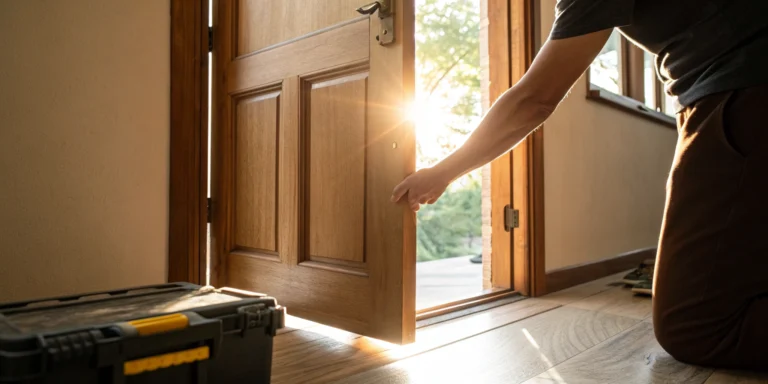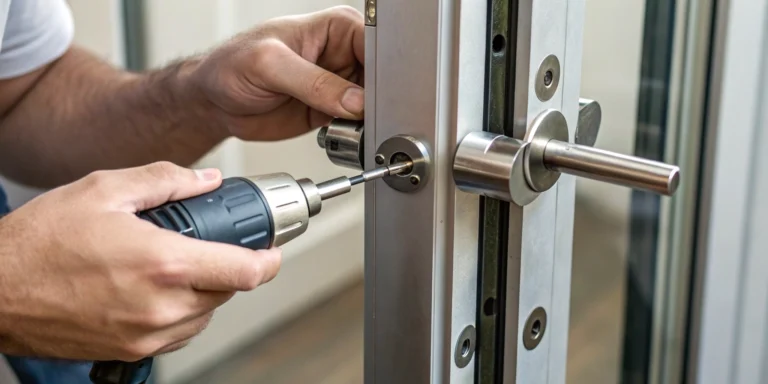

When a door is loose when closed — rattling in the frame or wobbling against the latch — the cause is almost always one of four things: loose hinge screws, a strike plate that no longer lines up with the latch, a warped frame, or a worn-out latch mechanism. The first two account for most cases, and both are fixable in under an hour with a screwdriver: tighten every hinge screw (swap one top-hinge screw for a 3-inch screw if the door has sagged), then adjust the strike plate so the latch seats snugly. Below is how to diagnose which problem you have, the exact fixes in order of likelihood, and the signs — like a warped frame or a lock that won’t engage — that mean it’s time to call a professional.
Key Takeaways
- Diagnose Before You DIY: Most rattles come from simple issues. Before starting any repairs, check for loose hinge screws and see how the latch aligns with the strike plate—this will often point you directly to the solution.
- Try the 3-Inch Screw Trick: For a surprisingly effective fix, replace one of the short screws on the top hinge with a 3-inch screw. This anchors the door directly to the wall stud, pulling it into alignment and stopping the wobble.
- Know When to Call for Help: If the door frame is visibly warped, the lock doesn’t engage securely, or your DIY attempts fail, don’t hesitate to use professional door repair. A secure door is non-negotiable for your home’s safety.
Why Does Your Door Rattle When It’s Closed?
That subtle but persistent rattling sound every time the wind blows or someone walks down the hall is more than just an annoyance—it’s a sign that your door isn’t closing securely. A loose door can compromise your home’s insulation, letting in drafts, and more importantly, it can be a weak point in your security. The good news is that the cause is usually a simple mechanical issue. Before you can fix it, you need to figure out what’s causing the wobble. Most of the time, the culprit is one of four common problems: worn hinges, a misaligned strike plate, a warped frame, or a faulty latch. Identifying the right one is the first step to getting a solid, silent close.
Loose or Worn Hinges
Think of the hinges as your door’s skeleton; they bear its full weight and control its movement. Over time, with thousands of openings and closings, the screws holding the hinges to the door and frame can work themselves loose. The hinge pins can also wear down, creating extra play. When this happens, the door can sag, even just a fraction of an inch. This slight drop is often enough to misalign the latch with the strike plate on the frame, preventing a snug fit. The result is a door that rattles and may not lock properly, which can be a real concern for your home’s security. A well-maintained door is a cornerstone of a secure residential locksmith setup.
A Misaligned Strike Plate
The strike plate is the small metal plate on the doorjamb that the latch clicks into. For your door to close securely, the latch bolt must align perfectly with the opening in the strike plate. If it’s off-center, the latch won’t fully engage, leaving the door loose enough to rattle. This misalignment can happen for many reasons—the house settling over time, the door frame shifting, or even just loose screws. Sometimes, the small metal tab inside the strike plate can be bent too far, preventing the latch from catching firmly. This is a common issue in both homes and businesses, where a secure door is essential for any commercial locksmith plan.
A Warped Door Frame
Wood is a natural material that responds to its environment, and in a place with fluctuating humidity like New York City, door frames can suffer. Moisture can cause the wood to swell, while dry air can make it shrink. Over years, this cycle can cause the door frame to warp, twist, or even crack. A warped frame changes the shape of the opening, so the door no longer fits squarely within it. This creates uneven gaps and pressure points, which almost always leads to a door that rattles or sticks. If you see visible cracks or splits in the frame, it’s a clear sign you might need professional door repair and installation.
A Worn-Out Latch
Sometimes the problem isn’t with the door’s alignment but with the latch mechanism itself. The latch is a moving part with internal springs that can wear out from constant use. When the mechanism becomes worn, the latch bolt may not extend all the way or retract smoothly. A weak or sticky latch won’t catch firmly inside the strike plate, leaving the door unsecured and free to move. This not only causes an annoying rattle but also creates a serious security vulnerability, as a faulty latch can be much easier to bypass. If your latch fails suddenly, leaving you unable to secure your property, it’s time to call an emergency locksmith.
How to Pinpoint the Problem
Before you can fix that annoying rattle, you need to play detective and figure out what’s causing it. A loose door is usually a symptom of a problem with one of four key areas: the hinges, the strike plate, the frame, or the latch itself. By systematically checking each one, you can identify the culprit and find the right solution. This process is all about observation, so take a moment to open and close the door a few times, paying close attention to how it moves and where the looseness seems to be coming from. Let’s walk through how to check each component.
Test the Hinge Stability
First, let’s look at the hinges. Open the door and gently try to lift it up and down. If you feel a lot of give or see movement at the hinges, you’ve likely found your problem. Grab a screwdriver and check if the screws are tight. If they spin without tightening, the screw holes are probably stripped. A quick fix for this is to use slightly longer or wider screws that can grip fresh wood. For a more durable solution, you can fill the holes with wood filler or even a few toothpicks and wood glue, let it dry, and then re-drive the original screws. If the hinges themselves are bent or broken, they’ll need to be replaced.
Check the Strike Plate’s Position
Next, examine the strike plate—the metal piece on the door frame where the latch clicks into place. Close the door slowly and watch how the latch bolt meets the plate. Does it hit the plate directly? Or is it too high or too low? If the alignment is off, the door won’t secure properly, causing it to rattle. A misaligned strike plate is a common issue, especially as a house settles over time. You can often see small scratches or marks around the opening that show where the latch has been hitting. This is a good indicator that a simple adjustment might be all you need to solve the problem.
Examine the Door Frame for Warping
Now, take a step back and look at the door frame itself. Check for any visible signs of warping, twisting, or cracking. Use a level to see if the sides of the frame are straight. A warped frame can prevent the door from sitting flush, creating gaps and causing it to feel loose even when latched. This is a more serious issue that can result from moisture damage or structural shifts in your home. If you suspect the frame is the problem, it often requires professional door repair and installation to ensure your home remains secure and properly sealed from the elements.
Inspect the Latch Mechanism
Finally, take a close look at the latch mechanism in the door itself (our door latch mechanism guide explains how the parts work). With the door open, turn the knob or handle and watch the latch bolt. Does it extend and retract smoothly? Is it loose or wobbly in its housing? A worn-out or broken latch can fail to extend fully into the strike plate, leaving the door unsecured and prone to rattling. This not only is an annoyance but also compromises your home’s security. If the latch seems faulty, it’s a good idea to call a residential locksmith to repair or replace the hardware.
Your DIY Door Repair Toolkit
Before you roll up your sleeves, let’s talk tools. The good news is you don’t need a professional workshop to fix a rattling door. Most wobbly doors can be steadied with a few basic items you might already have in a junk drawer or toolbox. Gathering everything you need before you start will make the process much smoother and save you from making multiple trips to the hardware store. A solid toolkit is the foundation of any successful home repair, turning a frustrating problem into a satisfying fix.
Think of this as your go-to list for tackling that annoying wobble. We’ll cover the absolute must-haves, like a trusty screwdriver, and some other helpful supplies like wood filler and shims that can make all the difference. Having these on hand will prepare you for the most common causes of a loose door, from stripped screw holes to minor alignment issues. We’ll also touch on a few safety basics because keeping yourself safe is just as important as getting the job done right. If your project involves more than a simple fix, like a complete door repair and installation, it’s always best to have a professional on standby.
Essential Screwdrivers and Hardware
The most important tool for this job is a reliable screwdriver. You’ll likely need both a Phillips head and a flathead, so having a multi-bit screwdriver or a small set is ideal. Your first step in any door repair is to check the hinges. Use your screwdriver to tighten all the screws on the door and the frame. If you find a screw that just keeps spinning, it’s stripped. You’ll need to remove it and fill the hole with a bit of wood glue and a few toothpicks or a small wooden dowel. Let it dry, and you’ll have a solid base to drive the screw back into.
Wood Filler and Longer Screws
Sometimes, a stripped screw hole needs a little more help than toothpicks can offer. That’s where wood filler comes in. It’s an easy-to-use putty that creates a durable, sandable, and drillable surface once it hardens. For an even more secure fix, especially on a heavy exterior door, grab a few 3-inch screws. Replace the middle screw on the top hinge with one of these longer screws. This allows the screw to bite into the sturdy wall stud behind the door jamb, pulling the door tighter into alignment and providing much better support than the standard short screws.
Shims and Weather Stripping
If tightening the hinges doesn’t solve the wobble, the door’s alignment might be off. Shims are your best friend here. These are thin, tapered pieces of wood or cardboard that you can slip behind a hinge to adjust the door’s position. By placing a shim between the hinge and the door jamb, you can gently push the door over, helping it latch correctly. For minor rattles, adding or replacing weather stripping around the door frame can also work wonders. The foam or rubber creates a snug seal, filling any small gaps and stopping the door from moving when closed.
A Quick Word on Safety
Before you start any repair, take a moment to think about safety. While fixing a wobbly door is a relatively low-risk job, it’s still important to be careful. Wear gloves to protect your hands from splinters and be mindful of where your fingers are when you’re working around hinges to avoid getting pinched. If the door is particularly heavy or if you’re feeling unsure about the repair, don’t hesitate to ask for help. A project that seems simple can quickly become complicated, especially if it involves complex hardware or is part of a larger security system. Knowing when to call a professional is the smartest tool you can have.
Simple Fixes for a Wobbly Door
That annoying rattle every time a window is opened or someone walks down the hall can be enough to drive anyone crazy. The good news is that a wobbly, loose door is often a problem you can solve yourself with a few basic tools and a little patience. Before you resign yourself to the noise, try these simple, actionable fixes to tighten things up and restore some peace and quiet to your home. Most of these adjustments only take a few minutes and can make a world of difference.
Tighten Loose Hinge Screws
Over time, the constant motion of opening and closing a door can cause the hinge screws to loosen. This is the most common cause of a wobbly door and, luckily, the easiest to fix. Grab a screwdriver that fits the screw heads snugly and work your way down the door, tightening every screw on each hinge. If you find a screw that just keeps spinning without getting tight, it’s likely stripped. To fix this, remove the screw, squeeze a little wood glue into the hole, and pack it with a few toothpicks or a small wooden dowel. Let it dry completely, then drive the screw back in for a secure fit.
Replace Stripped Screws with Longer Ones
If tightening the existing screws doesn’t do the trick, especially on the top hinge, the original hardware might be too short to get a solid grip. For a much more secure hold, try replacing one of the screws on the jamb-side of the top hinge with a 3-inch screw. This longer screw will go past the door jamb and anchor directly into the wall stud behind it. This simple swap can pull a slightly sagging door back into alignment and provide the sturdy support it needs to stop wobbling for good. It’s a small change that delivers a big impact.
Adjust the Strike Plate
The strike plate is the metal piece on your door frame that the latch clicks into. If it’s even slightly out of alignment, the latch won’t sit snugly inside, causing the door to rattle. To check this, close your door slowly and watch how the latch enters the plate. If it’s hitting the top or bottom, you can easily adjust it. Simply loosen the two screws holding the strike plate, move it up or down slightly until it’s centered on the latch, and then retighten the screws. This tiny adjustment ensures the door is held firmly in place when closed.
Realign the Door with Shims
Sometimes a door wobbles because there’s an uneven gap between the door and the frame. You can correct this by using shims, which are very thin pieces of wood or even cardboard. Figure out which hinge needs adjusting. If the gap is too wide near a hinge, you’ll want to shim it. Unscrew the hinge from the door jamb, place a thin shim behind it, and then screw the hinge back on. This will push the door slightly, closing the gap on the latch side. It’s a bit of a trial-and-error process, but it’s a great way to get a perfectly snug fit.
File the Strike Plate Opening
If moving the strike plate doesn’t quite solve the problem, or if the latch is just barely catching, you can enlarge the opening in the plate itself. This is less intimidating than it sounds. Using a small metal file, gently file away a tiny bit of material from the top or bottom edge of the strike plate opening—wherever the latch is making contact. File a little at a time, closing the door to test the fit after each pass. The goal is to create just enough space for the latch to fully extend and sit securely without any wiggle room.
Add Weather Stripping to Reduce Gaps
For doors that rattle due to drafts or air pressure changes, adding weather stripping is an excellent and easy fix. This also helps with insulation and soundproofing. You can find self-adhesive foam weather stripping at any hardware store. Just cut a piece to fit the height of your door frame and stick it along the inside of the door stop—the thin strip of wood the door rests against when closed. This creates a soft cushion that presses the door firmly against the frame, eliminating any space for it to rattle. If these fixes don’t work, you may need professional door repair and installation.
When to Call Golden Key Locksmith NYC for Help
While many loose door issues can be solved with a few simple tools, some problems point to bigger issues that are best left to the professionals. Trying to fix a complex problem yourself can sometimes lead to more damage or compromise your home’s security. If you’ve tried the DIY fixes and are still stuck, or if you suspect the problem is beyond a simple screw tightening, it’s time to call for backup. Knowing when to step back is just as important as knowing how to use a screwdriver.
The Frame Has Structural Damage
Take a close look at the door frame itself. If you notice it’s warped, cracked, or pulling away from the wall, you’re dealing with a structural problem. This kind of damage can make it difficult to open and close the door, creating gaps that affect insulation and security. A warped frame isn’t something a few longer screws can fix; it compromises the entire door’s function and stability. This is a clear sign you need a professional assessment from a team that specializes in door repair and installation to ensure the problem is corrected safely and effectively.
Your Home’s Security Is at Risk
A door that feels loose, appears bent, or doesn’t latch properly is more than just an annoyance—it’s a security risk. An improperly secured door is an invitation for trouble. If your deadbolt doesn’t engage smoothly or the latch doesn’t click firmly into place, your home isn’t as safe as it should be. Don’t wait for a potential break-in to address the issue. If you have any doubts about your door’s ability to secure your home, it’s wise to contact a residential locksmith who can quickly diagnose the vulnerability and restore your peace of mind.
Your DIY Attempts Haven’t Worked
You’ve tightened the hinges, adjusted the strike plate, and maybe even tried the wood-filler trick, but the door still rattles. It’s frustrating when your best efforts don’t solve the problem. Instead of spending another weekend tinkering with it, this is the perfect time to call in a professional. A skilled locksmith can accurately diagnose the root cause, which might be something less obvious than you think. They have the experience and tools to implement the right solution quickly, saving you from further frustration and ensuring the job is done correctly the first time.
You’re Dealing with Complex Hardware
Not all doors are created equal. If your door features a multi-point locking system, high-security locks, or other complex hardware, a DIY repair can be tricky. These systems require specialized knowledge to adjust and repair without causing damage. Signs of wear like cracks or breaks in intricate metal components are red flags. Attempting to fix these yourself could void a warranty or lead to a more expensive problem. For these situations, it’s best to consult a professional who understands how to handle advanced security systems and can manage these intricate repairs effectively.
Related Articles
- Internal Door Lock Mechanism Broken? Here’s The Fix
- The Door Latch Mechanism Explained: A Complete Guide
- DIY Cylindrical Door Lock Repair: A Step-by-Step Guide
- Revolving Door Repair: A Complete Maintenance Guide
- How To Keep An Exterior Door Open Safely
Frequently Asked Questions
My door just started rattling. What’s the very first thing I should check? Before you do anything else, grab a screwdriver and check the hinge screws. This is the most common reason for a wobbly door and the easiest fix. Go to each hinge on both the door and the frame and make sure every screw is snug. The constant movement of opening and closing the door can work them loose over time, and a few quick turns can often solve the problem in less than a minute.
Is a rattling door really a security problem? Yes, it absolutely can be. A rattle means the latch isn’t fully and securely engaged with the strike plate in the door frame. This creates a weak point, making the door less stable and potentially easier to force open. While the noise is an annoyance, the fact that your door isn’t closing firmly is a genuine security concern you should address.
How do I know if the problem is with the door’s hardware or the frame itself? Generally, if the door feels loose when you jiggle the handle, the issue is likely with the hardware, such as the hinges or the latch alignment. If you see uneven gaps around the door, notice it scraping the floor, or see visible cracks in the wood around it, you’re probably looking at a warped or damaged frame. Frame issues are more serious and usually require professional help to fix correctly.
I’ve tightened all the screws, but the door still feels loose. What should I try next? After checking the hinges, your next stop should be the strike plate on the door frame. Often, a house settling can knock it just slightly out of alignment. Loosen the screws on the plate, shift it up or down a tiny bit so the latch can enter it perfectly, and then tighten the screws back down. This small adjustment ensures the latch catches firmly and can stop the rattle for good.
Can these same fixes help if my door is sticking instead of rattling? Sometimes, yes. Both sticking and rattling are often symptoms of misalignment. A sagging door can cause both problems, so tightening the hinges or replacing a short screw with a longer one can pull the door back into place and fix either issue. However, sticking can also be caused by humidity making the wood swell, which is a different problem that might require other solutions.
Need professional help in NYC? Contact Golden Key Locksmith NYC for Commercial Door Repair or Metal Door Repair. Available 24/7 across Manhattan and all NYC boroughs — call (212) 204-1655.