Skip to content

Written by Steven Grunstein, lead locksmith at Golden Key Locksmith NYC (DCWP License #2065742-DCA), 328 Columbus Ave, Manhattan — operating since 1984.
Need a straight assessment and upfront quote on a sticking, broken, or misaligned lock? See our NYC door lock repair service.
The cost of a door lock repair in NYC is built from three clear components: a base service-call fee, the skilled labor required by your lock’s hardware type, and any replacement parts (such as a spring, cylinder, latch, or strike). Standard tubular alignment fixes sit at the low end of the scale, while pre-war mortise bench repairs, high-security cylinders, fire-rated commercial hardware, and after-hours emergency visits require more time and specialized parts. Knowing these factors upfront lets you separate an honest, itemized quote from a bait-and-switch before anyone is dispatched.
Cost-factor matrix: what actually drives lock repair pricing
Rather than guessing from generic online averages that ignore NYC door construction, look at the hardware on your door and the symptom you are seeing. Those two facts determine how long the job takes and whether parts are needed.
| Lock Type or Issue | Typical Repair Work Involved | Primary Cost Drivers | Parts Commonly Needed |
|---|---|---|---|
| Sticky lock or misalignment (standard deadbolt/knob) | Hinge tightening, strike plate repositioning, dry PTFE lubrication, cylinder cleaning | Labor time for frame/door alignment; usually minimal parts | 3-inch frame screws or upgraded strike plate |
| Broken key or spinning tubular latch | Key extraction, cylinder inspection, or tubular/swing latch swap | Whether cylinder pins were damaged during extraction or latch failed internally | Replacement tubular latch or standard cylinder |
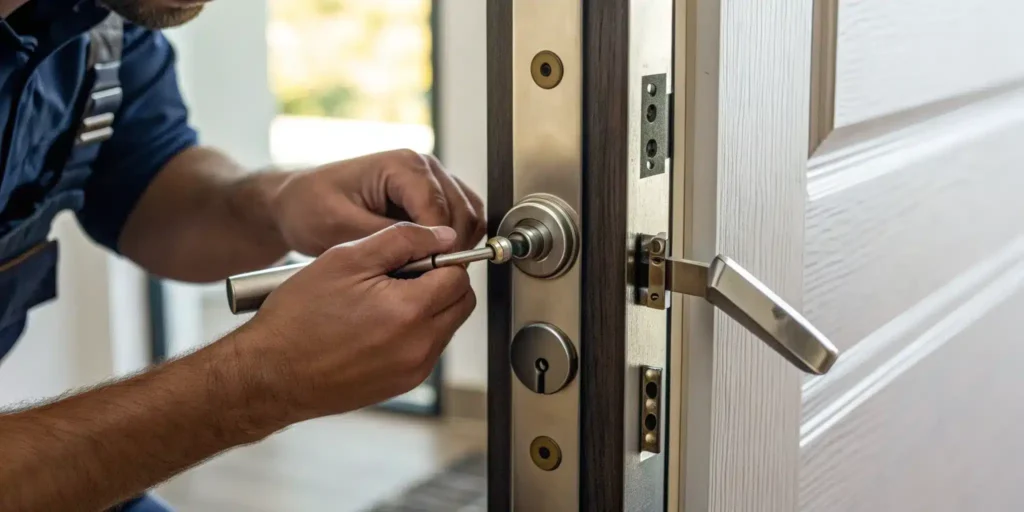
| NYC pre-war mortise lock repair | Removing lock case from door edge, bench opening, replacing internal lever springs, hubs, or cams | Specialized bench skill and matching legacy parts (Marks, Baldwin, Corbin, Sargent, vintage sets) | Model-specific springs, followers, mortise cylinder, or compatible replacement case |
| High-security cylinder (Medeco, Mul-T-Lock, Abloy) | Authorized dealer disassembly, sidebar/pin service, or patented cylinder replacement | Restricted parts, specialized tools, and key-control authorization | Patented keyway pins, sidebar components, or new high-security cylinder |
| Smart lock or electronic keypad repair | Bolt/strike realignment, wiring harness check, clutch/motor diagnosis, recalibration | Mechanical door prep plus electronic diagnostics | Mounting hardware, power/wire harness, or full unit swap if electronics failed |
| Commercial storefront, exit bar, or fire-rated door | Vertical-rod re-timing, Adams Rite deadlatch repair, closer adjustment, UL-listed swap | Commercial Grade 1 hardware, life-safety code compliance, and heavy frame work | Commercial deadlatch, paddle/exit chassis, or listed fire exit hardware |
Five variables that move any NYC repair quote up or down
- Service call vs. labor structure: Every legitimate mobile locksmith builds travel, van inventory, and diagnostic time into a service-call fee plus labor. Always ask whether the estimate you are hearing over the phone includes the service call.
- Timing (scheduled vs. emergency): A planned weekday appointment during business hours is the baseline. Late-night, weekend, and holiday calls carry an emergency dispatch premium because a licensed technician is responding on demand. For a deeper look at how emergency vs. daytime billing works across jobs, see our NYC locksmith cost breakdown.
- Hardware grade and age: Servicing a standard residential pin-tumbler lock takes far less bench time than rebuilding an 80-year-old Manhattan mortise lock whose parts must be sourced or matched precisely.
- Door and frame condition: Many “lock problems” are actually door problems — sagging hinges, swollen wood in summer humidity, or a shifted steel frame. Correcting the door prevents the repaired lock from failing again next month.
- NYC apartment and fire-door rules: Multifamily apartment entry doors are typically fire-rated and governed by building standards. Any replacement hardware must preserve the door’s fire rating and self-closing operation, and renters should remember that entry-door hardware is often the landlord’s responsibility under NYC housing maintenance rules.
Repair vs. rekey vs. replace: decision table
Before paying to repair an aging lock — or letting someone talk you into an unnecessary full replacement — run your situation through this decision matrix:
| Your Situation | Best Option | Why It Makes Sense |
|---|---|---|
| Lock hardware is solid, but door rubs or deadbolt binds | Repair & align | Adjusting hinges and strike plate fixes the root cause without buying new hardware |
| Pre-war mortise handle droops or latch fails, outer case is intact | Bench repair | Older solid-brass/steel mortise cases outlast modern budget replacements and preserve original door cutouts |
| Hardware works smoothly, but keys were lost or a tenant/roommate moved out | Rekey only | Repinning the existing cylinder invalidates old keys without replacing working hardware |
| Lock was forced during a break-in, cylinder is drilled, or casing is cracked | Full replacement | Compromised internal metal cannot be trusted; upgrade to ANSI/BHMA Grade 1 hardware |
| Builder-grade Grade 3 lock keeps jamming or you want key control / keyless entry | Full replacement | Repairing worn low-grade hardware costs more over time than installing a reliable lock once |
DIY vs. calling a licensed locksmith
Simple preventive fixes are safe to try yourself with the door open: tightening loose hinge and backplate screws, cleaning grit from a strike pocket, applying a light puff of dry PTFE or graphite lubricant (never wet oil or WD-40, which traps dust and gums up pins), or swapping a straightforward interior latch — if you are installing or swapping a standard latch on an interior door, our guide on how to install a swing door latch walks through backset and mortise alignment step by step.
Stop and call a professional if the door is locked shut with the failure, if the lock is a pre-war mortise case, if a key snapped deep inside the cylinder, or if the opening is a fire-rated apartment or commercial exit door. Forcing a jammed lock or pulling apart a mortise body without the right parts often turns a routine repair into a full hardware and door-edge rebuild.
5-step NYC locksmith scam checklist
Locksmith bait-and-switch operators thrive on urgency — quoting a suspiciously tiny teaser fee on the phone, then claiming on site that your standard lock is “unpickable” and must be drilled and replaced. Run these five checks before authorizing anyone to come to your door:
- Verify the NYC DCWP license number: Every locksmith operating legally in New York City must hold a Department of Consumer and Worker Protection (DCWP) license. Ask for the license number on the phone — Golden Key Locksmith’s license is #2065742-DCA — and check that the technician carries matching ID.
- Confirm a real local NYC storefront address: Legitimate shops have a verifiable brick-and-mortar location (ours is 328 Columbus Ave on the Upper West Side, open since 1984), not a national call center routing jobs to unvetted subcontractors.
- Demand an itemized scope before dispatch: Ask for the service-call structure, diagnostic approach, and what could change the scope once the technician sees the lock. Vague teaser quotes with zero questions asked about your lock type are a major warning sign.
- Reject the “drill-first” pitch: On lockouts or jammed cylinders, a trained locksmith inspects, lubricates, picks, or disassembles non-destructively whenever possible. Drilling is a documented last resort that requires your explicit approval beforehand.
- Get written approval before any part is replaced: A reputable technician diagnoses the lock at your door, explains repair vs. replacement options clearly, and gets your sign-off on the exact total before starting work.
For more red flags to watch out for, see our full guide on choosing a reliable locksmith in NYC and avoiding scams.
When to call Golden Key Locksmith NYC
If your lock sticks, spins, refuses to latch, or needs an honest repair-versus-replace assessment, we carry common mortise parts, Grade 1 deadbolts, high-security cylinders, and commercial exit hardware directly on our trucks so most repairs finish in a single visit. Steven Grunstein and our licensed team operate from 328 Columbus Ave, Manhattan (DCWP License #2065742-DCA, since 1984), and explain every option and flat quote before work begins. Visit our NYC lock repair service, compare our NYC locksmith cost breakdown, or call (212) 204-1655 24/7.
Frequently asked questions
What is the base charge for a professional door lock repair in NYC?
Every mobile locksmith visit starts with a service-call fee covering travel, diagnostics, and a stocked truck, plus labor for the repair itself and any needed parts. Always ask on the phone whether an estimate includes the service call and confirm the final flat total at the door before work starts.
How do I know whether to repair or replace my lock?
Repair makes sense when the lock body is solid — especially on well-made pre-war NYC mortise locks — and the issue is alignment, a worn spring, or a sticking latch. Replace the lock when the casing is cracked, damaged from a forced-entry attempt, heavily rusted, or low-grade hardware that fails repeatedly.
Should I spray WD-40 into a sticky door lock?
No. Standard WD-40 is a wet solvent and oil blend that initially frees grit but quickly attracts dust, gumming up the cylinder pins and making the lock stick worse. Use a small amount of dry PTFE or graphite lock lubricant instead.
What is the difference between rekeying and repairing a lock?
Repairing fixes a mechanical failure — such as a broken spring, jammed bolt, or misaligned strike — so the lock operates smoothly again. Rekeying changes the internal cylinder pins so old keys stop working and new keys operate the same working hardware.
In an NYC rental apartment, who pays for entry door lock repair?
In most NYC rentals, keeping the apartment’s main entry door and its lock functional is the landlord’s maintenance responsibility unless the tenant caused the damage. Document the malfunction in writing to management before calling a locksmith if the door is still securable.