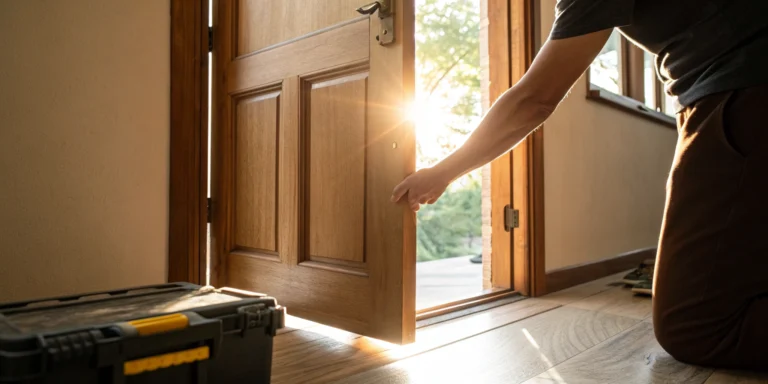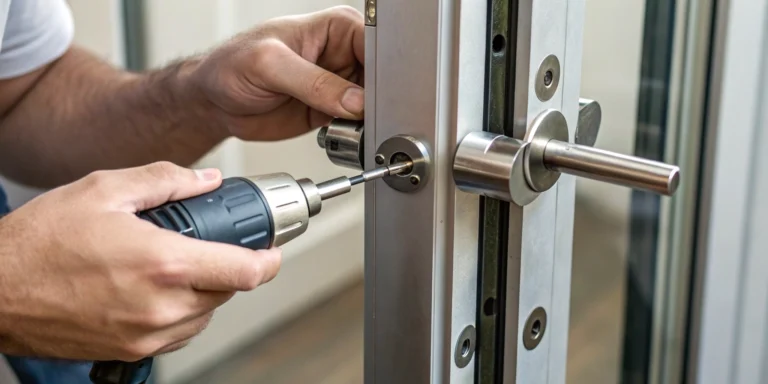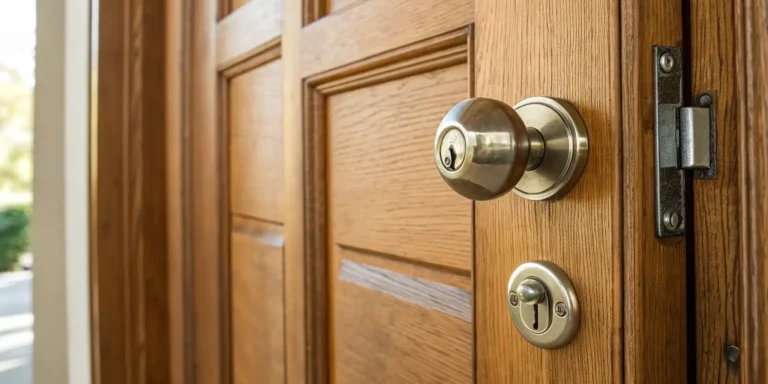

A door knob not locking almost always has one of three causes: grime stiffening the mechanism (fixed with cleaning and a dry lubricant), a latch that no longer lines up with the strike plate (fixed with a hinge or strike adjustment), or a worn-out internal part (fixed by replacing the lockset). Here’s the fastest way to tell which you have: with the door open, try to lock the knob. If the latch extends and the button or key works normally, the knob is fine and your problem is alignment. If the lock won’t engage even with the door open, the mechanism itself has failed. This guide shows you how to fix a door knob not locking in five steps, from the easy fixes to full replacement.
Button will not hold and the strike is already aligned? Then the part that holds the latch is worn, and a knob that will not lock is an unlocked door. We repair or replace the lockset and check the door swing while we are there. See our lock repair service or call (212) 204-1655.
Why won’t the door knob lock?
Everyday use lets dirt, dust, and metal shavings build up inside the mechanism, making the internal pins and springs stiff — if the key is hard to turn or the knob feels sticky, cleaning may be all it needs. Rust does the same on exterior doors exposed to New York’s humid summers and icy winters. Loose screws in the knob or faceplate let parts shift and jam. And sometimes the critical part has simply broken: the spring-loaded latch mechanism cracks or strips, so the knob turns endlessly or clicks without moving anything — that’s a replacement, not a cleaning. Finally, the lock may be fine and the door itself misaligned: if the house has settled or the door has warped, the latch hits the strike plate instead of entering it, and the door won’t lock no matter how healthy the knob is.
How to fix a door knob not locking: 5 steps
You’ll need a Phillips screwdriver, compressed air, a graphite or silicone lock lubricant, and possibly a small metal file. Work gloves protect against sharp lock edges, and safety goggles are smart if any filing is involved.
Step 1: Clean and lubricate the lock
Blow debris out of the keyway with compressed air, then apply a lock-specific lubricant — graphite or silicone spray, never WD-40 or household oil, which attract dirt and gum up the pins. Spray into the keyway and onto the latch, then insert the key and work it back and forth to spread the lubricant. This alone solves a large share of sticky, won’t-engage knobs without any disassembly.
Step 2: Find the misalignment
If cleaning doesn’t do it, close the door slowly and watch how the latch meets the strike plate. If it hits above, below, or beside the opening instead of sliding in, you’ve found the problem — usually a settled house or sagged hinges rather than a broken lock.
Step 3: Adjust the strike plate
Tighten the screws on all the door hinges first; a sagging door often pulls back into line with just that. If the latch still misses, unscrew the strike plate and enlarge its opening slightly with a metal file in the direction the latch needs to go. For a bigger correction, fill the old screw holes with wood putty, let it dry, drill new pilot holes, and remount the plate in the right spot. If the door itself is warped, that’s a job for professional door repair and installation.
Step 4: Replace worn-out parts
If everything lines up but the latch won’t extend or retract properly, look closely at the latch mechanism. Cracks, visible damage, or parts that feel loose and stripped mean the component has failed. These small internal parts are rarely worth repairing individually — replacing the whole knob or lockset is the effective, secure fix, and it guarantees all the components work together.
Step 5: Test the repair
With the door open, turn the knob and key to confirm the latch moves smoothly and the lock engages. Then close the door and lock it. If it still won’t lock after cleaning, realigning, and checking parts, stop before you cause damage — the problem needs professional lock repair.
Privacy door knob won’t lock (bedroom and bathroom knobs)
Privacy knobs — the push-button or twist-button locks on bedroom and bathroom doors — fail in their own way. The button engages a simple blocker inside the knob, and if the knob has rotated loose on its spindle or the mounting screws have backed out, the button can’t seat and won’t stay locked. Tighten the two mounting screws through the interior rose, reseat the knob so it sits square on the spindle, and test the button with the door open. If the button engages but pops back out, the internal blocker or spring is worn; privacy locksets are inexpensive, so replacement beats repair. One reassurance: privacy knobs are designed to be opened from outside with a pinhole emergency release, so a malfunctioning one won’t trap anyone — but it also means they’re a courtesy lock, not a security lock.
When to call a professional
Stop and call for help if the key breaks off in the lock, the mechanism is completely frozen, the knob spins freely without engaging the latch, or the lock shows signs of tampering — these need specialized tools to fix without wrecking the door. An unreliable lock on an entry door is a security risk that shouldn’t wait. Our lock repair service covers knobs, latches, and full lockset replacement across NYC, and if a failed lock has you locked out, our emergency locksmith team runs 24/7. We’re a licensed NYC locksmith (DCA #2065742) based at 328 Columbus Ave on the Upper West Side. Call (212) 204-1655.
Frequently asked questions
How do I tell if the problem is the lock or the door’s alignment?
Try to lock the knob with the door open. If the latch extends and retracts smoothly, the lock is fine — the latch just isn’t lining up with the strike plate when the door closes. If it won’t engage even with the door open, the mechanism has failed.
How do I fix a privacy door knob that won’t lock?
Tighten the mounting screws through the interior rose and reseat the knob square on its spindle so the push-button can engage. If the button still won’t hold, the internal blocker is worn and the knob should be replaced — privacy locksets are cheap and swap in minutes.
Can I use WD-40 to lubricate the lock?
No. Wet household lubricants attract dust and gum up the pins over time. Use a dry graphite or silicone-based spray made for locks — it lubricates without leaving sticky residue.
My door knob lock is stuck and stiff but still works. Should I bother fixing it?
Yes — stiffness is the first warning sign, usually grime inside the mechanism. A few minutes of cleaning and lubrication now prevents a complete failure or lockout later.
I’ve cleaned and tightened everything and it still won’t lock. What’s next?
A worn or broken internal part — latch mechanism, spring, or spindle — is the likely cause, and the reliable fix is replacing the lockset. A locksmith can confirm whether repair is possible and spot related issues like a misaligned frame.
Cleaned it, tightened it, and the knob still spins without locking? When the internals are worn, a new lockset is the fix that lasts — a quick visit, not a weekend project. Book a professional lockset replacement in NYC and we’ll match the new hardware to your door; call (212) 204-1655.