

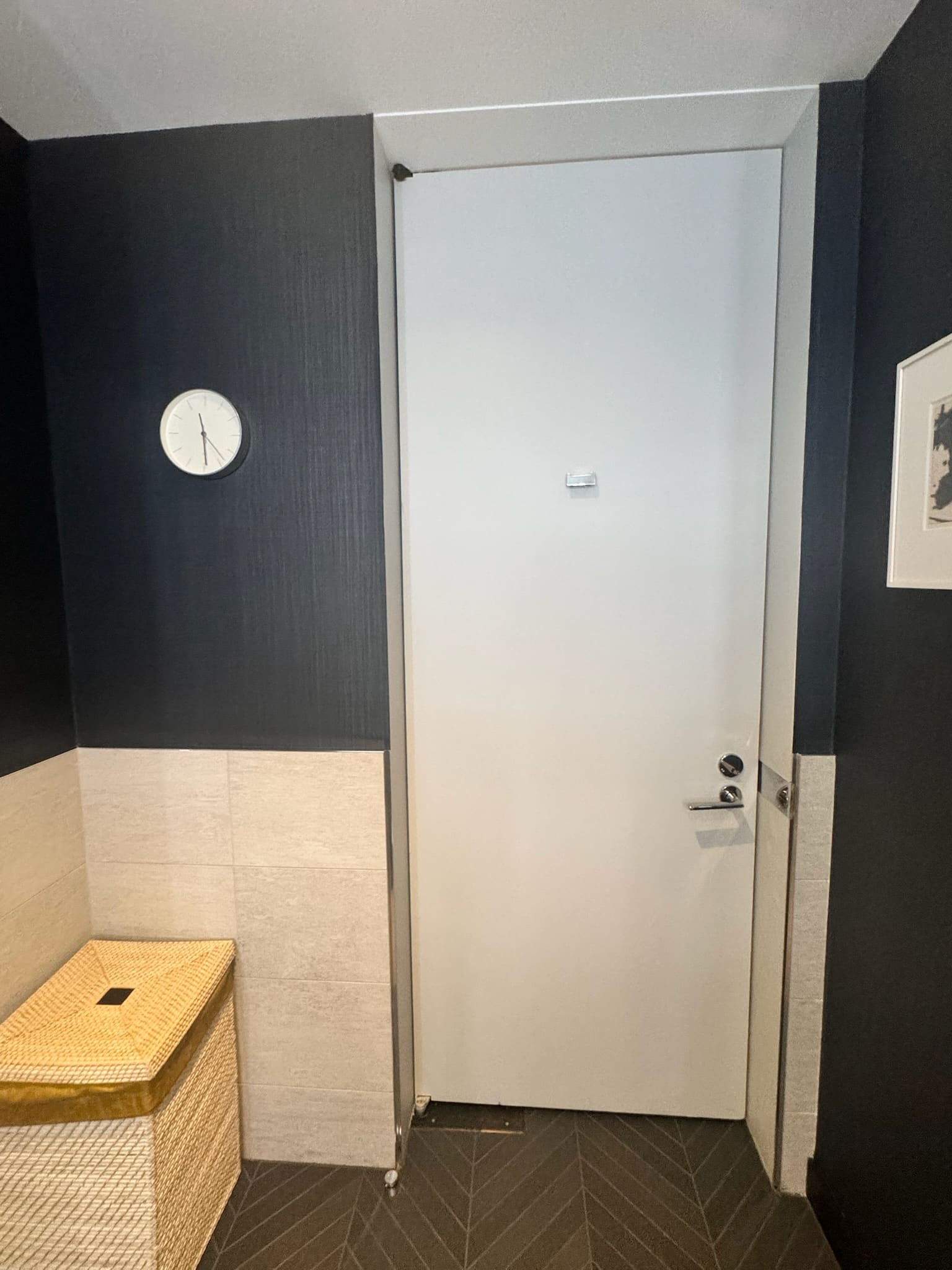
Your apartment front door is the single most important security decision you make as a renter or owner in New York City. It is the one barrier between a busy hallway and everything you own, and in most buildings it is the only door a burglar would ever try. The good news is that real front-door security does not require a full remodel. A strong deadbolt, a properly reinforced frame, and the right door material will stop the overwhelming majority of forced-entry attempts. Here is how to think about each piece and what actually matters for an NYC apartment.
Key Takeaways
- The lock matters more than the brand on the door: A Grade 1 deadbolt on an average door will outperform a cheap lock on a premium door every single time.
- Steel-clad and solid-core doors win in apartments: They resist kicks, pry bars, and the shoulder-first attacks that make up almost all NYC apartment break-ins.
- High-security cylinders are the real upgrade: If you want to stop bumping, picking, and key copying, step up to a patented keyway like the ones a high-security lock specialist installs.
Why the Front Door Is the Whole Security Story
In a Manhattan or Brooklyn apartment building, a determined burglar is not going in through a sixth-floor window. They are walking down a hallway and working the easiest door on the floor. That is why front-door hardening is where almost all of your security budget should go. A strong door with a serious lock signals that your unit is not worth the effort, and most intruders move on within seconds of realizing the door will not give.
What Actually Gets Forced
The weak point is almost never the lock body itself. It is the strike plate, the door jamb, and the short screws that came with your builder-grade hardware. A single well-placed kick can split a softwood jamb and tear a strike plate off the frame even if the deadbolt is perfectly fine. Any honest conversation about apartment security has to start with reinforcing the frame, not just swapping the lock.
The Best Locks for an Apartment Front Door
There is no single “best” lock, but there is a best lock for your door, your building, and how you actually live. These are the categories that matter for NYC apartments.
Grade 1 and Grade 2 Deadbolts
ANSI grading tells you how a lock performs under real-world abuse. Grade 1 is commercial-duty and built to survive hundreds of thousands of cycles plus serious forced-entry attempts. Grade 2 is strong residential. For a front door in a walk-up or a doorman building, a Grade 1 deadbolt with a one-inch throw and a hardened steel bolt is the baseline. Anything less is a convenience lock, not a security lock.
Mortise Locks
Most prewar NYC apartments already have a mortise lock, which is a heavy lock body that sits inside a pocket cut into the door. Mortise locks are strong because the metal body ties the deadbolt, latch, and faceplate together inside the door itself. If you have one, do not rip it out; upgrade the cylinder to a high-security keyway and you have one of the strongest apartment setups available.
High-Security Cylinders
If you only make one upgrade, make it the cylinder. A high-security cylinder uses a patented keyway that cannot be copied at a hardware store, along with internal pins designed to resist picking and bumping. The lock on the outside of your door looks the same, but keys cannot be duplicated without your authorization. This is the single biggest jump in real-world apartment security.
Smart Locks, With a Caveat
Smart locks are genuinely useful for short-term guests, housekeepers, and the “did I lock the door” question you ask yourself at work. Choose one with a physical key override and a tested mechanical deadbolt underneath the smart hardware. The weakest smart locks are the ones that dropped the mechanical design to chase features. Treat the smart part as a convenience layer on top of a real lock, not a replacement for one.
The Best Door Materials for NYC Apartments
Lock and door have to match. A top-tier lock on a hollow-core door gives you almost no real protection, because an intruder can simply kick a hole through the panel and reach the thumb-turn from the inside.
- Steel-clad doors are the gold standard for apartment entry doors. A steel skin over a rigid core resists kicks, pry bars, and impact tools while still looking like a normal painted door on the hallway side.
- Solid hardwood doors are common in prewar buildings and hold up well when the frame and strike plate are reinforced. They also sound solid, which is a genuine deterrent on its own.
- Solid-core composite doors are a strong middle ground, heavier and denser than hollow-core, and a major upgrade if you are replacing a builder-grade interior-style door.
- Hollow-core doors have no place on an apartment entry. If that is what is on your unit right now, a proper replacement is the first security project to tackle.
Reinforcing the Frame and Strike Plate
The strike plate is where most kick-in attacks actually win. The fix is cheap and fast. A security strike plate, usually six inches or longer, anchored with three-inch screws that bite into the structural stud behind the jamb, will turn an average door into a serious obstacle. Pair that with a box-style strike on the deadbolt so the bolt lands in a steel pocket instead of a hole in the wood, and you have eliminated the number-one failure point on an apartment front door.
Hinges and the Hinge Side
Hinges are often overlooked. On outswing doors, set screws or security pins in the hinge knuckle prevent someone from pulling the pins and lifting the door off. On inswing doors, long hinge screws that reach into the framing give the hinge side the same resistance to a hard hit as the lock side.
When to Rekey vs. Replace the Lock
If your door and hardware are solid but you just moved in, lost a key, or had a roommate move out, rekeying is almost always the right call. A locksmith swaps the pins inside your existing cylinder, every old key stops working, and you walk away with a new key for a fraction of the cost of new hardware. Full replacement is the better move when the lock is damaged, the hardware is old builder-grade stock, or you want to step up to a high-security cylinder. Our residential locksmith team walks every customer through both options before any work starts.
What a Locksmith Actually Checks on an Apartment Door
When we do a security visit on an NYC apartment, we are not only looking at the lock. We are checking the gap between door and frame, the condition of the jamb, the length of the existing strike-plate screws, the weatherstripping that can hide tool marks, and the way the deadbolt seats when the door is closed. Small misalignments add up, and they are the difference between a lock that looks strong and a lock that actually is strong. A quick visit from a Manhattan locksmith catches all of it at once.
Final Thoughts
Apartment front-door security in New York is a stack, not a single product. The right door material, a reinforced frame, a Grade 1 deadbolt, and a high-security cylinder together cost less than most people expect and stop the kind of break-ins that actually happen in this city. Start with the weakest link on your door today, fix that one piece, and move on to the next. A couple of small upgrades, done properly, are the real difference between a door that looks secure and one that keeps you that way.
Need professional help in NYC? Contact Golden Key Locksmith NYC for Manhattan Locksmith Services or Apartment Lockout Help. Available 24/7 across Manhattan and all NYC boroughs.