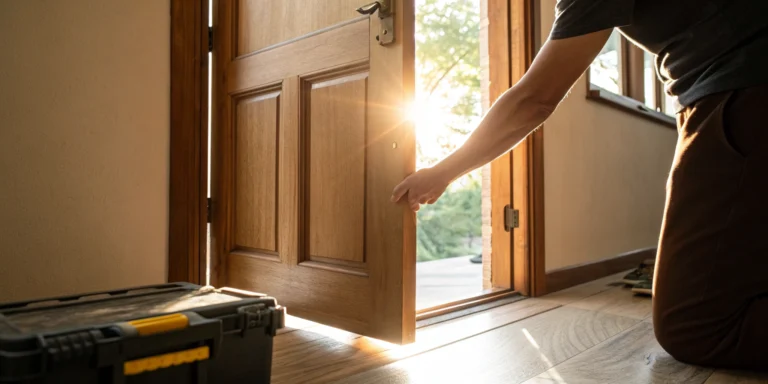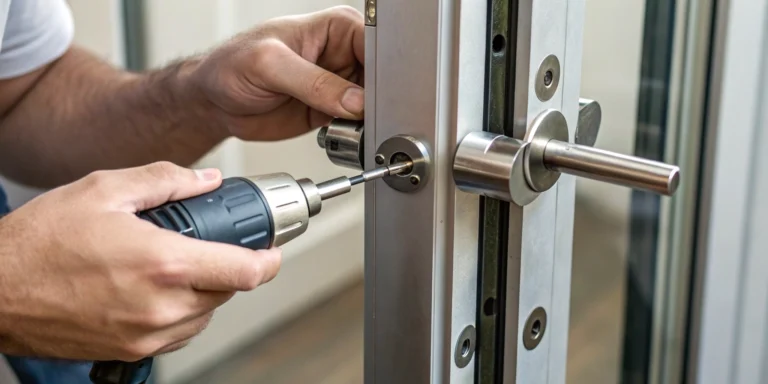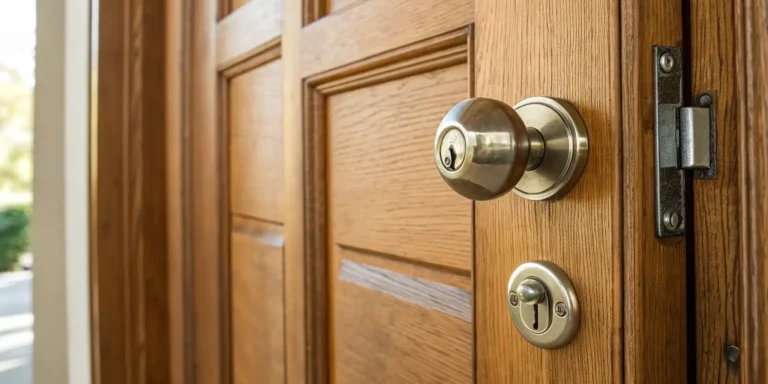
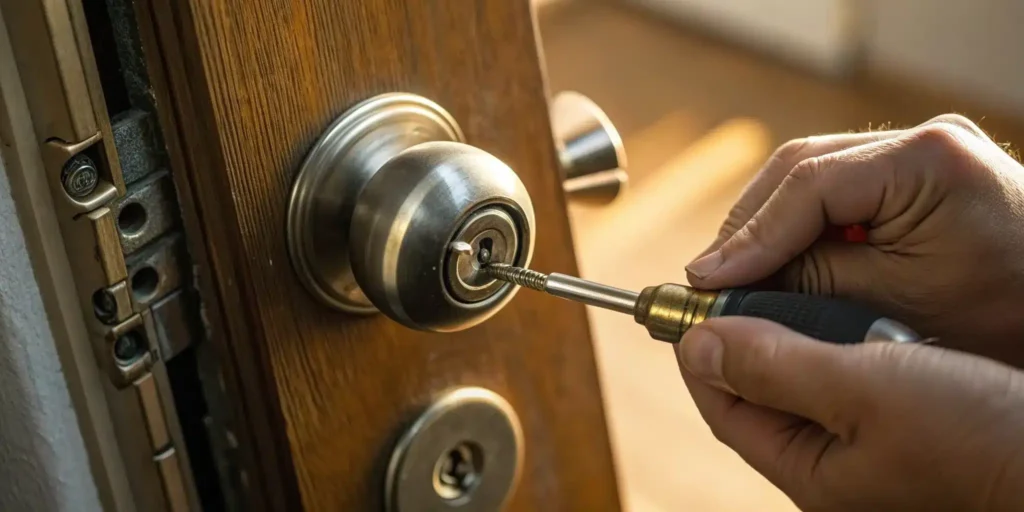
To repair a round door lock, first identify whether the problem is a loose knob, a sticky cylinder, or a latch that misses the strike. Tighten loose mounting screws, use dry graphite for a sticking keyway, and adjust the strike only after confirming the door is not sagging. If the cylinder spins or internal parts are broken, use a professional lock repair service.
Knob still loose after tightening, or parts worn inside? A round knob lock that keeps loosening has a worn spindle or retainer and will not hold with another turn of the screwdriver. Our door lock repair team in NYC replaces the worn part or the chassis on the spot. Call (212) 204-1655.
Key Takeaways
- Start with the simplest solutions: Many common lock issues, like a wobbly handle or a sticky key, don’t require a full disassembly. Try tightening all visible screws and cleaning the mechanism with a proper lock lubricant before moving on to more complex steps.
- Stay organized during disassembly: If you do need to take the lock apart, keep all your screws and small components in a container. Testing the lock’s function before you fully tighten everything back up will save you the headache of having to start over.
- Prioritize security when deciding to repair or replace: While a DIY fix can be satisfying, it’s not always the safest option. If your lock is old, visibly damaged, or has compromised internal parts, a lock replacement service is the best way to ensure your home is secure.
Is Your Round Door Lock Acting Up? Common Problems
Before you can fix your door lock, you need to play detective and figure out what’s actually wrong. Most lock problems start small and get worse over time, so catching them early can save you from the headache of a lockout. Think of it like a check-up for your door. A little attention now can prevent a major issue later. Let’s walk through some of the most frequent complaints with round door locks and what they might mean.
The Handle is Loose or Wobbly
Does your doorknob jiggle more than it should? A loose or wobbly handle is one of the most common issues, and thankfully, it’s often an easy fix. This usually happens when the screws holding the lock assembly together have loosened over time from daily use. While it might seem like a minor annoyance, a wobbly handle can put extra stress on the internal mechanism, leading to more serious damage down the road. As experts often note, many lock problems can be corrected before they become so serious that the lock fails completely. Taking a moment to tighten things up can make a huge difference.
Your Key Sticks or Jams
There’s nothing more frustrating than a key that fights you every step of the way. If your key sticks, feels difficult to insert, or jams when you try to turn it, the culprit is likely dirt and grime inside the lock cylinder. Over time, tiny particles of dust and metal shavings can build up, preventing the pins from moving freely. A good first step is to clean the lock cylinder. You can try inserting your key and working it back and forth to distribute any existing lubricant. For a more thorough cleaning, a quick spray of a graphite or silicone-based lubricant can work wonders.
The Lock Won’t Turn
When your key goes in but the lock absolutely refuses to turn, you have a more serious problem on your hands. This could be caused by a severely misaligned latch or, more likely, a broken or worn-out internal component. The small pins and springs inside a lock can break after years of use, causing the mechanism to seize up completely. If you find that your lock won’t turn or latch into position, it might require a professional adjustment or repair. When you’re facing a lock that won’t budge, it’s a clear sign that you need to investigate further before you end up locked out and in need of an emergency locksmith.
The Latch and Strike Plate Don’t Align
Do you have to push, pull, or lift your door to get it to lock? That’s a classic sign of misalignment. The latch bolt on your door needs to line up perfectly with the strike plate on the doorframe to work smoothly. When a door becomes difficult to lock, it often points to this exact issue. This can happen for many reasons, from the house settling to the doorframe swelling with humidity. This constant pressure not only makes locking the door a hassle but also puts significant strain on the lock itself, which can cause it to fail prematurely. Sometimes, a simple adjustment is all it takes, but it can also be a sign that you need professional door repair and installation.
Worn-Out Internal Parts
Just like any other mechanical device, door locks wear out. The constant turning, clicking, and sliding of metal parts leads to gradual wear and tear. If your lock feels gritty, catches unexpectedly, or just doesn’t feel as crisp as it used to, you might be dealing with worn-out internal parts. A regular inspection can help you spot trouble early. Check for loose screws and look for any visible signs of wear on the latch or bolt. While some parts can be replaced, a lock that’s seen better days might be telling you it’s time for an upgrade. Addressing these issues is a key part of maintaining your home’s security and is a common task for any residential locksmith.
What You’ll Need for the Repair
Before you start taking things apart, let’s get your toolkit ready. Gathering everything you need ahead of time is the secret to a smooth, stress-free repair. Think of it as setting up your own little command center. Most of these items are probably already in your home, but a quick check now will save you a frantic search for a tiny screwdriver later. A little preparation goes a long way in making sure your lock gets back to working order without any hiccups.
Having the right tools not only makes the job easier but also helps prevent accidental damage to your door or the lock mechanism itself. You don’t need a professional-grade setup, just a few key items to handle the most common issues. We’ll walk through the essentials, from basic hand tools to the supplies that will get your lock operating like new again.
Screwdrivers and a Removal Tool
The most essential items in your kit will be a set of screwdrivers. You’ll definitely want both a Phillips head and a flat-head, as locksets often use a mix of screw types. It’s also helpful to have a few different sizes on hand. To release the doorknob from its base, you’ll need a small, pointed object to press the detent or release pin—a sturdy paperclip, an awl, or a specific lock removal tool will work perfectly. Depending on your lock’s brand, you might also need a small Allen wrench or a pair of needle-nose pliers for grabbing small components.
Lubricant and Cleaning Supplies
Over time, dust and grime can build up inside your lock, causing keys to stick and parts to jam. Before you do anything else, a good cleaning is in order. A can of compressed air is great for blowing out loose debris from the keyway and latch mechanism. For lubrication, skip the oil-based products that can attract more dirt. Instead, opt for a graphite or silicone-based lock lubricant. A quick spray inside the keyway, followed by inserting and working your key a few times, will help distribute it evenly and restore smooth operation.
Replacement Parts
Sometimes, a lock is misbehaving because a part is simply broken or worn out. While you won’t know for sure until you open it up, it’s wise to consider this possibility. If you suspect a specific component like the cylinder or latch is faulty, you can often find replacement parts at a local hardware store. Just be sure to get parts that are compatible with your lock’s brand and model. If the damage seems extensive or you’re unsure what to buy, it might be time to consider a professional door repair and installation to ensure your home remains secure.
Safety Gear and a Clean Workspace
This might sound overly cautious, but it’s a pro tip for a reason. Lay down a towel or a magnetic tray on a flat, well-lit surface before you begin. Lock mechanisms contain tiny screws and springs that are notorious for rolling away and disappearing forever. This simple step will keep everything contained and organized. A pair of gloves will keep lubricant and grime off your hands, and while not always necessary, a pair of safety glasses is never a bad idea when you’re working with small, spring-loaded parts that could potentially pop out.
How to Safely Take Apart Your Door Lock
Taking apart a door lock might sound intimidating, but it’s often the first step to figuring out what’s wrong. With a little patience and the right approach, you can safely disassemble your lock to clean, inspect, or repair it. The key is to be methodical and organized so you can put everything back together correctly. Think of it as a small puzzle—all the pieces have a specific place. We’ll walk through each step together, so you can feel confident tackling this project. If at any point you feel overwhelmed, remember that our emergency locksmith team is always here to help, 24/7.
Prep Your Workspace
Before you touch a single screw, let’s get your tools and workspace ready. A little preparation goes a long way in making this process smooth and stress-free. You’ll want to gather a few essential items: a Phillips-head and a flat-head screwdriver, needle-nose pliers, and a lubricant like WD-40. Depending on your lock, you might also need an Allen wrench. Lay a towel or an old sheet on the floor beneath the door to protect the surface and catch any small parts that might try to escape. Having everything within arm’s reach means you won’t have to scramble for a tool mid-disassembly.
Find and Use the Release Pin
Now, let’s get that doorknob off. Take a close look at the base of the interior knob—the part closest to the door. You should see a tiny hole or slot. This is where the release pin is located. To release the knob, you’ll need to push something small and firm into this hole, like a straightened paperclip or the tip of a small screwdriver. As you push the pin in, gently pull on the doorknob. You should feel it release from the spindle, allowing you to slide it right off. This simple trick is the key to getting inside most standard round door locks.
Remove the Knob and Exterior Parts
With the interior knob removed, you can now access the rest of the exterior hardware. You’ll likely see a decorative plate, called a rose, that was hidden by the knob. This is usually held in place by two visible screws. Use your Phillips-head screwdriver to remove these screws, making sure to turn counter-clockwise. Once the screws are out, you can pull off the exterior knob and the entire outer assembly from the other side of the door. Set these pieces aside carefully. You’ve now successfully removed the main components and are ready to look at the inner workings.
Access the Inner Lock Mechanism
With the knobs and exterior plates gone, you can now see the latch mechanism inside the door. This is the heart of your lock. Carefully slide the latch assembly out from the edge of the door. Once it’s out, you can inspect it for obvious issues. Sometimes, you might see a small metal plate or strip inside that has dropped down, which can stop the lock from working correctly. This is also a good time to check for dirt, grime, or worn-out parts. If you see broken pieces or something looks too complex, it might be time to call in a professional residential locksmith to take over.
Keep Your Parts Organized
This might be the most important tip I can give you: keep all your screws and small parts in one safe place. Use a small container, a cup, or a magnetic tray to hold everything as you take the lock apart. It’s incredibly easy for a tiny screw to roll away and disappear forever. I like to arrange the parts in the order I removed them, which makes reassembly a breeze. Trust me, taking a few extra seconds to stay organized will save you a massive headache later when you’re trying to figure out which screw goes where.
Step-by-Step Fixes for Common Lock Problems
Once you have your lock taken apart, you can get a good look at what’s causing the trouble. Most common lock problems come down to a few key issues that are surprisingly easy to fix yourself. From a simple loose screw to a misaligned latch, a little attention can get your door functioning smoothly again. Before you rush to buy a whole new lock, walk through these simple diagnostic steps to see if you can solve the problem with a few basic tools and a little bit of time.
Tighten Loose Screws
One of the most common—and simplest—fixes for a wobbly or malfunctioning door lock is tightening the screws. Over time, the constant motion of opening and closing the door can cause the screws holding your lock and strike plate in place to loosen. Grab your screwdriver and check all the screws on the handle, the faceplate, and the strike plate on the doorjamb. Give each one a firm turn to make sure it’s snug. You might be surprised how often this quick adjustment solves the problem, restoring a solid feel and proper function to your lock. It’s a great first step in any lock repair.
Clean and Lubricate the Mechanism
If your key sticks or the lock feels stiff, it’s likely crying out for a good cleaning and lubrication. Dust, dirt, and tiny metal shavings can build up inside the lock’s cylinder, causing friction. Start by blowing compressed air into the keyhole to clear out any debris. Next, apply a small amount of graphite or silicone-based lock lubricant—avoid oil-based products like WD-40, which can attract more grime. Insert your key and work it in and out of the lock several times to distribute the lubricant evenly. This simple maintenance can make your lock feel brand new and prevent future jams.
Replace Worn-Out Components
Sometimes, a lock’s internal parts simply wear out from years of use. When you have the lock disassembled, take a moment to inspect the internal springs, pins, and the latch mechanism. Look for anything that appears bent, broken, or excessively worn down. Addressing these issues before they fail completely can save you from getting locked out. While you can find replacement kits for some parts, if the internal mechanism looks complex or heavily damaged, it’s often best to call a professional. A residential locksmith can quickly assess the damage and ensure your home remains secure.
Realign Shifted Parts
Does your door lock only catch sometimes? Do you have to pull or push the door to get it to latch? This usually points to a misalignment between the latch and the strike plate. Houses settle and doors can warp with humidity, causing parts that once lined up perfectly to shift. To check the alignment, close your door slowly and watch how the latch bolt meets the strike plate. If it’s hitting too high, too low, or on the side, you’ve found your problem. This is a common issue that can often be fixed by adjusting the strike plate, which is the next logical step in your repair.
Adjust the Strike Plate
If the latch isn’t entering the strike plate correctly, a simple adjustment can fix it. Use your screwdriver to loosen the screws holding the strike plate to the door frame—don’t remove them completely. Nudge the plate up, down, or side-to-side until it aligns perfectly with the latch. Tighten the screws and test the door. If the misalignment is minor, you may need to file the opening of the strike plate slightly to give the latch more room. For doors that have shifted significantly, a professional adjustment might be needed to ensure a secure fit. Our team can handle any door repair and installation to get things working perfectly again.
How to Reassemble and Test Your Lock
You’ve cleaned the parts, tightened the screws, and made your adjustments. Now it’s time to put your door lock back together. Take your time with these steps to make sure everything lines up perfectly for a smooth, secure finish.
Put the Internal Parts Back in Order
First, grab the main latch mechanism—the part you slid out from the edge of the door. Carefully reinsert it into the hole, making sure the curved side of the latch bolt faces the door jamb. The goal is to get a snug fit. It shouldn’t be loose or rattle around, but you also shouldn’t have to force it into place. If you feel resistance, pull it out and check for any obstructions before trying again. A proper fit here is the foundation for the rest of the reassembly.
Align the Inner and Outer Pieces
Now, let’s connect the two halves of the doorknob. Start by inserting the exterior knob, guiding its spindle and posts through the holes in the latch mechanism you just installed. Next, take the interior knob and place it on the other side. You’ll need to look for the specific grooves or brackets that allow the two pieces to interlock correctly. Make sure these parts line up perfectly. This connection is what allows the knob to turn the latch, so getting the alignment right is essential for the lock to function.
Test the Lock Before You Finish
This is a crucial step that can save you a lot of frustration. Before you grab your screwdriver to tighten everything down, give the lock a quick test run. Twist the knob on both sides to ensure the latch retracts smoothly and fully. If you have a locking button, press it and check that the outer knob no longer turns. If anything feels stiff or doesn’t work as expected, now is the time to take the knobs off and check your alignment again. It’s much easier to fix it now than after it’s fully installed.
Finish the Installation and Do a Final Check
Once you’re confident everything is working, it’s time to secure the lock. Insert the two long screws that hold the doorknobs together and tighten them until they are firm. Be careful not to overtighten, as this can warp the housing and cause the mechanism to bind. For the final, most important test, use your key. Lock and unlock the door several times from the outside to confirm that the key turns smoothly and the bolt engages correctly. If it’s still giving you trouble, it might point to a more complex issue, and it’s often best to call for emergency locksmith services to ensure your home is secure.
Repair or Replace? When to Get a New Lock
While fixing a finicky door lock yourself can be satisfying, sometimes a repair just isn’t the right move. Knowing when to throw in the towel and opt for a replacement can save you a lot of time, money, and future headaches. A lock is, after all, a critical part of your home or business’s security. Patching up a failing lock might seem like a quick fix, but it can leave you vulnerable. If you’re dealing with significant damage, an outdated model, or a repair that’s getting complicated and expensive, it’s probably time for an upgrade.
Deciding between a repair and a full replacement comes down to assessing the lock’s condition, age, and the cost of fixing it. A simple cleaning and lubrication job is one thing, but if you’re facing a fundamental problem with the lock’s structure or security, a new installation is the smarter, safer choice. For New Yorkers needing a professional opinion or a new lock installed, our commercial locksmith and residential teams are always ready to help. We can assess the situation and recommend the best course of action to keep your property secure.
Signs of Major, Irreparable Damage
Some problems go beyond a loose screw or a sticky key. If you see visible signs of major damage, like a cracked housing, a bent deadbolt, or significant rust that’s eating away at the metal, a repair is unlikely to hold. These are signs that the lock’s structural integrity is compromised. Another major red flag is when the lock won’t latch into position, even after you’ve tried adjusting it. This often means internal components are broken or warped beyond repair. Attempting to fix severe damage can be a temporary solution at best and a security risk at worst. In these cases, calling an emergency locksmith to install a new lock is your safest bet.
Your Lock is Old or Outdated
Even if it seems to be working, an old lock can be a security liability. Lock technology has advanced over the years, and older models are often much easier for intruders to bypass using techniques like lock picking or bumping. Many common lock problems can be addressed before they get so serious that you’re locked out, but age itself is a risk factor. If your lock has been in place for a decade or more, or if it’s a generic, low-quality model that came with the property, consider upgrading. A modern lock provides better protection and peace of mind. Upgrading can also be an opportunity to explore advanced security systems for even greater protection.
The Repair Costs More Than a Replacement
Before you invest too much time and money into a difficult repair, do a quick cost-benefit analysis. Look up the price of replacement parts and consider the value of your time. If the repair requires sourcing rare components or involves a complex fix you’re not comfortable with, the costs can add up quickly. Compare that potential expense to the price of a brand-new lock. Often, you’ll find that installing a new, reliable lock is more economical in the long run than sinking money into fixing an old one that might fail again soon. Our residential locksmith services can provide a straightforward quote for a new installation, giving you a clear comparison.
Related Articles
- How To Fix A Broken Door Lock Step-by-Step
- How To Fix A Door Lock Inside: A DIY Guide
- How To Fix A Door Lock That Is Stuck: A DIY Guide
- What A Revolving Door Maintenance Service Includes
- Your Guide To Revolving Door Speed Control Adjustment
Frequently Asked Questions
Can I just use WD-40 to fix a sticky lock? It’s a common impulse, but you should avoid using WD-40 or other oil-based lubricants on your locks. While it might offer a temporary fix, the oily residue actually attracts dust and grime, which can gum up the internal mechanism and make the problem worse over time. Stick with a graphite or silicone-based spray designed specifically for locks to keep things moving smoothly without creating a sticky mess.
What if I take my lock apart and can’t get it back together? First, don’t panic. It happens. The best thing you can do is carefully gather all the pieces in a small bag or container so nothing gets lost. Take a photo of the parts if you can. This is the perfect time to call a professional. A locksmith can reassemble it correctly and ensure it’s secure, saving you the frustration and the risk of an improperly installed lock.
How do I know if my lock just needs a simple fix or a full replacement? Think about the lock’s history and the nature of the problem. If the issue is new and seems minor, like a loose handle or a bit of stiffness, a simple tightening or cleaning will likely do the trick. However, if the lock is old, has visible rust or cracks, or if a key component inside is clearly broken, you’re better off replacing it. A new lock is a small investment for much greater security and peace of mind.
My whole door seems to be the problem, not just the lock. Can I still fix it myself? This is a great observation. If you have to lift or push your door to get it to latch, the issue is likely with the door’s alignment in its frame, not just the lock hardware. While you can try adjusting the strike plate, a sagging door often points to bigger issues with the hinges or the frame itself. For these problems, it’s best to have a professional assess the situation to ensure both the door and lock function securely together.
How often should I be checking my locks to prevent these problems? You don’t need to take your locks apart for regular maintenance, but a quick check-up twice a year can catch problems early. Simply test each lock with its key to make sure it turns smoothly. Check that all visible screws on the knobs and plates are snug, and give the keyhole a quick spray with a proper lock lubricant. This little bit of attention can prevent most common issues from ever starting.
Need professional help in NYC? Contact Golden Key Locksmith NYC for Commercial Door Repair or Metal Door Repair. Available 24/7 across Manhattan and all NYC boroughs.