
How you fix a broken door lock depends on which part failed: a key that turns without moving the bolt means a broken tailpiece or cam, a knob that wobbles or falls apart means loose or failed mounting hardware, and a key snapped off in the keyway is an extraction job. This guide covers how to fix broken door lock problems symptom by symptom, so you can match your failure to the right repair. One distinction before you start: if your lock is intact but jammed — the key sticks or the bolt scrapes — that’s a stuck lock, not a broken one, and our guide to fixing a stuck or jammed door lock covers those alignment and lubrication fixes. Broken means a component has actually failed and needs to be reseated, repaired, or replaced.
Found the broken part and would rather not open the lock yourself? We rebuild or replace the mechanism with parts matched to the door, mortise or cylindrical, and tell you before we start whether it is a repair or a new cylinder. See our lock repair service in NYC or call (212) 204-1655.
Need it repaired for you? Golden Key’s 24-hour door lock repair service covers every failure in this guide — call (212) 204-1655 and a licensed technician can usually repair or rebuild the lock the same day.
First, confirm what actually broke
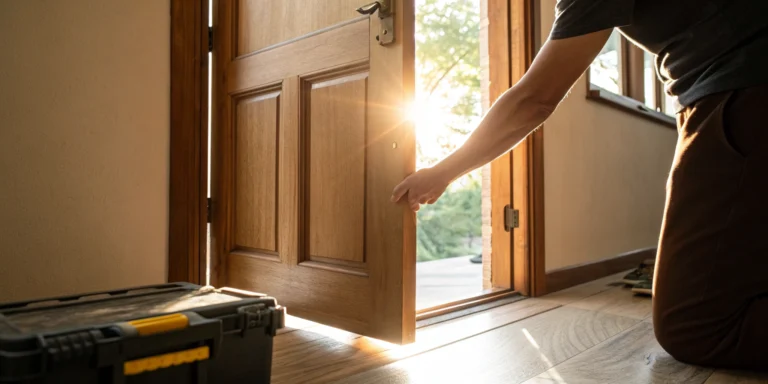
Test the lock with the door wide open. Turn the knob or key and watch the latch on the edge of the door. If the latch extends and retracts smoothly with the door open, nothing is broken — the door is misaligned, which is a different fix. If the latch doesn’t move, moves partway, or the handle turns with no resistance at all, an internal component has failed. Check the obvious externals too: loose or missing screws on the knob and faceplate, visible cracks or bends in the latch bolt, and debris or a key fragment in the keyway. A broken front door lock is a security problem, not just an inconvenience, so treat any exterior-door failure as same-day work.
The key turns but nothing happens
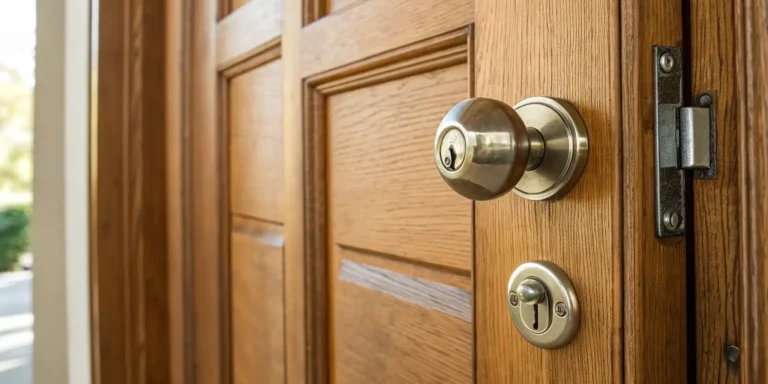
If the key spins freely in the cylinder without engaging the bolt, the cam or tailpiece — the small connector that links the back of the cylinder to the lock mechanism — has usually broken. The cylinder itself may be fine, but it’s no longer transferring motion to the bolt. This isn’t a lubrication problem, and no amount of turning will fix it. On many locks a locksmith can replace the tailpiece or swap the cylinder without changing the whole lockset; on cheap hardware, a full replacement is usually the better spend. If the door is locked shut when this happens, don’t force anything — call our emergency locksmith team and we’ll open it without damaging the door.
The knob is loose or the lock fell apart
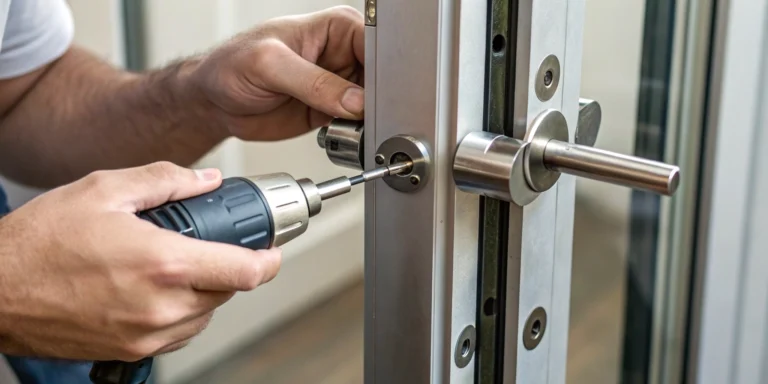
A wobbly knob or a handle that comes off in your hand usually traces back to the mounting hardware. Remove the interior knob (most have a small slot or hole on the neck — press the detent pin with a paperclip and pull the knob off), pry off the rose, and check the two mounting-plate screws underneath. Tighten them snugly but don’t overtighten. While you’re in there, look at the retractor assembly — the metal plate that pulls the latch back when you turn the knob. If it has slipped down, gently push it back into position; a dropped retractor plate is a common reason a lock stops working entirely. Reassemble, then test the latch from both sides. If parts inside are bent, cracked, or stripped, tightening won’t hold — the lockset needs replacement. If you need to take a lever off to get at the mechanism, see our guide to removing a lever door handle.
The key broke off in the lock
Stop before you reach for tweezers. Digging at a snapped key with tweezers, a second key, or a screwdriver pushes the fragment deeper into the cylinder and can damage the pins, turning a quick extraction into a cylinder replacement. Broken-key extraction is a fast job with purpose-made tools, and a locksmith can cut you a fresh key from the fragment on the spot. If the broken key has you locked out, this is exactly what 24/7 emergency service exists for.
The latch or bolt won’t extend
If the handle works but the latch won’t spring out to catch the strike plate — or a deadbolt won’t throw — the internal spring or latch mechanism has worn out or broken. A weak latch that doesn’t fully engage leaves the door unsecured even when it feels closed. With the door open, clean the latch, apply a dry graphite or silicone lock lubricant (not WD-40 or other oils, which attract grime), and work it a few times. If it still won’t extend fully, the latch assembly needs replacement; these are inexpensive parts, but they must match your lockset’s backset and bore. If the handle turns but the door still won’t open, that’s a related failure with its own fix — see fixing a door handle that turns but doesn’t open.
Repair or replace?
Tightening hardware, reseating a retractor plate, and swapping a latch assembly are legitimate DIY repairs. Replace the lock instead when the cylinder is damaged, the hardware is visibly rusted or cracked, the lock has failed more than once, or it was broken in a tampering or break-in attempt — a compromised lock can’t be trusted to secure the door, and repair money is better put toward new hardware. If you’re not sure which side of the line you’re on, a professional diagnosis costs far less than a failed repair followed by a lockout.
When to call a professional for broken door lock repair
Call rather than continue when the key spins without engaging, a key has snapped off inside, the mechanism is visibly damaged, or the door is an entry door you can’t leave unsecured overnight. Our lock repair service handles broken cylinders, tailpieces, latches, and full lock replacements across NYC, and our emergency team runs 24/7 for lockouts and after-hours failures. We’re a licensed NYC locksmith (DCA #2065742) based at 328 Columbus Ave on the Upper West Side, serving Manhattan and all the boroughs. Call (212) 204-1655.
Frequently asked questions
How do I know if my lock is broken or just stuck?
Test with the door open. A stuck lock resists — the key is hard to turn or the bolt scrapes — and usually responds to cleaning, dry lubricant, or alignment fixes. A broken lock has a failed part: the key spins freely, the handle turns with nothing happening, or the latch won’t move at all.
Can I fix a broken door lock without replacing it?
Often, yes. Loose mounting screws, a slipped retractor plate, and a worn latch assembly are all repairable. A broken tailpiece or damaged cylinder can frequently be replaced on its own. Replace the whole lockset when the hardware is old, rusted, repeatedly failing, or damaged in a break-in attempt.
What should I do if my front door lock is broken and won’t lock?
Don’t leave the door unsecured. If a quick tighten-and-reseat doesn’t restore it, treat it as urgent — a lock that won’t engage is an open invitation. A locksmith can repair or replace it the same day; after-hours, use emergency service.
Why won’t my key turn in the lock?
If it won’t turn even with the door open, the pins inside the cylinder are worn, dirty, or damaged. Try a spare key first — a worn key is a common culprit. If no key turns, the cylinder needs professional service or replacement. Never force it; that’s how keys snap off.
Still grinding after the graphite and the spare key? A cylinder that chews keys is on its way to failing shut — usually at night, from the outside. Book same-day lock repair in NYC and we’ll service or swap the cylinder in one visit; call (212) 204-1655.