Skip to content

Written by Steven Grunstein, lead locksmith at Golden Key Locksmith NYC (DCWP License #2065742-DCA), 328 Columbus Ave, Manhattan — operating since 1984.
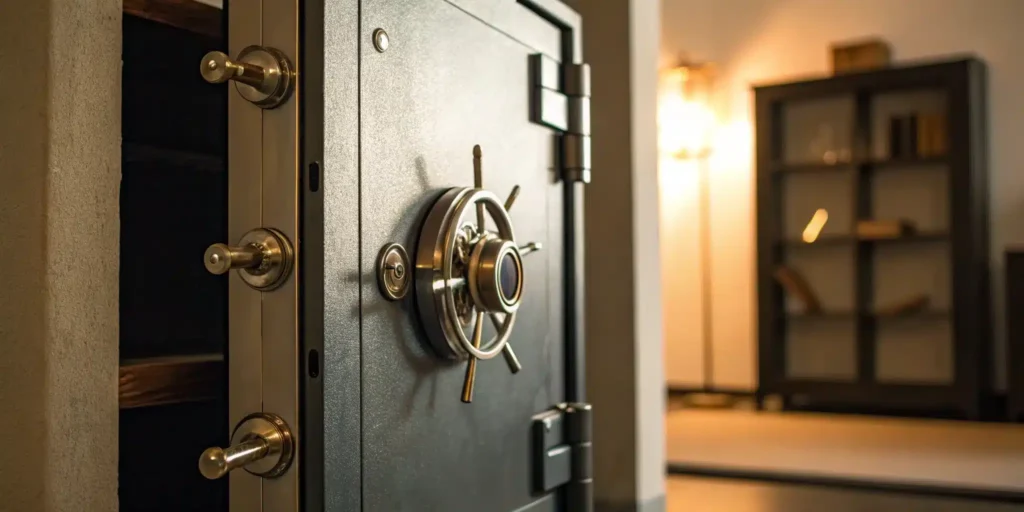
Locked out of a home, office, jewelry, or depository safe in NYC? Get a clear, non-destructive-first assessment through our NYC safe opening service.
The cost to open a safe in NYC depends on four transparent variables: the service-call dispatch, the safe’s security rating and barrier construction, the lock failure mode, and the opening method plus any replacement parts. Light fire-resistant home safes require far less time than UL-rated burglary safes with glass relockers and hardplates.
Safe opening complexity matrix: what actually drives the quote
Generic online estimates rarely reflect real New York City safes — where a client might have anything from a compact hotel-style closet safe to a century-old cast-iron floor safe or a UL TL-30 jewelry safe in the Diamond District. Here is how safe class directly shapes the labor, tooling, and restoration scope:
| Safe Category | Lock & Barrier Construction | Typical Opening Approach | Primary Cost Drivers | Usable After Opening? |
|---|---|---|---|---|
| Residential Fire / Document Safe (SentrySafe, Honeywell, basic home boxes) | Thin composite walls, tubular override key or basic electronic solenoid | Keypad/battery diagnostics, non-destructive override picking, or targeted solenoid access | Usually quickest visit; minimal specialized tooling | Often yes (if non-destructively opened or lock replaced) |
| Electronic Home, Hotel & Gun Safe (Liberty, Gardall, AMSEC, Cannon) | Digital keypad (La Gard, S&G, SecuRam), steel boltwork, internal relocker | Power/wiring reset, factory override procedure, or precision micro-drill & lock swap | Whether electronics failed vs. jammed mechanical boltwork; replacement keypad cost | Yes — precision repair hole is plugged and new lock installed |
| Commercial B-Rate / C-Rate & Depository Safe | Thick plate steel door, spring-loaded relockers, hardened drill-resistant plate | Mechanical dial manipulation, scoping, or specialized carbide-bit precision drilling | Hardplate thickness, relocker protection, and skilled technician bench time | Yes — professionally repaired and fitted with new dial or electronic lock |
| UL-Rated Burglary Safe (RSC, TL-15, TL-30) | Multi-layer composite barrier, tempered glass relockers, secondary deadlocks | Master safe-tech manipulation or multi-stage borescope precision entry | Extreme barrier density, glass relocker risk, specialized diamond/carbide tooling, hours of labor | Yes when opened by a trained safe specialist rather than forced |
| Antique, Cast-Iron & Pre-War NYC Wall / Floor Safe | Legacy multi-wheel mechanical dial, rusted boltwork, tight closet or floor recess | Dial manipulation, lubrication/vibration freeing, or careful custom drilling | Tight physical workspace, seized vintage linkage, obsolete replacement lock parts | Case-by-case; modern Group 2 mechanical or electronic retrofits often possible |
Safe opening methods compared: non-destructive vs. precision drilling
Before authorizing anyone to touch your safe, ask how they plan to open it. A real safe technician always evaluates non-destructive techniques first and explains the exact restoration plan if drilling is required:
| Opening Method | How It Works | When It Is Used | Impact on the Safe |
|---|---|---|---|
| Electronic Reset & Override | External power testing, keypad ribbon check, or factory/dealer override procedure | Dead or weak batteries, worn keypad membrane, or lost code on supported models | Zero damage; safe stays 100% factory intact |
| Dial Manipulation | Listening and feeling tiny wheel-pack contact tolerances through the dial to decode the combination | Forgotten combination on a working Group 2 mechanical dial (S&G, La Gard, Mosler) | Zero damage; no holes, no replacement lock needed |
| Precision Micro-Drill & Borescope | Drilling one tiny, blueprint-accurate hole to view wheel gates or retract a failed solenoid/bolt | Failed electronic lock, broken drive cam, slipped wheel, or seized internal relocker | Fully repairable — hole is tapped, plugged with hardened steel, finished, and a new lock installed |
| Forced / Destructive Entry | Heavy prying or cutting open a compromised body | Strict last resort on low-value safes with catastrophic internal boltwork failure where contents are the only priority | Safe cannot be reused; only performed with your explicit advance approval |
Five safe checks to try before calling a locksmith
We gladly talk NYC clients through five quick, zero-risk checks on the phone — because surprisingly often the safe is not broken at all:
- Install a brand-new, name-brand alkaline battery: Electronic safe locks need full voltage under load to fire the internal solenoid. Even a partially drained or rechargeable 9V/AA battery can make the keypad beep and light up while lacking the power to pull the bolt. Swap in a fresh Duracell or Energizer alkaline cell (see our digital keypad safe guide).
- Wait out the lockout penalty timer: After 3 to 5 wrong codes, most commercial electronic keypads enter a 5- to 15-minute lockout freeze where even the right code is ignored. Leave the keypad completely untouched until the lockout expires, then enter the code slowly once.
- Relieve bolt-bind pressure on the handle: If the safe is packed tight with binders, jewelry boxes, or cash trays pushing against the door from inside, the bolts bind against the frame. Push the door firmly inward and gently turn the handle slightly toward the locked direction before entering your code or finishing your dial turn.
- Verify your dial turn direction and stop index: Standard three-number mechanical safes require a strict Left-Right-Left (or Right-Left-Right) spin count, stopping squarely on the opening index mark — not the changing index off to the side. Review our step-by-step 3-number combination safe guide and combination lock troubleshooting guide.
- Check whether the safe has a mechanical override key: Many residential fire and hotel safes hide a backup key cylinder behind a removable logo cover or keypad trim plate.
Five factors that move a safe-opening quote up or down
- Safe make, model, and UL rating: Sending a clear photo of the entire safe, the lock face, and any UL/manufacturer label on the door lets a technician identify hardplate and relocker locations before arriving.
- Forgotten combination vs. mechanical failure: A forgotten code on a healthy dial can often be manipulated non-destructively, whereas a snapped handle linkage, slipped wheel, or triggered glass relocker requires careful surgical entry and parts replacement.
- Access constraints inside NYC spaces: Safes bolted deep inside tight closets, low under office desks, recessed flush into floors, or located in walk-up buildings take more setup time for drill rigs and lighting than a freestanding safe in an open room.
- Scheduled daytime vs. emergency after-hours dispatch: Booking during regular weekday hours keeps billing at standard rates, whereas late-night, weekend, or urgent commercial cash-access calls carry emergency dispatch rates (see our NYC locksmith cost structure breakdown).
- Post-opening lock replacement and relocking: Decide upfront whether you only need contents retrieved or want a fresh S&G, La Gard, or SecuRam lock installed and the safe returned to daily service in the same visit.
How to vet a trustworthy NYC safe technician
Safe opening is a specialized craft — calling a general handyman or an unlicensed bait-and-switch ad often destroys a valuable safe and can trigger internal glass relockers that double the work required to open it. Verify these four basics before dispatching anyone:
- NYC DCWP License & real local shop: Confirm an active Department of Consumer and Worker Protection locksmith license (Golden Key Locksmith’s is #2065742-DCA) and a verifiable brick-and-mortar NYC storefront (ours is 328 Columbus Ave, Manhattan, since 1984).
- Photo-based upfront scope: A legitimate safe tech asks for the brand, lock type, symptom, and a photo before quoting — and confirms a flat total before touching the safe.
- Non-destructive-first mindset: Beware anyone whose first answer on the phone is “we’ll just cut it open.” Precision safe specialists prioritize manipulation, scoping, and repairable micro-drilling.
- Ownership verification: Reputable locksmiths always verify photo ID and proof of authority or ownership before opening a locked safe.
Call Golden Key Locksmith NYC for safe opening & repair
Whether you have a locked home fire safe, a commercial depository safe that refuses to release before closing, or a high-security UL-rated safe with a failed keypad, Steven Grunstein and our licensed safe technicians open, repair, and upgrade safes across Manhattan, Brooklyn, Queens, and the Bronx with transparent upfront quotes before work starts. Visit our NYC safe opening service, our commercial locksmith page, or call (212) 204-1655.
Frequently asked questions
Can a locksmith open my safe without destroying it?
In the vast majority of cases, yes. Working mechanical dials can often be opened non-destructively through manipulation, and even when an electronic lock or internal part has failed, precision micro-drilling through a single small, blueprint-located point allows the safe to be professionally plugged, fitted with a new lock, and returned to full service.
What information should I have ready when calling for a safe-opening quote?
Share the safe’s brand and model (if visible), whether it has a mechanical dial, electronic keypad, or key lock, what happened right before it stopped opening, whether it is bolted in a tight closet or floor, and a clear photo of the door face. That lets us give an accurate quote and bring the exact replacement lock if needed.
Will a safe locksmith ask for identification before opening my safe?
Yes. Any licensed NYC locksmith will verify your government-issued photo ID and confirmation that you own or are authorized to access the property and safe before starting work.
My electronic safe keypad beeps and lights up, but the handle still won’t turn — why?
The two most common causes are a weak battery that powers the LED/beeper but lacks enough current to retract the internal solenoid, or internal contents pressing against the door and binding the locking bolts. Try a brand-new name-brand alkaline battery and relieve pressure on the door handle first.
Can you replace an unreliable electronic safe keypad with a mechanical dial (or vice versa)?
Usually yes. Most quality commercial and residential safes use a standardized lock footprint (Magic Module), allowing a safe technician to upgrade a failing keypad to a UL-listed mechanical dial or a higher-grade electronic lock (S&G, La Gard, or SecuRam) during the same visit.