Written by Steven G., licensed NYC locksmith (DCWP License #2065742-DCA), Golden Key Locksmith, 328 Columbus Ave, Manhattan. We’ve opened and repaired digital and dial safes in NYC homes and businesses since 1984.
When the battery swap and reset steps do not work, Golden Key Locksmith NYC opens electronic keypad safes across NYC — see our safe opening service or call (212) 204-1655.
A digital safe that won’t open has one of four problems, and they’re worth checking in this exact order: dead or weak batteries (the cause in most lockouts), a wrong-code lockout (the keypad deliberately ignores you for a few minutes after repeated wrong entries), a jammed bolt (the electronics accept your code but the door binds), or a failed lock (solenoid, motor, or wiring — no code will fix it). The five-minute sequence below sorts out which one you have; three of the four you can often solve yourself without damaging the safe.
The five-minute diagnosis
- Keypad completely silent — no lights, no beeps: power. Go to step 1.
- Keypad responds but rejects a code you’re sure is right: lockout mode or a drifted code. Step 2.
- Keypad accepts the code (happy beep, motor whirs or clunks) but the door won’t open: jammed bolt work. Step 3.
- Fresh batteries, right code, dead or erratic keypad: the lock itself has failed. Steps 4–5.
Step 1: Fix the power
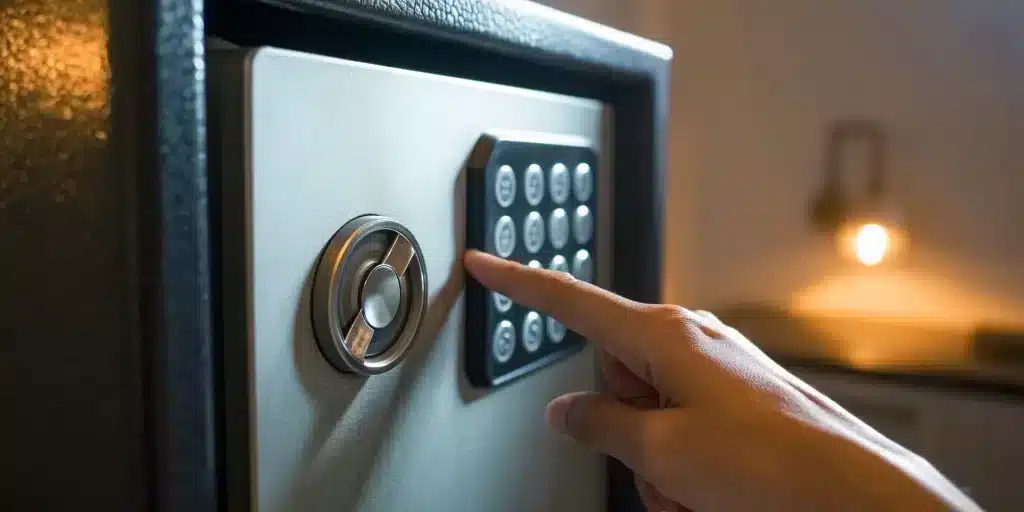
Most keypad safes run on AA batteries or a 9-volt in a compartment you can reach from outside the safe — slide the keypad housing up or sideways, or pop the cover below it. Replace with fresh brand-name alkalines; weak batteries cause the classic half-failure where the keypad lights up but the lock can’t pull the bolt. Two brand quirks worth knowing: on AMSEC’s ESL-series locks (common on business safes) the 9-volt lives inside the keypad housing itself — the keypad twists or lifts off its base to reach it — and some import models hide external 9-volt boost terminals on the face of the keypad: hold a fresh 9-volt against the two contacts and enter your code while it’s powered.
Step 2: Rule out lockout mode and code drift
After three to five wrong entries, most digital safes disable the keypad — some flash, some beep rapidly, some go silent. Walk away for 15–20 minutes and try once, slowly and firmly, one press per digit. If you recently changed the code, try the old one; on cheaper safes an interrupted programming sequence can silently revert it. And check the manual for a factory master code — many budget import safes ship with one, which is a reason we tell NYC businesses not to store anything serious in them.
Step 3: Free a jammed bolt
If the keypad accepts your code — you hear the confirmation beep and the motor or solenoid actuate — but the handle won’t turn, the electronics are fine and the bolt work is binding. Press the door firmly inward with one hand while entering the code and turning the handle with the other: contents shifted against the door, or a slightly bowed door, puts pressure on the bolts that the little motor can’t overcome. A gentle palm-tap near the locking side while the motor runs can free a sticky bolt. Stop there — prying the door or hammering the keypad turns a service call into a destroyed safe.
Step 4: Use the override key
Most home keypad safes include an emergency key that bypasses the electronics entirely. The keyhole is nearly always hidden — behind the removable brand logo plate, under a sliding panel beside the keypad, or beneath the keypad housing itself. Insert, turn, and open the door (on some models you turn the key and the handle together), then change the batteries from inside and reset your code. Two exceptions: if the key is lost, a safe locksmith can often pick or replace that override lock without drilling — and many gun safes deliberately have no override key (Liberty’s ProVault line among them), because a bypass lock is a security hole. On those, a dead electronic lock means professional opening, which is why “gun safe won’t open” is one of the most common safe calls we get.
Step 5: When the lock itself has failed
Fresh batteries, correct code, and still nothing — or the keypad behaves erratically — means the solenoid, motor, circuit board, or the wiring bundle through the door has failed. This is a hardware fault; no reset sequence fixes it. A safe technician opens the safe with minimal or no damage (drilling is the last resort, not the first move, and even then it’s a small, precisely placed hole — not the movie version), then replaces the failed lock so the safe goes back into service. That’s the job our safe opening service in NYC does daily across Manhattan, Brooklyn, and Queens: bring the safe’s brand and model if you know it, and expect to show ID and proof of ownership before any safe is opened — a legitimate locksmith will always ask.
The NYC part
- Humidity kills keypads. Safes in apartment closets against exterior walls, or in basements, corrode battery contacts and circuit boards years earlier. If battery contacts show white or green crust, clean them before assuming the lock is dead.
- What we actually see: the failure list is dominated by budget import safes and hotel-style units; quality electronic locks (AMSEC, S&G, SecuRam) mostly fail at the battery and wiring level, which is repairable.
- Dial, not keypad? If your safe has a mechanical dial, the process is completely different — see our guide to opening a 3-number combination safe.
When to call us
Call when the override key is lost, when a gun safe’s electronics have died, when the keypad accepts the code but the bolts won’t move even with door pressure, or when the safe holds documents you need same-day. We open safes non-destructively wherever possible, replace failed locks on the spot, and change combinations on the same visit. Golden Key Locksmith — licensed (DCWP #2065742-DCA), at 328 Columbus Ave since 1984. Call (212) 204-1655, 24/7.
Frequently asked questions
Why won’t my safe open even with the correct code?
Either the batteries are too weak to drive the bolt motor (keypad may still light up), the keypad is in a temporary lockout from earlier wrong attempts, or the bolt work is jammed by pressure on the door. Fresh batteries, a 15–20 minute wait, and firm inward pressure on the door while you re-enter the code resolves most of these. If all three fail, the lock hardware has failed.
How do I open a digital safe when the batteries are dead and there’s no key?
Check the keypad face for external 9-volt boost terminals — hold a fresh 9-volt battery against them and enter your code. If your model has no terminals and no override key, there is no manufacturer-intended way in, and the safe needs a professional opening. Don’t buy the “bounce it and turn the handle” tricks online — they mostly damage cheap safes and don’t touch decent ones.
How do I open a digital safe without the key?
The key is only a backup — if the keypad works and you know the code, you don’t need it. Lost the code as well? The manufacturer can often supply a reset procedure or factory code if you provide the serial number and proof of purchase; otherwise a safe locksmith can open it and reset everything.
What do the beeps mean on my safe keypad?
Beep patterns are the safe’s error language and they differ by brand, but the common conventions are: one confirmation beep = code accepted; a rapid series = wrong code or lockout mode; intermittent beeping on its own = low battery warning. Enter your code slowly and count the beeps — the pattern plus your manual (searchable online by model number) identifies the fault.
Why won’t my gun safe open?
Same four causes as any keypad safe, but with a catch: many gun safes have no override key by design, so a failed electronic lock can’t be bypassed. Try fresh batteries and door pressure first. If the lock is dead, it needs a professional opening — which on a quality gun safe is a precise, repairable job, not a destroyed safe.
Should I drill my safe open myself?
No. Safes are built to punish exactly that — hardplate steel around the lock, relockers that fire when they sense an attack and deadlock the bolts permanently. A DIY drill attempt routinely turns a routine opening into a much longer one. A technician who knows the drill points for your model opens it with one small hole at worst, and usually with none.