

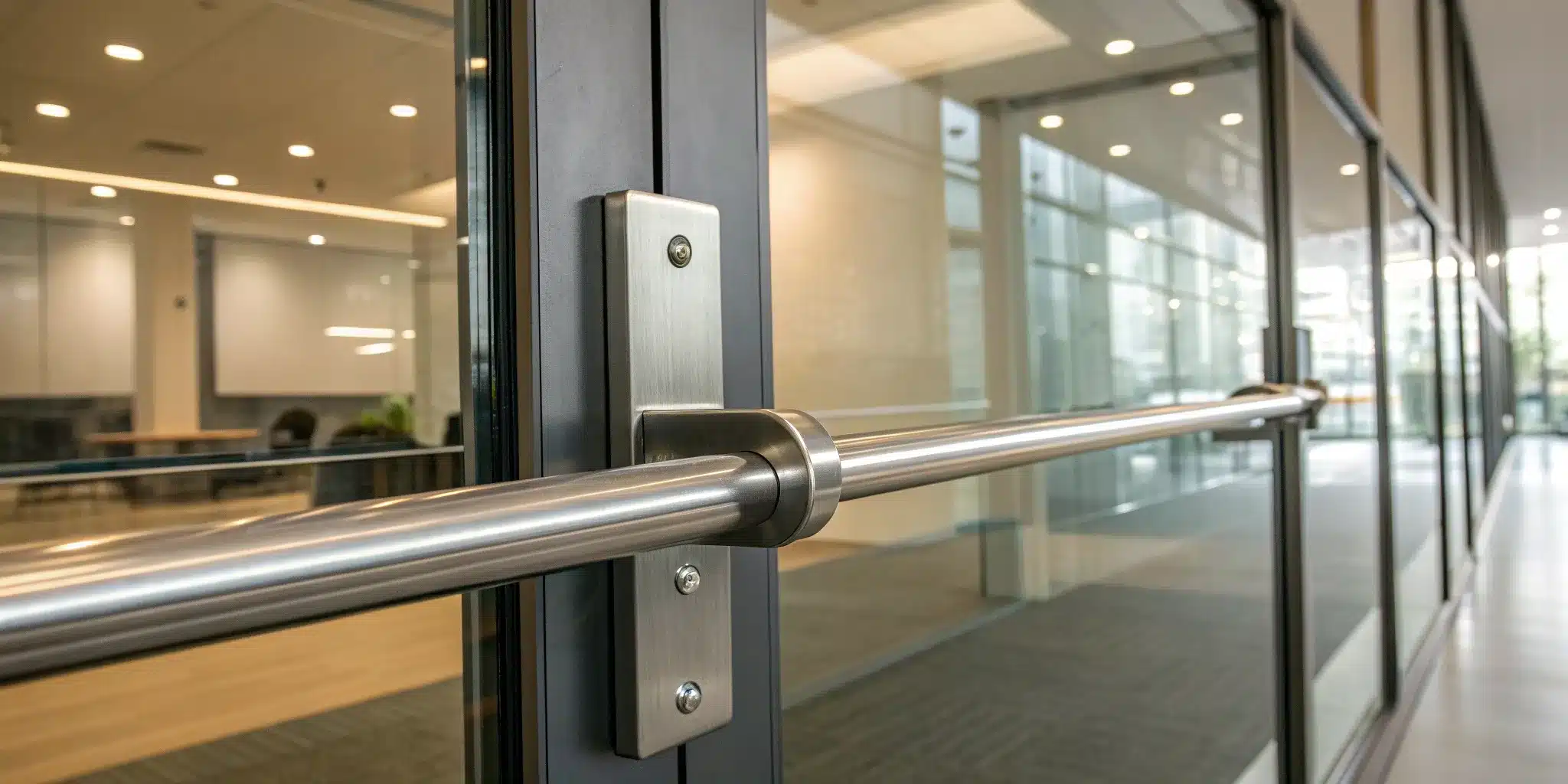
When you hear the term panic bars, you might picture a clunky, industrial metal bar that clashes with your building’s aesthetic. It’s a common misconception, and one that might make you hesitate to install this crucial safety feature. But modern exit hardware has come a long way. Today’s options are sleek, stylish, and can even integrate with your high-tech security systems for enhanced access control. This guide will bust the common myths surrounding panic hardware. We’ll show you how these devices not only meet legal safety requirements but can also improve daily foot traffic and complement your building’s design.
Key Takeaways
- Ensure Your Exits Meet Legal Standards: Panic bars are a non-negotiable safety requirement for many businesses, essential for meeting fire codes and ADA accessibility standards. Proper hardware ensures you are compliant and provides a safe, fast exit for everyone during an emergency.
- Invest in Quality Hardware and Professional Installation: The reliability of a panic bar depends on its quality and installation. Always choose a durable, Grade 1 rated device and have it installed by a professional to guarantee it functions correctly and withstands daily use.
- Integrate for Enhanced Security and Convenience: Modern panic bars do more than just provide an emergency exit. They can be connected to your access control and alarm systems, turning a safety feature into an active part of your building’s security while also improving the daily flow of traffic.
What is a Panic Bar and Why Does Your Business Need One?
If you own a business in New York City, you know that the safety of your employees and customers is a top priority. Among the many things you manage, the hardware on your exit doors might not seem like a big deal, but it’s one of the most critical safety features you can have. I’m talking about panic bars—that horizontal bar you see on emergency exits that opens the door with a simple push. They’re designed for fast, intuitive, and safe escapes during an emergency. More than just a smart feature, panic bars are often a legal requirement for commercial buildings, helping you protect your people and your business. Understanding how they work and why they’re so important is the first step toward making your space safer and compliant with city codes.
How They Work: A Quick Breakdown
The brilliance of a panic bar, also called a crash bar or exit device, lies in its simple design. It’s a spring-loaded bar that runs across the inside of an outward-swinging door. When pressure is applied anywhere along the bar, it retracts the latch, instantly unlatching the door and allowing it to open. This mechanism is crucial during an emergency when people may be panicking or moving in a crowd. There’s no need to find and turn a small knob or handle; a simple push is all it takes. This intuitive, one-step motion ensures that exits remain clear and accessible, allowing for a quick and orderly evacuation when every single second matters.
The Different Types of Panic Hardware
Panic bars are not a one-size-fits-all product. They come in several designs to accommodate different doors and security requirements. The most common styles you’ll encounter are rim devices, which have a latch that secures into a strike mounted on the door frame, and vertical rod devices, which use rods to latch the door at the top and bottom. The best option for your business depends on factors like your door’s material, whether it’s a single or double door, and its required fire rating. Choosing the right hardware is essential for both safety and compliance, which is why it’s always a good idea to consult with a professional commercial locksmith to ensure you get the perfect fit.
Key Benefits for Commercial Buildings
The number one benefit of a panic bar is, without a doubt, enhanced safety. In an emergency like a fire, it provides a fast and reliable way for everyone to evacuate, which can dramatically reduce the risk of injury. They are also designed to be accessible, meeting ADA standards so that people with disabilities can exit without assistance. Beyond emergencies, they offer daily convenience by making heavy commercial doors easier to open, especially for staff carrying items. For many businesses, installing them isn’t optional—building codes often mandate panic bars in spaces with an occupancy of 50 or more people. Proper door repair and installation is key to making sure these devices function correctly when you need them most.
Panic Bars and Building Codes: What You Need to Know
Installing a panic bar isn’t just a smart safety move; it’s often a legal requirement for your business. These regulations can feel like a maze of acronyms and rules, but getting them right is crucial for keeping everyone safe and avoiding hefty fines. Think of it as a non-negotiable part of your business’s safety plan. Understanding the basics of building codes, accessibility standards, and how they apply to your specific space will give you the confidence that you’re fully compliant and prepared for any emergency. Let’s walk through what you need to know to make sure your exits are up to code.
Meeting Local Building Code Requirements
When it comes to panic hardware, the rules aren’t one-size-fits-all. Your business needs to follow regulations set by national standards like the International Building Code (IBC) and NFPA 101, but local New York City codes are the ultimate authority. These codes specify exactly when and where panic bars are required, usually based on your building’s size, use, and the number of people it holds. Getting this wrong can lead to failed inspections and fines. The best way to ensure you’re compliant is to consult with a professional who understands both the national standards and NYC’s specific requirements. A commercial locksmith can assess your property and recommend the right hardware to meet every regulation.
A Simple Guide to NFPA and ADA Compliance
Two key sets of standards you’ll hear about are NFPA and ADA. The National Fire Protection Association (NFPA) creates codes designed to prevent death and injury from fire, which is why their rules heavily influence exit door requirements. On the other hand, the Americans with Disabilities Act (ADA) ensures that your building is accessible to everyone. For panic bars, this means the hardware must be easy to operate with minimal force and without tight grasping or twisting. Following ADA standards ensures that in an emergency, people with disabilities can exit just as quickly and safely as anyone else. Compliance with both is essential for a truly safe exit.
How Rules Differ for Various Building Types
It’s a common myth that only huge venues or auditoriums need panic bars. The truth is, the rules are based more on occupancy than square footage. Even a small business may need panic hardware if its occupancy load is 50 people or more. This applies to a wide range of places, from restaurants and retail shops to schools and offices. The specific requirements can change depending on whether your space is classified as an assembly, educational, or business occupancy. Because the regulations vary so much, it’s never a good idea to guess. A professional can help you understand the specific rules for your building type and ensure your door hardware installation is done right the first time.
How to Choose the Right Panic Bar for Your Business
Selecting the right panic bar isn’t just about picking one off a shelf; it’s about finding the perfect fit for your door, your building’s needs, and your legal obligations. The right hardware ensures smooth, safe exits during an emergency and stands up to daily use without a hitch. Getting this choice right from the start saves you from future headaches, potential fines, and, most importantly, keeps everyone in your building safe. Let’s walk through the key factors to consider so you can make a confident and informed decision for your business.
Match the Hardware to Your Door
Before you even think about features, look at the door itself. Is it a single or double door? Does it swing in or out? What is it made of—wood, metal, or glass? These basic details will narrow down your options significantly. For example, a rim-style panic bar is common for single doors, while vertical rod devices are often needed for double doors. It’s also crucial that the hardware you choose complies with local building codes and national standards. Any reputable commercial locksmith will ensure your installation meets all requirements, including those set by the American National Standards Institute (ANSI), to keep your business compliant and secure.
Assess Your Security and Foot Traffic Needs
Think about how the door is used every day. Is it a main entrance with constant traffic or a back exit that’s rarely opened? High-traffic areas need a more durable, heavy-duty panic bar that can withstand thousands of uses without failing. For less-used emergency exits, a standard-duty bar might be sufficient. You also need to consider accessibility. Panic bars are designed to be easy for anyone to use, including people with disabilities, which is why they must meet ADA standards. The goal is to find a balance between robust security and effortless exit for everyone.
Consider Weather and Environmental Factors
If the panic bar is for an exterior door, you have to account for the elements, especially in a city like New York. Rain, snow, humidity, and salt in the air can cause corrosion and damage over time. Look for panic hardware with a weather-resistant finish, like stainless steel, to prevent rust and ensure it functions properly when you need it most. Don’t worry about sacrificing style for durability. Many people think panic bars are clunky and unattractive, but modern designs are often sleek and can blend seamlessly with your building’s aesthetic. A professional can help you find hardware that complements your door installation perfectly.
Check for the Correct Fire Rating
This is a non-negotiable for fire exit doors. Fire-rated doors are designed to slow the spread of fire and smoke, but they only work if they’re equipped with equally-rated hardware. A fire-rated panic bar is built to withstand high temperatures without melting or jamming. One of the most dangerous mistakes a business can make is installing fire-rated hardware on a non-rated door, or vice-versa. This not only violates fire codes but also creates a false sense of security. Always check the fire rating of both the door and the panic hardware to ensure you have a truly compliant and safe fire exit.
Must-Have Features for Safety and Compliance
When you’re choosing a panic bar, it’s about more than just picking a piece of hardware. You’re investing in the safety of your employees and customers, and you need to meet specific legal standards. The right features ensure your exits are secure, accessible, and completely reliable during an emergency. Let’s walk through the non-negotiable features you should look for to keep your business safe and compliant.
Understanding ANSI Grade Ratings
You’ve probably seen “ANSI Grade” on hardware packaging before, but what does it actually mean? The American National Standards Institute (ANSI) sets the quality and durability standards for door hardware. For panic bars, you should always look for a Grade 1 rating. This is the highest grade possible, indicating the hardware has been tested to withstand at least 500,000 cycles of use.
Think of it as a promise of reliability. A Grade 1 panic bar is built for high-traffic commercial environments and designed to perform flawlessly when you need it most. Settling for a lower grade might save a few dollars upfront, but it could fail under pressure, compromising both safety and security. Our commercial locksmith team always recommends Grade 1 hardware to ensure your exits are built to last.
Key Features for ADA Accessibility
Your business needs to be accessible to everyone, and your exit doors are no exception. Panic bars are inherently designed to meet the standards of the Americans with Disabilities Act (ADA). The law requires that doors can be opened without tight grasping, pinching, or twisting of the wrist. The simple push motion of a panic bar allows anyone—including people with disabilities, someone carrying heavy items, or a parent pushing a stroller—to exit easily.
Proper door repair and installation is key to ensuring the pressure needed to open the door is minimal and meets ADA guidelines. This feature isn’t just about compliance; it’s about creating a safe and welcoming environment for every single person who walks through your doors.
Integrating with Fire Safety Systems
Panic bars are a critical component of your building’s overall fire safety plan. Codes like the International Building Code (IBC) and NFPA 101 Life Safety Code often require them in buildings with a certain number of occupants. This is because they ensure a clear and fast path of egress during a fire.
Modern panic hardware can also be integrated with your building’s fire alarm and other security systems. For example, if your doors have electronic locks for access control, they can be set up to automatically unlock when the fire alarm is triggered. This integration ensures that even secured doors become immediate, unobstructed exits during an emergency, removing any chance of a fatal delay.
The Importance of a Quick-Exit Mechanism
The single most important feature of a panic bar is its ability to provide a quick, intuitive exit. During an emergency, people don’t have time to figure out how a complex lock works. The simple, single-motion push mechanism allows for a fast and orderly evacuation, which can dramatically lower the risk of injury or tragedy.
Imagine a crowded space during a fire or other emergency. A traditional doorknob would be nearly impossible for people in the back of a crowd to reach and operate. A panic bar, however, allows people to open the door by simply pressing against it with their body weight. This intuitive design is what makes it essential for any public space. It’s a feature you hope you’ll never need, but it’s absolutely critical to have when every second counts.
Proper Installation and Maintenance
A panic bar is a critical piece of safety equipment, but it’s only effective if it’s installed correctly and properly maintained. Just like any other mechanical device, it needs a little attention to ensure it’s ready to perform when you need it most. Getting the installation right from the start prevents major headaches and potential safety risks down the line. A professional setup ensures your hardware meets all local codes and functions smoothly for daily use and emergencies. It’s not just about slapping a bar on a door; it’s about precise measurements, secure fittings, and an understanding of how the mechanism interacts with the specific door and frame. This initial step is the foundation of its reliability.
Once installed, a simple but consistent maintenance routine is all it takes to keep your panic bar in top working order. This protects your investment, ensures compliance, and, most importantly, keeps the people in your building safe. Regular checks can catch minor issues like a loose screw or a sticky latch before they turn into a major failure during a critical moment. Let’s walk through the key steps for proper installation and upkeep to make sure your exit doors are always ready.
Why Professional Installation is a Must
While it might seem like a straightforward task, installing a panic bar is a job best left to the experts. A professional commercial locksmith has the specific tools and knowledge to do the job right, ensuring the hardware is secure and compliant. One of the most frequent errors in a DIY installation is using the wrong or insufficient hardware. Screws and bolts that aren’t tightened correctly can loosen over time, causing the entire mechanism to fail during an emergency. Professionals understand the nuances of different door types—whether they’re wood, metal, or glass—and how to anchor the panic bar securely without compromising the door’s integrity, especially if it’s fire-rated.
Getting the Height and Placement Just Right
Precision is key when it comes to placement. Building codes specify that a panic bar must be installed between 34 and 48 inches from the finished floor. This isn’t an arbitrary number; this height range ensures the bar is easily accessible to everyone, including children and individuals in wheelchairs, meeting ADA requirements. A professional installer will measure this perfectly, ensuring the bar is level and functions without a hitch. Proper placement also involves aligning the latching mechanism with the door frame and strike plate, so the door opens smoothly with minimal pressure and closes securely every time. It’s a small detail that makes a huge difference in both safety and daily convenience.
Your Regular Testing and Maintenance Checklist
Keeping your panic bar in reliable condition doesn’t take much time. A quick monthly check can catch small issues before they become serious problems. First, give the bar a push. It should depress smoothly and allow the door to open without sticking or requiring excessive force. Next, inspect all the hardware. Check to make sure that all screws and bolts, including those on the strike plate, are securely fastened. Over time, vibrations from the door opening and closing can cause them to loosen. Regular inspections will help you spot wear and tear and ensure every component of your door hardware is functioning as it should.
Common Installation Mistakes to Avoid
A faulty installation can render a high-quality panic bar useless. One of the most critical mistakes is leaving old screw holes unfilled after removing previous hardware. On a fire-rated door, these small openings can compromise the door’s ability to stop smoke and flames, creating a serious safety hazard. Other common errors include cutting the push bar too short for the door width, misaligning the latch so it doesn’t engage properly, or even installing the mechanism upside down. These mistakes not only prevent the bar from working correctly but can also lead to failed building inspections. Hiring a professional helps you sidestep these dangerous and costly errors.
Beyond the Basics: Advanced Security Features
Panic bars have come a long way from being simple, mechanical exit devices. While their primary function is still to provide a fast and easy exit during an emergency, today’s panic hardware can do so much more. Modern panic bars can be integrated into your building’s broader security infrastructure, offering a powerful combination of safety, access control, and monitoring. This means you no longer have to treat your emergency exits as a potential security weak point.
By connecting your panic bars to other systems, you can get real-time alerts, control who enters and exits, and maintain a secure perimeter without compromising safety compliance. These advanced features allow you to create a smarter, more responsive security plan for your commercial property. From linking with electronic keycard systems to triggering alarms during a breach, these integrations turn a mandatory safety feature into an active part of your building’s defense. Plus, with sleek new designs, you don’t have to sacrifice your building’s aesthetic for security.
Connecting to Electronic Access Control
One of the most significant advancements is the ability to integrate panic bars with your building’s electronic access control systems. This setup strikes the perfect balance between everyday security and emergency preparedness. On a typical day, the door remains locked from the outside, accessible only to authorized personnel using a key card, fob, or keypad. This prevents unauthorized entry and keeps your property secure.
However, the panic bar on the inside remains fully functional, allowing anyone to exit freely and instantly in an emergency. This integration ensures you can maintain controlled access without violating fire codes, giving you peace of mind that your building is both safe and secure.
Integrating with Your Alarm System
For an even higher level of security, you can connect your panic bars directly to your building’s alarm system. This integration means the alarm can be triggered automatically if the exit door is used without authorization. For example, you can set it up so the alarm sounds when the panic bar is pushed, alerting your security team to a potential breach.
This feature is incredibly useful for monitoring sensitive areas or back doors that shouldn’t be used for regular foot traffic. It ensures a rapid response to potential threats and acts as a strong deterrent against theft or unauthorized access. It turns every emergency exit into a monitored checkpoint, adding another critical layer of protection to your business.
Smart Panic Bars for Modern Buildings
Welcome to the world of smart security. Electrified, or “smart,” panic bars offer advanced capabilities like remote monitoring and real-time data alerts. These systems can be programmed to work with your building management software, giving you a complete overview of your exit points from a central dashboard. You can receive instant notifications on your phone or computer whenever a specific door is opened.
These electrified exit devices can also log entry and exit data, which is valuable for security audits and tracking movement within your facility. For businesses that handle sensitive information or valuable assets, smart panic bars provide an unmatched level of control and oversight.
Modern Designs That Don’t Sacrifice Style
If you think all panic bars are bulky, industrial-looking pieces of hardware, think again. Manufacturers now understand that aesthetics matter. Modern panic bars are designed to blend seamlessly with contemporary architecture, offering a clean and sophisticated look without compromising on safety or function.
You can find panic hardware in a variety of finishes—from brushed stainless steel to matte black—to match your door hardware and interior decor. This means you can ensure your building is up to code and secure while maintaining a professional and polished appearance. When planning your door repair and installation, you can choose a panic bar that complements your style instead of clashing with it.
Common Panic Bar Myths, Busted
Panic bars are a non-negotiable part of commercial safety, but they’re surrounded by a surprising number of misconceptions. These myths can lead to poor choices that compromise your building’s security and compliance. Let’s clear the air and separate the facts from the fiction so you can make the best decision for your business.
Myth: They’re All Bulky and Unattractive
If you’re picturing a clunky, industrial-looking metal bar that will ruin your building’s aesthetic, it’s time for an update. While older models might have been purely functional, modern panic bars are designed with style in mind. Today’s hardware comes in a variety of sleek, low-profile designs and finishes that can blend seamlessly with your decor. You can find options that match your door handles, frames, and overall interior design. The key is choosing the right model and ensuring it’s installed correctly. A professional door repair and installation service can help you select a panic bar that is both safe and stylish.
Myth: They Don’t Require Maintenance
This is one of the most dangerous myths out there. A panic bar is a mechanical device with moving parts, and just like any other piece of hardware, it needs regular attention to function properly. Over time, screws can loosen, latches can misalign, and internal mechanisms can wear down. It’s crucial to check that all components, including the strike plate, are securely fastened. A malfunctioning bar is a serious liability in an emergency. We recommend scheduling routine checks with a commercial locksmith to test the hardware, make adjustments, and ensure it’s always ready when you need it most.
Myth: Any Bar Works on Any Door
Thinking you can just pick any panic bar off the shelf and install it is a common mistake. Panic hardware is not a one-size-fits-all solution. The right choice depends on your door’s material, size, and fire rating. More importantly, panic bars must comply with strict local building codes and national standards, like those from the National Fire Protection Association (NFPA). Installing the wrong type of hardware can result in failed inspections, hefty fines, and—most critically—a door that won’t open in an emergency. Always consult with a professional to ensure you get the right, compliant hardware for your specific needs.
Fact: They Improve Daily Flow, Not Just Emergencies
While their primary purpose is to provide a quick exit during an emergency, panic bars offer significant everyday convenience. Think about employees carrying boxes, customers pushing strollers, or anyone with their hands full. A panic bar allows them to open a heavy commercial door with a simple push of their body, making entry and exit much smoother. This improves the daily flow of traffic and accessibility for everyone. When integrated with modern security systems, they provide a perfect balance of easy egress and controlled access, making them a valuable asset for any busy commercial building.
Breaking Down the Costs and Long-Term Value
A panic bar is more than just a piece of hardware; it’s a critical investment in the safety of your employees, customers, and property. While it’s easy to focus on the upfront cost, it’s important to look at the complete picture. The true value of a panic bar comes from its long-term reliability, compliance with safety codes, and even its potential to save you money down the line.
When you start budgeting for this essential safety feature, think beyond the initial price tag. You’ll need to consider the quality of the hardware, the cost of professional installation, and a plan for ongoing maintenance. A well-chosen and properly installed panic bar not only ensures a safe exit during an emergency but can also offer financial benefits, like lower insurance premiums. Let’s break down what you can expect to invest and how that investment pays off over time.
What Influences the Initial Price?
The price of a panic bar itself can vary quite a bit. Several factors come into play, including the brand, the materials it’s made from, and any special features it includes, like alarms or integration with access control systems. It can be tempting to go for the cheapest option, but this is one area where paying a bit more upfront can save you headaches and money later. A higher-quality device is built to withstand heavy use, reducing the need for frequent repairs or a full replacement. Think of it as an investment in durability and peace of mind.
Factoring in Installation Costs
The price on the box is just the beginning. Proper installation is non-negotiable for a panic bar to function correctly and meet legal requirements. This isn’t a DIY project; you need a professional to ensure it’s installed at the right height and works seamlessly with your door and frame. The cost for professional installation depends on the type of door and the complexity of the job. When you work with an experienced commercial locksmith, you’re paying for the assurance that your exit hardware will work flawlessly when it matters most.
Budgeting for Maintenance
Like any mechanical part of your building, your panic bars need regular attention to stay in top working order. Setting aside a small budget for annual maintenance is a smart move. A routine inspection can catch small issues, like loose fittings or alignment problems, before they become serious safety hazards. This proactive approach ensures your hardware remains compliant and functional year after year. Regular check-ups are far less expensive than an emergency repair or the consequences of a device failing during a critical moment.
How They Can Impact Your Insurance
Here’s a financial benefit you might not have considered: installing code-compliant panic bars can potentially lower your insurance premiums. Insurance providers see businesses with proper safety measures as a lower risk. By demonstrating your commitment to safety with professionally installed and maintained exit hardware, you may qualify for better rates. This turns a necessary safety upgrade into a financially savvy decision that contributes to your bottom line while protecting everyone in your building.
Related Articles
Frequently Asked Questions
Do I really need a panic bar for my small shop or office? It’s a common question, and the answer usually depends on occupancy, not square footage. Building codes, particularly in NYC, often require panic hardware in any space designed to hold 50 or more people. This can include restaurants, retail stores, and even some office layouts. The best way to know for sure is to have a professional assess your space to ensure you’re meeting all local safety regulations.
Will installing a panic bar make my business less secure from break-ins? Not at all. This is a myth we hear all the time. A panic bar is designed for safe and easy exit from the inside, but it keeps the door securely locked from the outside. For even greater control, modern panic hardware can be integrated with electronic access systems, allowing you to manage who enters with a key card or code while still ensuring a quick, unobstructed exit in an emergency.
Can I install a panic bar myself to save on costs? While I understand the temptation to DIY, this is one job you should always leave to a professional. Installation requires absolute precision to meet strict ADA height requirements and ensure the latching mechanism works flawlessly. An incorrect installation can lead to a failed inspection, void the hardware’s fire rating, and, most importantly, fail to work during a critical emergency.
My exit door already has a deadbolt. Can I just add a panic bar to it? It’s not quite that simple. For an exit door to be compliant, it must unlatch with a single motion. Adding a panic bar while keeping a separate deadbolt would require two actions to open the door, which violates safety codes. A professional locksmith can replace your existing hardware with an integrated system that provides security and ensures a safe, one-step exit.
How often should I test my panic bars? A great habit to get into is performing a quick check yourself once a month. Simply push the bar to make sure it moves smoothly and that the door opens easily without sticking. You should also visually inspect it to see if any screws are loose. Beyond that, it’s a smart move to have a professional locksmith inspect and service your exit hardware annually to ensure it remains in perfect working order and fully compliant.
Need professional help in NYC? Contact Golden Key Locksmith NYC for Metal Door Installation or Sliding Door Services. Available 24/7 across Manhattan and all NYC boroughs.