

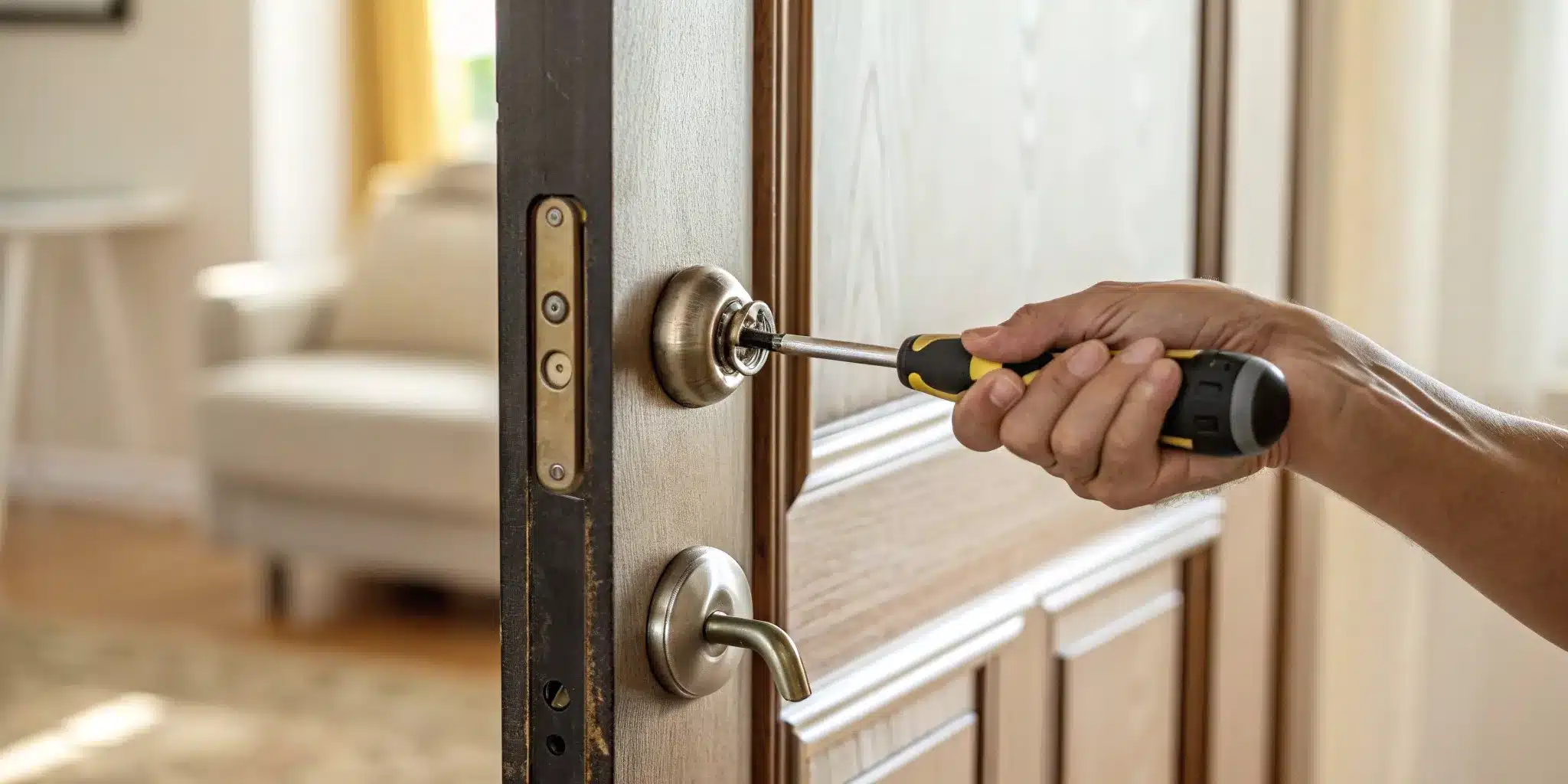
A reliable lock is the first line of defense for your home or business, providing a fundamental sense of security. When that lock fails, it’s easy to feel exposed and anxious. A door knob that refuses to engage properly isn’t just an inconvenience; it’s a security risk that needs immediate attention. The good news is that you can often resolve the issue yourself with a few simple checks. Whether it’s a buildup of grime, a simple misalignment, or a worn-out component, identifying the problem is the first step. This guide will show you how to fix a door knob not locking, empowering you to restore your door’s integrity and, more importantly, your peace of mind.
Key Takeaways
- Start with a quick diagnosis: Most lock problems stem from one of three things: a dirty mechanism, a broken internal part, or a misaligned door frame. Figure out which one you’re dealing with before you grab your tools.
- Handle the easy fixes first: A thorough cleaning, a spray of lock-specific lubricant, and tightening loose screws on the hinges and strike plate can often solve the problem without needing to take anything apart.
- Recognize when a DIY fix isn’t enough: If you’re dealing with a broken key, a completely frozen mechanism, or a warped door, a professional locksmith can resolve the issue safely and ensure your home is properly secured.
Why Won’t My Door Knob Lock?
There’s nothing more frustrating than a door knob that just won’t lock. You turn the key or twist the knob, and… nothing. It’s a common problem that can leave you feeling insecure in your own home or office. Before you panic, know that the cause is often a simple mechanical issue you might be able to identify yourself. Most lock problems boil down to one of three things: the lock mechanism itself is dirty or worn out, a specific part inside has failed, or the door and its frame are no longer aligned correctly. Figuring out which one is the culprit is the first step toward a solution.
Common Reasons Your Lock Is Stuck
Over time, your lock goes through a lot. Everyday use leads to wear and tear, and it’s easy for dirt, dust, and grime to build up inside the intricate mechanism. This buildup can make the lock’s internal pins and springs stiff and difficult to move. If your key is hard to turn or the knob feels sticky, a good cleaning might be all it needs. Rust is another common enemy, especially for exterior doors exposed to New York’s humid summers and icy winters. Sometimes, the problem is as simple as loose screws in the knob or faceplate, which can cause parts to shift and jam. If you’re locked out because of a stuck lock, our emergency locksmith team is available 24/7 to help.
Know Your Lock Type
Not all lock failures are due to dirt or alignment. Sometimes, a critical part inside the lock has simply broken. The most common point of failure is the latch mechanism—that’s the small, spring-loaded bolt that slides out from the side of the door to hold it shut. If this part is cracked, damaged, or “stripped,” it won’t extend or retract properly, preventing the lock from engaging. You might hear a clicking sound without any movement, or the knob might turn endlessly. In these cases, cleaning won’t solve the problem. The lock itself is compromised, and you’ll likely need a full replacement to secure your door properly. Our residential locksmith services can help you choose and install a durable new lock.
Check Your Door Frame Alignment
Often, the lock isn’t the problem at all—it’s the door. For a lock to work, the latch must line up perfectly with the strike plate, which is the metal plate on the door frame with a hole in it. If they’re even slightly misaligned, the latch can’t slide into the hole, and the door won’t lock. This misalignment is incredibly common and can happen for many reasons. Your house might settle over time, the door can warp with changes in humidity, or the hinges might come loose. You can check for this by closing your door slowly and watching how the latch meets the strike plate. If it hits the plate instead of entering the hole, you’ve found your issue. Sometimes this requires a simple adjustment, but it can also point to a bigger issue with the door itself that may need professional door repair and installation.
Gather Your Tools and Prep for Safety
Before you start taking things apart, let’s get you set up for success. Having the right tools on hand and thinking about safety first will make this whole process smoother and stress-free. Most of what you’ll need is probably already in your home toolkit. This isn’t about a major renovation; it’s about a targeted fix. A little preparation ensures you can work efficiently without having to stop and search for a screwdriver mid-repair. Let’s walk through the simple tools and safety steps to get you ready.
The Tools You’ll Need
You don’t need a professional-grade workshop for this fix. Grab a few basic items to make the job easier. A Phillips screwdriver is essential for removing the knob’s screws. It’s also helpful to have a dry-erase marker or some masking tape to mark positions so you can put everything back together correctly. If the strike plate or latch needs a little persuasion to fit, a small metal file or a piece of sandpaper can help you smooth out any rough spots. Finally, a pair of diagonal pliers can be useful for gripping small components if needed.
Essential Safety Gear
Even for a seemingly small project like fixing a doorknob, it’s smart to protect yourself. The last thing you want is a simple repair turning into a trip to the pharmacy for bandages. I always recommend wearing a pair of work gloves. They’ll protect your hands from any sharp metal edges on the lock mechanism or splintered wood on the door frame. If you end up needing to chisel or file anything down, a pair of safety goggles is a must to shield your eyes from any flying debris. It only takes a second to put them on and can save you a lot of trouble.
Considering Pro-Level Tools
Sometimes you’ll open up a lock and realize the problem is more complex than a loose screw. If you find bent internal parts or a mechanism that’s completely seized, your basic toolkit might not be enough. This is where professional locksmiths come in with specialized tools and experience. If you feel out of your depth or if the security of your home is at stake, don’t hesitate to call for backup. A 24/7 emergency locksmith can handle complex issues quickly and ensure your door is secure, giving you peace of mind.
How to Diagnose the Problem Quickly
Before you start taking things apart, a quick diagnosis can often pinpoint the exact problem with your lock. It’s like being a detective for your door. By methodically checking a few key areas, you can save yourself a lot of time and frustration. Most lock issues fall into a few common categories, and figuring out which one you’re dealing with is the first step toward a successful fix. Let’s walk through how to identify what’s going wrong.
Start With a Visual Check
Your eyes are your best first tool. Start by closely examining the lock mechanism, both on the knob and the edge of the door. Look at the latch—that’s the small metal bolt that slides in and out of the door. Do you see any visible cracks, bends, or signs of damage? Check the screws on the doorknob and faceplate; are any of them loose or missing? Sometimes, the fix is as simple as tightening a screw. Also, inspect the keyhole for any debris or obstructions that might be preventing the key from working properly. A quick visual once-over can often reveal the culprit right away.
Test Each Part of the Lock
Next, test the moving parts individually to isolate the issue. Turn the knob or handle from both inside and outside. Does it feel loose, stiff, or gritty? Does the latch retract fully when you turn the handle? If the handle turns but the latch doesn’t move, the problem is likely with the internal mechanism, such as a broken spindle or spring. Try locking and unlocking the door with the key. If the key is hard to turn or won’t go in all the way, the issue could be with the cylinder. This process of elimination helps you understand which specific component has failed.
Check the Strike Plate Alignment
One of the most common reasons a door won’t lock is simple misalignment. The latch needs to line up perfectly with the hole in the strike plate, which is the metal plate on the doorframe. Close the door slowly and watch how the latch meets the strike plate. Does it hit the plate instead of entering the hole? Changes in humidity or the house settling can cause the door and frame to shift over time. If you suspect a misalignment, you may need a professional door repair to get things back in place. This is often an easy fix but is frequently overlooked.
Warning Signs to Look For
Your lock will usually give you hints before it fails completely. Pay attention to these warning signs. Is the lock becoming increasingly stiff or difficult to turn with the key? Does the handle feel wobbly or loose in your hand? Have you started to jiggle the key or push on the door to get it to lock? These are all indicators that something is wearing out. Addressing these small annoyances early can prevent a full-blown lockout situation. If you notice several of these issues, it might be a sign that the internal parts are worn and it’s time to call for a professional emergency locksmith.
Your Step-by-Step Repair Guide
Ready to get hands-on? This guide will walk you through the most common fixes for a stubborn door knob, starting with the simplest solutions. Grab your tools, and let’s get that lock working smoothly again.
Step 1: Clean and Lubricate the Lock
Often, the problem is just a bit of buildup. Over time, dust, grime, and tiny metal shavings can accumulate inside the lock mechanism, making it stiff and difficult to turn. Before you start taking things apart, give the lock a good cleaning. Use a can of compressed air to blow out any debris from the keyway. Then, apply a lock-specific lubricant like a graphite or silicone-based spray directly into the keyway and onto the latch. Insert your key and turn it back and forth a few times to spread the lubricant evenly. This simple step can often solve the problem right away without any need for disassembly.
Step 2: Realign the Lock Components
If cleaning doesn’t do the trick, the issue is likely alignment. A door that won’t lock is often because the latch—the part that extends from the door—doesn’t line up perfectly with the strike plate hole in the door frame. This can happen for many reasons, from a house settling over time to loose hinge screws causing the door to sag. Slowly close your door and watch carefully to see if the latch hits the strike plate above or below the opening. This visual check will tell you exactly where the misalignment is, which is crucial for the next step. For many homeowners, this is a common residential locksmith issue.
Step 3: Adjust the Strike Plate
Once you’ve identified a misalignment, you can often fix it by adjusting the strike plate. First, try tightening the screws on all the door hinges. If the door has sagged, this can sometimes be enough to pull it back into alignment. If that doesn’t work, you’ll need to reposition the strike plate itself. Unscrew the plate and use a metal file to enlarge the opening slightly in the direction the latch needs to go. If a larger adjustment is needed, you may have to fill the old screw holes with wood putty, let it dry, and then drill new pilot holes to move the plate up or down. If the door itself is warped, you might need professional door repair and installation.
Step 4: Replace Worn-Out Parts
If the lock and strike plate are aligned but the latch won’t extend or retract properly, you might be dealing with a worn-out internal mechanism. Take a close look at the latch mechanism itself. If you see any visible cracks or damage, or if the parts feel loose and “stripped,” the component has likely failed. Unfortunately, these small internal parts are often difficult to repair or replace individually. In most cases, the most effective and secure solution is to replace the entire doorknob or lockset. This ensures all components are new and working together correctly, restoring your peace of mind.
Step 5: Test Your Repair
After cleaning, realigning, or replacing parts, it’s time to test your work. With the door open, turn the knob or key to ensure the latch extends and retracts smoothly. Then, close the door and try locking it. Does it lock without resistance? Is it secure? If you’ve tried all these steps and the lock still won’t function correctly, the problem might be more complex than a simple DIY fix can handle. At this point, it’s best to avoid further frustration and potential damage. If you find yourself locked out or unable to secure your property, our emergency locksmith team is available 24/7 to help.
Troubleshooting More Complex Issues
So, you’ve cleaned, lubricated, and tightened everything, but your doorknob still won’t lock. Don’t worry. Sometimes the problem runs a little deeper than surface-level adjustments. These next steps involve looking at issues with the door frame, the internal mechanics of the lock, and even the weather’s impact. While these problems can be more challenging, identifying the root cause is the key to a lasting fix. Let’s walk through some of the more complex scenarios you might encounter and what you can do about them.
How to Handle Door Frame Issues
Often, the lock isn’t the problem at all—it’s the door frame. If your door doesn’t lock, it could be because the latch isn’t aligning perfectly with the strike plate hole. Over time, a house can settle, or a door frame can warp from humidity, causing this misalignment. Check the gap between your door and the frame. Is it even all the way around? Try tightening the screws on the door hinges first, as this can sometimes pull the door back into place. If the frame itself is warped or damaged, you might need professional door repair and installation to get everything lined up correctly again.
When to Replace the Entire Lock
There comes a point where a lock is simply beyond a simple repair. If you’ve tried everything and the knob still won’t turn or the bolt won’t extend, the internal mechanisms are likely worn out or broken. Continuing to force a faulty lock can cause it to fail completely, potentially locking you out. In these cases, replacing the entire lockset is the safest and most effective solution. A new lock restores your security and gives you peace of mind. If you’re not comfortable tackling a full replacement, a residential locksmith can install a new one for you quickly and securely.
Fixing Weather-Related Lock Problems
Living in New York means dealing with all kinds of weather, which can take a toll on your locks, especially exterior ones. Humidity and rain can cause rust to form inside the lock mechanism, while dirt and grime can build up and cause parts to stick. Regular cleaning and lubrication can prevent many of these issues, but sometimes the damage is already done. If your lock becomes stiff or difficult to operate after a storm or a humid spell, internal corrosion could be the culprit. While a deep clean might help, severe rust often means it’s time for a replacement.
How to Fix Internal Springs and Pins
If you’re feeling a bit more adventurous, you can inspect the lock’s internal components. To do this, you’ll need to remove the door handle to get a look at the spindle and springs inside. Sometimes, a tiny spring can break or a pin can fall out of place, preventing the lock from engaging. If you spot any broken or obviously damaged parts, you’ll need to replace them. Finding the exact replacement part can be tricky, though. If you take it apart and aren’t sure how to put it back together, or if the problem persists, don’t hesitate to call an emergency locksmith for help.
Know When to Call a Professional Locksmith
While fixing a lock yourself can be satisfying, some situations are best left to the experts. Knowing when to put down the screwdriver and pick up the phone can save you time, prevent further damage, and ensure your home or business is truly secure. A professional brings the right tools and experience to diagnose complex issues quickly and get the job done right the first time. If you’ve tried the basic steps and are still stuck, or if the problem feels beyond a simple fix, it’s a good sign you need a professional’s touch.
Signs It’s Time to Call for Help
Sometimes a locking issue is a symptom of a bigger problem. If you’re not sure how to fix the issue or it seems severe, it’s best to call a professional. A key that breaks off in the lock, for instance, requires special tools for extraction. If the lock’s internal mechanism is completely frozen or you can see signs of tampering or significant rust, a DIY fix might not hold. For urgent situations, like being locked out or dealing with a broken lock after a break-in attempt, an emergency locksmith can provide immediate, reliable help when you need it most.
Simple Tips to Maintain Your Locks
The best way to avoid a lock emergency is through regular upkeep. Your locks and door handles are crucial for keeping your home safe, so a little attention goes a long way. Doing simple maintenance, like regularly checking your locks and tightening loose screws, can stop many problems before they start. Once a year, spray a graphite or silicone-based lubricant into the keyway to keep the internal pins moving smoothly. This simple step prevents the grinding and sticking that often leads to bigger issues down the road and keeps your hardware working as it should.
Keeping Your Home Secure
A door that doesn’t lock properly is more than an inconvenience—it’s a security risk. If your lock is unreliable, it compromises the safety of your property and everyone inside. If you’re concerned about an older or damaged lock, it might be time to consider an upgrade. A professional can evaluate your current setup and recommend modern, high-security options. Improving your home’s defenses can be as simple as installing a new deadbolt or exploring comprehensive security systems for greater peace of mind and a stronger sense of safety.
What to Expect for Professional Service Costs
Calling a professional is an investment in your security. If the problem seems to be with the inside parts of the doorknob, you might need to replace the entire lockset. A locksmith can quickly determine if a repair is possible or if a full replacement is the safer, more cost-effective option. They can also spot related issues you might miss, such as a misaligned frame that requires door repair and installation services to fix the root cause. While there’s a cost for professional service, it often prevents more expensive damage from a failed DIY attempt.
Related Articles
- Artificial Intelligence In Security (Guide)
- Beware Of Scams: Common Tricks Targeting Homeowners
- Locksmith Services
Frequently Asked Questions
My lock feels stiff, but it still works. Do I really need to do anything? Yes, you should definitely address it. A stiff or sticky lock is often the first warning sign that something is wrong. It’s usually caused by dirt and grime building up inside the mechanism. Taking a few minutes to clean and lubricate it now can prevent the problem from getting worse and save you from the frustration of a complete lock failure or a lockout situation down the road.
How can I quickly tell if the problem is the lock itself or the door’s alignment? Here’s a simple test you can do. Keep the door open and try to lock the doorknob or deadbolt. If the latch or bolt extends and retracts smoothly without any issue, then the lock mechanism itself is likely fine. The problem is probably that the latch isn’t lining up correctly with the strike plate on the door frame when you try to close it.
Can I just use a household oil like WD-40 to lubricate my lock? Please don’t. While it seems like a quick fix, common household lubricants like WD-40 are wet and can actually attract more dust and dirt over time, gumming up the delicate pins inside your lock. You should always use a product specifically designed for locks, like a dry graphite or silicone-based spray, which won’t leave a sticky residue.
I’ve tried cleaning and tightening everything, but it’s still not working. What’s next? If you’ve already tried the basic fixes like cleaning, lubricating, and tightening all the screws without success, the issue is likely more serious. You’re probably dealing with a worn-out or broken internal part, like the latch mechanism or a spring. At this point, the most reliable and secure solution is to replace the entire lockset.
What are the definite signs that I should stop and call a professional immediately? You should stop what you’re doing and call for help if your key breaks off inside the lock, if the lock has been visibly damaged or tampered with, or if the knob just spins freely without engaging the latch at all. These situations often require specialized tools and expertise to fix without causing more damage to your door.
Need professional help in NYC? Contact Golden Key Locksmith NYC for Commercial Door Repair or Metal Door Repair. Available 24/7 across Manhattan and all NYC boroughs.