

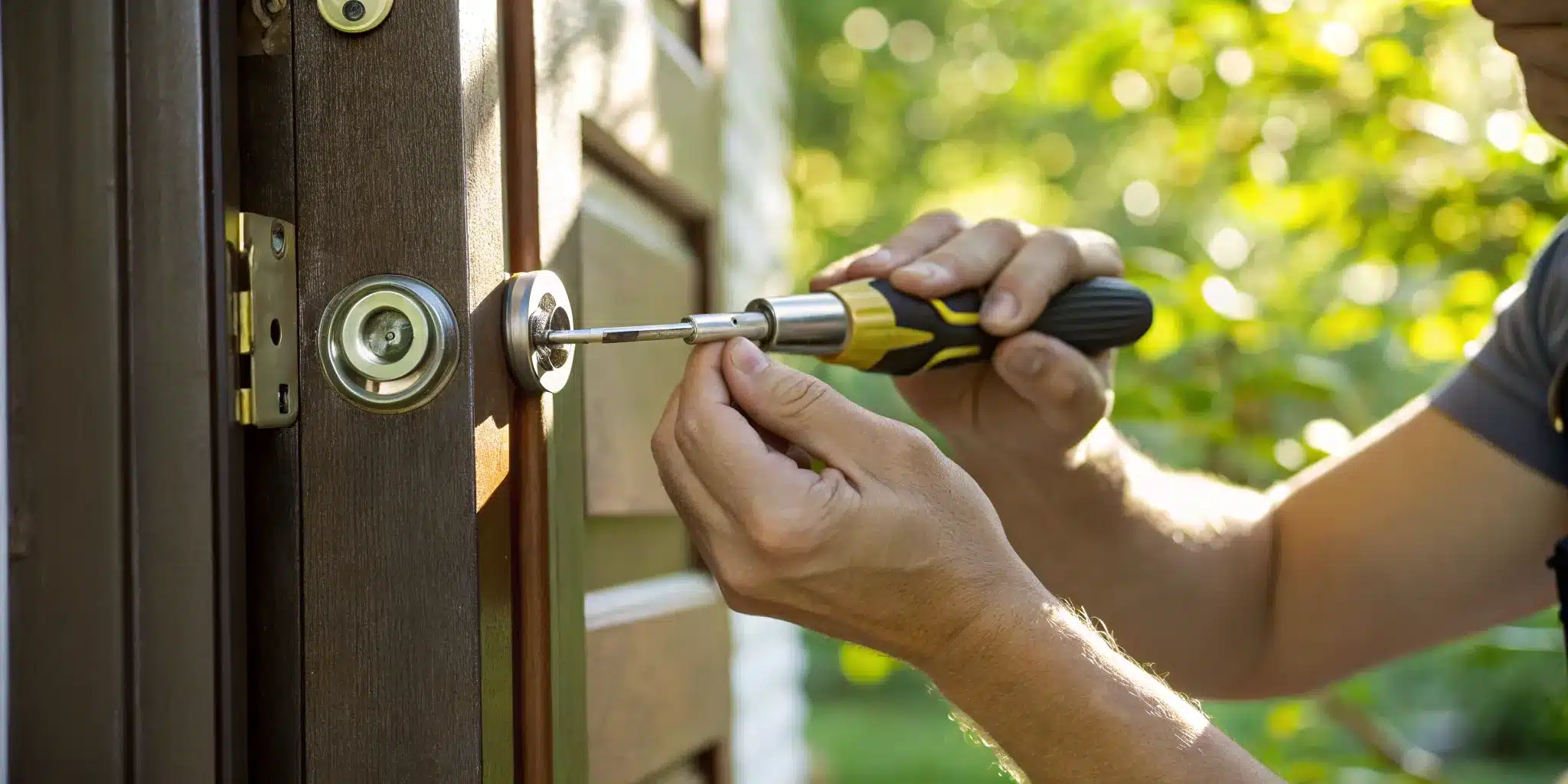
Have you ever had to shove your shoulder into the door just to get it to latch on a humid summer day? Or struggled with a frozen lock in the dead of winter? Here in New York, our doors and locks take a beating from the weather. Wood frames swell and shrink, and metal mechanisms can get gummed up or stiff. These seasonal shifts are a leading cause of lock problems, but the fixes are often straightforward. Instead of fighting with your door every time the weather changes, you can make a few simple adjustments. We’ll show you how to diagnose and perform a basic exterior door lock repair to counteract the effects of the elements and keep everything operating smoothly year-round.
Key Takeaways
- Pinpoint the real issue first: Before you start, determine if the problem is the lock’s internal mechanism or its alignment. Test the lock with the door open—if it works smoothly, your issue is likely the strike plate’s position on the door frame.
- Master the basic fixes: Many common lock problems can be solved with simple tools. Tighten loose screws, clean the keyway with compressed air, and use a dry graphite or silicone lubricant to address sticking without attracting more grime.
- Prioritize security over a temporary repair: A DIY fix isn’t always the safest option. If your lock is old, visibly damaged, or rusted, replacing it is a better investment. A new, modern lock provides reliable security that a patch-up job on old hardware can’t guarantee.
Common Door Lock Problems You Can Fix Yourself
Before you pick up the phone to call a locksmith, take a moment. Many common door lock issues are surprisingly simple to fix on your own with just a few basic tools and a little patience. A stubborn lock doesn’t always mean it’s broken beyond repair. Often, it’s just a sign that a small adjustment is needed. Walking through a few diagnostic steps can help you identify the root cause and, in many cases, handle the fix yourself. This can save you time, money, and the frustration of dealing with a faulty lock. Let’s look at some of the most frequent problems and how you can tackle them.
The Lock and Strike Plate Are Misaligned
Have you ever had to jiggle the doorknob or push on the door just right to get it to latch? This is a classic sign of a misaligned lock. The latch bolt in your door needs to line up perfectly with the hole in the doorframe, which is protected by a metal piece called the strike plate. Over time, doors can shift as a house settles or wood expands and contracts with the weather. To confirm this is the issue, try locking the door while it’s open. If the bolt extends and retracts smoothly, misalignment is your culprit. You can often fix this by simply adjusting the strike plate to better meet the latch.
The Mechanism Sticks or Jams
When turning the key feels like a workout, it’s usually because the internal mechanism is sticking. Dirt, dust, and tiny metal shavings can build up inside the lock over years of use, creating friction that prevents the pins and springs from moving freely. This is especially common in older locks that haven’t been serviced. A quick fix is often a puff of graphite lubricant or a spray of a dry, silicone-based lubricant directly into the keyway. This can clear out debris and get the internal parts moving smoothly again. Just be sure to avoid oil-based products like WD-40, which can attract more grime and make the problem worse over time.
Your Key Won’t Go In or Turn
There’s nothing more frustrating than a key that refuses to go into the lock or won’t turn once it’s in. If the key won’t insert, the keyway might be obstructed by debris or even a piece of a previously broken key. If the key goes in but won’t turn, the issue could be misalignment or worn-out internal pins. If your key ever breaks off in the lock, resist the urge to force it. You might be able to gently pull the broken piece out with needle-nose pliers if it’s visible. If not, forcing it will only push it deeper. For a broken key you can’t easily remove, it’s best to call for emergency locksmith services to avoid damaging the lock further.
The Lock Feels Loose or Wobbly
A doorknob or deadbolt that jiggles in place feels insecure, and for good reason—it is. A loose lock is not only annoying but also a potential security risk, as it can be easier to force open. The good news is that this is usually the easiest problem to fix. The issue is almost always just a couple of loose screws. Over time, the daily vibrations from opening and closing the door can cause the mounting screws to back out. Simply grab a screwdriver and tighten the screws on the interior side of the lockset. Be careful not to overtighten, as this can cause the mechanism to bind. A snug fit is all you need.
Internal Parts Are Worn Out
If you’ve tried lubricating and tightening your lock but it still isn’t working correctly, the problem might be internal. Like any mechanical device, the pins, springs, and tumblers inside a lock wear down with repeated use. When these components become too worn, the key will no longer align them properly, and the lock will fail to open. At this point, the lock has likely reached the end of its lifespan. While it’s possible to take the lock apart and replace individual components, this is a complex task. For most people, this is the moment to call a residential locksmith to either repair the internal mechanism or install a new lock.
How to Diagnose Your Lock Problem
Before you can find the right fix, you need to play detective. Understanding the root cause of a lock issue is the first and most important step. Often, a quick investigation is all it takes to figure out what’s going on with your door. Let’s walk through how to diagnose the problem so you can decide on your next move.
Start With a Visual Check
First things first, give your lock a thorough once-over. A careful visual inspection can reveal a lot. Look for obvious signs of trouble like rust, dents, or cracks on the lock body or the door frame. Are the screws holding the lock and strike plate tight, or have they become loose over time? Peek into the keyway to see if there’s any dirt or debris lodged inside. This initial check helps you identify any clear issues that might be causing the malfunction.
Test How the Lock Works
Next, see how the lock behaves in different situations. Start with the door wide open and try locking and unlocking it. Pay attention to how the key turns and how the bolt moves—it should be smooth. Now, close the door and try again. If the lock suddenly becomes stiff or won’t engage, you’ve learned something important. This simple test helps you determine if the problem is inside the lock mechanism itself or related to how it interacts with the door frame. If the lock is completely jammed and you find yourself locked out, it’s best to call for emergency service.
Spot Alignment and Mechanical Issues
If the lock works perfectly when the door is open but struggles when it’s closed, you’re probably dealing with an alignment issue. This common problem occurs when the latch or bolt doesn’t line up correctly with the strike plate on the door frame. Wood doors can swell with humidity, causing this misalignment. Check the screws on the strike plate and hinges; simply tightening them can sometimes solve the problem. If the door itself seems to be sagging or out of place, you may need a professional door adjustment to get everything working smoothly again.
What Tools and Materials Will You Need?
Before you can get to work, you’ll need to gather your supplies. The good news is that you probably have most of what you need already tucked away in a toolbox or junk drawer. You can often fix common door lock problems yourself with just a few basic tools. Having everything ready before you start taking things apart will make the process much smoother and save you from a frantic search for a tiny screw later on.
Think of this as setting up your workstation. Lay out a towel on the floor to catch any small parts and to protect your door from scratches. Grab a few small containers or plastic bags to keep screws and internal components organized—trust me, this step is a lifesaver. With the right tools in hand, you’ll be ready to tackle the most common lock issues without having to call for help. If you get started and realize the job is more than you bargained for, our residential locksmith team is always here to help.
Your Essential Repair Kit
You don’t need a professional-grade tool chest for most basic lock repairs. A small, well-rounded kit will get you through almost any simple fix. Make sure you have these items before you begin:
- Screwdriver Set: You’ll need both Phillips and flathead screwdrivers in various sizes. Most lock hardware uses Phillips head screws, but it’s good to have both on hand.
- Plastic Bags or Containers: Use these to keep track of tiny screws and internal parts as you disassemble the lock.
- Marker: A thin marker is helpful for marking the position of components before you remove them, ensuring everything goes back in the right place.
- Aerosol Duster: A can of compressed air is perfect for blowing dust and debris out of the keyway and lock mechanism.
The Right Lubricants and Cleaners
A sticky or jamming lock is often just thirsty for a little lubrication. But using the wrong kind can make the problem worse by attracting more dirt and grime over time. For the best results, use a graphite or silicone-based spray lubricant designed specifically for locks. These lubricants are dry and won’t gum up the internal mechanism.
While a product like WD-40 can provide a temporary fix, it’s an oil-based solvent that can attract dust, eventually creating a sticky residue inside your lock. If your keyway is clogged with debris, start with an aerosol duster to clean it out before applying any lubricant. A clean, properly lubricated lock will operate smoothly for years.
Replacement Parts to Have on Hand
Sometimes, the problem comes down to a single worn-out or broken part, like a spring or a screw. You can often find standard replacement parts at your local hardware store. Take the old part with you to make sure you get an exact match.
However, if a major component of the lock mechanism is cracked or severely damaged, finding a replacement part can be difficult and may not be worth the effort. In these cases, or if your lock is old and no longer provides adequate security, a full replacement is your best bet. A new lock is an investment in your home’s safety, and our team can handle any door repair and installation you need.
How to Fix Common Lock Problems Step-by-Step
Alright, you’ve diagnosed the issue, and you have your tools ready. It’s time to tackle the repair. These step-by-step guides cover the most frequent lock problems you’ll encounter. Remember to work carefully and test your lock after each adjustment. If you ever feel like you’re in over your head or applying too much force, it’s always better to pause and call a professional. A small problem can become a big one if a component breaks. Let’s get started on these simple fixes that can make a world of difference.
Realign a Lock and Strike Plate
If your lock works perfectly when the door is open but won’t catch when it’s closed, you’re dealing with a classic alignment issue. This often happens as a house settles or with temperature changes. First, unscrew and remove the metal strike plate from the door frame. Close the door and use a pencil to mark exactly where the latch bolt hits the frame. Now, reposition the strike plate so the opening is centered on your mark and screw it back in. If the door itself seems warped or saggy, you might need a more involved door repair to fix the root cause.
Free a Sticking or Jammed Mechanism
A lock that sticks or feels gritty is often just thirsty for some lubrication or has some loose screws. Before you do anything else, check all the screws on your lockset and handles and tighten any that are loose. If it’s still sticking, grab a graphite or silicone-based spray lubricant. Aim the nozzle into the keyway and give it a quick spray. Also, spray a little directly onto the latch bolt. Insert your key and work the lock back and forth a few times to spread the lubricant evenly. If the mechanism is completely jammed and won’t budge, avoid forcing it. This is when you should call for emergency locksmith assistance to prevent further damage.
Fix a Key That Won’t Insert or Turn
When your key suddenly stops working, it’s usually due to one of two things: debris in the keyway or, worse, a key that has broken off inside. If you suspect debris, use a can of compressed air to blow out the keyway. If your key has snapped, don’t panic. If a piece is sticking out, you can try to gently pull it straight out with needle-nose pliers. Don’t try to turn the lock or wiggle the piece too much. If you can’t get it out easily, stop. Trying to force it can push the fragment deeper, making it a much more difficult extraction. A professional locksmith has specialized tools for this exact situation.
Tighten Loose Lock Components
Does your doorknob or deadbolt feel wobbly? This is a common issue that’s incredibly easy to fix. Over time, the simple act of opening and closing the door can cause the screws holding the lock assembly to loosen. Take a look at the interior side of your door. You’ll see two exposed screws on the plate of the knob or the thumbturn of the deadbolt. Grab the appropriate screwdriver (usually a Phillips head) and tighten them until they’re snug. Be careful not to overtighten, which can cause the mechanism to bind. After you’re done, test the lock to make sure it operates smoothly. This simple task is a key part of basic residential locksmith maintenance.
Clean Debris From the Keyway
Sometimes, the only thing wrong with your lock is that it’s dirty. Dust, lint, and tiny particles can build up inside the keyway, preventing your key from inserting fully or turning properly. The safest and most effective way to clean it is with a can of compressed air. Point the straw directly into the keyway and give it a few short, powerful bursts. This will dislodge and blow out most of the gunk without you having to stick anything inside. For a deeper clean, you can follow up with an electrical contact cleaner, which cleans effectively and evaporates quickly without leaving any residue. Wiping your keys down occasionally helps prevent transferring dirt into the lock.
Repair or Replace? When to Get a New Lock
You’ve tried tightening the screws, lubricating the keyway, and realigning the strike plate, but your lock still isn’t working right. This is where every DIY project reaches a crossroads: do you keep trying to fix it, or is it time to call it and get a replacement? While the satisfaction of fixing something yourself is great, your home’s security is one area where it pays to be realistic. Sometimes, a repair is just a temporary patch on a bigger problem that could leave you vulnerable.
Deciding whether to repair or replace your lock comes down to three key factors: the extent of the damage, your overall security needs, and the long-term cost. An old, failing lock isn’t just an inconvenience; it can be a serious security risk. Before you spend another hour tinkering with a worn-out mechanism, it’s worth taking a step back. We’ll walk through how to determine if a brand-new lock is the smarter, safer choice for your home. A professional can help you find the right hardware and ensure it’s installed correctly, giving you lasting peace of mind and a door that closes with a satisfying, secure click. It’s about making a choice that protects your home not just for today, but for years to come.
Signs Your Lock Is Beyond a DIY Fix
It’s important to know when to step back and recognize that a lock is past the point of a simple fix. If you see signs of serious damage, like a bent frame from an attempted break-in or deep, pervasive rust that’s compromising the metal, a replacement is your best bet. Another clear signal is age. If your lock is an old, obscure model, finding replacement parts can be a frustrating and often fruitless search. Instead of spending weeks hunting for a single component, investing in a new, modern lock is a more efficient and reliable solution for your home’s door repair and installation needs.
Consider Your Home’s Security
Even if you can get an old lock working again, ask yourself if it truly makes you feel secure. A lock that’s technically functional but outdated might not stand up to modern lock-picking techniques. Your front door is your first line of defense, and its security shouldn’t be an afterthought. This is a perfect opportunity to upgrade to something more robust, like a high-security deadbolt or a keyless entry system. A professional residential locksmith can assess your current setup and recommend modern solutions that provide far greater protection and convenience for you and your family.
Compare the Costs: Repair vs. Replacement
When you’re weighing your options, it’s easy to assume that a repair will always be cheaper. While a simple fix might cost less upfront, you have to consider the long-term value. Spending a couple of hundred dollars to patch up an old, unreliable lock could mean you’ll be facing another failure—and another bill—in a year or two. A full replacement is an investment. Installing a new, high-quality lock ensures reliability for years to come and prevents the stress of an unexpected lockout. If your lock fails completely, you’ll need an emergency locksmith, which can add to the overall cost.
How to Prevent Future Lock Problems
A little bit of prevention goes a long way in keeping your locks working smoothly and avoiding that sinking feeling of a key breaking off or a door refusing to open. You don’t need to be an expert to keep your locks in great shape. By building a few simple habits, you can extend the life of your hardware and maintain your home’s security. Think of it as simple upkeep, just like any other part of your home. These small steps can save you from the headache and expense of an unexpected lockout or a major repair down the line. Taking care of your locks is one of the easiest ways to ensure your home remains a safe, secure space.
Create a Simple Maintenance Routine
One of the best things you can do for your locks is to clean them regularly. Over time, dust, grime, and tiny bits of debris can build up inside the keyway, causing the mechanism to stick. A simple routine can make all the difference. Once or twice a year, use a can of compressed air to blow out any debris from the keyhole. Afterward, wipe down the lock body, handle, and plate with a soft, damp cloth to remove surface grime. This quick cleaning helps prevent the buildup that leads to bigger problems. For more comprehensive care for your residential locksmith needs, keeping things clean is always the first step.
Protect Your Locks From the Weather
New York City weather can be tough on exterior locks. From humid summers to freezing winters, the elements can cause metal parts to rust, expand, or freeze solid. If you find your lock frozen, try applying a bit of isopropyl alcohol to thaw it out. You can then add a small amount of lubricant to help prevent it from freezing again. Be careful not to overdo it with oil-based lubricants, as they can attract dirt and gum up the lock over time. If you notice your door is letting in drafts or the lock is constantly exposed to the elements, you might need professional door repair and installation to ensure a proper seal and protect your hardware.
Use Your Keys and Locks Correctly
This might sound obvious, but always use the correct key for the lock. Using a key that’s bent, damaged, or poorly copied can seriously harm the delicate pins inside the lock mechanism. If you have to jiggle or force the key to get it to turn, stop. This is usually a sign of a bigger issue, like misalignment or worn-out internal parts. Forcing it will only make things worse and could lead to a broken key. A well-maintained lock should operate smoothly. If it doesn’t, and you find yourself struggling with it regularly, it’s better to address the problem head-on than to wait until you’re locked out and need an emergency locksmith.
Related Articles
- How To Repair A Round Door Lock: A DIY Guide
- Step-by-Step Guide On How To Fix Broken Door Lock
- A Step-by-Step Guide To Electronic Lock Repair
- How To Fix A Door Lock Inside: A DIY Guide
- Internal Door Lock Mechanism Broken? Here’s The Fix
- Revolving Doors Murray Hill · 212-204-1655
- The Essential Panic Bar Door Replacement Guide
- What to Look For in a Commercial Electric Strike Door Lock Kit
Frequently Asked Questions
What’s the best type of lubricant to use for a sticky lock? For the best results, you should always use a dry, non-petroleum-based lubricant like a graphite or silicone spray. These products are designed specifically for locks because they don’t attract the dust and grime that can clog the internal mechanism. While it might be tempting to grab a can of WD-40, it’s an oil-based solvent that can create a sticky residue over time, making the problem worse in the long run.
I tried to fix my lock myself and now it seems worse. What should I do? First, don’t panic—it happens. The most important thing is to stop what you’re doing and not force any parts that don’t want to move, as this can cause permanent damage. Take a step back and assess the situation. If the lock is now completely jammed or you feel you’re in over your head, it’s the perfect time to call a professional. A skilled locksmith can diagnose the new issue and fix it without causing further harm to your door or lock.
How do I know if I should replace my lock or just have it rekeyed? Rekeying is a great option when your lock is in good working condition, but you want to use a new key—for instance, after moving into a new home or losing a spare. It involves changing the internal pins so the old key no longer works. You should opt for a full replacement if the lock itself is old, damaged, rusted, or simply doesn’t offer the level of security you need. A replacement is an upgrade to the hardware itself, not just the key.
How often should I actually perform the maintenance you mentioned? A little bit of lock maintenance goes a long way. A good rule of thumb is to give your locks a quick check-up and cleaning once or twice a year. A simple routine of tightening any loose screws and cleaning out the keyway with compressed air can prevent most common issues. If you live in an area with harsh weather, like heavy rain or snow, you might want to check on your exterior locks more frequently to ensure they are clean and operating smoothly.
Is it really safe to try and pull a broken key out of a lock myself? You can safely try to remove a broken key only if a piece is clearly visible and sticking out far enough to be gripped firmly with needle-nose pliers. The key is to pull it straight out without wiggling or turning it. If the piece is flush with the lock or deep inside the keyway, you should stop immediately. Attempting to dig it out with other objects will almost certainly push it deeper and damage the internal pins, turning a simple extraction into a much more complex repair.
Need professional help in NYC? Contact Golden Key Locksmith NYC for Commercial Door Repair or Metal Door Repair. Available 24/7 across Manhattan and all NYC boroughs.