
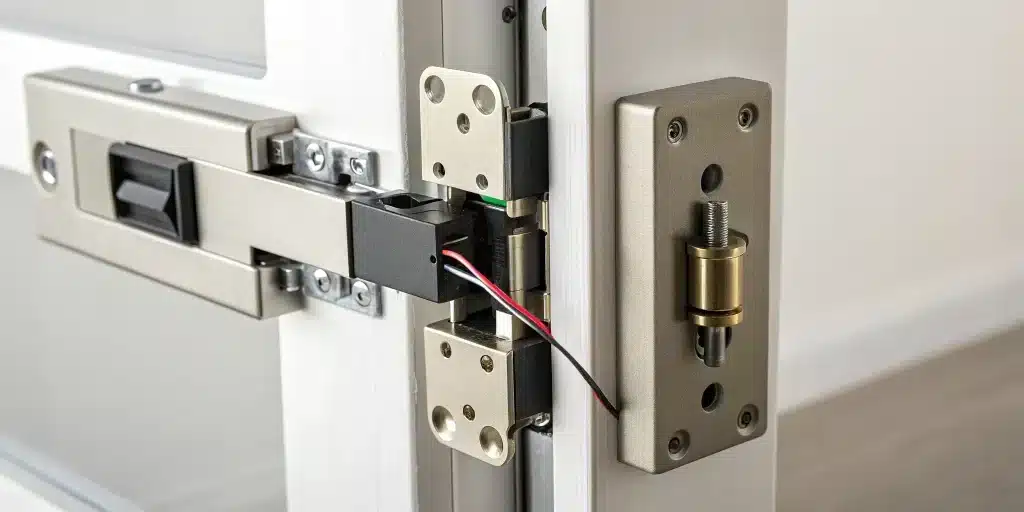
If you’ve ever been buzzed into an apartment or office, you’ve used an electric strike lock. They’re a fantastic way to upgrade your property’s security, giving you remote control over who gets in without changing your entire lockset. But making that upgrade happen means getting the installation right, and that’s where things can get tricky. The heart of the process is the electric strike lock wiring diagram, a technical map that shows how every component connects. It can look intimidating, but it’s the key to a safe and functional system. This guide will walk you through reading that diagram, installing your lock, and ensuring your new security feature works perfectly from day one.
Key Takeaways
- Know the Difference Between Fail-Safe and Fail-Secure: Your choice determines what happens during a power outage. Fail-safe unlocks (essential for fire exits), while fail-secure stays locked (for high-security rooms). Getting this right is crucial for both safety and security.
- Correct Wiring and Alignment are Non-Negotiable: An electric strike will only work reliably if it receives the correct voltage and is perfectly aligned with the door’s latch. Always follow the wiring diagram and double-check the physical fit to prevent damage and malfunctions.
- Test Your Entire System, Not Just the Lock: An electric strike is part of a larger access control system. After installation, test everything together—the keypad, the power supply, and the lock itself—to ensure every component communicates and functions as a complete, reliable unit.
What Is an Electric Strike Lock?
If you’ve ever been “buzzed in” to an apartment building or office, you’ve likely encountered an electric strike lock. Think of it as the smart, electronic version of the simple metal plate in your doorframe—the strike plate—that your door latch clicks into. An electric strike replaces that standard plate with a device that can be controlled electronically. This allows you to unlock a door remotely without having to retract the latch or bolt on the door itself.
Electric strikes are a cornerstone of modern access control, giving you the power to manage who comes and goes without handing out physical keys. They work with your existing lockset, making them a cost-effective way to upgrade security for both residential and commercial properties. Instead of a key, entry is granted via a keypad, card reader, or a simple button pushed by a receptionist. This integration is what makes them a pivotal part of any robust security system. For businesses, this means no more rekeying locks when an employee leaves. For apartment buildings, it provides a secure and convenient way to manage visitor access. It’s a simple piece of hardware that offers a major improvement in security and convenience.
How It Works: Key Components and Operation
At its core, an electric strike is a simple device. It has a hinged piece of metal called a “keeper.” When the strike is locked, this keeper is stationary, holding the door’s latch in place just like a standard strike plate. When it receives an electrical signal, a small electromagnet inside the strike, called a solenoid, activates. This releases the keeper, allowing it to pivot out of the way. With the keeper open, you can simply push or pull the door open without turning the handle. The electrical impulse is triggered by an authorized signal from an access control device, like a key card scanner or an intercom system, giving you precise control over entry.
Common Types of Electric Strikes
Electric strikes aren’t a one-size-fits-all solution. They come in various shapes and sizes designed to work with different types of locks, from standard cylindrical locks found in most homes to heavy-duty mortise locks common in commercial buildings. The type you need depends on your door, frame, and existing hardware. Some are designed for surface mounting, while others are installed flush within the doorframe for a cleaner look. They can also be integrated into a larger commercial locksmith security setup, working alongside other systems to provide layered protection. Choosing the right one is key to ensuring it functions correctly and securely, which is why professional guidance is always a good idea.
Fail-Safe vs. Fail-Secure: What’s the Difference?
This is one of the most important distinctions when choosing an electric strike. The terms “fail-safe” and “fail-secure” describe what the lock does when it loses power. A fail-safe strike unlocks when the power goes out. This is essential for safety on doors that are part of an emergency exit route, ensuring people can always get out during a fire or other crisis. A fail-secure strike remains locked when it loses power. This is used for high-security areas, like a server room or inventory storage, where keeping the door locked is the top priority. Getting this wrong can have serious safety or security implications, which is why understanding the door’s purpose is critical before installation.
Gather Your Tools and Prioritize Safety
Before you touch a single wire, let’s talk about preparation. A successful electric strike installation is all about having the right tools, prioritizing your safety, and understanding the rules of the road—in this case, your local building codes. Getting these three things sorted out first will save you a ton of headaches and ensure your new lock is both secure and reliable. Think of it as your pre-flight check; it’s the most important step for a smooth project.
Your Toolkit and Materials List
Having everything you need within arm’s reach makes the installation process much smoother. You don’t want to be running to the hardware store mid-project. Here’s a basic list of what you’ll likely need: the electric strike lock itself, a power supply, appropriate wiring, wire strippers, a drill with various bits, a screwdriver set, and a multimeter for testing. Before you begin, always review the manufacturer’s instructions. You’ll need to “make the necessary wire connections per the appropriate wiring diagram” to ensure everything functions correctly. Remember, these locks are often part of a larger security system, so double-checking compatibility is a must.
Essential Safety Gear
Safety first, always. At a minimum, you should have safety glasses to protect your eyes from debris and a good pair of work gloves. When working with electrical components, it’s crucial to turn off the power at the circuit breaker to prevent any risk of shock. Beyond the immediate physical risks, think about the functional safety of the lock itself. For example, if the lock is on a primary exit door, you must ensure there’s a way to operate it if the power goes out. This is a critical safety consideration to prevent anyone from being trapped during an emergency. If you ever feel unsure, our emergency locksmith team is available 24/7 to help.
Know Your Local Building Codes
This step is non-negotiable, especially for businesses. Local building and fire codes dictate specific requirements for door hardware, particularly on emergency exits. These rules are in place to ensure everyone can exit a building safely. An improperly installed lock can not only lead to fines but can also pose a serious safety hazard. As experts note, “when an electric strike fails, it compromises the security of a building,” and that failure could be due to non-compliant installation. For businesses in NYC, working with a professional commercial locksmith ensures your access control system is powerful, convenient, and fully compliant with all local regulations.
How to Read an Electric Strike Wiring Diagram
At first glance, an electric strike wiring diagram can look like a complex web of lines and symbols. But once you understand the language it’s written in, you’ll see it’s just a roadmap showing how to connect everything correctly. Think of it as a recipe: follow the steps, use the right ingredients, and you’ll end up with a perfectly functioning security system. Taking a few minutes to learn how to read these diagrams will save you a lot of headaches and ensure your installation is safe and effective from the start.
This skill is essential whether you’re installing a single electric strike or integrating it into a larger access control system for your business. It helps you visualize how the power flows from the source, through the controls, and to the lock itself. Let’s break down the key elements you’ll find on any standard wiring diagram.
Decoding the Symbols and Components
Every wiring diagram uses a standardized set of symbols to represent different electrical parts. You don’t need to be an electrical engineer to understand them, you just need to learn what the most common ones mean. Each component, from a simple switch to the electric strike itself, has a unique graphic symbol that identifies it on the page. For example, the power source is often shown as a circle with plus and minus signs, while a switch might be a line with a break in it.
Learning these symbols is the first step to making sense of the entire diagram. You can usually find a key or legend on the diagram itself, or you can look up a chart of standard electrical symbols online. Getting familiar with these basics will give you the confidence to tackle more advanced setups later on.
Understanding Power Supply Needs
The power supply is the heart of your electric strike system, and giving it the right voltage is critical. Most electric strikes require either 12-volt or 24-volt DC (Direct Current) power, though some models are designed to work with AC (Alternating Current). The diagram and the manufacturer’s instructions will specify exactly what your lock needs. Using the wrong voltage can permanently damage the strike or cause it to fail when you need it most.
Always double-check that your power source matches the strike’s requirements. This isn’t a place for guesswork. If you’re unsure about matching components, our team can help you design and install reliable security systems that are wired for performance and safety, ensuring every part works together seamlessly.
A Guide to Wire Types and Colors
The lines running between the symbols on your diagram represent the physical wires, and their colors are a crucial part of the code. While there are industry standards—like red for the positive wire and black for the negative—manufacturers can sometimes use their own color schemes. That’s why your best friend during installation is the guide that came with your electric strike.
Beyond color, the wire’s gauge (its thickness) is also important. A wire that’s too thin can overheat and become a fire hazard, while one that’s too thick can be difficult to work with. The diagram or manual will specify the recommended gauge. Ensuring your wiring is connected correctly is fundamental for both function and safety.
Common Wiring Setups You’ll See
The simplest wiring setup connects the power supply to a control device (like a button or keypad) and then to the electric strike. When the button is pressed, the circuit is completed, and the door unlocks. However, many properties need more advanced solutions. Electric strikes are often integrated into a comprehensive access control system that includes credential readers, control panels, and request-to-exit sensors.
These diagrams will look more complex, but the logic is the same. They show how each component connects to a central panel, which acts as the brain of the operation. This is a common setup for commercial locksmith installations where you need to manage access for multiple users across different entry points.
Installing Your Electric Strike, Step by Step
Alright, you’ve got your tools and you understand the wiring diagram. Now it’s time for the main event: the installation. This process requires precision and a bit of patience, but breaking it down into clear steps makes it much more manageable. We’ll walk through assessing your door, connecting the power, integrating the system, and testing your work. Following these steps carefully is the key to a secure and properly functioning electric strike system. If you’re ever in doubt, especially with wiring, remember that a professional is just a call away.
Step 1: Assess Your Door and Frame
Before you drill any holes, take a good look at your door and frame. Are they wood, metal, or something else? Is the frame hollow or solid? This initial assessment is crucial because it determines where you’ll place the strike and what kind of hardware you’ll need. You have to ensure the electric strike is compatible with your existing lockset (like a cylindrical or mortise lock). This is also the time to think about how the strike will fit into your bigger security picture, as these locks can be synced with broader security systems to manage entry points more effectively. A proper evaluation here prevents headaches later.
Step 2: Connect the Power Supply
Now for the electrical part. Before mounting the strike, you need to connect the wires according to your diagram. The most important thing here is supplying the correct operating voltage. Sending too much or too little power can damage the unit or cause it to fail. Double-check the manufacturer’s instructions for the specific voltage requirements. Make sure all your connections are secure and insulated properly to prevent shorts. If you’re not comfortable working with electrical wiring, this is the perfect time to call in a professional commercial locksmith to ensure it’s done safely and correctly.
Step 3: Integrate with Your Access Control System
An electric strike doesn’t work on its own; it needs a brain. That’s where your access control system—like a keypad, card reader, or intercom button—comes in. This device is what tells the strike when to unlock. You’ll run wires from the strike to the access control reader, which governs the electrical impulses that lock or unlock the door. When someone presents a valid credential (like a key card or code), the reader sends a signal to the strike, releasing the latch. This integration is what transforms a simple door into a smart, secure entry point.
Step 4: Test Everything to Be Sure
You’re almost there! Once everything is installed and wired up, it’s time to test your work thoroughly. Don’t just check if it locks and unlocks once. Test it multiple times using the access control system. Does it engage and disengage smoothly? Does the door latch securely when closed? Check for any binding or misalignment between the strike and the latch. A small misalignment can cause big problems down the road. Run through all the scenarios—power on, power off (if you have a backup)—to ensure it functions exactly as intended. If something isn’t right, it’s better to find out now than during an emergency.
Beyond the Basics: Advanced Wiring Setups
Once you’ve mastered the wiring for a single electric strike, you might start thinking about more complex setups. Advanced configurations can add powerful layers of security and convenience to your property, whether you’re securing multiple entry points or preparing for a power outage. These setups introduce more variables, and while it’s great to understand the principles, this is often where calling a professional is the smartest and safest move. Let’s walk through a few common advanced scenarios you might encounter with your access control system. From wiring several locks together to ensuring your system can withstand the elements, getting these details right is key to a truly secure and reliable setup.
Wiring for Multiple Locks
For many businesses or large residential buildings, controlling a single door isn’t enough. You often need a way to manage several entry points from a central hub. The good news is that electric strike locks can be synced into a larger security system to streamline access across your entire property. When connecting multiple strikes to one power source and controller, you’ll typically use a parallel wiring configuration. This ensures that each lock receives the full voltage it needs to operate correctly. It also means that if one lock in the system fails, the others will continue to function independently, which is a huge advantage over a series circuit where one failure can take down the whole line.
Setting Up a Backup Power Source
What happens to your electric strike lock when the power goes out? If it’s a fail-safe lock on a primary exit, a power failure could leave the door unlocked, creating a security risk. If it’s a fail-secure lock, it could leave people trapped. That’s why a backup power source is non-negotiable for any critical entry point. An Uninterruptible Power Supply (UPS) is the standard solution here. It’s essentially a battery backup that automatically kicks in the moment it detects a loss of power, keeping your access control system running smoothly. In any unexpected situation, knowing your doors will still function properly provides peace of mind, but it’s also wise to have a trusted emergency locksmith you can call.
Protecting Your System from the Elements
If you’re installing an electric strike on an exterior door or an outdoor gate, you have to account for Mother Nature. Rain, humidity, dust, and extreme temperatures can all cause damage to electrical components and lead to system failure. Always choose an electric strike specifically rated for outdoor use. Beyond the lock itself, ensure all wiring is protected with weatherproof conduit and that connections are sealed in junction boxes. Proper door repair and installation is also critical to ensure there are no gaps or vulnerabilities that could expose your wiring to moisture. This small step protects your investment and prevents frustrating malfunctions down the road.
Getting the Voltage Right
When it comes to electricity, close enough is never good enough. Supplying the proper operating voltage to your electric strike is absolutely essential for it to function correctly. If you provide too little voltage (undervoltage), the strike may not have enough power to release the latch, leading to intermittent failures. If you provide too much voltage (overvoltage), you risk burning out the internal solenoid, which will permanently damage the lock. Always double-check the manufacturer’s specifications and use a multimeter to confirm the output of your power supply before connecting it. For businesses with complex electrical systems, a commercial locksmith can verify that every component is perfectly matched for safe, long-term operation.
Connecting to Your Access Control System
An electric strike is powerful on its own, but its true potential is realized when you connect it to a central access control system. This integration is what transforms a single locked door into a smart, manageable entry point. Instead of a simple push-button release at a reception desk, you can use keypads, card readers, or even biometric scanners to grant access. This allows you to create a comprehensive security network where you can manage entry permissions, track who comes and goes, and secure your property more effectively without needing to be physically present at the door.
Think of the electric strike as the muscle and the access control panel as the brain. The panel receives a credential—like a key card swipe or a PIN code—verifies it, and then sends an electrical signal to the strike, telling it to unlock. This setup is the foundation of modern security systems for both commercial and residential buildings. It gives you centralized control over your property’s security, making it easier to manage access for employees, residents, or visitors without the hassle of traditional keys. If an employee leaves, you simply deactivate their card instead of rekeying the entire building. It’s a scalable solution that can grow with your security needs, from a single door to an entire campus.
Finding a Compatible System
Before you start wiring, you need to make sure all your components can work together. Your electric strike, power supply, and access control reader must be compatible. Check the voltage and amperage requirements for each device to ensure they align. For example, a 12V DC strike needs a 12V DC power supply and an access controller that can operate on that same voltage. Mismatched components can lead to system failure or even damage your hardware. Most manufacturers provide compatibility charts and technical sheets, so always review those documents carefully before making a purchase or starting the installation.
How to Connect the Two Systems
The connection itself is fairly straightforward. The access reader acts as a switch that completes the circuit between the power supply and the electric strike. When an authorized credential is presented, the reader sends an electrical impulse that prompts the strike to either lock or unlock, depending on its configuration. It’s crucial to consider whether your door requires a fail-safe or fail-secure setup. For a primary exit, a fail-safe lock that automatically unlocks during a power outage is often required by building codes to ensure people can get out safely in an emergency. This is a critical safety consideration you shouldn’t overlook.
A Quick Guide to Programming
The programming doesn’t happen at the electric strike itself, but within your access control panel or software. This is where you’ll set the rules for your system. You can add or remove users, define access schedules (like allowing entry only during business hours), and monitor activity logs. The specific steps for programming will vary widely depending on the manufacturer of your access control system. Always keep the user manual for your system handy. For more complex setups with multiple users and schedules, working with a professional ensures everything is configured securely and correctly from the start, saving you headaches down the road.
Troubleshooting Common Problems
Even with the most careful installation, your electric strike lock can sometimes act up. Before you panic, know that most issues are caused by a few common culprits that are often simple to diagnose. Walking through these troubleshooting steps can help you pinpoint the problem and, in many cases, fix it yourself. We’ll cover the big three: power supply, wiring connections, and physical alignment. Think of this as your first-response checklist before you need to call for backup.
Solving Power Supply Issues
If your electric strike is dead or behaving erratically, the power supply is the first place you should look. An inconsistent or incorrect power flow is a frequent cause of lock failure. Grab a multimeter to check the power supply and make sure it’s delivering the right voltage and current specified by the manufacturer. If the reading is low or fluctuating, the lock won’t have enough juice to operate correctly. Also, take a moment to check the source—is the outlet working? Has a circuit breaker been tripped? If you’re dealing with a more complex security system, the power issue could be more involved, and it might be time to consult a professional.
Fixing Faulty Connections
Your electric strike relies on a solid connection to function. Over time, the vibrations from a door opening and closing can cause wires to loosen. Start with a visual inspection. Look at the wires and connectors to ensure they are secure and tightly connected. Check for any signs of wear and tear, like frayed insulation or corrosion on the terminals, which can interrupt the electrical circuit. Sometimes, a connection that looks fine is internally broken. If you suspect a faulty wire is the problem and you’re locked out, our emergency locksmiths are available 24/7 to help you get back inside safely and sort out the wiring.
Adjusting for Mechanical Misalignment
Sometimes the problem isn’t electrical at all, but physical. For an electric strike to work, the latch from the door must align perfectly with the strike mechanism in the frame. Buildings settle, doors warp with humidity, and hinges can wear down, all of which can throw off this alignment. Check if the door is sagging or if the frame is bent. Is there a consistent gap between the door and the frame? If the latch is rubbing or binding against the strike plate, it won’t be able to release properly. For significant alignment issues, you may need professional door repair to get everything working smoothly again.
Simple Maintenance to Prevent Problems
The best way to fix a problem is to prevent it from happening in the first place. A little routine maintenance goes a long way. Periodically, wipe down the electric strike to keep it free of dust, grime, and debris that could jam the mechanism. While you’re cleaning, do a quick visual check of the wiring and alignment to catch any potential issues early. If you run into a problem you can’t solve or just want a professional to perform a system check-up, don’t hesitate to call. Our residential locksmith team can ensure your system is secure and functioning perfectly.
Tips from the Pros for a Flawless Installation
Even with the right diagram, a few insider tips can make the difference between a frustrating afternoon and a perfect installation. Getting these details right ensures your electric strike lock works reliably from day one. Think of this as the advice a seasoned pro would give you before you start—the small things that prevent big headaches down the road. From preparing the door frame to running final checks, these steps will help you achieve a secure, professional-grade result.
Prepping the Door Frame Correctly
Before you run a single wire, your door frame needs to be ready. A clean, precise cutout is essential for the electric strike to sit flush and align perfectly with the latch. An improper fit can cause mechanical issues or prevent the lock from engaging correctly. This step is even more critical if you plan to sync the lock into a larger access control system, as a poor installation can disrupt the entire setup. Take your time, measure carefully, and ensure the opening is free of debris. A well-prepped frame is the foundation for a flawless installation.
Why Proper Grounding Matters
Let’s talk about electricity. Proper grounding is a non-negotiable step for both safety and performance. It protects the lock’s sensitive electronics from power surges and ensures a stable electrical circuit. More importantly, the correct operating voltage must be supplied to the strike for it to function as designed. Without it, you might experience inconsistent locking and unlocking, or the unit could fail prematurely. Double-check that your power source matches the manufacturer’s specifications and that all grounding connections are secure. This simple step is key to the lock’s long-term reliability, especially for a commercial locksmith installation.
Running Quality Control Checks
Once everything is wired up but before you close everything up, it’s time for a quality control check. This is your chance to catch any issues while they’re still easy to fix. Start by confirming your power supply is providing enough electricity. Next, inspect your wiring to ensure every connection is tight and in the right place. Finally, use a multimeter to verify the voltage levels are correct and stable. Identifying a loose wire or an incorrect voltage reading at this stage can save you from having to troubleshoot a malfunctioning lock later on.
Final System Testing
The last step is to put your work to the test. Don’t just check if it locks once; run the system through its paces. Test the strike with every access method you plan to use, like different key cards, fobs, or codes, to ensure they all work smoothly. Simulate a power outage to confirm that the fail-safe or fail-secure mechanism engages correctly. If you’ve followed all the steps and something still isn’t working right, don’t hesitate to contact an emergency locksmith for professional help. Thorough testing gives you the confidence that your new lock is secure and ready for daily use.
Related Articles
- HES 9500 Electric Strike Installation: A Complete Guide
- Magnetic Lock Vs Electric Strike: Which To Choose?
- The Master Key System: Your Guide To Success
- Where To Buy New Locks For House: A Pro’s Guide
Frequently Asked Questions
What’s the real difference between “fail-safe” and “fail-secure”? Think about the door’s primary job in an emergency. A “fail-safe” lock unlocks when it loses power, which is essential for exit doors so people can always get out during a fire alarm or blackout. A “fail-secure” lock does the opposite—it stays locked without power. This is what you’d want for a server room or inventory closet, where keeping the contents secure is the top priority, even if the lights go out.
Can I still use my regular key with an electric strike installed? Yes, you absolutely can. The electric strike replaces the metal plate in your doorframe, not the lock in your door. This means your existing lockset and keys will continue to work just as they always have. The electric strike simply gives you an additional, electronic way to open the door, offering a convenient manual override whenever you need it.
What happens to my electric strike lock if the power goes out? This depends entirely on whether your lock is set up as fail-safe or fail-secure. A fail-safe lock will unlock automatically, while a fail-secure lock will remain locked. For any critical entry point, we always recommend installing a backup power supply, like a UPS battery. This ensures your access control system continues to function as intended, keeping your property secure and accessible no matter what.
Can an electric strike be installed on any door? Electric strikes are incredibly versatile, but they aren’t a universal fit. The right model depends on your door’s material (like wood, steel, or aluminum), the type of frame you have, and the kind of lockset that’s already installed. A professional assessment is the best way to determine which strike is compatible with your specific door and security needs.
Do I need a locksmith or an electrician for this kind of installation? While an electrician can handle the wiring, a professional locksmith who specializes in access control is your best bet. We understand the complete system—not just the electrical connections, but also the mechanical lock hardware, door alignment, and overall security requirements. This ensures every part of the installation is done correctly for safe, reliable, and secure operation.
Need professional help in NYC? Contact Golden Key Locksmith NYC for Key Card Entry Systems or Access Control Systems. Available 24/7 across Manhattan and all NYC boroughs.