Skip to content

Written by Steven Grunstein, lead locksmith at Golden Key Locksmith NYC (DCWP License #2065742-DCA), 328 Columbus Ave, Manhattan — operating since 1984.
Need a broken building buzzer diagnosed or a modern video intercom installed on an NYC vestibule door? See our NYC intercom installation & repair service.
An intercom buzzer with door release lets residents or staff verify a visitor at a locked NYC entrance and unlock the door remotely. Pressing the button triggers a low-voltage circuit that releases an electric door strike or magnetic lock, allowing entry while keeping the vestibule secured once the door closes.
The four parts that make an NYC door buzzer work
Whether you live in a 1920s Upper West Side brownstone or manage a modern Brooklyn condo, every buzzer door-release system relies on the same four-stage chain. When a buzzer stops working, the fault sits in one of these four links:
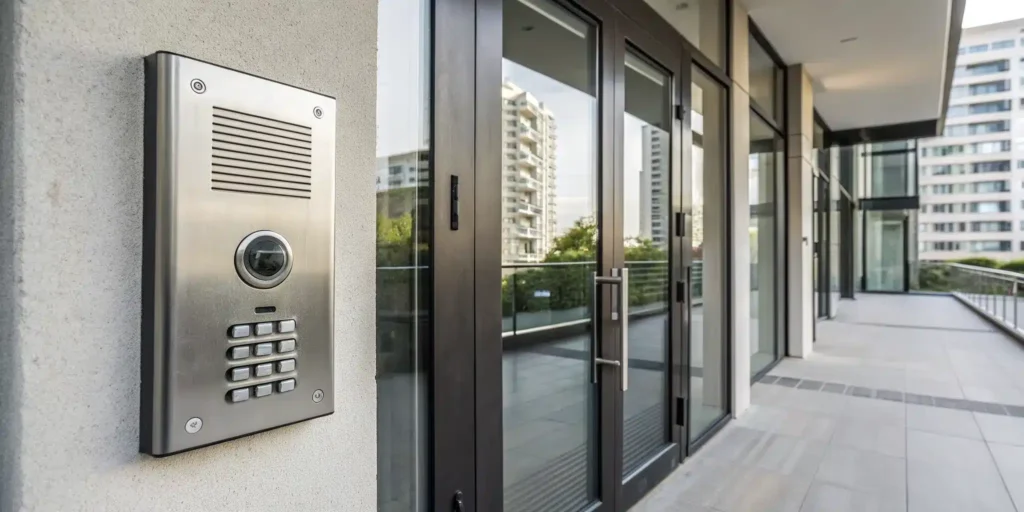
- Exterior entry panel (vestibule station): Houses the call buttons or digital directory, microphone, speaker, and (on video models) wide-angle camera. Because NYC lobbies face rain, winter condensation, and heavy delivery traffic, corroded pushbutton contacts and worn speakers are common wear points.
- Interior station or smartphone receiver: In traditional buildings, a wall-mounted apartment handset provides talk, listen, and door-release buttons. In modern IP or cellular systems, the call rings directly to a resident’s smartphone or touchscreen monitor so deliveries can be let in from anywhere.
- Low-voltage power supply and wiring (or network): Most legacy NYC buzzers run on 12V to 24V AC/DC transformers feeding multi-conductor riser cables up the building shafts. Modern smart intercoms use Cat6 PoE, Wi-Fi, or cellular connections, though the final lock trigger at the door frame still uses dedicated low-voltage lock wiring.
- Door release hardware (electric strike or magnetic lock): Mounted in the door frame or header, this is the mechanical workhorse that actually unlocks the door when signaled — and the source of the classic buzzing sound on AC-powered strikes.
Electric strike vs. magnetic lock: choosing safe NYC release hardware
The intercom panel is only half the system. Matching the right release hardware to your door type and NYC fire-egress rules is what keeps the entrance reliable and code-compliant.
| Release Hardware | How It Releases | Power-Failure Mode | Best Door Types | NYC Code & Maintenance Notes |
|---|---|---|---|---|
| Electric Door Strike (Fail-Secure) | Strike keeper pivots open when energized so the door’s existing latch passes through | Stays locked during a power outage; mechanical key and interior handle still work normally | Wood, hollow metal, and aluminum-glass vestibule doors with standard mortise or cylindrical latches | Preferred on most NYC apartment lobbies; free mechanical egress from inside at all times; door closer must pull the latch cleanly without binding |
| Electric Door Strike (Fail-Safe) | Requires continuous power to stay locked; cutting power frees the keeper | Unlocks automatically if power fails | Controlled interior doors where fire-alarm release is required | Must be paired with a fire-rated strike body on labeled doors; check transformer duty rating (continuous duty required) |
| Electromagnetic Lock (Maglock) | High-holding-force electromagnet at top of frame releases when power is interrupted | Always fail-safe — unlocks automatically on power loss or fire-alarm activation | Frameless glass doors, herculite commercial lobbies, and double storefront doors where strikes cannot fit | NYC Building Code / FDNY requires a dedicated Request-to-Exit (REX) motion sensor, a clearly labeled push-to-exit button, and fire-alarm tie-in so occupants are never trapped |
Comparing today’s NYC intercom buzzer options
Upgrading a malfunctioning buzzer does not always require tearing open hallway plaster. Choosing the right architecture depends on your existing riser wiring, unit count, and whether residents need mobile delivery access.
| Intercom Type | Typical Brands in NYC | Wiring Needed | Key Capabilities | Best Building Fit |
|---|---|---|---|---|
| Traditional Wired Audio Buzzer | Alpha Communications, LeeDan, TekTone, Siedle | Existing 2-wire, 3-wire, or 4-wire riser cables | Voice verification + wall-button door release; zero monthly cloud fee | Small walk-ups, brownstones, and co-ops with intact riser cabling |
| Wired Video Intercom (2-Wire / IP) | Aiphone, Comelit, Siedle | 2-wire bus (often reuses existing risers) or Cat6 PoE | Live video monitor in each unit, clear two-way audio, optional keypad or fob entry at vestibule | Brownstones, townhomes, and mid-size co-ops wanting visual verification without cloud subscriptions |
| Smart Cloud / Cellular Video Intercom | ButterflyMX, 2N, Mircom, Akuvox | Power + internet/cellular at lobby only (no apartment rewiring required) | Smartphone video calls, remote unlock, temporary delivery PINs, photo entry logs, key fob integration | Multi-unit rentals, package-heavy NYC buildings, and properties with damaged legacy risers |
| Telephone-Entry Buzzer | DoorKing (DKS), Linear, Viking | Dedicated phone line, VoIP, or cellular module at lobby | Dials resident’s mobile or landline; press “9” (or assigned digit) to release the door | Mixed-use buildings and commercial offices with existing lobby enclosures |
Why NYC door buzzers fail — and quick checks before calling repair
In decades of troubleshooting Manhattan and outer-borough vestibules, we see the same five failure patterns again and again. Several can be diagnosed in seconds before a technician arrives:
- You hear the buzzer humming, but the door will not push open: The intercom and wiring are working — the problem is mechanical pre-load on the electric strike. A sagging hinge, warped wood door, swollen weatherstripping, or misadjusted door closer presses the latch tightly against the strike keeper so the solenoid cannot release. Tell visitors to pull slightly before pushing as a temporary workaround, then have the door and strike realigned.
- One apartment’s buzzer is dead, while neighbors work fine: The issue is almost always localized to that single apartment’s wall handset (loose wire, painted-over button contact after an apartment repaint, or a faulty handset switch) or that unit’s individual button on the lobby panel.
- No apartments can buzz the door open, even though audio works: Check the dedicated door-release transformer (usually mounted in the basement near the main intercom amplifier) and inspect the strike solenoid for an open coil or broken wire at the frame hinge side.
- Static, screeching feedback, or one-way audio: Caused by moisture inside the street-facing lobby panel, a degraded amplifier board, or loose splice connections in a basement junction box.
- The door stays unlocked after someone buzzes in: Either a lobby release button is stuck closed, a strike keeper spring has broken, or the overhead door closer is failing to latch the door fully. A vestibule door that fails to latch defeats the entire intercom system — see our NYC door repair service when closer or hinge issues are involved.
For step-by-step troubleshooting by system type, read our intercom system repair guide or our resident quick-start on how to use an apartment intercom.
Security best practices for NYC vestibule buzzers
An intercom is only as secure as the hardware and habits around it. To stop tailgating, forced latches, and package theft:
- Pair the buzzer with key fob or keypad resident entry: Residents should not rely on easily copied standard lobby keys. Adding a key fob entry system or keypad access control integrated into the lobby panel lets management revoke lost credentials instantly and log entries.
- Install an astragal (latch guard) on outward-swinging doors: Even the best electric strike can be compromised by prying or “loiding” a loose spring latch if there is a visible gap between the door and frame. A heavy steel latch guard paired with a deadlatching mortise lock closes that gap.
- Protect the vestibule door closer: An electric strike depends on a properly calibrated commercial closer that shuts the door firmly and smoothly without slamming. If the door hangs open an inch in winter wind, every security upgrade in the lobby is bypassed.
- Keep entry directories and delivery PINs updated: On smart video systems, issue time-limited carrier or contractor PINs rather than sharing permanent door codes across the whole neighborhood.
Schedule an intercom or door-release inspection in NYC
Because vestibule problems sit right at the intersection of low-voltage electronics, locks, strikes, and heavy doors, calling an electrician who does not service commercial locks — or a handyman who does not understand low-voltage door hardware — often leads to repeat visits. Steven Grunstein and the Golden Key Locksmith NYC team (328 Columbus Ave, Manhattan; DCWP License #2065742-DCA, since 1984) service both the intercom electronics and the door/strike hardware in one visit, with clear upfront quotes before work starts. Visit our intercom installation & repair page, explore our access control systems, or call (212) 204-1655.
Frequently asked questions
Why does my apartment buzzer make a buzzing sound when it unlocks the door?
Traditional NYC electric strikes run on alternating current (typically 12V to 24V AC), which causes the internal solenoid to vibrate audibly while energized. Modern DC-powered strikes and magnetic locks operate almost silently, sometimes using a brief beep from the entry panel to let the visitor know the door is unlocked.
Can a building upgrade to a video intercom without rewiring every apartment?
Yes. Two-wire video bus systems (such as Comelit and Aiphone) can frequently reuse healthy existing riser wires, and cloud/cellular smartphone intercoms (such as ButterflyMX or 2N) require no apartment wiring at all — only power, internet or cellular signal, and the lock release connection at the vestibule.
Why does the door still stay locked even when I hear the strike buzz?
Usually the latch is binding under pressure against the strike keeper due to sagging hinges, a swollen door, or a misadjusted closer, preventing the keeper from pivoting freely. Less commonly, the strike coil is weakening or receiving under-voltage from an aging transformer.
What happens to an intercom door release during an NYC power outage?
A fail-secure electric strike stays locked from the outside during a power outage while still allowing normal physical key entry from outside and free mechanical exit from inside. A magnetic lock is fail-safe and automatically unlocks when power is lost unless backed up by a code-compliant battery system wired to the fire alarm.
Can Golden Key repair both the intercom panel and the vestibule door lock in one visit?
Yes. Our technicians diagnose the entry panel, power supply, wiring, electric strike or maglock, mortise latch, and door closer together so the door latches smoothly and releases cleanly every time.