

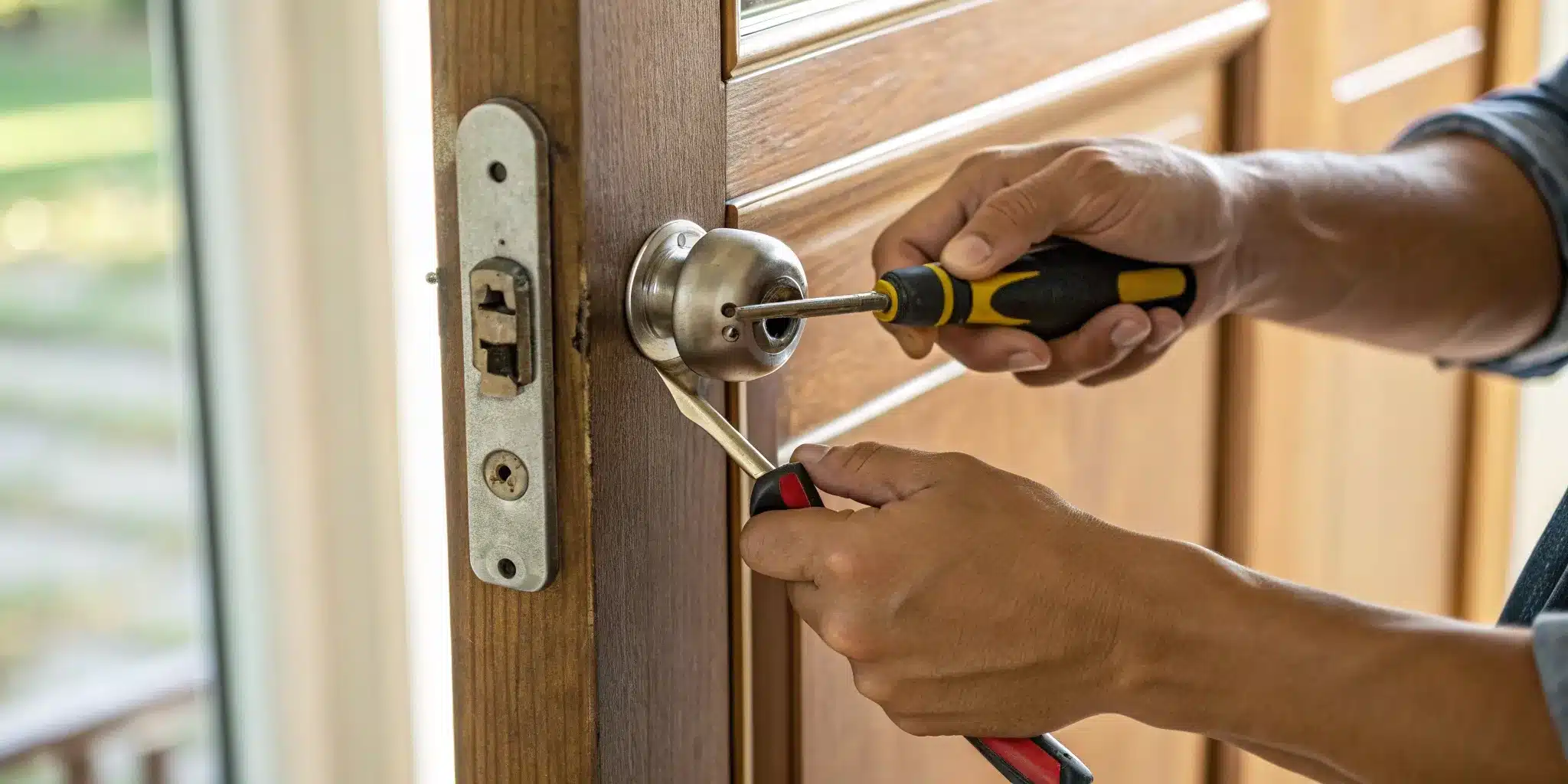
There’s a unique satisfaction that comes from fixing something yourself, and a stubborn interior door lock is the perfect project to tackle. Before you pick up the phone to call a professional, know that many common lock issues have surprisingly simple solutions. Whether your key is stuck, the latch won’t catch, or the knob feels loose, a little troubleshooting can often get it working smoothly again. This guide is designed to give you the confidence to pop that lock off the door and see what’s going on. We’ll cover everything you need to know about how to fix a door lock inside your house, empowering you to solve the problem and save yourself a service call.
Key Takeaways
- Start with a simple inspection: Before you take anything apart, check for the real culprit. Test the lock with the door open and closed to identify alignment issues, and make sure all visible screws on the lock and strike plate are tight.
- Use the right lubricant as your first fix: A sticky or gritty lock often just needs a quick cleaning. A spray of a silicone-based or graphite lubricant can solve many common problems in seconds without requiring you to disassemble the hardware.
- Know when to replace instead of repair: Don’t waste time on a lock that’s visibly rusted or has broken internal parts. For most interior doors, buying a new lock is often cheaper and more effective than attempting a complicated fix.
Is Your Door Lock Trying to Tell You Something?
Your door lock is one of those things you probably don’t think about until it stops working. But just like any other mechanical device, it wears down over time. The good news is that a lock rarely fails without warning. It usually sends out subtle (and sometimes not-so-subtle) clues that something is wrong. Learning to recognize these signs can help you address a small problem before it turns into a major headache, like getting locked out of your bedroom. Before you jump into a DIY fix, it’s important to understand what your lock is telling you and what kind of lock you’re even working with.
Spot the Telltale Signs of a Failing Lock
Think about how your lock feels and sounds during daily use. Is it as smooth as it used to be? If you have to jiggle the key or force the knob, that’s a clear signal the lock is malfunctioning. According to experts, one of the most common signs you should replace your door locks is when the door has difficulty latching, which could mean the internal parts are failing. You should also listen for any grinding or clicking noises when you turn the key, as this points to worn-out mechanisms. A lock in good condition should operate smoothly. If you need to use excessive force, it’s time to look into a repair or replacement before you end up with a broken key or a complete lock failure.
A Quick Guide to Interior Lock Types
Not all interior door locks are created equal. The type you have depends on the room’s purpose, and knowing which one you’re dealing with is the first step to a successful repair. The most common types you’ll find inside your home are privacy and passage locks. Privacy locks, typically found on bedrooms and bathrooms, have a simple turn or push-button lock on the inside. Passage locks are used for closets or hallways and don’t lock at all—they simply latch the door closed. For rooms that need a bit more security, like a home office, you might have a keyed entry lock. If you’re ever unsure or need help with an installation, our residential locksmith services can get the right hardware on any door in your home.
Gather Your DIY Lock Repair Toolkit
Before you can play detective with your faulty lock, you need to assemble a small toolkit. The good news is you probably have most of these items lying around your home already. Having everything in one place before you start will make the process much smoother and save you from running back and forth to the garage or junk drawer. Think of it as your lock first-aid kit. With these simple tools, you’ll be ready to tackle the most common interior lock problems without needing a trip to the hardware store.
The Must-Have Tools for the Job
You don’t need a professional-grade set of tools for this job. Start with the basics. First, grab a screwdriver—it’s best to have both a Phillips head and a flathead, as screw types can vary. You’ll need this to remove the handle or faceplate and get a look inside. Next, find a pair of pliers. If you discover any bent metal pieces inside the lock mechanism, you can use the pliers to gently straighten them out. Finally, a thin, flat object can be surprisingly useful. Something like an old credit card or a sturdy library card can help you jimmy a stuck latch between the door and the frame.
Don’t Forget Your Safety Gear
This might sound like overkill for a simple door lock, but it’s always better to be safe. A pair of work gloves is a great idea to protect your hands from grime, grease, and any sharp metal edges you might encounter inside the lock. Eye protection is also smart, especially when you’re working with small springs or components that could pop out unexpectedly. If a lock is so damaged that parts are breaking off, it might be a sign of a bigger problem with the door itself. In that case, forcing it could cause more damage or injury, and a professional door repair and installation might be the safer option.
Choose the Right Lock Lubricant
A stiff or sticky lock is often just thirsty for a little lubrication. The key is to use the right kind. Avoid thick, oil-based products, which can attract dust and gunk up the lock’s interior over time. Instead, opt for a spray lubricant like a silicone spray, graphite, or even WD-40 for a quick fix. To apply it, aim the straw directly into the keyhole and give it a short spray. It’s also a good idea to spray the lubricant directly onto the latch and any other moving parts you can see once you have the handle removed. This helps everything move freely again.
How to Diagnose the Problem
Before you start taking things apart, it’s time to play detective. A few minutes of careful observation can save you a lot of time and frustration. Understanding exactly what’s going wrong is the key to figuring out the right way to fix it. Most lock problems fall into a few common categories, and you can often identify the culprit without a single tool. Let’s walk through how to figure out what your lock is trying to tell you.
Start with a Visual Inspection
Your first step is the easiest: just look. Examine the lock, keyhole, latch, and strike plate on the door frame. Look closely for any obvious signs of trouble like bent metal parts, rust, or trash that might be stopping it from working correctly. Sometimes a small piece of debris lodged in the latch mechanism is all that’s standing between you and a smoothly operating door. Also, check if the screws holding the lock and strike plate are tight. A loose screw can cause misalignment and prevent the latch from catching properly. This simple check can often solve the problem before you even think about more complex residential locksmith solutions.
Test Each Part of the Lock
Next, put the lock through its paces. With the door open, turn the knob or lever and watch the latch. Does it retract and extend smoothly? Now, try locking it. If it has a push-button or turn-button lock, engage it and see if the outside handle will turn. If someone outside cannot open the door, then the lock is likely working as it should. This helps you determine if the issue is with the lock mechanism or the door’s alignment. If the lock works perfectly when the door is open but sticks when it’s closed, the problem is probably how the door fits in its frame. A misaligned door can prevent the latch from entering the strike plate correctly, a common issue that might require professional door repair and installation.
Pinpoint Common Problem Areas
If the lock feels gritty, stiff, or makes a grinding noise when you turn the knob, the issue is likely internal. This often indicates that a part inside is twisted or needs lubrication. After removing the lock from the door, you can inspect its internal components. Look for twisted parts that are out of place. If you find any, you can sometimes use pliers to carefully twist and straighten any bent or mangled metal pieces you find inside the lock mechanism. However, be gentle, as these parts can be delicate. If a good cleaning and lubrication don’t solve the problem, or if you see broken pieces, it might be time to call for backup. For urgent situations, an emergency locksmith can resolve the issue quickly and safely.
Your Step-by-Step Guide to Fixing Your Lock
When your lock starts acting up, it’s easy to feel a little panicked. But before you assume the worst, know that many common lock problems have simple DIY solutions. A stubborn lock doesn’t always mean you need a full replacement. Often, a little bit of troubleshooting is all it takes to get things working smoothly again. Let’s walk through some of the most frequent issues and the straightforward steps you can take to fix them yourself. With the right approach, you can often solve the problem in just a few minutes.
How to Properly Clean and Lubricate
Over time, dust, dirt, and tiny metal shavings can build up inside your lock, causing the internal pins to stick. This is one of the most common reasons a key stops working smoothly. The fix is simple: clean and lubricate. Start by spraying a silicone-based lubricant or graphite spray directly into the keyhole. Avoid using oil-based products like WD-40 for regular maintenance, as they can attract more grime over time. After applying the lubricant, insert your key and slide it in and out a few times. Turn it back and forth to help spread the lubricant evenly across all the moving parts inside. This simple step can make a world of difference.
What to Do When Your Key Gets Stuck
There’s nothing more frustrating than a key that’s stuck fast in a lock. Your first instinct might be to yank it out, but that can break the key, leaving you with a much bigger problem. Instead, stay calm and try wiggling the key gently up and down while pulling lightly. If it’s still stuck, apply some lubricant into the keyway around the key. Let it sit for a minute to penetrate the mechanism, then try wiggling it again. If the key is truly jammed and won’t budge, it’s best not to force it. Forcing it could damage the lock’s internal components. If you’re in a bind, our emergency locksmith team is available 24/7 to help without damaging your door.
Fix a Lock That Just Won’t Turn
If your key goes in but just won’t turn, the pins inside the lock cylinder are likely misaligned or seized. This is another problem where lubricant is your best friend. Spray a silicone-based lubricant into the keyway, then insert the key and work it back and forth. This action helps the lubricant coat the pins and tumblers, allowing them to move freely again. If this doesn’t solve the issue, the problem could be a worn-out key or a more serious internal failure. A key that’s been copied too many times can lose its precise shape, failing to align the pins correctly. If you suspect a more complex issue with your home’s locks, a professional can diagnose it properly.
Correcting Door Misalignment
Sometimes the problem isn’t the lock at all—it’s the door. If your lock works perfectly when the door is open but struggles when it’s closed, you’re likely dealing with a misalignment issue. This means the latch or bolt isn’t lining up correctly with the strike plate on the doorframe. Check the hinges first; loose screws can cause the door to sag. Tightening them can often pull the door back into alignment. You can also examine the strike plate to see if it has shifted. If tightening the hinges doesn’t work, the door itself may have warped, which might require professional door repair and installation to ensure a secure fit.
Get to Know Your Lock’s Inner Workings
Okay, time to play detective. Sometimes, the only way to figure out what’s wrong with your lock is to take a peek inside. It might sound complicated, but many common lock problems come from a simple, visible issue within the mechanism. Getting comfortable with the internal parts of your lock is a great skill for any homeowner or renter. By carefully disassembling the lock, you can often spot a bent component or a spring that’s out of place. This section will walk you through how to safely open up your lock, what to do with the small parts you find inside, and how to deal with stubborn screws that stand in your way. Just remember to work slowly and keep track of all your pieces.
How to Safely Access Internal Parts
First things first, you need to get inside the lock. To do this, you’ll have to take one side of the doorknob or handle off the door. This step lets you see the inside parts and get a clear view of the latch mechanism. Look for screws on the interior side of the knob’s faceplate. Unscrew them and gently pull the handle off. If you don’t see any screws, you likely have a small, spring-loaded button on the side of the knob’s shaft. Press it with a small screwdriver or paperclip to release the handle. Once it’s off, place all your screws and parts in a small bowl so nothing gets lost. If you’re having trouble getting the handle off without force, it’s better to call for professional residential locksmith services to avoid damaging your door.
Repairing Small Springs and Components
Once you’re inside, you’ll see a collection of small springs and metal pieces. Take a moment to observe how they fit together. A lock that won’t turn or latch properly often has a component that’s just slightly out of place. Look closely for anything that seems bent, twisted, or disconnected. If you spot something, you can often fix it yourself. Use a pair of needle-nose pliers to carefully twist and straighten any bent or mangled metal pieces you find inside the lock mechanism. Be gentle—these parts can be delicate. If a spring has popped out of place, try to guide it back into its original position. If a piece is snapped or broken, however, the lock will likely need a full replacement.
How to Handle Stripped Screws
Nothing stops a DIY project in its tracks faster than a stubborn screw. If a screw is just too tight, don’t apply all your force at once, as this can strip the head. Instead, try loosening it just a little bit—a couple of turns—to see if that breaks the tension. If the screw is already stripped, you have a few options. Place a wide rubber band over the screw head before inserting your screwdriver; the rubber can provide the extra grip you need. If that doesn’t work, you may need a specialized screw extractor kit. Forcing a stripped screw can damage your door frame, turning a small repair into a bigger problem. If you’re stuck, our emergency locksmith team can handle it without causing any damage.
Repair or Replace? Making the Right Call
After trying a few fixes, you might find yourself wondering if you’re fighting a losing battle. Sometimes, a lock is simply past its prime, and no amount of lubricant or tightening will bring it back. Knowing when to switch from repair mode to replacement mode is key to saving time, frustration, and ensuring your home remains secure. It’s not just about a functioning lock; it’s about your peace of mind. Deciding between a quick fix and a full replacement depends on a few factors, from the lock’s condition and age to the cost and complexity of the job. Let’s walk through how to make the best decision for your situation.
Signs It’s Time for a New Lock
Your lock will usually give you clear hints when it’s ready for retirement. One of the most obvious signs is if it no longer latches or locks properly, leaving your room unsecured. Take a close look at the hardware itself—do you see visible rust or significant wear and tear? These are indicators that the internal components are deteriorating. You should also listen to your lock. If you hear a distinct clicking or grinding sound when you turn the key, it’s a red flag that the mechanism is failing. Ignoring these signs can lead to a complete lockout, so it’s better to address them proactively with a new lock.
A Quick Cost Breakdown
You might assume that repairing a lock is always the cheaper option, but that’s often not the case with interior door locks. In many situations, a full replacement is more cost-effective. A standard bedroom or bathroom door lock is surprisingly inexpensive, typically costing around $15 at a hardware store. Most replacement kits come with straightforward instructions, making it a manageable DIY project for many people. When you weigh the low cost of a new lock against the time and potential frustration of trying to fix a worn-out mechanism, simply starting fresh with new hardware is often the most practical choice.
When to Choose Professional Installation
While a basic lock swap is a great DIY task, some situations are best left to the experts. If turning the key requires a lot of force, or if the lock only works intermittently, there might be a deeper issue at play, such as door misalignment or a problem with the door frame itself. A professional can diagnose the root cause and ensure the new lock is installed correctly, preventing future problems. For a secure and flawless fit, especially on exterior doors or when you need a lock change for security reasons, calling a trusted locksmith ensures the job is done right.
Quick Fixes for Lock Emergencies
Getting stuck—whether in or out of a room—is stressful. Before you panic, take a deep breath. Sometimes a quick, temporary fix is all you need to solve the immediate problem. These solutions won’t replace a proper repair, but they can get your door open and buy you some time. Remember, the goal is to address the issue without causing more damage. If a fix requires too much force, it’s best to stop and reassess. We’ll walk through a few smart solutions to try, some important safety reminders, and how to know when it’s time to hand the problem over to a professional.
Smart Temporary Solutions
If your lock is sticking or the key just won’t turn, the internal mechanism might just need a little help. A common issue is a lack of lubrication, causing the pins and springs to get stuck. Before you do anything else, try spraying a lubricant like graphite or a silicone-based spray directly into the keyhole. Work your key in and out a few times to spread the lubricant around. Sometimes, this is all it takes to get things moving smoothly again. If you can see any bent or twisted metal pieces inside the lock mechanism, you might be able to gently straighten them with a pair of pliers, but be careful not to break them off.
Important Safety Reminders
Your safety is the top priority. If you find yourself locked inside a room, your first step should be to stay calm. Try calling or texting someone who can help you from the other side. They might be able to open the door or bring you the tools you need. It’s also a good idea to check if the lock is truly broken. Ask the person outside to try opening the door; if they can’t, it confirms the lock is engaged as it should be, pointing to a mechanical failure. Avoid trying to force the door open in a way that could injure you or damage the door frame. There’s always a safe way out of the situation.
Know When to Call a Professional
DIY fixes are great, but they have their limits. If you’ve tried lubricating and gently adjusting the lock with no success, it’s time to stop. Forcing a key or a broken lock can cause more extensive damage. Most interior door locks aren’t designed for complex repairs; once a key part breaks, the most effective solution is often a replacement. If a brand-new key isn’t working, it might have been cut incorrectly. However, if the lock itself is broken, you’ll need an expert. A professional emergency locksmith can diagnose the problem quickly, open your door without damage, and advise you on the best next steps.
Related Articles
- How To Fix A Broken Door Lock Step-by-Step
- How To Replace A Front Door Lock: A DIY Guide
- DIY Guide To Fix A Door Handle That Turns But Doesn’t Open: Fix Door Handles
- 7 Door Latch Types: Which Is Right For You?
Frequently Asked Questions
My lock isn’t broken, just sticky. What’s the quickest fix? This usually means the inside is dirty or dry. The best first step is to spray a silicone or graphite-based lubricant directly into the keyhole. Then, slide your key in and out and turn it a few times to spread the lubricant around. This simple action often solves the problem by cleaning out debris and helping the internal pins move freely again.
Is it really better to replace an interior lock instead of trying to fix it? In many cases, yes. Basic interior door locks for bedrooms or bathrooms are quite affordable, often costing less than $20. When you consider the time and effort it might take to diagnose and repair a failing mechanism, simply swapping it out for a new one is frequently the more practical and cost-effective solution, especially if you see signs of rust or significant wear.
My lock works fine when the door is open, but it won’t latch when I close it. What’s going on? This is a classic sign of door misalignment, meaning the problem isn’t your lock but how the door hangs in its frame. The latch isn’t lining up correctly with the strike plate. Before you do anything else, check the door’s hinges and tighten any loose screws. This often pulls the door back into the right position and solves the issue without you ever having to touch the lock itself.
I’ve heard you shouldn’t use WD-40 on locks. Is that true? While WD-40 can work in a pinch to loosen a stuck part, it’s not the best choice for long-term lock health. It’s an oil-based product that can attract dust and dirt over time, eventually gumming up the lock’s delicate internal components. For regular maintenance, it’s much better to use a dry lubricant like a silicone or graphite spray, which won’t create that sticky buildup.
What should I do if my key breaks off inside the lock? First, don’t try to use the lock or force the broken piece further in. If a piece of the key is sticking out, you might be able to grab it with needle-nose pliers and gently pull it straight out. If it’s flush with the lock or deep inside, trying to dig it out yourself can damage the lock permanently. This is a situation where calling a professional is the safest and most effective option to avoid a bigger problem.
Need professional help in NYC? Contact Golden Key Locksmith NYC for Commercial Door Repair or Metal Door Repair. Available 24/7 across Manhattan and all NYC boroughs.