

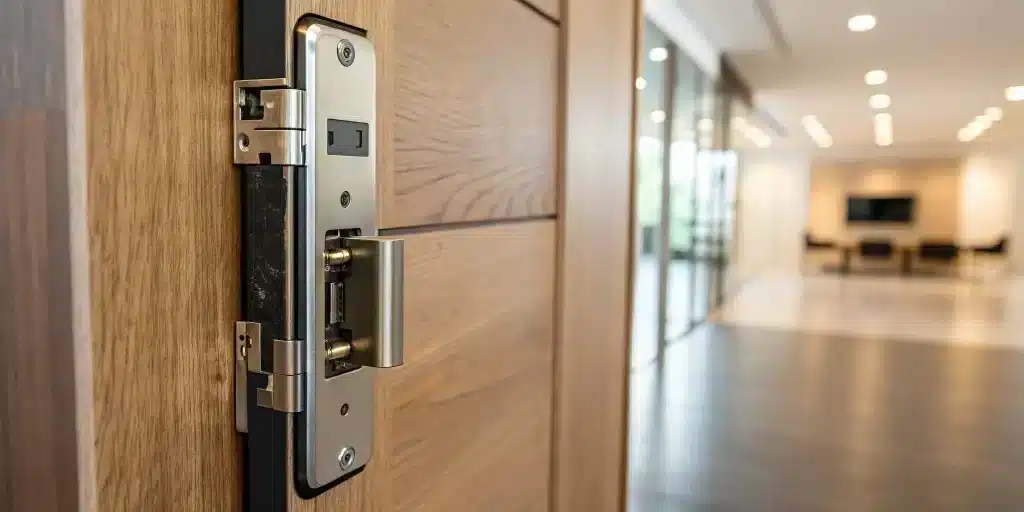
If you’ve ever been buzzed into a friend’s apartment building in Brooklyn or an office in Manhattan, you’ve already used an electric strike. It’s the technology that makes that convenient click possible, letting you in without a key. While it sounds technical, an electric strike is a straightforward upgrade to a standard door lock that offers a huge leap in security and control. It replaces the simple metal plate in your door frame with a smart, electronic version. Understanding how does an electric strike work is the first step to seeing how it can improve your property’s access control, whether for a residential building or a commercial space.
Key Takeaways
- Control Access Without Replacing Your Lock: An electric strike is a high-tech upgrade for the metal plate in your door frame, not the entire lock. It lets you add keyless entry options like keypads or remote buzzers, giving you modern access control while keeping your existing lock hardware. For a business-focused parts and setup overview, see our guide to a commercial electric strike door lock kit.
- Prioritize Security or Safety in a Power Outage: You must choose between two types: “fail-secure” which stays locked during a power failure to protect your property, and “fail-safe” which unlocks to allow for easy exit during an emergency. Your choice depends entirely on the door’s location and purpose.
- Check Compatibility Before You Commit: Not every lock works with an electric strike, and the device must be precisely fitted into your door frame. To avoid security risks and ensure flawless operation, confirm your current lock is compatible and rely on a professional for the installation.
What Is an Electric Strike?
If you’ve ever been “buzzed into” an apartment building or office, you’ve likely used a door with an electric strike. Think about the standard metal plate on your door frame—the one the latch clicks into. An electric strike is essentially a high-tech version of that plate. Instead of being a simple, stationary piece of metal, it uses a small amount of electricity to control the locking mechanism.
This device is a cornerstone of modern access control, allowing doors to be unlocked remotely with a button, key card, or keypad code. It works with your existing lock hardware (the handle and latch on the door itself), which makes it a versatile and popular upgrade for both residential and commercial properties. By replacing the standard strike plate, you can add a layer of convenience and security without having to change the entire lockset, making it a smart part of any integrated security system.
Its Core Components
At the heart of every electric strike is a component called a solenoid, which is basically a small electromagnet. When you press a button or scan a card, the access control system sends an electrical current to this solenoid. The current creates a magnetic field that moves a small, hinged piece of metal inside the strike. This movement unblocks the latch, allowing you to push the door open without turning the handle. Once the power is cut, the metal piece springs back into place, securing the latch again. It’s a simple but effective mechanism that makes electronically controlled access possible.
How It Compares to a Traditional Lock
A traditional lock requires a physical key to retract the latch and open the door. An electric strike, on the other hand, works in tandem with an electronic system. This means you can grant access using key fobs, numeric codes, or even a smartphone app. The biggest advantage is control. You can unlock a door for a visitor from another room or even another city. For businesses, this technology is a game-changer, allowing managers to set schedules that grant employee access only during specific hours. This level of flexibility is something a standard key simply can’t offer, which is why it’s a go-to for our commercial locksmith clients.
Clearing Up Common Misconceptions
One of the most common questions is, “What happens if the power goes out?” This is where it’s important to understand the difference between “fail-safe” and “fail-secure” models. A fail-secure strike remains locked during a power outage, keeping the area secure. This is the most common type and is ideal for protecting property and sensitive areas. A fail-safe strike automatically unlocks when the power is cut, which is essential for fire exits and other emergency routes where people need to get out quickly. Choosing the right one depends entirely on the door’s purpose, ensuring both safety and security for your residential or commercial space.
How Does an Electric Strike Work?
At its core, an electric strike is a smart and efficient way to control who enters a space. Instead of a traditional strike plate—the metal piece on the doorframe that the latch goes into—an electric strike has a hinged section. This section can pivot out of the way when it receives an electrical signal, allowing the door to open without you having to turn a knob or key. It’s a key component in modern security systems, working behind the scenes to make access smooth and secure for both homes and businesses.
Think of it as the gatekeeper that responds to an electronic command from a keypad, card reader, or remote button. This simple mechanism is what makes buzzing someone into your apartment building or swiping a keycard at the office possible. When the door is closed, the latch is held securely. But when an authorized signal is received, the strike releases the latch for a moment, just long enough for the door to be pushed open. It then immediately returns to its locked state, ensuring the door is secure again once it’s closed. This process provides a seamless blend of security and convenience, replacing the need for a physical key in many situations and offering a higher degree of control over who has access to your property.
The Role of the Solenoid
The magic behind an electric strike is a component called a solenoid. A solenoid is essentially a small, powerful electromagnet. When you present your credential, like a keycard or a code, the access control system sends a quick electrical pulse to the strike. This current energizes the solenoid, creating a magnetic field. This magnetic force is just strong enough to move a small metal piece inside the strike, which in turn releases the hinged part of the strike plate. This allows the door’s latch to swing free, and the door can be pushed open. It all happens in an instant, providing secure yet convenient access.
Understanding Power Requirements
For the solenoid to do its job, it needs a power source. Most electric strikes run on low-voltage direct current (DC), typically 12 or 24 volts. This is a safe, low level of power, similar to what many other small electronics in your home or office use. Some models are also designed to work with alternating current (AC). The power is usually supplied by a dedicated power supply that’s connected to your building’s electrical system. This ensures the strike has a consistent and reliable source of energy to function correctly every time someone needs to get through the door.
The Locking and Release Process
Let’s walk through the process step-by-step. When a door with an electric strike is closed, the latch from the doorknob rests securely behind the strike’s hinged keeper. The door is locked. When an authorized person wants to enter, they present their credential—a keycard, fob, or PIN. The access control system verifies it and sends an electrical signal to the strike. This signal activates the solenoid, which instantly pivots the keeper out of the way of the latch. The door can now be opened. Once the door closes again, the latch slides back into place, and the keeper locks behind it, securing the door until the next authorized entry.
Integrating with Monitoring Systems
An electric strike doesn’t work alone; it’s part of a larger access control ecosystem. It can be integrated with a wide variety of systems, from simple push-button releases at a reception desk to sophisticated commercial locksmith solutions involving keypads, biometric scanners, or card readers. Beyond just granting access, many electric strikes can also be connected to monitoring systems. This allows you to get real-time information about whether a door is locked or unlocked, and even if it’s been propped open. This adds a valuable layer of security, giving you a complete picture of who is coming and going.
Exploring the Types of Electric Strikes
Once you decide an electric strike is right for you, the next step is figuring out which type you need. They aren’t a one-size-fits-all solution, and the best choice depends entirely on the door’s location and how you plan to use it. Different models are designed for specific situations, from high-traffic office entryways to residential front doors. Understanding these key differences will help you find the perfect match for your security goals and ensure your system works exactly as you expect it to, especially in an emergency. Let’s walk through the main types so you can feel confident in your choice.
Fail-Secure vs. Fail-Safe: Which Do You Need?
This is one of the most critical distinctions, and it all comes down to what happens when the power goes out. A fail-secure electric strike stays locked during a power failure. This is the most common type and is ideal for securing exterior doors or any room containing valuables. It ensures your property remains protected even during a blackout. In a fire, it also helps contain the spread by keeping doors latched. A fail-safe strike does the opposite—it unlocks when the power is cut. This is used for interior doors on an escape route, allowing people to exit freely in an emergency. Choosing the right one is a fundamental part of designing effective security systems.
Continuous vs. Intermittent Duty
This feature relates to how long the strike can be powered to keep the door unlocked. An intermittent-duty strike is designed to be energized for only short periods—just long enough for someone to open the door. Think of a typical apartment building buzzer. A continuous-duty strike, on the other hand, can remain powered and unlocked for extended periods without overheating. This is essential for high-traffic areas where a door might be put in “passage mode” during business hours, allowing people to come and go without needing credentials every time. Using the wrong type can cause the unit to fail prematurely, so check the product details carefully.
Options for Outdoor Use
You can’t just install any electric strike on an exterior gate or door. Outdoor units need to be built tough to withstand rain, snow, and fluctuating temperatures. Look for models specifically rated for outdoor or weatherproof use to prevent rust and electrical failure. Beyond weather resistance, strikes used on fire-rated doors or designated emergency escape routes must meet strict safety codes. These units undergo rigorous testing to ensure they perform reliably during a fire or other emergency. Proper door repair and installation is crucial here to ensure everything is up to code and functions correctly from day one.
Smart Home and Office Integration
Electric strikes are the hardware that makes modern access control possible. They are designed to integrate seamlessly with all kinds of electronic systems, from keycard readers and numeric keypads to biometric scanners. This connectivity is what allows you to manage access for your home or business remotely. For homeowners, this means you can unlock your door for a guest from your smartphone. For business owners, you can grant temporary access to employees or track entry logs. This technology is a core component of modern commercial locksmith services, offering a flexible and powerful way to control who enters your property and when.
Key Security and Access Control Features
Electric strikes do more than just secure a door; they act as the gatekeeper for a modern security system. When you move beyond a traditional lock and key, you gain a whole new level of control, awareness, and convenience. These features are what transform a simple entryway into a smart, responsive access point for your home or business. From integrating with other technologies to providing real-time alerts, an electric strike is a powerful upgrade that puts you firmly in charge of your property’s security.
Pairing with Access Control Systems
One of the biggest advantages of an electric strike is its ability to work with a wide range of security systems. Think beyond a metal key—you can pair your lock with keypads requiring a PIN, card readers for employee badges, or even biometric scanners. This integration creates a seamless, keyless entry experience that’s both convenient and highly secure. For a business, it means you can easily manage employee access without handing out physical keys. For a home, it means no more fumbling for keys with your hands full or worrying about lost copies. It’s about creating a flexible system that fits your specific needs.
Built-in Tamper Protection
Modern electric strikes offer more than just a strong barrier; they provide active security monitoring. Certain models, known as monitored strikes, can detect when a door is locked, unlocked, or even if someone is trying to force it open. This feature essentially gives your door a voice, allowing it to alert your security system to a potential break-in. It’s a significant step up from a standard lock, which can’t tell you if it’s being tampered with. This kind of proactive protection is invaluable for any commercial locksmith strategy, giving you peace of mind that your property is being watched over, even when you’re not there.
Reinforcing the Strike Plate
While the electronics are impressive, an electric strike doesn’t compromise on physical strength. These devices are engineered to be incredibly durable, providing a tough defense against forced entry. When the door closes, it locks automatically and securely from the outside, removing the risk of someone forgetting to lock up. The strike plate itself is a critical component of your door’s integrity, and a high-quality electric strike reinforces this weak point. Proper door repair and installation ensures the frame and strike work together to create a formidable physical barrier, combining smart technology with brute-force resistance for complete security.
Remote Management Capabilities
Imagine being able to grant access to your property without being there. That’s the convenience electric strikes offer. By connecting to an intercom or buzzer system, you can let in a delivery person or guest with the simple push of a button from your desk or phone. This is a game-changer for apartment buildings and offices, streamlining visitor access. For a residential locksmith setup, it means you can let in a trusted contractor or dog walker remotely. This capability gives you incredible flexibility, allowing you to manage access on your terms and making daily logistics much simpler and more secure.
What to Know Before Installation
Thinking about adding an electric strike to your property? That’s a great step toward better access control. Before you jump in, there are a few key things to consider to make sure the installation goes smoothly and your new system works perfectly from day one. Getting these details right beforehand will save you time, money, and potential headaches. From checking your door’s compatibility to understanding the power needs, a little prep work goes a long way.
Check Your Door Frame Compatibility
First things first: take a good look at your door frame. Unlike a traditional lock that’s installed on the door itself, an electric strike is fitted into the door frame. This means the frame needs to be sturdy enough to house the new hardware and withstand daily use. Check the material—whether it’s wood, steel, or aluminum—and its current condition. If your frame is weak, damaged, or warped, it could compromise the security and function of the strike. It’s essential to address any issues with the frame before installation. A secure lock needs a solid foundation, so ensuring your door and frame are in top shape is a non-negotiable first step for any security system upgrade.
Understand Power Transfer Methods
Electric strikes need power to function, but you don’t just plug them into a wall outlet. They typically run on low-voltage DC power, usually 12 or 24 volts. This means you’ll need a dedicated power supply and a way to get the electricity from that source to the strike in your door frame. This process, known as a power transfer, can be handled in a few different ways, such as through an electric hinge or a door loop. It’s important to plan the wiring route to keep it concealed and protected from tampering. Understanding the power requirements is crucial for choosing the right strike and ensuring it operates reliably without interruption.
Match the Strike to Your Current Lock
Not all locks are created equal, and not all of them play nicely with electric strikes. An electric strike is designed to work with a specific type of lockset, most commonly a cylindrical lock with a deadlatch. A deadlatch is the small, spring-loaded plunger next to the main latch that keeps it from being slipped open. Deadbolts, on the other hand, are generally not compatible because their solid bolt can’t be retracted by the strike mechanism. Before you buy an electric strike, check your existing lock. If you have a deadlock, you’ll likely need to replace it with a compatible lockset to make the system work. A residential locksmith can help you identify your lock type and find the right match.
Why Professional Installation Matters
While it might seem like a straightforward project, installing an electric strike requires precision. The alignment between the strike in the frame and the latch on the door has to be perfect—even a millimeter off can cause the door to not lock or unlock properly. The process involves careful measuring, cutting into the door frame, and handling low-voltage wiring. An improper installation can not only cause the lock to fail but could also damage your door or frame and create a serious security vulnerability. To ensure everything is done correctly and safely, it’s always best to call in a professional. A skilled commercial locksmith has the right tools and experience to get the job done right the first time.
Maintaining Your Electric Strike
Just like any other piece of technology in your home or business, your electric strike needs a bit of attention to keep it working perfectly. A little preventive care goes a long way in making sure your door always opens when it should and stays securely locked when it needs to. Taking a few minutes for regular maintenance can help you avoid the headache of a sudden malfunction, a frustrating lockout, or an expensive emergency repair. Think of it as a quick health check-up for your security system—it’s simple, fast, and keeps everything running smoothly.
Your Regular Inspection Checklist
Setting aside time for a quick inspection every few months can catch small issues before they become big problems. Start by cleaning the strike plate and the area around the latch. Dust, grime, and other debris can build up and cause the mechanism to stick. A simple wipe-down is often all it takes. Next, check the moving parts and apply a small amount of lubricant if needed to ensure they operate without friction. Finally, take a look at the wiring to make sure it’s secure and undamaged. Proper alignment is also key; the strike should line up perfectly with the door’s latch. If anything looks off, it might be time for a professional adjustment from a security systems expert.
Solving Common Issues
Even with great care, you might run into a snag. If your door won’t open, it could be due to too much pressure on the lock when the door is closed. This can happen if the door swells or the frame shifts slightly. Check to see if the door seals are too tight or if the door itself is warped. If the strike isn’t unlocking at all, the issue might be electrical. The power supply needs to deliver the correct voltage, which you can check with a multimeter if you’re comfortable doing so. If you’re not sure how to handle wiring, it’s always safest to call a professional. A faulty door can be a major inconvenience, so don’t hesitate to get help with door repair and installation.
Tips for Preventive Care
A proactive approach is the best way to ensure your electric strike has a long and reliable life. Get into the habit of testing it regularly, especially after a power outage, to confirm it’s functioning correctly. Pay close attention to alignment—if the strike and latch aren’t meeting perfectly, it can cause wear and tear over time. A helpful diagnostic trick is to test the strike while it’s removed from the door; if it works fine on its own, the problem is likely how it fits within the frame. For businesses that rely on consistent access, scheduling an annual check-up with a commercial locksmith can provide peace of mind and keep your security seamless.
How to Choose the Right Electric Strike
Picking the right electric strike for your door can feel a bit technical, but it’s one of the most important decisions you’ll make for your property’s access control. The best choice depends on your specific door, your security goals, and even local building codes. Think of it like finding the perfect key for a lock—the right fit makes all the difference. A smart decision from the start ensures your system is secure, convenient, and reliable for years to come. To help you get it right, let’s walk through the key factors you need to consider.
Define Your Security Needs
First things first, think about how the door will actually be used day-to-day. Is it the main entrance to a busy office with employees coming and going, or a restricted-access server room? The amount of traffic a door gets will determine how durable the strike needs to be. You also need to consider the type of latch on your door and any applicable building codes that might dictate your options. For a high-traffic commercial space, you’ll need a heavy-duty strike designed for constant use. For a residential property, your needs might be different, but security is just as important. Assessing your unique situation is the first step, and if you’re setting up a business, a commercial locksmith can provide an expert evaluation.
Consider the Environment
Where your door is located is a huge factor. An electric strike on an exterior door exposed to New York’s wild weather needs to be fully weatherproof to resist rain, snow, and humidity. Without proper protection, it can corrode and fail. More importantly, if the strike is for a fire-rated door or an emergency exit, it must meet strict safety standards to be code-compliant. Electric strikes on fire doors have to be specifically tested and approved for that purpose to ensure they don’t compromise the door’s integrity during a fire. Using the wrong hardware isn’t just a mistake; it’s a serious safety risk that could have major consequences in an emergency.
Select a Power Source
Electric strikes run on low-voltage power, but you can’t just use any power supply. The unit you choose must provide enough consistent electricity for all the components of your access control system, including the strike itself, the keypad, or the card reader. An underpowered system can lead to intermittent failures, leaving your door unlocked when it should be secure or, worse, failing to open when you need it to. When setting up your security systems, it’s essential to calculate the total power draw and choose a power supply that can handle the load without strain. This ensures everything operates reliably and safely day in and day out.
Double-Check Compatibility
This is a big one: not all electric strikes work with all locks. Before you commit, you need to confirm that the strike is compatible with your existing lockset, whether it’s a standard cylindrical lock, a heavy-duty mortise lock, or part of a panic bar system. You’ll need to check details like the lock’s bolt size (also called the latch throw) and the fit of your door within its frame. An improper fit can prevent the door from latching securely or cause the mechanism to jam over time. If you’re unsure about what you have or what you need, it’s always best to ask an expert. A professional can handle the entire door repair and installation, guaranteeing a perfect match and flawless operation.
Related Articles
- HES 9500 Electric Strike Installation: A Complete Guide
- Access Control Installation: A Step-by-Step Guide
- The Smart Guide To Commercial Electronic Door Lock Systems
- Access Control System Installation: A Complete Guide
- How To Change A Commercial Door Lock: A Pro Guide
- Business Lock Changes After Turnover: Best Practices
- Commercial Lock Change Manhattan: A Business Checklist
Frequently Asked Questions
What happens to my electric strike lock if the power goes out? This is a great question and a common concern. The answer depends on the type of strike you have. A “fail-secure” model, which is the most common for exterior doors, will remain locked during a power outage, keeping your property secure. A “fail-safe” model does the opposite and unlocks when the power is cut. These are typically used for interior fire exits or other emergency routes where getting out is the top priority.
Is an electric strike as secure as a traditional lock? Absolutely. A professionally installed electric strike is built from heavy-duty materials and reinforces the door frame, which is often a weak point in a forced entry attempt. When combined with a high-quality lock, it provides excellent physical security. Plus, many models can be monitored, meaning they can alert your security system if someone tries to tamper with the door, offering a layer of protection a standard lock can’t.
Will an electric strike work with my existing deadbolt? Generally, no. Electric strikes are designed to work with locks that have a spring-loaded latch, like the kind you find on most doorknobs and levers. A deadbolt is a solid bolt of metal that has to be manually retracted with a key or thumbturn, and the strike mechanism can’t pull it back. If you want to add an electric strike, you’ll likely need to pair it with a compatible lockset.
Can I install an electric strike myself? While it might seem like a manageable project, installing an electric strike requires a lot of precision. It involves cutting into your door frame, ensuring perfect alignment with the latch, and handling low-voltage electrical wiring. If the alignment is even slightly off, the lock can fail to engage properly, creating a serious security risk. For a secure and reliable installation, this is a job best left to a professional locksmith.
How do I know if I need a fail-safe or fail-secure model? The easiest way to decide is to think about the door’s primary purpose in an emergency. If the door’s job is to keep people out and protect what’s inside (like your front door or an office), you need a fail-secure strike that stays locked without power. If the door’s main job is to let people out freely during an emergency (like a fire escape route), you need a fail-safe strike that unlocks automatically.
Need professional help in NYC? Contact Golden Key Locksmith NYC for Smart Lock Installation NYC or Key Fob Entry Systems. Available 24/7 across Manhattan and all NYC boroughs.