

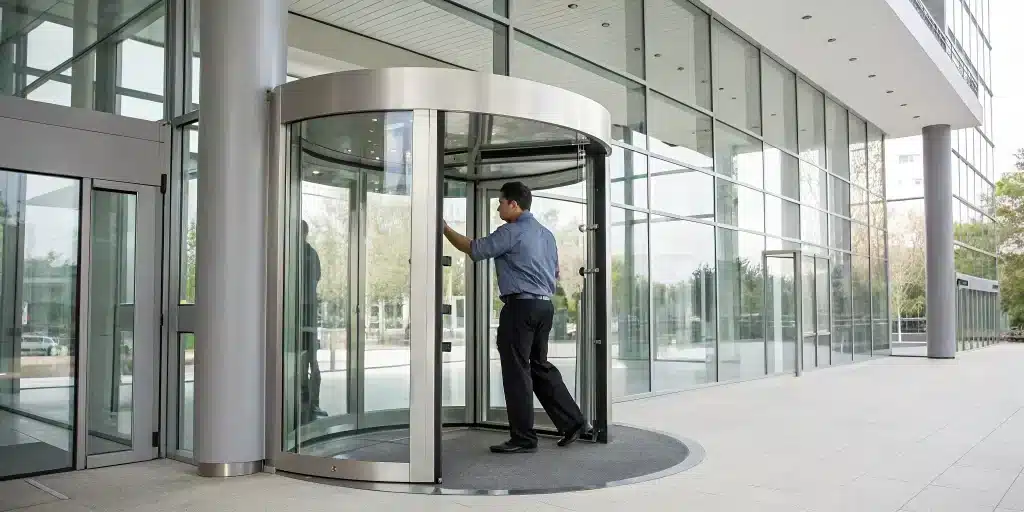
A revolving door is your building’s handshake. When it breaks, it’s a weak, limp grip that tells customers something is wrong. It halts foot traffic, creates a security vulnerability, and can bring your operations to a complete standstill. In a city that never stops, you can’t afford that kind of downtime. Finding a reliable service for emergency revolving door repair NYC isn’t just about fixing a mechanism; it’s about protecting your reputation and your bottom line. This guide will walk you through how to identify a true emergency, what to do in the moment, and how to choose a service that gets you back in business fast.
Key Takeaways
- Know when it’s an emergency: A revolving door problem requires an immediate call if it creates a safety hazard, such as having faulty sensors or moving erratically, or if it completely blocks access to your building. Your first steps should always be to secure the area and guide people to an alternate entrance.
- Choose the right 24/7 service: When you need help fast, look for a company with licensed technicians, transparent emergency pricing, and a proven track record. A professional service will provide a clear diagnosis and perform thorough safety checks after the repair to ensure the door is fully compliant and safe.
- Invest in regular maintenance: The most effective way to handle emergencies is to prevent them from happening in the first place. A scheduled maintenance plan is more cost-effective than paying for urgent repairs and helps you avoid the stress and business disruption of a sudden breakdown.
When Does a Revolving Door Need Emergency Repair?
A revolving door is often the first impression your building makes, welcoming everyone who enters. But when it malfunctions, it can quickly become a major headache and a serious liability. Knowing the difference between a minor issue and a true emergency is key to keeping your property safe and your business running smoothly. Some problems can wait for a scheduled appointment, while others demand an immediate call for professional help.
Spotting immediate safety hazards
Your top priority is the safety of your employees, customers, and visitors. A malfunctioning revolving door can pose a significant risk, so if you notice any signs that compromise safety, you should stop its use and call for an emergency locksmith right away. Pay close attention if the door is making unusual grinding noises, vibrating, or not turning correctly, as these are often the first indicators of a serious problem. Other red flags include jerky rotation, doors stopping suddenly, or cracked glass panels. A critical safety failure is when the built-in sensors stop working, which can lead to the door closing on someone. These aren’t just inconveniences; they are accidents waiting to happen.
Failures that halt your business
Beyond immediate safety concerns, a broken revolving door can bring your business to a standstill. Revolving doors are complex, and when they fail, they can block your main entrance, preventing customers from coming inside and creating a negative first impression. A complete shutdown during peak hours can directly impact your revenue and reputation. A door that won’t lock properly overnight also creates a serious security breach. For any business, maintaining a secure and accessible entrance is non-negotiable, making a swift repair from a commercial locksmith essential for your operations.
Emergency call vs. scheduled repair: Making the right choice
So, how do you decide whether to make an urgent call or book a future appointment? The answer comes down to safety and security. If the door presents any immediate danger, is completely inoperable and blocking access, or will not lock to secure your building, you have an emergency on your hands. These situations require a 24/7 response to protect people and property. On the other hand, minor issues like a faint squeak, slow operation during off-peak hours, or cosmetic damage can typically wait for a scheduled door repair and installation service. Making the right choice ensures you get the help you need exactly when you need it.
What to Do When Your Revolving Door Malfunctions
A malfunctioning revolving door can bring your building’s traffic to a screeching halt. It’s more than just an inconvenience; it can be a serious safety issue and a major disruption to your business operations. When you’re faced with a door that’s stuck, making strange noises, or moving erratically, it’s easy to feel a sense of panic. But don’t worry. By taking a few clear, methodical steps, you can manage the situation safely and efficiently while you wait for professional help to arrive. The key is to prioritize safety, maintain accessibility for your customers and staff, and gather the right information for a speedy repair. Acting quickly and calmly will minimize risks and get your entryway back in working order as soon as possible. Here’s exactly what you should do the moment you realize your revolving door isn’t working correctly.
Secure the area to prevent injuries
Your first priority is always safety. A revolving door that isn’t functioning properly can pose a significant risk of injury. Even if it seems to be moving slowly, a sudden stop or acceleration could trap someone or cause them to fall. Immediately block off access to the door. Use cones, caution tape, or prominent signs that clearly state “Do Not Use” or “Door Out of Order.” If you have staff available, post someone near the entrance to redirect people and ensure no one attempts to use the malfunctioning door. Properly maintained revolving doors have safety sensors, but when a door is broken, you can’t rely on them. Taking control of the area prevents accidents and protects everyone in your building.
Set up a temporary entrance for staff and customers
With the broken door secured, your next step is to ensure people can still get in and out of your building. Revolving doors are designed to manage the flow of traffic and reduce congestion, so their failure can quickly create a bottleneck. Identify the nearest alternative entrance, which is often a standard swing door located next to the revolving one. Make sure this door is unlocked and fully accessible. Post clear, easy-to-read signs that direct foot traffic to the temporary entrance. Good signage prevents confusion and frustration, allowing your business to continue operating as smoothly as possible. This simple step keeps your entryway organized and shows your customers you’re on top of the situation.
Document the issue for insurance and repairs
Before you even pick up the phone to call for help, take a moment to document the problem. This information is incredibly valuable for both your insurance claim and the repair technician. Use your phone to take clear photos and videos of the door, capturing any visible damage or erratic behavior. Make a note of what happened: Was there a loud noise? Is the door stuck in a specific position? When did you first notice the issue? This detailed record provides crucial diagnostic information for the technician and serves as important evidence for your insurance provider. It also helps the door repair and installation team arrive with a better idea of what they’re facing, potentially speeding up the entire process.
Choosing a 24/7 Emergency Repair Service in NYC
When your revolving door breaks down, it feels like your business’s front line has collapsed. In a city like New York, a malfunctioning entrance is more than an inconvenience; it’s a direct hit to your operations, security, and customer experience. The constant flow of people means you can’t afford extended downtime, and a broken door can quickly become a safety hazard or a violation of accessibility standards. The last thing you need is the added stress of sifting through dozens of repair services in the middle of the night or on a busy weekend.
The right choice means getting a fast, professional fix from a team that understands NYC’s unique demands, from navigating traffic to get to you quickly to complying with complex building codes. The wrong one can lead to longer closures, shoddy work, and even bigger security risks down the line. Finding a trustworthy partner ahead of time is ideal, but when you’re in a pinch, knowing what to look for is critical. Let’s walk through the key factors so you can make a confident decision, even when you’re under pressure.
What to look for in a qualified technician
When you’re facing an emergency, you need an expert, not a general handyman. Look for a company with a team of licensed, insured, and experienced technicians who specialize in commercial doors. It’s a good sign when a company uses its own in-house staff rather than subcontractors, as it shows a commitment to quality control and accountability. A qualified technician will arrive with the right tools and a clear understanding of complex door mechanisms. You need a team with proven experience handling commercial security to ensure the job is done right and your property remains protected from the start.
Understanding response times and availability
In an emergency, “soon” isn’t good enough. You need a service that guarantees a rapid response, 24 hours a day, 7 days a week. When a company advertises 24/7 service, confirm that includes holidays and weekends, because problems don’t stick to a 9-to-5 schedule. Check their service area to make sure they can get to you quickly in Manhattan, Brooklyn, or Queens. A true emergency service understands the urgency and is structured to dispatch technicians immediately, helping you get your business back to normal with minimal disruption.
Key questions to ask before you hire
Before you agree to any work, take a moment to ask a few critical questions. This quick vetting process can save you a lot of trouble. Start with the basics: “What is your estimated arrival time?” and “Can you provide a quote or explain your pricing structure for emergency calls?” It’s also smart to ask about their specific experience with your type of door repair and installation. A great follow-up is, “Do you offer a warranty on your parts and labor?” This shows you’re thinking long-term and helps you find a company that stands behind its work.
The Emergency Repair Process: What to Expect
When your building’s revolving door suddenly stops working, it can feel like a major crisis. It disrupts foot traffic, creates a potential safety hazard, and can bring your business to a halt. Calling for an emergency repair is the first step, but what happens next? Understanding the process can help reduce stress and get your entrance back in working order faster. A professional technician follows a structured approach to diagnose the problem, fix it efficiently, and ensure everything is safe. The process involves a careful initial assessment, a clear repair plan, sourcing the right parts, and performing rigorous safety checks. Knowing these steps helps you know what to expect when you make that urgent call for door repair and installation.
The initial assessment and diagnosis
The first thing a technician will do upon arrival is a thorough inspection to pinpoint the exact cause of the malfunction. Revolving doors are complex machines with many moving parts, electrical components, and safety sensors, so a quick glance isn’t enough. The technician will likely test the door’s movement, listen for unusual sounds, and examine the motor, drive mechanism, and weather stripping. They will also check the sensors and control panel for any error codes or signs of failure. Once they’ve diagnosed the issue, they will explain it to you in simple terms, outline the necessary repairs, and provide a clear estimate for the work.
Typical repair timelines and steps
After you approve the repair plan, the technician gets to work. For an emergency locksmith service, the priority is to resolve the issue as quickly as possible to minimize downtime for your business. The timeline can vary depending on the problem’s complexity. A simple sensor adjustment might only take an hour, while a major mechanical failure could take longer. The general process involves securing the area for safety, carefully dismantling the affected components, replacing or repairing the faulty parts, and then reassembling the door. The technician will work efficiently to restore function, keeping you updated on their progress along the way.
Sourcing and replacing necessary parts
A well-equipped repair service has access to a wide inventory of common parts for revolving doors. Components like motors, sensors, bearings, and electronic control units can fail over time and require replacement. During the assessment, the technician will identify which parts are needed. In many cases, they will have the necessary components in their service vehicle, allowing for an immediate fix. If a specialized or custom part is required, they will source it from a trusted supplier. Using high-quality, manufacturer-approved parts is essential for ensuring the repair is durable and the door operates reliably for years to come.
Final safety and compliance checks
The job isn’t finished once the door is spinning again. The final and most critical step is to conduct comprehensive safety and compliance checks. The technician will test all the door’s safety features, including the motion sensors that prevent it from closing on a person and the emergency stop buttons. They also ensure the door meets all local NYC building and fire codes, which may include requirements for emergency collapse functions. This final inspection is vital for any commercial locksmith service, as it guarantees the door is not only functional but also completely safe for your employees, customers, and visitors.
The Cost of Emergency Revolving Door Repair in NYC
When your revolving door breaks down, your first thought is probably about safety and getting it fixed fast. Your second thought is likely about the cost. Emergency repairs can feel unpredictable, but understanding the key components of the bill can help you feel more in control. Let’s break down what you can expect to pay for an emergency door repair and installation service in NYC.
Breaking down service fees and emergency premiums
The first thing to know is that calling for help outside of standard business hours usually comes with a premium. Many companies offer 24/7 emergency service for revolving door issues, but this immediate availability often includes an emergency call-out fee on top of the regular labor rate. When you call a technician, make sure to ask about their emergency service fees upfront. This transparency helps you avoid any surprises on the final invoice. A reputable company will be clear about their pricing structure, so you know exactly what you’re paying for when you need urgent assistance.
Understanding labor and parts costs
The total cost of your repair will be a combination of labor and the price of any necessary parts. While every situation is different, looking at installation costs can give you a rough idea of what a major repair might involve. For example, a complex fix could run anywhere from $500 to $2,500. The technician’s time, the complexity of the job, and the specific components needed all contribute to the final price. This is also why yearly maintenance, which can cost between $100 and $500, is often a smart investment to prevent larger, more expensive emergency repairs down the road.
Factors that influence the final bill
Several variables can affect your final bill. The type of revolving door you have is a major factor, as the cost for automatic doors varies widely based on the model. The materials, like glass or steel, and the specific automatic system also play a big role in the overall cost. A simple mechanical adjustment will be much less expensive than replacing a faulty motor or a set of safety sensors. The technician will diagnose the specific problem to determine what parts and labor are required, which will then be reflected in your quote.
Checking for insurance and warranty coverage
Before you approve any work, take a moment to check your business insurance policy. Some policies may cover the cost of emergency repairs, which could significantly reduce your out-of-pocket expenses. It’s also a great idea to ask the repair company if they offer a warranty on their work. Some providers offer a 90-day warranty on revolving door repairs, giving you peace of mind that the fix is guaranteed. Asking about these details upfront can save you money and ensure you’re working with a professional service that stands by its work.
Common Revolving Door Emergencies
Revolving doors are the workhorses of many NYC buildings, managing foot traffic with impressive efficiency. But when they break down, the problem is often more than just an inconvenience. Certain issues can create immediate safety risks or bring your business to a standstill. Knowing what to look for can help you act quickly and call for professional help before a minor issue becomes a major crisis. Here are some of the most common emergencies you might face.
Motor and mechanical failures
At its core, a revolving door is a complex machine with a motor, gears, and numerous moving parts. Over time, these components can wear down, leading to a sudden breakdown. You might find the door stops turning completely, moves in jerky, unpredictable motions, or gets stuck, trapping people inside. This kind of failure doesn’t just disrupt the flow of people into your building; it can halt business operations entirely. Since these doors are often the main entrance, a mechanical failure requires an immediate response from a door repair and installation professional to get your entryway functioning safely again.
Faulty safety sensors and accessibility issues
Modern revolving doors are equipped with sophisticated safety sensors designed to detect people and objects, preventing the door from closing on them. When these sensors malfunction, the door becomes a significant safety hazard. It might fail to slow down or stop, posing a serious risk of injury to anyone passing through, especially children or the elderly. A faulty door can also create major accessibility problems, potentially trapping individuals or blocking entry for those with strollers or mobility aids. This isn’t just a repair issue; it’s a critical safety emergency that demands an immediate call to a 24/7 emergency service.
Violations of emergency exit codes
Did you know your revolving door is part of your building’s emergency exit plan? In New York City, revolving doors must comply with strict fire and safety codes, which often require them to have a “breakaway” or collapsible function. This allows the wings to fold out of the way during an evacuation, creating a clear exit path. If this mechanism is jammed, broken, or improperly maintained, your building could be in violation of local codes. This is a serious liability and a danger to everyone inside. Ensuring your door’s emergency features are functional is a key part of responsible commercial property management.
Alarming noises, vibrations, or structural damage
Unusual sounds or movements are your revolving door’s way of telling you something is wrong. Grinding noises, loud squeals, or a shuddering motion as the door turns are all red flags that point to underlying mechanical problems. You should also look for visible signs of damage, like cracked glass panels or a bent frame. Ignoring these warnings can lead to a complete system failure, which is often more dangerous and expensive to fix. If your door is making strange noises or vibrating, it’s best to get it serviced quickly to prevent traffic jams, further damage, or potential injuries. A professional door repair technician can diagnose the problem before it gets worse.
How to Prevent Future Revolving Door Emergencies
Dealing with a revolving door emergency is stressful enough. Once the immediate problem is fixed, the next step is to make sure it doesn’t happen again. A proactive approach to door care not only saves you from future headaches but also protects your property and the people who use it. By paying attention to your door’s daily performance and scheduling regular check-ups, you can prevent minor issues from turning into major, business-halting emergencies.
Why regular maintenance is essential
Think of regular maintenance as a health check-up for your revolving door. These systems are complex, with many moving parts that need to work in perfect harmony. Preventive maintenance involves having a professional inspect, clean, and lubricate components to keep the door operating safely and smoothly. This consistent care extends the life of your door, ensures it meets safety standards, and prevents the kind of sudden breakdowns that lead to emergency calls. A well-maintained door provides a seamless entry for your visitors and reflects well on your business. Professional door repair and installation services can create a maintenance schedule that fits your needs.
Warning signs you shouldn’t ignore
Your revolving door will often give you clues that something is wrong before it fails completely. It’s important to pay attention to these warning signs. If you notice any new or unusual noises like grinding or squeaking, feel vibrations as the door turns, or see it moving slower or getting stuck, it’s time to call a technician. Ignoring these symptoms can lead to more significant damage and potential safety risks for anyone using the door. Acting quickly when you spot these issues can often prevent a full-blown emergency and a much more expensive repair.
Maintenance plans vs. the cost of emergency repairs
When a revolving door stops working, it can disrupt your entire business and potentially turn away customers. While an emergency repair solves the immediate problem, it often comes with premium pricing and the added cost of lost business. A scheduled maintenance plan, on the other hand, is a predictable operational expense. Technicians can spot wear and tear on parts, check safety sensors, and even ensure the door’s seals are intact to maintain energy efficiency. Investing in a regular service plan through a commercial locksmith is always more cost-effective than waiting for a critical failure.
Related Articles
- Revolving Door Repair & Installation In NYC
- Revolving Door Installer NYC – Golden Key Locksmith NYC
- How To Find The Best Revolving Door Repair Company
Frequently Asked Questions
How do I know if my revolving door problem is a real emergency? The simplest way to decide is by considering safety and security. If the door is moving erratically, has stopped completely and is blocking the entrance, or won’t lock properly to secure your building overnight, you have an emergency. These situations pose immediate risks to people and your property, so they require a 24/7 response. Issues like minor squeaks or cosmetic scuffs can usually wait for a scheduled appointment.
What are the first things I should do if my revolving door stops working? Your first priority is to prevent any injuries. Immediately block off the area with signs or cones to stop people from trying to use the door. Next, make sure any nearby swing doors are unlocked and accessible, and put up clear signs directing everyone to that temporary entrance. Finally, take a quick video or a few photos of the problem with your phone; this documentation will be very helpful for the repair technician and your insurance provider.
My door is just making a strange noise. Should I call for an emergency repair? A strange noise, like grinding or vibrating, is your door’s way of telling you something is wrong. While it might not seem like a full-blown emergency yet, it’s a serious warning sign of a potential mechanical failure. Ignoring it could lead to a more dangerous and expensive breakdown. It’s best to stop its use and call a professional for an assessment. They can help you determine if it needs an immediate fix or if a scheduled service will suffice.
How can I avoid the high cost of emergency repairs in the future? The most effective way to prevent costly emergencies is through regular, professional maintenance. A scheduled service plan allows a technician to inspect, clean, and lubricate all the moving parts, catching wear and tear before it leads to a sudden failure. This proactive approach is far more budget-friendly than paying premium rates for an urgent, after-hours repair and dealing with unexpected business disruptions.
What should I ask a 24/7 repair service to make sure they’re reliable? When you’re calling for help, especially under pressure, a few key questions can tell you a lot. Ask for their estimated arrival time to gauge their responsiveness. You should also ask for their pricing structure for emergency calls so there are no surprises. A great question is, “Do you have experience with my specific type of revolving door?” Finally, asking if they provide a warranty on their parts and labor shows you’re looking for a quality fix from a company that stands behind its work.