

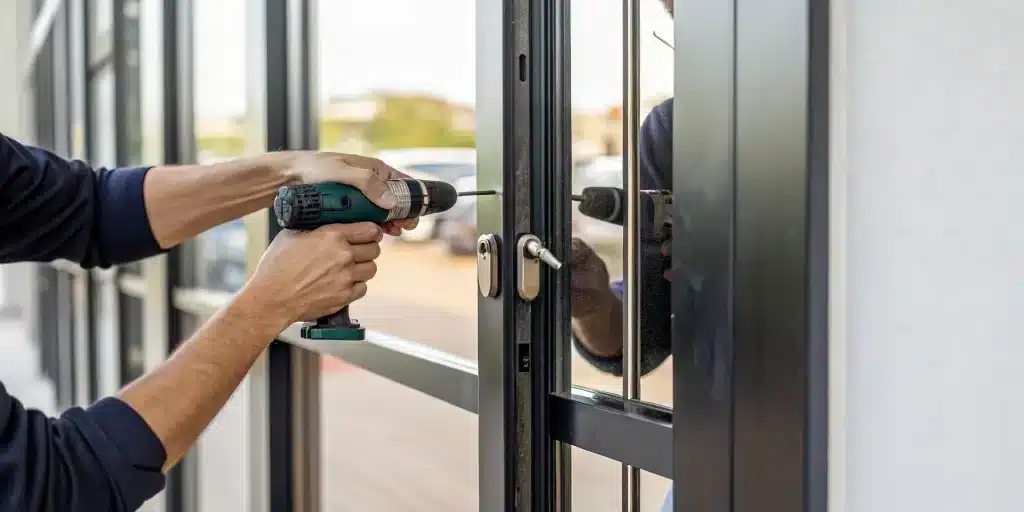
Your storefront door is the first handshake you offer your customers. It sets the tone for what’s inside and serves as the primary guardian of your business. A door that’s misaligned, difficult to open, or visibly worn can send the wrong message and, more importantly, create a serious security risk. That’s why a professional commercial storefront door installation is about so much more than just looks; it’s a fundamental investment in your business’s safety, functionality, and curb appeal. This guide will walk you through the essential steps, from preparing the opening to adding the final security features, ensuring your new entrance is both welcoming and secure. If the door is sound but the lock is worn, compare options in our storefront door lock replacement guide before replacing the whole entry.
Key Takeaways
- Preparation prevents problems: Before you begin, confirm your measurements are exact, the existing opening is square, and your plans meet all local building and ADA codes to avoid major issues later.
- Anchor the frame for true security: A door is only as strong as its frame, so ensure it’s perfectly level and plumb before using extra-long fasteners to secure it directly to the building’s structure.
- Security is an ongoing process: After installation, add high-security locks and reinforce the strike plate, then create a simple maintenance schedule to lubricate hardware and check for wear to keep your entrance secure.
Gather Your Tools and Materials
There’s nothing worse than starting a project only to realize you’re missing a crucial tool halfway through. Before you even think about removing the old door, taking a moment to gather everything you need will make the entire process smoother and safer. Think of it as your pre-flight check. A well-organized workspace with all your tools and materials laid out is the first step toward a successful installation. This preparation not only saves you time but also helps prevent frustrating mistakes. When you have everything on hand, you can focus completely on getting the job done right, ensuring your new storefront door is secure and perfectly aligned from the get-go. If you find your toolbox is looking a little sparse, remember that a professional service comes with all the right equipment for any situation.
Essential Tools for the Job
Having the right tools is non-negotiable for a secure and professional-looking installation. You’ll want to start with the basics: a heavy-duty drill with various bits, a set of screwdrivers (both Phillips and flathead), and a reliable tape measure. A pry bar will be essential for removing the old frame, and a utility knife is always handy for trimming and adjustments. Most importantly, you’ll need a quality level—at least four feet long—to ensure your frame is perfectly plumb and square. A caulk gun for sealing gaps and a rubber mallet for gentle persuasion will also be your best friends during this process. Having these items ready will prevent you from having to stop and run to the hardware store mid-installation.
Necessary Materials and Hardware
Your new storefront door package should include the main components, but it’s smart to double-check. A standard door frame consists of three main parts: two vertical side pieces, called stiles, and the top horizontal piece, known as the head. Beyond the door and frame itself, the hardware is what truly secures your business. This includes hinges, the lockset, and potentially a door closer. Pay close attention to the fasteners. You’ll need plenty of anchors and extra-long screws designed for your building’s material—whether it’s brick, concrete, or wood—to attach the frame securely. Using the wrong fasteners can compromise the entire installation. Sourcing the right hardware is a critical step our technicians handle with every door repair and installation.
Safety Gear You Can’t Skip
Storefront doors are heavy and installation involves risks, so don’t overlook your personal safety. At a minimum, you should have a pair of durable work gloves to protect your hands from sharp edges and a pair of safety glasses to shield your eyes from dust and debris. Given the weight of the materials you’ll be lifting and positioning, steel-toed boots are also a very wise investment to protect your feet from potential accidents. A secure installation starts with a safe one. Taking these simple precautions helps ensure you can complete the job without injury. For businesses that want to guarantee a safe and compliant installation, our commercial locksmith team is always ready to help.
How to Prepare for Your Installation
A smooth installation starts long before the new door arrives. Taking the time to prep your space properly will save you headaches and ensure a perfect, secure fit for your new storefront door. Think of it as setting the stage for a successful project. Getting these initial steps right prevents common issues like drafts, sticking, and alignment problems down the road. While you can tackle these preparations yourself, remember that a professional door installation service handles all of this for you, guaranteeing every detail is covered. If you’re managing the project, focus on these three key areas to get started.
Measure the Door Opening
Before you even think about ordering a door, you need to measure the opening accurately. This is non-negotiable. Use a reliable tape measure to get the width and height of the rough opening. It’s a good practice to measure in at least two different spots for both width and height (e.g., top and bottom for width, left and right for height) and use the smallest measurement. This accounts for any slight imperfections in the opening. An ill-fitting door can compromise security and energy efficiency, so double-check your numbers to ensure your new door will fit perfectly.
Assess the Existing Frame
With your measurements in hand, take a close look at the existing door frame and the surrounding wall. Is the opening square? You can check this with a builder’s square or by measuring diagonally from corner to corner; the two measurements should be equal. Also, use a level to see if the sides are plumb (perfectly vertical) and the header and threshold are level (perfectly horizontal). If the frame is warped, rotted, or out of square, you’ll need to make adjustments before installing the new door. Forcing a new door into a flawed frame will only lead to problems.
Check Local Building Codes and ADA Rules
For a commercial property, this step is critical. Before you finalize any plans, you must check the local building codes to ensure your new door is compliant. The NYC Department of Buildings has specific requirements for commercial entryways that you need to follow. Additionally, your storefront must be accessible to everyone. That means your door needs to meet the standards set by the Americans with Disabilities Act (ADA). This includes specifications for door width, threshold height, and hardware. Following these guidelines isn’t just about avoiding fines—it’s about making your business welcoming to all customers.
Your Step-by-Step Installation Guide
Installing a new storefront door is a project that demands precision and patience. It’s more than just hanging a piece of glass and aluminum; it’s about creating a secure and welcoming entrance for your customers. A properly installed door protects your inventory, contributes to your building’s energy efficiency, and ensures you meet accessibility standards. Before you even pick up a tool, it’s important to understand that this process requires careful measurement, a good understanding of how door hardware works, and often, an extra set of hands. Each step, from removing the old frame to testing the final lock, builds on the last. A small mistake early on can lead to bigger problems later, like a door that doesn’t close properly, a lock that won’t engage, or even security vulnerabilities. This guide will walk you through the fundamental steps. However, given the importance of a secure entrance for any business, professional commercial locksmith services are often the best route. Experts have the specialized tools and experience to handle unexpected challenges, like an uneven opening or a complex locking mechanism, ensuring the job is done right the first time. They can also guarantee that all components, from the frame to the high-security locks, work together seamlessly for maximum protection.
Remove the Old Door and Frame
Your first physical step is to clear the way for the new door. Start by removing the old door panel itself. This usually involves detaching the door closer arm and then unscrewing the hardware at the top and bottom pivots or hinges. Since these doors are heavy, have a partner help you lift it away safely. Next, tackle the frame. You’ll need to cut through any old caulk or sealant around the perimeter and then carefully pry the frame sections out of the opening. Take your time to avoid damaging the surrounding wall. Once the old frame is out, inspect the rough opening for any rot, rust, or structural damage. Discovering issues now is much better than after the new door is in. If you find significant damage, it’s wise to get professional door repair and installation to ensure a solid foundation for your new entrance.
Install and Secure the New Frame
With a clean opening, you can now set the new frame. This is the most critical step for ensuring your door operates smoothly. Place the frame into the opening and use a level to check that it is perfectly plumb (vertically straight) and level (horizontally flat). You’ll use shims—small wedges of wood or plastic—to make tiny adjustments until the frame is perfectly positioned. Once you’re satisfied with the placement, secure the frame to the building structure using the appropriate fasteners for your wall type. Don’t skimp here; a securely anchored frame is essential for the door’s stability and security. A solid frame is the backbone of your storefront’s defense, a key component of any effective commercial locksmith strategy.
Hang the Door and Adjust the Hardware
Now it’s time to hang the new door. With a helper, carefully lift the door and attach it to the pivots or hinges on the newly installed frame. Once it’s hanging, the fine-tuning begins. Your goal is to have a consistent gap, typically about 1/8 inch, all the way around the door. This prevents it from rubbing against the frame or threshold. You can make adjustments at the pivot points to shift the door’s position until the alignment is perfect. This is also when you’ll install the door closer, which controls the swing and speed of the door. Getting these adjustments just right is what separates a frustrating door from a flawless one, and it’s a hallmark of a professional door repair and installation service.
Test the Door and Make Final Adjustments
With the door hung and aligned, it’s time for final testing and finishing touches. Open and close the door repeatedly to ensure it swings freely without any sticking or scraping. Check that the latch engages smoothly and the lock operates correctly. Now you can install the handles, push/pull bars, and any other hardware. Apply weatherstripping around the frame to create a tight seal, which helps with energy costs and keeps drafts out. This is also the perfect moment to think about your overall security. Once your door is physically sound, you can integrate it with advanced security systems, like keypads or card readers, to fully protect your business. Make any final tweaks to the door closer speed and latching action until it’s perfect.
How to Ensure the Frame is Level and Secure
A storefront door is only as strong as its frame. If the frame is wobbly, misaligned, or poorly attached, it compromises the entire entrance. This isn’t just a minor inconvenience; it’s a major security risk that can make your business an easy target for break-ins. It also leads to daily operational headaches, like doors that stick, scrape the floor, or don’t close properly, which can frustrate both your staff and your customers. Getting the frame installation right is non-negotiable for both security and functionality. A properly installed frame supports the weight of a heavy commercial door, ensures the locks engage correctly, and maintains a tight seal to keep drafts and moisture out. The following steps are all about creating that solid foundation. We’ll cover how to ensure it’s perfectly aligned, securely anchored to the building, and sealed against the New York weather. While these steps can guide a DIY project, the precision required often makes it a job for the pros. A professional door installation guarantees every detail is handled correctly from the start, giving you a secure and smoothly operating entrance for years to come.
Check for a Square and Plumb Fit
Before securing the frame, make sure it’s perfectly positioned. This means checking that it’s “plumb” (perfectly vertical) and “square” (with true 90-degree corners). Use a quality level on the sides and top of the frame. A crooked frame will cause the door to swing on its own, stick when you try to close it, or create gaps that compromise security and insulation. Taking the time to get this alignment perfect is one of the most critical steps. It ensures the door hangs correctly and operates smoothly for years, preventing unnecessary wear on the hinges and lock.
Use the Right Anchoring Techniques
How you attach the frame to the building gives your door its strength against forced entry. Use multiple, extra-long screws that go through the frame and deep into the wall studs. Shorter screws that only grip the rough opening can be easily kicked in. The goal is to make the door frame an integral part of the building’s structure. This robust anchoring is a fundamental part of any commercial security strategy. A securely anchored frame provides the resistance needed to deter potential break-ins and gives you peace of mind that your business is protected.
Seal Gaps and Weatherproof the Frame
Once your frame is level and securely anchored, the final step is to seal it. Run a bead of high-quality silicone caulk around the perimeter where the frame meets the building, both inside and out. This isn’t just for looks; it’s a crucial weatherproofing measure. Sealing these gaps prevents water from seeping in and causing rot or structural damage over time. It also stops air leaks, which can help keep your heating and cooling costs down. This simple finishing touch protects your investment and contributes to a more energy-efficient storefront.
What Security Features Should You Add?
A new storefront door looks great, but its main job is to protect your business. A standard installation provides a basic level of security, but for true peace of mind, you’ll want to add a few extra layers of protection. Think of your door as the first line of defense—making it as strong as possible deters potential intruders and safeguards your inventory, equipment, and livelihood. The right security features turn a simple entryway into a formidable barrier against break-ins, vandalism, and unauthorized access. A door is only as strong as its weakest component, so it’s important to address every potential vulnerability.
From the locks you choose to the type of glass you install, every element plays a role in your overall security plan. It’s not just about preventing a forced entry; it’s also about controlling who has access and when. Integrating modern security solutions with a physically strong door and frame creates a comprehensive system that works around the clock to keep your business safe. Taking these extra steps during installation will save you from costly repairs and losses down the road. Let’s walk through the most effective security upgrades you should consider for your new commercial storefront door. These additions are investments in the long-term safety and success of your business.
Install High-Security Locks and Deadbolts
The lock is the heart of your door’s security, so don’t settle for a standard, off-the-shelf model. High-security locks are specifically designed to resist common break-in methods like picking, drilling, and bumping. They often feature complex pin systems and are constructed from hardened steel, making them incredibly difficult for intruders to defeat. Installing a commercial-grade deadbolt adds another critical layer of protection. Unlike a standard spring-latch lock, a deadbolt can’t be forced open with a credit card or knife. For any business, investing in professional commercial locksmith services to install these locks is one of the smartest security decisions you can make.
Consider Impact-Resistant Glass or Security Bars
If your storefront door has glass panels, they can be a major weak point. A single well-aimed rock can grant an intruder easy access. To counter this, consider using impact-resistant glass. This type of glazing, which includes laminated or tempered glass, is designed to withstand significant force without shattering into pieces. It holds together even when cracked, frustrating and delaying anyone trying to break through. For an even stronger visual deterrent, you could install security bars or a metal grille. While they may not fit every brand’s aesthetic, they send a clear message that your business is well-protected against both break-ins and vandalism.
Reinforce the Frame and Integrate Access Control
A high-security lock won’t do much good if the door frame can be easily kicked in. Reinforcing the frame is a crucial step that’s often overlooked. This can be done by installing metal strike plates with extra-long screws that anchor deep into the wall stud, not just the flimsy door jamb. This simple upgrade makes the entire entryway significantly stronger. To bring your security into the modern age, consider integrating an access control system. These systems replace traditional keys with keypads, card readers, or electronic fobs, giving you complete control over who can enter your building and when. You can easily grant or revoke access without ever changing a lock.
Common Installation Mistakes to Avoid
Installing a commercial storefront door might seem straightforward, but a few common slip-ups can turn a simple project into a major headache. These mistakes don’t just affect how the door looks or functions; they can create serious security risks for your business. Getting it right from the start saves you time, money, and stress down the line. Let’s walk through the most frequent installation errors so you know exactly what to watch out for and how to prevent them.
Incorrect Measurements and Alignment
One of the most critical steps is getting the measurements exactly right. Even being off by a fraction of an inch can cause significant problems. A misaligned door might not close smoothly, create drafts, or leave gaps that invite prying tools. This not only compromises your building’s energy efficiency but also its security. Before you even begin, double- and triple-check your measurements for the door opening and the frame. A perfectly level and plumb installation ensures the door hangs correctly and operates seamlessly for years. If you’re feeling unsure, professional door repair and installation services can guarantee a perfect fit.
Weak Fastening and Security Gaps
A strong door is only as secure as its frame. A common mistake is not fastening the frame securely enough to the building’s structure. Using short screws or too few anchors creates a weak point that can be exploited. For a truly secure installation, it’s best to use plenty of anchors and extra-long screws. The longer the hardware, the more difficult it is for someone to kick in or pry the frame loose. Taking this extra step provides a solid foundation and is a fundamental part of protecting your business. Our commercial locksmith team always prioritizes robust fastening to ensure your entrance is fortified.
Ignoring Safety and Building Codes
Cutting corners on building codes is a mistake you can’t afford to make. New York City has specific regulations for commercial doors that cover everything from fire safety to accessibility requirements. Ignoring these rules can lead to failed inspections, hefty fines, and potential liability issues if an accident occurs. It’s also a missed opportunity to enhance your security. A professional installation includes recommendations for features like high-security deadbolts, shatter-resistant glass, and integrated security systems. Adhering to codes doesn’t just keep you compliant; it ensures your storefront is safe for both your employees and your customers.
How to Maintain Your New Storefront Door
Your new storefront door looks fantastic, but the job isn’t quite over. Just like any other important part of your business, your door needs a little attention to stay secure, functional, and professional-looking. Think of it as protecting your investment. A well-maintained door not only keeps your property safe but also prevents small, easy-to-fix issues from turning into costly emergency repairs. Setting up a simple maintenance routine is one of the smartest things you can do for your business. It doesn’t take much time, and it ensures your entrance operates smoothly and securely for years to come. A little proactive care goes a long way in keeping your business safe and welcoming.
Create a Regular Inspection Schedule
The easiest way to stay on top of maintenance is to make it a habit. Set a recurring reminder on your calendar—once a month is perfect—to give your door a quick once-over. During your check, look for any signs of wear and tear on the door and its frame. Does it open and close smoothly, or does it stick or drag? Check the hinges, handles, and any glass panels for cracks or looseness. Pay attention to the weatherstripping to make sure it’s intact and creating a good seal. Catching these small things early prevents them from becoming bigger, more expensive problems.
Maintain Locks and Hardware
The moving parts of your door do a lot of heavy lifting, so they need the most attention. At least twice a year, take a few minutes to lubricate the hinges and the lock mechanism with a silicone-based spray to keep them moving freely. Grab a screwdriver and gently tighten any loose screws on the handles, hinges, and lock plates. It’s also a good idea to wipe down the hardware to remove dirt and grime that can cause premature wear. These simple steps ensure your door operates reliably and that your commercial locksmith services last as long as possible, keeping your business secure day in and day out.
Know When to Call a Professional
While regular check-ups can handle most minor upkeep, some issues require an expert eye. If you notice the door is misaligned, you see cracks in the frame, or the lock consistently sticks even after cleaning, it’s time to call for help. Don’t try to force a door that’s difficult to operate, as you could cause more damage. A professional can handle complex adjustments and door repair and installation to get things working perfectly again. It’s also a good time to consult an expert if you’re considering upgrading to more advanced security systems to better protect your business.
Related Articles
- A Guide To Commercial Glass Door Installation
- The Ultimate Guide To Storefront Door Installation
- How To Remove A Commercial Door Knob Without Screws
- How To Repair Your UPVC Door Lock Mechanism
Frequently Asked Questions
Can I really install a commercial door myself? While it’s technically possible if you have the right tools and a lot of patience, installing a commercial storefront door is a job that demands precision. These doors are heavy, and getting the frame perfectly level and secure is critical for both smooth operation and security. A small mistake can lead to a door that sticks, creates drafts, or is vulnerable to break-ins. For most business owners, hiring a professional is the smarter move to ensure the job is done safely and correctly the first time.
What’s the single biggest mistake people make when installing a new door? The most common and costly error is failing to get the frame perfectly square, plumb, and level before securing it to the wall. People often rush this step, but a misaligned frame is the root cause of most door problems, from sticking and scraping to locks that don’t engage properly. Taking the extra time to shim and adjust the frame until it’s perfect is the most important part of the entire installation.
My door is installed, but it doesn’t close smoothly. How can I fix it? A door that doesn’t close smoothly is almost always a symptom of a frame that wasn’t installed perfectly level. The door’s weight is likely causing it to sag or bind against the frame. You can try making minor adjustments at the hinges or pivots, but if the frame itself is crooked, the problem will persist. This issue often requires a professional to come in, remove the door, and reset the frame correctly.
Are high-security locks actually worth the extra cost? Absolutely. A standard lock can often be bypassed in minutes by someone with basic skills. High-security locks, on the other hand, are built with hardened steel and complex internal mechanisms designed to resist common attack methods like drilling, picking, and bumping. Think of it as an investment in your business’s first line of defense—the added cost provides a significant increase in protection and peace of mind.
How do I know if my door needs professional repair versus simple maintenance? You can handle simple maintenance like tightening loose screws on a handle or lubricating a squeaky hinge. However, you should call a professional if you notice more serious issues. These include a door that has become difficult to open or close, visible cracks in the frame or glass, or a lock that consistently fails to latch. Trying to force a malfunctioning door can cause more extensive damage, so it’s best to get an expert opinion.
Need professional help in NYC? Contact Golden Key Locksmith NYC for Metal Door Installation or Sliding Door Services. Available 24/7 across Manhattan and all NYC boroughs.