

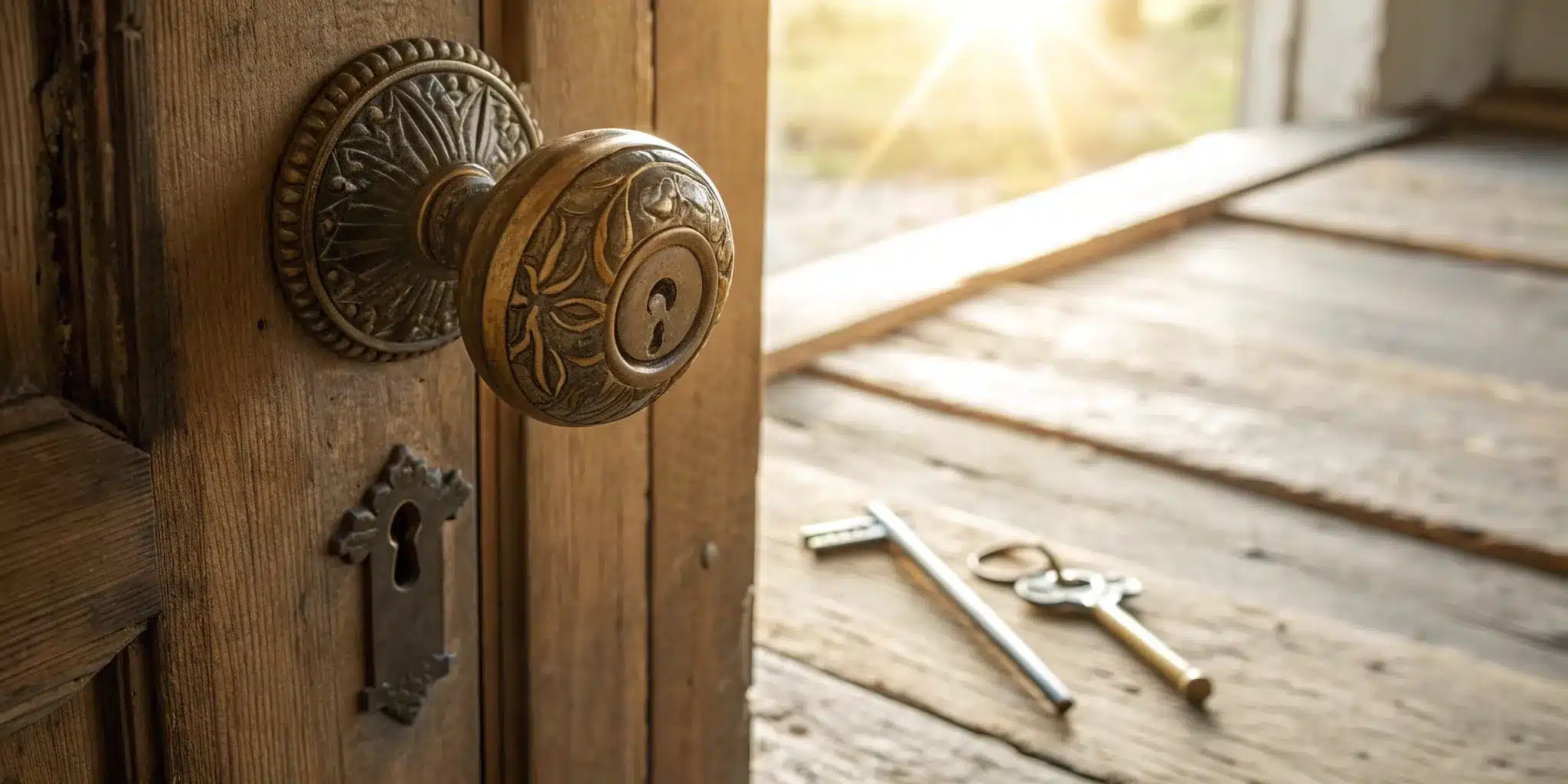
A broken lock is an inconvenience anywhere, but in New York City, it can feel like a major crisis. When you’re faced with a jammed apartment door after a long day or a faulty lock at your business, you need a solution, fast. This guide is designed for city dwellers who need practical advice without the fluff. We’ll cut right to the chase, showing you how to diagnose the problem with your lock and what you can do about it. We will cover the essential techniques for a broken door lock how to open it using items you likely already have, while also highlighting the situations where trying to fix it yourself could compromise your security and lead to a bigger problem.
Key Takeaways
- Figure Out the Real Issue First: Before you try anything, determine if your key is stuck, the latch is jammed, or the handle is loose. Knowing the specific problem helps you choose the right solution and prevents you from accidentally making things worse.
- Use a Gentle Approach, Not Brute Force: Start with simple, non-damaging techniques like using a plastic card or removing the handle. Forcing a key or using the wrong tools, like a hammer or WD-40, will almost always lead to more significant damage to your lock and door.
- Recognize When to Call a Professional: If you’re dealing with a high-security lock, a malfunctioning electronic system, or if gentle DIY methods fail, it’s time to stop. A professional locksmith can resolve the issue quickly and safely, saving you from costly repairs and ensuring your home remains secure.
Know Your Lock: A Breakdown of Common Types
Before you can tackle a broken lock, it helps to know what you’re working with. Different locks have different mechanisms, and identifying yours is the first step toward a solution. Think of it like this: you wouldn’t use the same approach to fix a leaky faucet and a clogged drain. The same principle applies here. Understanding the type of lock on your door can give you clues about what might be wrong and how to approach the problem safely. Let’s walk through some of the most common types you’ll find on doors across New York City.
Deadbolts
You probably have one of these on your front door right now. A deadbolt is a standalone lock that doesn’t have a spring-loaded mechanism. You have to manually turn a key or a thumb-turn to extend or retract the bolt. This design makes it much stronger against forced entry compared to a standard knob lock. Because the bolt is so secure, a broken deadbolt can be particularly tricky. If the key spins without engaging the bolt, or if it’s completely stuck, you’re dealing with an internal failure. These are a staple of any good residential locksmith service because they provide such a critical layer of security for homes and apartments.
Knob and Lever Handles
These are the most familiar types of locks, where the locking mechanism is built directly into the doorknob or lever handle. They’re incredibly common on interior doors, like for bedrooms and bathrooms, but you’ll sometimes see them on exterior doors, too. While convenient, especially lever handles which are great for accessibility, they offer less security than a deadbolt. The latch is spring-activated, which is what makes it vulnerable to being bypassed with something like a credit card. If you have one on an exterior door, it should always be paired with a separate deadbolt for proper security. When these break, the handle might move freely without retracting the latch.
Electronic and Smart Locks
Gaining popularity in both homes and businesses, electronic and smart locks offer keyless convenience. You might open your door with a keypad code, a fingerprint, or even an app on your smartphone. They’re a fantastic modern solution, but they come with their own set of potential problems. A malfunction could be due to dead batteries, a software glitch, or a mechanical failure within the lock itself. Troubleshooting these often involves checking the power source first. These advanced systems are a key part of modern security systems, blending convenience with robust protection when they are working correctly.
Mortise Locks
If you live in an older apartment building or manage a commercial property, you’ve likely encountered a mortise lock. These are heavy-duty systems set into a pocket—or mortise—cut into the edge of the door. They combine the latch and a deadbolt into a single, sturdy cartridge. Mortise locks are known for their strength and durability, making them an excellent choice for high-traffic areas. Because of their complex, integrated design, a failure can be more complicated than with a simple deadbolt. When a mortise lock breaks, it often requires a professional commercial locksmith who understands its intricate internal workings.
Is Your Door Lock Actually Broken? Here’s How to Tell
Before you start trying to force a stubborn lock, it helps to figure out what’s actually going on. A lock that feels “broken” might just be dirty, misaligned, or have a simple mechanical issue. Identifying the specific problem can help you decide if it’s a quick fix or a job for a professional. Here are a few common signs that your lock is failing and what they might mean.
The Key Won’t Turn or Gets Stuck
We’ve all been there: you slide your key into the lock, but it refuses to turn. Or worse, it gets stuck. This is one of the most common lock problems, and it often happens because dust and grime have built up inside the lock’s mechanism, causing the pins to stick. You can try spraying a lubricant like graphite spray directly into the keyhole to see if that frees things up. If the key still won’t budge or feels gritty, the internal components might be worn out. This could be a sign that it’s time to replace the hardware or consider upgrading your home’s security systems to a keyless option.
The Latch Is Stuck
A jammed door latch is another frequent issue. You’ll know this is the problem if the latch bolt doesn’t retract into the door when you turn the handle or knob. It might feel completely frozen in place. This often happens with older locks as rust and dirt accumulate inside the mechanism over time. It can also occur if the internal parts connecting the handle to the latch have become disconnected. While you can try cleaning it, a latch that consistently fails to move is a security risk. A professional can diagnose whether it’s a simple misalignment or if you need a full lock repair.
The Handle Moves, But Nothing Happens
It’s a strange feeling when you turn the doorknob or press the lever, and it moves freely, but the latch doesn’t budge. If the handle feels loose and disconnected from the lock, it usually means an internal part, like the spindle or cam, has broken or slipped out of place. The connection between the handle and the latch is gone. Sometimes, the issue isn’t the lock itself but the door. A door that has swollen from humidity, warped over time, or sagged on its hinges can put pressure on the latch, preventing it from moving correctly. In these cases, you might need professional door repair and installation to get everything aligned again.
You See Damage or Hear Strange Noises
Your eyes and ears can tell you a lot about the health of your lock. If you hear grinding, clicking, or scraping sounds when you turn the key, that’s a clear signal that the internal components are damaged or wearing out. These noises are not normal and suggest that parts are rubbing against each other incorrectly. Also, take a close look at the lock and the area around it. Do you see rust, cracks in the casing, or signs of tampering? Any visible damage is a red flag. These issues compromise your security and often require immediate attention from an emergency locksmith to prevent a complete lock failure.
What You’ll Need to Open a Broken Lock
Before you start tinkering with a broken lock, it’s smart to gather a few tools. Having the right items on hand can mean the difference between a quick, successful fix and accidentally causing more damage to your door. You might be surprised to find that many of the things you need are already in your toolbox or junk drawer. But just as important as knowing what to use is knowing what not to use. Let’s walk through the essentials, some handy household substitutes, and the tools you should definitely leave on the shelf.
Essential DIY Tools
If you have a basic toolkit, you’re already in a good position. A simple screwdriver is often your best friend in this situation. If you can remove the handle, you can sometimes insert the screwdriver into the spindle hole and turn it to retract the latch. For locks where a piece has snapped off but is still visible, a pair of locking pliers can give you the grip you need to grab the remaining part of the shaft and twist it open. As a more drastic, last-resort measure, a drill can be used to destroy the lock cylinder, but this is a destructive method that should only be attempted if you’re prepared to replace the entire lock and are confident you won’t damage the door itself.
Helpful Household Items
Don’t have a full toolbox? No problem. You can often find what you need around the house. The most classic trick involves a stiff, flexible card, like a credit card or a laminated ID. By sliding the card between the door and the frame, you can sometimes push the latch back and pop the door open. This works best on simple spring latches, not deadbolts. For other situations, a thin, sturdy item like a long Allen wrench or even a butter knife can be used to probe inside the mechanism once the handle is removed, potentially allowing you to manually trigger the latch. These items are great for when you’re in a bind and need a creative solution.
Tools You Should Never Use
Some tools can turn a minor inconvenience into a major repair bill. First, step away from the hammer. While it might seem like a good idea to use brute force, you’re far more likely to damage the door, the frame, and the internal lock mechanism than you are to open the door. This can make a professional repair much more difficult and expensive. Another item to avoid is WD-40. While it’s a common fix for squeaky hinges, you should never use it on a lock. It can provide a temporary fix, but it leaves behind a sticky residue that attracts dirt and will eventually cause the lock components to seize up again, making the problem even worse.
How to Open a Broken Door Lock Yourself
When you’re staring at a door that won’t open, it’s easy to feel a wave of panic. But before you start thinking about breaking a window, take a deep breath. There are several DIY methods you can try to get a broken lock open without causing major damage. These techniques range from simple tricks to more hands-on approaches. It’s always best to start with the least invasive option first. Remember to work patiently and avoid using brute force, which can turn a small problem into a much bigger one. Here are a few methods you can try to get yourself back inside.
Trying the Credit Card Method
You’ve likely seen this trick in movies, and for good reason—it can actually work. This method is designed for simple spring-latch locks, the kind with a slanted bolt that you typically find on interior doors. It won’t work on deadbolts. Find a stiff, flexible card that you don’t mind potentially damaging, like an old gift card or a laminated ID. Slide the card into the vertical crack between the door and the doorframe. Push it in right at the level of the doorknob, wiggling it until you feel it hit the slanted edge of the latch. Apply steady pressure and try to bend the card away from the knob to push the latch back into the door.
Removing the Handle or Lock Plate
If the card trick fails, your next step is to grab a screwdriver and get a look at the lock’s interior mechanism. This approach is a bit more involved but often effective. Most doorknobs are held in place by a couple of visible screws on the base plate (also called the “rose”) on the interior side of the door. Once you remove those screws, you should be able to pull both the interior and exterior handles off. This will expose the latch assembly inside the door. Look for the retractor mechanism and use the tip of your screwdriver to slide it back, away from the doorjamb. This should pull the latch in and allow the door to open. This is a common fix for many residential locksmith calls.
Using Screwdrivers to Disengage the Lock
Sometimes a lock isn’t truly broken but just stuck due to grime, rust, or a slight misalignment of the door. If you can see the latch is extended but it just won’t retract when you turn the handle, you can try to manually nudge it free. You’ll need a flathead screwdriver and a hammer for this. Place the tip of the screwdriver against the side of the latch bolt and give it a few gentle taps with the hammer. The goal is to use the vibration to dislodge whatever is causing it to stick. Try tapping from a few different angles to work it loose. Just be careful not to hit it too hard, as you could bend the latch and worsen the problem.
Bypassing a Malfunctioning Electronic Lock
Electronic and smart locks introduce a different set of challenges. If your keypad isn’t responding, the first and most obvious step is to check the batteries. Many models have a low-battery warning, but it’s an easy signal to miss. If a fresh set of batteries doesn’t do the trick, look for a manual key override. Most smart locks have a traditional keyhole hidden somewhere on the unit as a backup. If the key won’t turn or the electronics seem completely fried, you’re likely dealing with an internal mechanical or electrical failure. Avoid prying at the lock, as you can easily damage the sensitive components. When dealing with faulty security systems, it’s often best to call for professional help.
Drilling as a Final Option
Drilling the lock should be your absolute last resort. This is a destructive method that will permanently ruin the lock and carries a high risk of damaging your door. The process involves drilling through the lock cylinder at the shear line to destroy the pins inside, which then allows the lock to be turned. However, if you don’t know the precise drill point for your specific lock model, you can easily miss the target, leaving you with a ruined lock and a door that is still shut. Before you even consider this option, it is far safer and more cost-effective to call a professional. An emergency locksmith has the tools and expertise to open your door quickly with minimal damage.
When to Call a Professional Locksmith
While it’s empowering to handle things yourself, some situations call for a professional touch. Trying to force a stubborn or complex lock can lead to more expensive damage to your door, frame, or the lock itself. If you find yourself in a tricky spot, remember that a skilled locksmith can solve the problem quickly and safely, saving you time, stress, and potential repair costs. Knowing when to put down the tools and pick up the phone is just as important as knowing how to use them. If you’re facing any of the following scenarios, it’s a clear sign to call for backup.
You See Severe Lock Damage
Take a close look at your lock and door. Do you see a bent deadbolt, a cracked lock casing, or a splintered door frame? These are signs of a bigger problem than a simple jam. Forcing a key or trying to jimmy a lock in this condition can worsen the damage. If your door lock won’t latch into place correctly, it could be an alignment issue or a sign of internal failure. A professional can assess whether you need a simple repair or a full door and lock replacement, ensuring your home’s security isn’t compromised.
You Have a High-Security System
High-security locks are designed with complex pin systems and reinforced materials specifically to resist tampering. If you have one of these on your home or business, it’s best to call a professional. Attempting a DIY fix on these systems can permanently damage the intricate internal mechanisms, void your warranty, and even affect your home insurance. A certified locksmith has the specialized tools and knowledge to work on these advanced locks without compromising the security features you invested in. For these systems, professional service is the only way to guarantee both access and continued protection.
You’re Locked Out in an Emergency
Getting locked out is stressful enough without adding a difficult DIY project to the mix, especially if it’s late at night or you’re in a hurry. While you might be tempted to try every trick you can find online, you could end up wasting valuable time or damaging your property. In these moments, your safety and time are the top priorities. An emergency locksmith can get you back inside quickly and without causing damage. Sometimes, you just can’t fix the problem yourself, and it’s best to get professional help right away.
The Lock’s Electronics Have Failed
Smart locks and electronic keypads add convenience, but they also introduce new points of failure. If you’ve already tried replacing the batteries and the lock is still unresponsive, you’re likely dealing with a wiring issue, a faulty circuit board, or a software glitch. Trying to fix these components without the right expertise can lead to frying the entire system. A professional who specializes in modern security systems can diagnose the electronic issue correctly. They’ll determine if it’s a simple fix or if the unit is too damaged and needs to be replaced, getting your system back online safely.
Mistakes to Avoid When Opening a Broken Lock
When you’re faced with a broken lock, it’s easy to let panic take over. Your first instinct might be to jiggle the key aggressively, shove your shoulder against the door, or grab the nearest pointy object from your junk drawer. But taking a moment to pause can save you from a much bigger headache and a more expensive repair bill. Trying to force a solution without understanding the problem often leads to more damage, turning what might have been a simple fix into a full-blown door or lock replacement. It’s a frustrating situation, but avoiding a few common mistakes can make all the difference.
Before you go any further, let’s walk through what not to do. These are the missteps we see all the time, and they almost always make the problem worse. Knowing these pitfalls will help you assess the situation clearly and decide whether it’s a quick fix you can handle or a job that requires professional tools and expertise. Sometimes, the smartest move is recognizing when to step back. If you find yourself in a jam, especially outside of normal hours, remember that a 24/7 emergency locksmith is always just a call away to handle the problem safely and efficiently, without causing any extra damage to your property.
Forcing the Mechanism
Your frustration is understandable, but putting your weight into the door or trying to force the key to turn is one of the worst things you can do. Applying excessive force can crack the door frame, strip the screws holding the lock in place, or completely break the delicate components inside the lock mechanism. What started as a stuck latch can quickly become a shattered lock and a damaged door. Instead of muscling through it, take a gentle approach. If the key or handle isn’t moving with normal pressure, stop. Forcing it will only dig you into a deeper, more expensive hole that might require a full door repair and installation.
Using the Wrong Tools
When your lock is acting up, it’s tempting to raid your toolbox—or kitchen drawer—for a quick fix. But using tools that aren’t designed for locks, like a hammer, a butter knife, or a random piece of wire, is a recipe for disaster. These items can scratch your door, damage the lock’s internal pins, or even break off inside the keyway, creating a much more complex problem. The right tools make all the difference, and if you don’t have a proper lock-picking set and the knowledge to use it, it’s best to leave it alone. Sometimes, a doorknob is simply too broken to fix and needs to be replaced by a professional who has the correct equipment for the job.
Ignoring the Real Problem
Often, a stuck lock is just a symptom of a deeper issue. For example, if you turn the handle and nothing happens, the internal rod might have disconnected from the latch mechanism. Similarly, if you hear grinding, clicking, or scraping sounds, that’s a clear sign of internal damage that won’t be fixed by simply jiggling the key. Trying to bypass these symptoms without addressing the root cause is like putting a bandage on a broken bone. You need to figure out why the lock failed. A professional residential locksmith can diagnose these hidden mechanical failures and ensure the entire system is working correctly, giving you peace of mind that the problem is truly solved.
How to Prevent Future Lock Problems
Dealing with a broken lock is stressful, but the good news is that you can prevent most common issues with a little proactive care. Just like any other mechanical device, your locks need some attention to stay in good working order. Taking a few simple steps can extend the life of your locks, keep them functioning smoothly, and help you avoid that sinking feeling of being locked out. Think of it as a small investment of your time to protect your home or business and save you from a future headache. By focusing on regular maintenance, proper key handling, and door alignment, you can keep your security strong and your entryways accessible.
Perform Regular Maintenance and Lubrication
Your locks have a lot of small, moving parts that work hard every day. Over time, friction and grime can cause them to wear down and stick. A simple way to keep them operating smoothly is to lubricate them once or twice a year. Don’t reach for an oil-based lubricant like WD-40, as it can attract dust and gum up the mechanism. Instead, use a silicone or graphite-based spray. Just a quick spray into the keyway and on the latch bolt is all it takes. If your lock feels gritty, you can also use compressed air to blow out any debris. This simple step is one of the best things you can do to prevent a future lockout.
Use Your Keys Properly
We often don’t think twice about how we use our keys, but improper handling can lead to a broken key or a damaged lock. If your key feels stiff or won’t turn easily, don’t force it. Jiggling it aggressively can cause the key to bend or snap off inside the lock, creating a much bigger problem. Keys also wear down over time, so if you notice yours is looking thin or has developed cracks, get a new one made. And if a key does break, never try to glue it back together. A poorly repaired key can easily damage the internal pins of your lock. For persistent issues, a professional residential locksmith can assess if the problem is with the key or the lock itself.
Check Door Alignment and Weatherproofing
Sometimes, the problem isn’t the lock at all—it’s the door. A door that is warped, swollen, or misaligned can put pressure on the latch and bolt, making it difficult to lock and unlock. You can check this easily: with the door open, try turning the key. If the bolt extends and retracts without any trouble, the issue is likely the door’s alignment. Seasonal changes in New York can cause wooden doors to expand and contract, throwing off the alignment. Check that your door hangs straight and that the weatherstripping isn’t interfering with the latch. If you notice your door is sagging or sticking, it might be time for a professional adjustment or door repair and installation.
Safety Tips for DIY Lock Opening
Trying to open a broken lock on your own can feel empowering, but it’s important to prioritize safety above all else. The goal is to get back inside without injuring yourself or causing more damage to your property. A botched DIY attempt can turn a simple lock issue into a costly door replacement and, more importantly, can leave your home vulnerable. Before you pick up any tools, take a moment to think through the process and understand the risks. Being prepared and knowing your limits is the smartest approach you can take.
Protect Yourself and Your Property
When you’re working with tools, especially in a tight space like a doorway, it’s easy for things to slip. Always wear protective gloves to save your hands from scrapes and cuts. Beyond personal safety, think about your property. Applying too much force or using the wrong technique can scratch, dent, or even split your door and its frame. What might seem like a quick fix could lead to a much bigger problem requiring professional door repair and installation.
Common issues like wiggly handles or misaligned latches are often signs of a deeper problem. A lock that doesn’t latch correctly compromises your home’s security. Even if you manage to get the door open, a temporary fix might not make it secure.
Know When to Stop and Call for Help
There’s a fine line between a successful DIY fix and making a problem worse. Knowing when to stop is key. If you hear strange grinding noises when trying to turn the lock, that usually points to internal damage that a screwdriver can’t fix. If you’ve tried a few gentle methods without any success, it’s probably time to pause. Continuing to force it will likely lead to a completely broken mechanism.
Sometimes, you simply can’t fix the problem yourself, and that’s okay. A broken doorknob or a failing lock is a serious security risk for your home. If you feel like you’re in over your head or you’re dealing with a high-security lock, the best move is to call for professional help. An emergency locksmith has the right tools and expertise to solve the problem quickly and without causing additional damage.
Related Articles
- Step-by-Step Guide On How To Fix Broken Door Lock
- How To Repair A Round Door Lock: A DIY Guide
- Internal Door Lock Mechanism Broken? Here’s The Fix
- How To Fix A Door Lock Inside: A DIY Guide
- How To Fix A Door Lock That Is Stuck: A DIY Guide
- Panic Bar Vs. Push Paddle Exit Devices: Key Differences
- A Guide To Panic Bars With Alarm Systems
- How to Replace a Commercial Door Hinge: Step-by-Step
Frequently Asked Questions
My key broke off inside the lock. What’s the first thing I should do? First, don’t panic and definitely don’t try to force the lock with the broken piece still inside, as you can push it in deeper. If a piece of the key is sticking out, you might be able to gently pull it out with a pair of needle-nose pliers. If it’s flush with the lock or pushed far inside, your best bet is to stop there. Attempting to dig it out with other objects can damage the delicate pins inside the lock, turning a simple extraction into a full lock replacement.
You mentioned not using WD-40. What lubricant is actually safe for locks? That’s a great question, as using the wrong product can cause more harm than good. You should always use a lubricant that is specifically designed for locks, which will be a dry, non-petroleum-based spray. Look for a graphite or silicone-based lubricant. These products won’t attract dust and dirt the way oily lubricants do, which helps keep the internal mechanism clean and operating smoothly for much longer.
How can I tell if the problem is the lock itself or just the door’s alignment? There’s a simple test you can do. Open the door completely and try to operate the lock. Extend and retract the deadbolt or latch with your key or the thumb-turn. If the lock works perfectly when the door is open but gets stuck or is hard to turn when the door is closed, the problem is almost certainly the alignment between the door and the frame. If it’s still stiff with the door open, the issue is within the lock’s mechanism.
Is it cheaper to try and fix a broken lock myself or just call a locksmith right away? It’s tempting to try a DIY fix to save money, and for a very simple issue, it might work out. However, you have to consider the risk. If you make a mistake, you could cause more extensive damage to the lock, the door, or the frame, leading to a much more expensive repair than the original service call would have been. Calling a professional from the start ensures the job is done correctly and efficiently, preventing any costly collateral damage.
My smart lock isn’t working. Is there anything I can do besides changing the batteries? After you’ve tried a fresh set of high-quality batteries, the next step is to look for a manual key override. Most smart locks have a hidden, traditional keyhole as a backup for exactly this situation. If the backup key doesn’t work or if your model doesn’t have one, the problem is likely an internal electronic or mechanical failure. It’s best to avoid prying at the unit, as you can easily damage the sensitive components and wiring.
Need professional help in NYC? Contact Golden Key Locksmith NYC for Commercial Door Repair or Metal Door Repair. Available 24/7 across Manhattan and all NYC boroughs.
Related: door handle turns freely without releasing the latch