

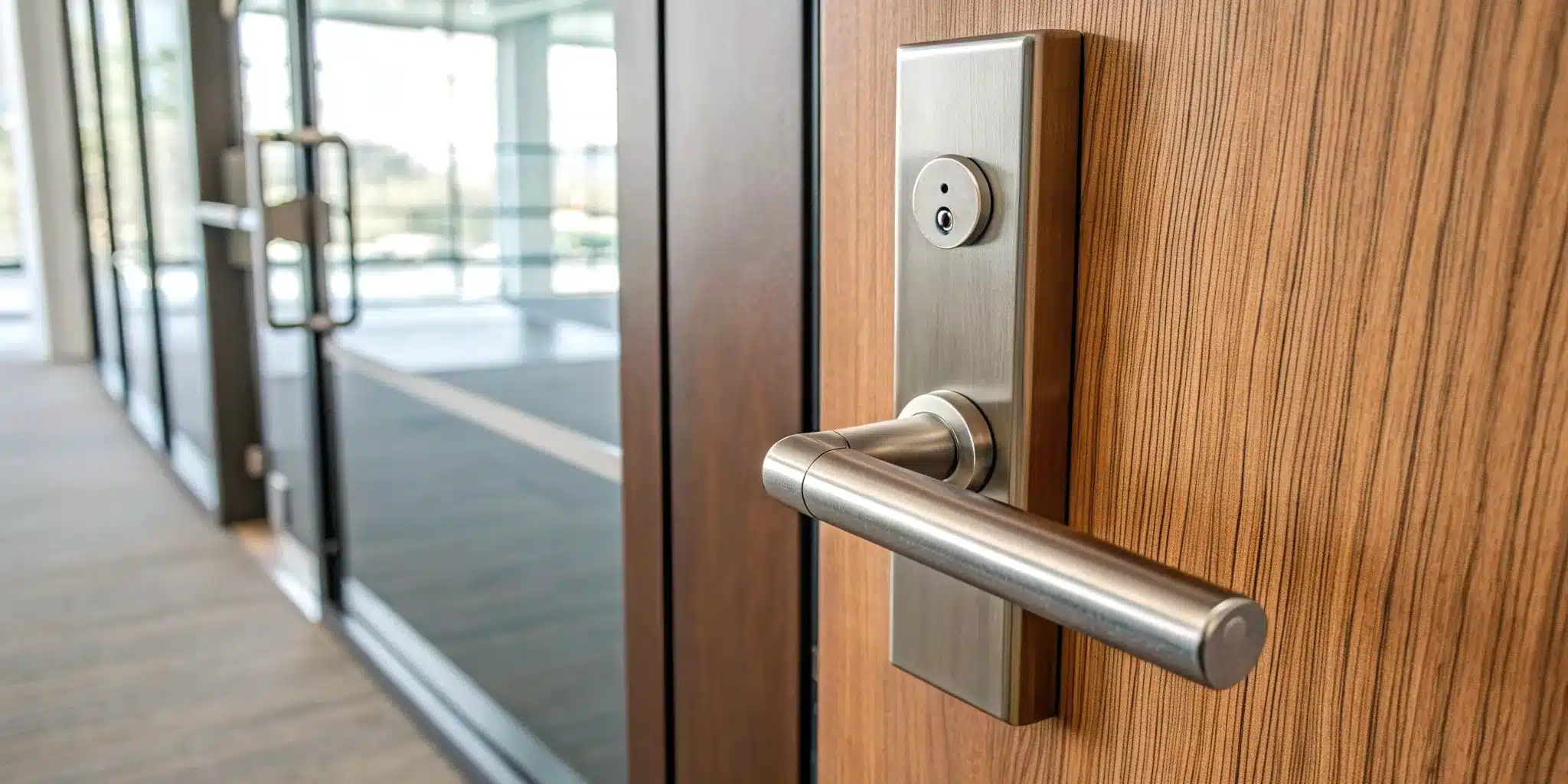
Walking into a hardware supplier or browsing online can feel overwhelming. You’re faced with endless options: smart locks, traditional keyways, keypad entry, and various security grades. How do you know which one is right for your business? The truth is, the best commercial door handle with lock depends entirely on your specific needs, from your daily foot traffic to the level of security your assets require. This guide is designed to cut through the confusion. We’ll explain the essential features and standards in straightforward terms, helping you confidently select a solution that provides the perfect balance of security, convenience, and durability.
Key Takeaways
- Prioritize Security Ratings Over Aesthetics: A door handle’s most important job is to protect your business. Always check for a Grade 1 ANSI rating and choose durable materials like stainless steel before you even consider the handle’s style.
- Match the Hardware’s Function to Your Daily Operations: The best lock for your business depends on your unique needs. Consider your foot traffic and who needs access to decide between traditional keys, a master key system, or smart locks with remote access control.
- Invest in Professional Installation and Upkeep: The most secure lock can fail if installed incorrectly. Using a professional ensures your hardware works as intended, protects your warranty, and establishes a relationship for future maintenance to keep your business secure.
What Makes a Commercial Door Handle Secure?
When you’re securing your business, the door handle is your first line of defense. A commercial handle isn’t just for opening a door; it’s a critical security component that needs to withstand constant use and potential tampering. Choosing the right one means looking past style and focusing on proven security features. From industry grades to the materials used, every element plays a role. Let’s walk through the key factors that make a commercial door handle truly secure.
Understanding ANSI Grades
The most direct way to judge a handle’s strength is its ANSI (American National Standards Institute) grade. Think of it as a report card for hardware. ANSI, in partnership with the BHMA, tests handles for durability and security, rating them from 1 to 3. Grade 1 is the highest rating and the best choice for commercial properties, tested to withstand at least 800,000 cycles. For any business in New York, a Grade 1 handle is the standard you should aim for to ensure maximum security.
Key Security Standards to Look For
Beyond ANSI grades, look for hardware certified by the BHMA (Builders Hardware Manufacturers Association). This certification means the product has passed rigorous, independent tests for performance and durability. When you see the BHMA Certified® mark, you can trust that the handle meets high industry standards. It’s an easy way to verify you’re buying a reliable component for your commercial security. Certified hardware is built to stand up to the demands of a commercial environment and provide lasting protection.
Meeting ADA Requirements
Security and accessibility go hand in hand. The Americans with Disabilities Act (ADA) sets standards to ensure commercial spaces are accessible to everyone. For door handles, this means using levers instead of round knobs. Levers can be operated with one hand without tight grasping or twisting, making them easier for people with disabilities to use. Installing ADA-compliant hardware is often a legal requirement and helps create a welcoming environment for all your customers and employees.
Choosing Materials for Durability
The material and finish of your door handle directly impact its longevity. Commercial handles are typically made from durable metals like stainless steel, brass, or bronze. The finish is just as important. Look for options that are strong and easy to clean, like satin chrome or PVD finishes, which are highly resistant to scratches and corrosion. A durable finish keeps your hardware looking professional and functioning smoothly. When planning a new door installation, the material should be a top consideration.
Must-Have Features for Your Business Door Hardware
When you’re choosing a commercial door handle and lock, it’s easy to get caught up in the aesthetics. But the right hardware does more than just look good—it secures your assets, manages access, and stands up to daily use. The features you need depend entirely on your business, from the number of employees you have to the amount of foot traffic you see each day. Thinking through these key features will help you find the perfect balance of security, convenience, and durability for your commercial space.
Traditional vs. Smart Locks
The first big decision is whether to stick with a traditional key-and-lock system or move to a smart lock. While traditional locks are reliable and familiar, smart door locks are changing how businesses approach security. They offer features like keyless entry and remote access, allowing you to lock or unlock doors from your phone. This is a game-changer for convenience and control. For businesses looking to modernize, upgrading to a smart lock is a great first step toward a more integrated security system. It simplifies access for your team while giving you a clear record of who enters and when.
Adding Electronic Access Control
If you have employees, clients, or vendors coming and going, an electronic access control system is worth considering. These systems give you incredible flexibility in managing who can enter your property and when. Instead of handing out physical keys that can be lost or copied, you can grant access using key cards, fobs, or even smartphones. The best part? You can easily revoke access for former employees or temporary visitors without the hassle and cost of changing all your physical locks. This level of control is essential for maintaining a secure commercial locksmith solution as your business grows and your team changes.
Do You Need a Master Key System?
For businesses with multiple doors and different levels of access, a master key system can be a lifesaver. This system allows a single “master” key to open all doors, while other keys are designed to open only specific locks. For example, a manager can have access to all rooms, while an employee’s key might only open the main entrance and their office. This streamlines operations by reducing the number of keys you have to carry and manage. It’s a practical way to maintain security and hierarchy without complicating daily routines, giving designated personnel the access they need to move freely through the building.
Factoring in Weather Resistance
Your exterior door hardware is your first line of defense against more than just intruders—it also has to withstand the elements. New York City weather can be tough, so choosing a durable material and finish is crucial. Look for hardware made from materials like stainless steel or brass with a weather-resistant coating to prevent rust and corrosion. For businesses like restaurants or retail shops, you might also want to select finishes that are easy to clean and resistant to fingerprints. Proper door repair and installation ensures your hardware not only looks great but also functions reliably for years to come, no matter what the weather throws at it.
Consider Your Daily Foot Traffic
How many people open your business’s doors each day? A quiet office has very different needs than a bustling cafe or retail store. If your doors see constant use, you absolutely need to choose heavy-duty door hardware. Commercial-grade handles and locks are built to withstand the wear and tear of high-traffic environments, ensuring they won’t fail when you need them most. Investing in robust hardware from the start prevents frequent repairs and replacements down the line. A professional commercial locksmith can help you select hardware with the right durability rating for your specific level of foot traffic.
Exploring Smart Lock Technology
Moving beyond traditional keys and tumblers, smart lock technology is changing how we secure our homes and businesses. Instead of a physical key, you use a digital credential—like a PIN code, a smartphone app, or even your fingerprint—to open the door. This shift gives you a level of control and awareness that standard locks just can’t match. You can grant temporary access to a contractor, see when your kids get home from school, or ensure your business was locked up on time, all from your phone.
For business owners in busy boroughs like Brooklyn or Manhattan, this means no more worrying about collecting keys from former employees or managing dozens of copies. For homeowners, it’s the convenience of keyless entry and the peace of mind that comes with it. Smart locks are more than just a gadget; they are a core component of modern security systems that offer flexibility, detailed tracking, and remote management. They integrate seamlessly into your life, providing a practical way to make your property smarter and safer. Whether you’re upgrading your apartment’s security or outfitting a new commercial space, understanding how these locks work is the first step toward a more secure and convenient future.
The Perks of Keyless Entry
The most immediate benefit of a smart lock is the freedom of going keyless. Think about never having to fumble for your keys with your hands full of groceries or worrying about a lost or stolen key compromising your security. Instead, you can use a simple PIN code, your smartphone, or a key fob. For businesses, this eliminates the cost and hassle of rekeying locks every time an employee leaves. You can simply delete their access code. Keyless entry streamlines access for everyone you authorize while making it much harder for those you don’t. It’s a simple change that adds a layer of convenience and security to your daily routine.
Is Biometric Access Right for You?
Biometric smart locks take security a step further by using your unique physical traits, like a fingerprint, to grant access. This is an incredibly secure method because, unlike a key or a code, a fingerprint can’t be easily copied or shared. For businesses, this is ideal for protecting sensitive areas like server rooms, cash offices, or inventory storage, as it provides a clear, undeniable record of who entered and when. While it might sound like something out of a spy movie, biometric technology is a reliable and practical choice for any property needing a higher level of access control. Our commercial locksmith team can help you determine if it’s the right fit for your business.
Managing Access from Anywhere
One of the most powerful features of smart locks is the ability to manage them remotely. Imagine you’re out of town and need to let a pet sitter in, or a delivery arrives at your business after hours. With a smart lock, you can unlock the door right from your smartphone, no matter where you are. You can also grant temporary or recurring access codes for specific people and set schedules for when those codes are active. This gives you complete control over who can enter your property and when, offering a level of flexibility that’s impossible with a traditional lock and key.
Connecting to the Cloud and Mobile Apps
The magic behind remote management lies in cloud connectivity. Most smart locks connect to your property’s Wi-Fi, allowing them to communicate with a dedicated app on your smartphone. This app becomes your security command center. From the app, you can lock and unlock your door, check its current status to make sure it’s secure, and view a detailed activity log of everyone who has used the lock. This constant connection provides real-time updates and alerts, so you’re always in the know. It puts complete control over your door’s security right in the palm of your hand, offering both convenience and powerful peace of mind.
Common Mistakes When Choosing a Door Handle
Selecting the right door handle and lock seems straightforward, but a few common missteps can compromise your business’s security and daily operations. It’s about finding that perfect balance between strength, function, and style. By being aware of these potential pitfalls, you can make a choice that you’ll be happy with for years to come. Let’s walk through the most frequent mistakes so you can avoid them.
Choosing Style Over Security
It’s easy to get drawn to a sleek, modern door handle that perfectly matches your brand’s aesthetic. But when it comes to commercial properties, security should always be the top priority. A beautiful handle is useless if it can’t withstand daily wear and tear or a potential break-in attempt. For example, installing a decorative, hollow-core knob designed for an interior residential door on your main commercial entrance is a major security risk. Always start by evaluating the handle’s durability, material, and lock mechanism. The right hardware provides peace of mind, and a professional can help you find options that are both secure and stylish, ensuring you don’t have to compromise.
Forgetting Your Business’s Unique Needs
Every business is different, and your door hardware should reflect your specific operational needs. A retail store with high foot traffic requires a durable handle that can withstand constant use, while a healthcare facility might prioritize antimicrobial materials for hygiene. Do you need to comply with ADA accessibility standards? Is the door exposed to harsh weather? Forgetting to ask these questions can lead to choosing hardware that just isn’t right for the job. Taking a moment to assess your environment and daily activities will help you select a handle and lock that truly serves your business. Our commercial locksmith team can help you evaluate these factors.
Getting the Measurements Wrong
This is one of the most common—and frustrating—mistakes. You find the perfect handle, but when it arrives, it doesn’t fit. Before you even start shopping, take precise measurements of your door. You’ll need to know the door’s thickness to ensure the hardware will fit correctly. You also need to measure the backset, which is the distance from the edge of the door to the center of the borehole for the lock. Getting these numbers right from the start saves you from the headache of returns and project delays. It’s a simple step that makes the entire installation process much smoother.
Overlooking the Installation Kit
You’ve chosen a secure handle and double-checked your measurements. You’re all set, right? Not quite. Many people forget to confirm that the hardware includes a complete installation kit. A missing screw, a misplaced strike plate, or an incomplete latch mechanism can bring your installation to a grinding halt, leaving your property vulnerable. Always check the product description to see what’s included. When you work with a professional for door repair and installation, you can rest assured they’ll arrive with all the necessary components and tools to get the job done right the first time.
Picking the Wrong Lock Type
Not all locks function the same way, and choosing the wrong type can create both security risks and daily inconveniences. For instance, a storeroom that holds valuable inventory should have a storeroom lock, which is always locked from the outside and requires a key for entry. An office that needs to be accessible during the day but locked at night might need a different function entirely. Think about how you need each door to operate. Do you need it to lock automatically? Should it allow for easy exit in an emergency? Matching the lock’s function to the door’s purpose is critical for maintaining a secure and efficient workplace.
How to Assess Your Business’s Needs
Choosing the right door handle and lock combination is about more than just picking something that looks good. It’s a critical decision that impacts your security, daily operations, and even your budget. Before you start browsing options, take a step back and think about what your business truly needs. Every commercial space is different, from a bustling retail shop in Manhattan to a quiet office in Queens. The hardware that works for one might be completely wrong for another.
To make the best choice, you need to evaluate a few key factors specific to your environment. How much foot traffic do you get? What level of security is non-negotiable? What does your long-term budget for maintenance and potential replacements look like? Answering these questions will help you narrow down the options and find a solution that provides security, durability, and peace of mind. Let’s walk through the essential steps to assess your business’s unique requirements.
Determine Your Security Level
First things first: how secure does your entrance need to be? The answer depends entirely on your business. A high-end jewelry store on 5th Avenue has vastly different security needs than a local coffee shop in Brooklyn. Consider the value of the assets inside your property, the level of public access, and even crime rates in your neighborhood. High-traffic areas or businesses holding sensitive information may require heavy-duty, Grade 1 locks. A comprehensive security assessment can help you identify vulnerabilities and choose hardware that provides the right level of protection without being excessive for your needs.
Match the Handle Style to Its Use
Not all doors serve the same purpose, so they shouldn’t have the same hardware. The main entrance to your business needs a durable, easy-to-use handle that can withstand constant use, while a private office requires a lock for confidentiality. Think about the function of each door. A restroom needs a privacy lock, a storage closet might need a simple keyed entry, and a hallway door may only need a passage handle with no lock at all. Your choice should balance durability, aesthetics, and accessibility, ensuring the hardware is practical for its specific location and meets ADA standards for public spaces.
Plan Your Budget
While it’s tempting to go for the cheapest option, your door hardware is an investment in your business’s security and functionality. Set a realistic budget that accounts for both the cost of the hardware and professional installation. You can find handles for different uses at various price points, from basic passage handles to advanced electronic locks. Remember that a higher upfront cost for a quality lock can save you money down the road on repairs and replacements. Getting a professional quote will give you a clear picture of the total investment required for a secure and reliable solution.
Think About Long-Term Value
When it comes to security, quality matters. Opting for a cheap, unrated lock might save you a few dollars now, but it could cost you much more in the long run through break-ins or frequent failures. Look for hardware with a high ANSI grade (Grade 1 is the best for commercial use). These products are built from stronger materials and are tested to withstand more use and abuse. Investing in a durable, reliable lock from a trusted brand provides better long-term value and ensures your property remains secure. If you’re constantly dealing with failing hardware, it might be time for a door repair and installation upgrade.
Consider Maintenance Needs
It’s a common myth that door hardware is a “set it and forget it” component of your business. The reality is that all mechanical parts require some upkeep to function properly over time. High-traffic doors, in particular, will need regular checks to tighten loose screws, lubricate moving parts, and clean away grime that can cause mechanisms to stick. When selecting your hardware, consider its maintenance requirements. Some materials and finishes are easier to clean and more resistant to wear. Planning for routine maintenance will extend the life of your hardware and prevent unexpected failures.
Why Professional Installation and Support Matter
You can pick the most advanced, high-security door handle on the market, but it won’t do you much good if it’s installed incorrectly. When it comes to your business’s security, the installation and ongoing support are just as critical as the hardware itself. A professional locksmith does more than just attach a handle to a door; they ensure every component works perfectly, from the alignment of the latch to its integration with your broader security setup.
Think of it as an investment in peace of mind. A professional installation guarantees that your locks function as intended from day one, preventing vulnerabilities that could be exploited. It also saves you from the costly and frustrating process of fixing a botched DIY job. Beyond the initial setup, having a trusted locksmith for ongoing support means you have an expert on call for maintenance, repairs, and future upgrades. This partnership ensures your security hardware remains effective for years, adapting as your business grows and its needs change. Let’s look at why leaving this work to the pros is always the right call.
The Benefits of an Expert Installation
Having a professional handle your commercial locksmith needs is one of the smartest decisions you can make for your business. An expert ensures the lock is perfectly aligned and functions smoothly, which is fundamental for preventing unauthorized access. A poorly installed lock can be easily bypassed, defeating its entire purpose. Beyond security, a professional installation can have financial benefits. In fact, some business insurance costs can be lowered if you have a professionally installed commercial door. It signals to insurers that you’re serious about protecting your property. Ultimately, expert installation provides a solid foundation for your business’s security, giving you confidence that your entry points are truly secure.
Tips for Regular Maintenance
Your security hardware works hard every day, and just like any other piece of equipment, it needs regular attention to stay in top shape. Scheduling routine maintenance is a proactive way to protect your investment. Regular inspections can identify worn components before they fail, ensuring your locks remain tamper-resistant and operate smoothly. This prevents small issues, like a sticking latch or a loose handle, from turning into major security risks or expensive emergency repairs. A quick check-up by a professional can extend the life of your locks and keep your business secure. Consider setting up a recurring maintenance plan with a trusted locksmith for your door repair and installation needs.
Integrating with Your Current Security System
Modern businesses often have multiple layers of security, from alarm systems to access control panels. Your new door handle and lock must work seamlessly with this existing infrastructure. This is where a professional’s expertise becomes invaluable. An expert can ensure your new hardware integrates perfectly with your current setup, creating a cohesive and more effective security network. Proper integration is paramount for the safety of your commercial property, preventing communication errors between different components. Whether you’re connecting to a key card reader or a comprehensive security system, a professional ensures all parts work together to protect your business without any gaps or glitches.
Understand Your Warranty Coverage
Commercial door hardware is designed for heavy use and enhanced security, and it often comes with a manufacturer’s warranty. However, this coverage can be voided by improper installation. Hiring a professional ensures the installation is done to the manufacturer’s specifications, keeping your warranty intact. This provides a crucial safety net, protecting you from costs associated with product defects. Professionals often stand by their work with an installation warranty as well, giving you another layer of protection. Since commercial locks are designed for high traffic usage, having a solid warranty is essential. Always ask your installer about the warranties covering both the product and their labor.
Related Articles
Frequently Asked Questions
What’s the real difference between a Grade 1 and Grade 2 lock, and does it matter for my business? Think of it this way: a Grade 1 lock is the heavyweight champion. It’s been tested to withstand significantly more use and force than a Grade 2 lock, making it the standard for any main commercial entrance. While a Grade 2 lock might be suitable for an internal office door with low traffic, your exterior doors that protect your assets and see constant use absolutely need the proven durability and security of a Grade 1 rating.
Are smart locks a secure option for a business, or are they just for convenience? They are definitely secure, and their convenience is actually a key part of that security. Smart locks offer powerful management features that traditional locks can’t match. You can see an activity log of who entered and when, and you can instantly grant or revoke access for employees or vendors from your phone. This eliminates the risk of lost or unreturned keys and gives you complete control over who enters your space.
How often should I have my commercial door locks professionally maintained? For a busy commercial door, a professional check-up once a year is a great rule of thumb. This allows a locksmith to catch small issues like loose components or alignment problems before they turn into a major security risk or an emergency lockout situation. Proactive maintenance is one of the easiest ways to extend the life of your hardware and ensure it works correctly when you need it most.
Can I save money by installing a commercial door handle myself? While it might seem like a way to cut costs, installing a commercial lock is much more complex than a simple residential knob. A small mistake in alignment can compromise the lock’s integrity, damage your door, and even void the manufacturer’s warranty. Hiring a professional ensures the job is done correctly, providing you with true security and saving you from potential headaches and bigger expenses down the road.
My business has several doors with different access needs. Where do I even start with creating a cohesive lock system? The best first step is to have a professional locksmith assess your property. They can help you map out the function of each door and recommend a solution that makes sense for your operations. This might be a master key system that gives you a single key for all doors while providing employees with keys that only open specific areas. This approach simplifies your key management while maintaining proper security throughout your entire business.
Need professional help in NYC? Contact Golden Key Locksmith NYC for Commercial Door Services or Metal Door Installation. Available 24/7 across Manhattan and all NYC boroughs.