

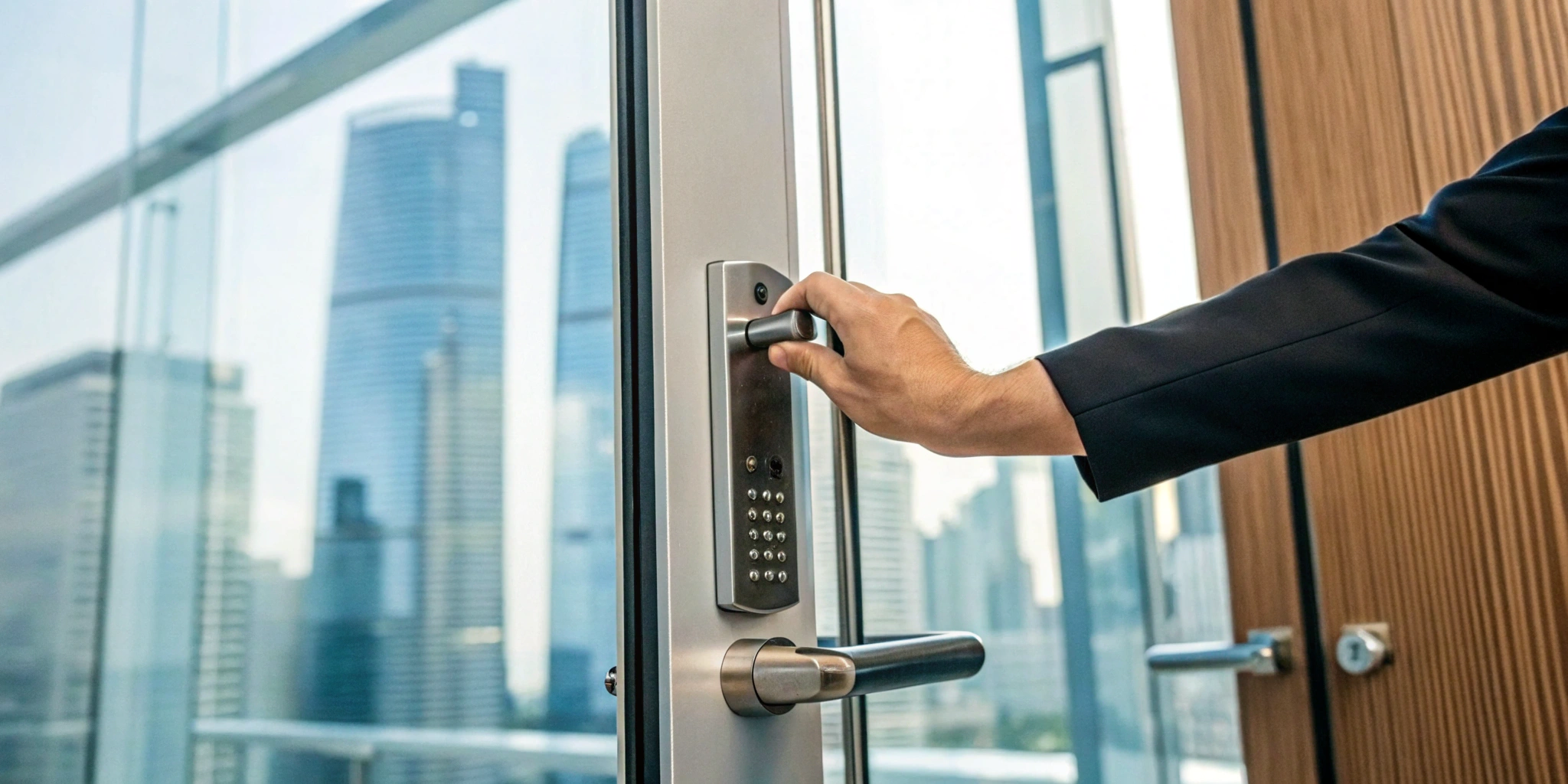
How many keys to your business are currently in circulation? Do you know for sure who has a copy? For many business owners, the honest answer is no. Traditional keys offer limited control and create a significant security risk, especially when employees leave. Modern lock technology changes that dynamic completely. From smart locks you can manage with your phone to access control systems that track every entry, today’s solutions give you precise command over who enters your property and when. The first step toward gaining this oversight is upgrading business locks for security. This guide will introduce you to the world of keyless and high-security options that put you back in control and make lost or copied keys a problem of the past.
Key Takeaways
- Match the Lock to the Door’s Purpose: Your front entrance has different security needs than an internal office. Select hardware based on a door’s specific function and risk level, prioritizing features like BHMA Grade 1 ratings and restricted key systems for critical entry points.
- Look Beyond the Lock Itself: The most advanced lock is ineffective on a weak door. A secure entryway requires a complete system, including a sturdy door and frame, a plan for regular maintenance, and proper training so your team uses the new hardware correctly.
- Professional Installation is Non-Negotiable: An improperly installed lock creates a major security risk. Hiring a licensed and insured commercial locksmith guarantees your hardware is installed correctly, provides expert advice tailored to your business, and ensures the job is done right the first time.
What Are My Commercial Lock Options?
Choosing the right locks for your business can feel overwhelming. You’re not just picking hardware; you’re investing in the safety of your property, inventory, and team. The good news is that there’s a perfect solution for every type of business, from a small boutique in Brooklyn to a large office in Manhattan. Your ideal setup depends on factors like your daily foot traffic, the level of security you need, and your budget. Do you need to grant access to dozens of employees? Are you concerned about unauthorized key duplication? Or do you just need a simple, robust lock that can withstand heavy use?
To help you make a clear choice, let’s walk through the main types of commercial lock systems available. We’ll cover everything from heavy-duty traditional locks to sophisticated keyless entry systems. Understanding these options is the first step toward building a secure and efficient entryway for your business. Each type offers distinct advantages, and knowing the difference will help you protect your assets and streamline your operations. Think of this as your guide to finding a solution that not only secures your space but also fits seamlessly into your daily workflow.
Traditional Deadbolts and Cylinder Locks
These are the workhorses of the commercial world. While they might look similar to the locks on your apartment door, commercial-grade deadbolts and cylinder locks are built to a much higher standard. They are designed to handle constant use and provide serious protection. According to the Builders Hardware Manufacturers Association (BHMA), a Grade 1 lock offers the highest level of strength and durability, making it the top choice for commercial buildings. These locks are a reliable and budget-friendly option, providing a strong physical barrier against intrusion. They are an excellent foundation for any business’s security plan, especially when paired with professional door repair and installation to ensure a perfect fit.
Smart Locks and Electronic Systems
Ready to ditch the keys? Smart locks are a fantastic entry point into keyless convenience. These are typically standalone devices that can be installed on both exterior and interior doors, offering multiple ways to get in—think keypads, fobs, or even your smartphone. One of the biggest perks is the ability to grant temporary access or unlock the door remotely. This is incredibly useful for letting in a delivery person or an employee who forgot their code without having to be there yourself. Smart locks give you more control and flexibility than a traditional key, making them a great fit for small businesses, private offices, or storage areas where you want to manage access without the complexity of a larger system.
Keyless Entry and Access Control
If you manage a larger team or a building with multiple entry points, a full access control system is the way to go. This is much more than just a single smart lock; it’s a networked solution managed through central software. These systems give you complete command over who can go where and when. You can create unique credentials for every employee, track entry and exit logs in real time, and instantly revoke access for former staff members. With features like remote unlocking and real-time alerts, you always know what’s happening at your property. Comprehensive security systems like these are the ultimate solution for businesses that require tight security, detailed monitoring, and streamlined management of a large number of users.
High-Security and Restricted Key Systems
One of the biggest security risks for any business is uncontrolled key duplication. How many copies of your front door key are floating around? High-security and restricted key systems solve this problem directly. These systems use patented keys that are illegal for anyone other than an authorized locksmith to duplicate. This means you maintain total control over who has a key to your business. Beyond key control, these locks are also engineered with features that resist picking, drilling, and other forced entry methods. It’s an essential upgrade for any business owner who wants to prevent unauthorized access and ensure that when an employee leaves, their key can’t be copied.
Why Upgrade to High-Security Locks?
If you’re running a business, the locks on your doors are your first line of defense. But not all locks are created equal. While a standard lock might seem sufficient, upgrading to a high-security system is one of the smartest investments you can make for your company’s safety and your own peace of mind. It’s about more than just keeping the door shut; it’s about creating a robust barrier against potential threats and gaining more control over who has access to your space.
Many businesses stick with traditional key-and-lock systems that are prone to wear and tear or easy to bypass. High-security locks are engineered differently. They are built with hardened materials and complex mechanisms designed to resist common break-in techniques like picking, drilling, and bumping. This upgrade isn’t just a minor improvement—it’s a fundamental shift in your security posture. From protecting your physical assets and sensitive data to ensuring the safety of your employees, a better lock is a critical component of a comprehensive security system. Let’s look at exactly why making this switch is a game-changer.
Better Protection Against Break-Ins
Let’s be honest: the primary reason to upgrade your locks is to make it much harder for unauthorized people to get in. Many businesses rely on standard locks that are vulnerable to common manipulation techniques. High-security locks, however, are specifically designed with features like pick-resistant pins, reinforced steel construction, and drill-resistant plates. This means they can withstand brute force attacks that would quickly defeat a conventional lock. By investing in a stronger locking mechanism, you create a formidable deterrent that significantly reduces your risk of theft, vandalism, and other security breaches. It’s a proactive step that protects your inventory, equipment, and confidential information.
Superior Durability and Longevity
Commercial doors see a lot more traffic than residential ones, and the locks need to be able to handle the constant use. High-security locks are built for this kind of wear and tear. Unlike standard locks that can weaken over time, commercial-grade hardware is constructed from tougher, more resilient materials like solid brass or hardened steel. This superior build quality means they last longer and are less likely to fail when you need them most. Think of it as a long-term investment. You’ll spend less time and money on repairs and replacements down the road, and you’ll have a reliable lock that performs consistently day in and day out.
Potential Insurance Premium Reductions
Here’s a benefit you might not have considered: upgrading your locks could save you money on insurance. When you install high-security locks, you’re demonstrating to your insurance provider that you are taking serious, proactive steps to protect your property. Insurers see your business as a lower risk for break-ins and theft, which can often translate into lower annual premiums. While you should always check with your specific provider, this potential cost savings can help offset the initial investment of the upgrade. It’s another way that making your business more secure proves to be a financially sound decision.
Tighter Access Control and Monitoring
Modern high-security locks offer much more than just a physical barrier. Advanced options like smart locks, keyless entry pads, and biometric systems give you precise control over who can enter your premises and when. You can issue temporary access codes for vendors, track entry and exit times for employees, and instantly revoke access for a former staff member without needing to change the locks. These access control systems create a detailed audit trail, adding a powerful layer of oversight to your security plan. This level of control is simply not possible with a traditional key.
What Security Features Matter Most?
When you’re choosing new locks for your business, it’s easy to get lost in the details. But a few key features separate a standard lock from a true security asset. Focusing on these specific elements will ensure you’re making a smart investment that protects your property, your inventory, and your team. Think of it as a checklist for peace of mind. From the physical strength of the lock itself to the technology that controls access, each feature plays a vital role in creating a secure environment. Let’s break down what you should be looking for.
BHMA Grading and Material Strength
First things first, let’s talk about strength. The Builders Hardware Manufacturers Association (BHMA) grades locks based on their durability and performance. For any commercial locksmith application, you should look for a Grade 1 lock. These are the toughest on the market, designed to withstand significant force and heavy use, making them ideal for high-traffic entryways. Grade 2 locks are a solid choice for less critical areas or smaller businesses, while Grade 3 is typically reserved for residential use. The grade reflects not just the lock’s internal mechanism but also the quality of its materials, like hardened steel bolts that resist sawing or prying.
Pick and Drill Resistance
A strong lock body is only half the battle; you also need a cylinder that can fend off covert attacks. High-security locks are specifically engineered with features like security pins, steel inserts, and complex keyways to make them extremely difficult to pick or drill. While it’s true that almost any lock can eventually be bypassed by a skilled professional, the goal is to make it so time-consuming and difficult that a potential intruder gives up and moves on. A layered security approach is always best, but starting with a lock that has built-in resistance to tampering is a fundamental step in protecting your business.
Key Control to Prevent Unauthorized Duplication
Think about how many keys to your business are floating around. Do you know for sure who has a copy? This is where key control becomes critical. High-security and restricted key systems prevent unauthorized duplication. With these systems, keys can only be copied by an authorized locksmith with proper identification and approval, giving you complete control over who has access. This is a simple but powerful way to secure your premises, especially after an employee leaves. It eliminates the risk of a disgruntled former staff member easily making a copy of their key and retaining access to your property.
Smart Tech and Biometric Access
Moving into the digital realm, smart locks and biometric readers offer a new level of control and convenience. These security systems allow you to grant or revoke access instantly from your phone or computer, which is perfect for managing employee turnover or granting temporary entry to vendors. You can also see a detailed log of who entered and when, providing a valuable audit trail. Biometric options, like fingerprint scanners, add another layer of security by ensuring the person entering is exactly who they claim to be. This technology makes lost keys a thing of the past and gives you precise oversight of your business’s entry points.
Backup Power and Manual Overrides
If you opt for an electronic or smart lock system, what happens when the power goes out? It’s a crucial question. Any reliable electronic lock must have a plan for power failures. This usually comes in the form of a battery backup that keeps the system running or a manual key override that allows you to open the door the old-fashioned way. This feature ensures you’re never locked out of your own business during an outage or other emergency. When discussing options with your locksmith, always ask about the backup plan. It’s a non-negotiable feature for ensuring consistent access and safety, no matter what happens.
Which Lock Brands Should You Trust?
When it comes to securing your business, the brand of lock you choose matters just as much as the type. A well-known, reputable brand offers peace of mind, backed by years of engineering, rigorous testing, and a proven track record of protecting properties like yours. Sticking with trusted names ensures you get a product that’s durable, reliable, and built with high-quality materials designed to stand up to tampering. At Golden Key Locksmith NYC, we work with these brands every day and have seen firsthand which ones deliver on their promises.
Our Top Recommendations
Navigating the world of lock brands can feel overwhelming, but a few names consistently rise to the top for commercial security. We recommend brands like Schlage, Medeco, ASSA ABLOY, Kwikset, and Master Lock because they offer a strong balance of security, durability, and innovation. Each one has its own strengths, whether you need a simple, sturdy deadbolt for a stockroom or a sophisticated keyless system for your main entrance. Our team can help you select the perfect hardware for your specific needs, ensuring your business is properly secured.
Schlage Commercial Systems
Schlage is a powerhouse in the commercial lock industry, known for producing hardware that is exceptionally durable and secure. Their locks are designed to meet the highest safety standards, making them a go-to choice for businesses that experience high foot traffic, like retail stores, offices, and restaurants. Schlage offers a wide range of products, from heavy-duty deadbolts to electronic keypads, that can withstand daily wear and tear while providing excellent protection. When you need a lock that just works, day in and day out, Schlage is a name you can count on for your commercial locksmith needs.
Medeco and ASSA ABLOY Premium Locks
For businesses requiring the highest level of protection, Medeco and ASSA ABLOY are the industry leaders. Medeco locks are famous for their high-security features, including patented key control that prevents unauthorized key duplication and cylinders that are resistant to picking and drilling. ASSA ABLOY, a global leader in access solutions, offers a vast portfolio of advanced locking systems that blend robust mechanics with cutting-edge technology. These brands are ideal for businesses that handle sensitive information or valuable assets, as they often form the foundation of comprehensive security systems.
Kwikset and Master Lock Commercial Options
Kwikset and Master Lock are household names for a reason—they provide reliable, user-friendly security solutions. While often associated with residential locks, Kwikset also offers a solid range of commercial products that are easy to use and install, making them a practical choice for small businesses. Master Lock is unparalleled when it comes to padlocks and other heavy-duty locking devices, perfect for securing gates, storage units, and equipment. Both brands offer dependable security that is both accessible and effective, providing great value for business owners looking for straightforward protection.
What’s the Budget for a Business Lock Upgrade?
Thinking about upgrading your business’s security is a big step, and one of the first questions that comes to mind is, “How much will this cost?” It’s a fair question. As a business owner, every dollar counts. The final price for a lock upgrade isn’t a single number; it’s a combination of the hardware you choose and the professional expertise needed to install it correctly. It’s helpful to think of it as an investment in your company’s safety and your own peace of mind, not just another expense on the books.
While it can be tempting to find the cheapest lock on the shelf, your business’s security is one area where cutting corners can have serious consequences. A flimsy lock is an open invitation for trouble, and a poorly installed high-end lock isn’t much better. The total cost will depend on your specific needs, the type of locks you select, and the complexity of the installation. A professional commercial locksmith can walk you through your options and provide a detailed quote, so you know exactly what to expect before any work begins. This transparency helps you make an informed decision that fits your security goals and your budget, ensuring there are no surprises along the way.
Breaking Down Hardware Costs
The locks themselves are the first part of your budget. The price can vary quite a bit depending on what you need. On average, you can expect to pay between $100 and $250 per door for a standard commercial-grade lock. If you’re looking for something more robust, like a high-security lock with features that prevent picking and drilling, the cost could be closer to $400 per door. This range covers everything from sturdy deadbolts for a back office to advanced electronic keypads for your main entrance. The key is to match the lock to the door’s function and security risk. Not every door needs the most expensive lock, but your most critical entry points definitely deserve the best protection you can afford.
Factoring in Professional Installation
Once you’ve chosen your hardware, the next cost is installation. This isn’t just a labor fee; you’re paying for experience. Commercial locksmithing is a specialized field that requires a deep understanding of different lock mechanisms, door types, and business security needs. An expert ensures your new locks are installed perfectly, function smoothly, and provide the security they were designed for. An improperly installed lock can be easily bypassed, completely defeating the purpose of your upgrade. Professional installation guarantees that the lock fits securely within the door and frame, with no vulnerabilities. This fee covers the locksmith’s time, specialized tools, and the assurance that the job is done right the first time, saving you potential headaches and future costs.
What Influences the Final Price?
Several factors come together to determine your final bill. The type and number of locks you’re installing are the biggest variables. Beyond that, consider the specifics of your business. The complexity of the installation can change based on your door material—metal, wood, or glass doors all have different requirements. Sometimes, a door or frame needs adjustments, and any necessary door repair and installation will add to the cost. Your industry and the value of the assets you’re protecting also play a role in deciding the appropriate level of security. Finally, if you’re integrating the new locks with existing security systems, that can also influence the project’s scope and price.
Don’t Make These Lock Upgrade Mistakes
Deciding to upgrade your business’s locks is a fantastic move for your security. But before you jump in, it’s helpful to know about a few common pitfalls that can trip people up. The right lock system can protect your inventory, data, and team, but a few simple missteps can undermine your entire investment. From picking hardware that isn’t quite right for your front door to forgetting that a lock is part of a much larger security picture, these mistakes are surprisingly common—and completely avoidable.
Thinking through your upgrade carefully will save you from future headaches, unexpected costs, and security gaps. We’ll walk through the most frequent errors business owners make when changing their locks. By sidestepping these issues, you can ensure your new commercial locksmith solution is effective, reliable, and built to last. Let’s get it right the first time so you can focus on running your business with genuine peace of mind.
Choosing the Wrong Lock for Your Needs
One of the most frequent mistakes is simply selecting the wrong type of lock for a specific door. The glass front door of a busy Manhattan boutique has very different security needs than the server room door in a quiet office. A standard deadbolt might be fine for an interior office, but it likely won’t offer enough protection for an external entry point that faces the street. It’s essential to match the lock’s features to its function. Before you buy, consider foot traffic, exposure to the elements, and the value of what’s behind the door. A thoughtful security assessment can help you clarify your needs and choose hardware that provides the right level of protection without being overkill.
Forgetting About Regular Maintenance
It’s easy to install new locks and then completely forget about them. But locks are mechanical devices with moving parts, and they need a little attention to keep working correctly. Dust, grime, and daily wear and tear can cause mechanisms to stick or even fail over time, potentially leading to a lockout at the worst possible moment. Ignoring regular maintenance is a gamble that can leave your business vulnerable. A simple cleaning and lubrication schedule can make a huge difference. For more complex electronic or high-security systems, having a professional check on them periodically ensures they remain in top condition, so you’re never left dealing with an unexpected emergency locksmith call.
Ignoring How Your Systems Work Together
A top-of-the-line lock is only as strong as the system supporting it. This includes the door, the frame, and just as importantly, the people who use it. Businesses sometimes invest in advanced security systems but fail to train their team on how to use them properly. This can lead to staff propping doors open or sharing access codes, which defeats the purpose of the upgrade. It’s also crucial to ensure your door and frame are solid. A high-security lock on a weak, flimsy door won’t stop a determined intruder. A holistic approach that includes staff training and professional door repair and installation is key to creating a truly secure environment.
Sacrificing Quality for a Lower Cost
When you’re managing a budget, the temptation to choose the cheapest lock is understandable. However, this is one area where cutting corners can cost you much more in the long run. Lower-cost locks are often made from inferior materials, making them more susceptible to being picked, drilled, or forced open. They also tend to wear out faster, meaning you’ll have to replace them sooner. Think of your locks as an investment in the safety of your assets and employees. You don’t necessarily need the most expensive option on the market, but investing in quality hardware from a reputable brand provides reliable, long-lasting protection and is always the smarter financial decision.
How to Choose the Right Locksmith for the Job
Selecting the right hardware for your business is only half the battle. The locksmith you hire to install and maintain your security systems is a long-term partner in protecting your assets. A great locksmith provides expert advice, reliable service, and peace of mind. But how do you find a professional you can trust? It comes down to vetting their credentials, understanding their services, and confirming their reputation. Taking this time upfront will save you from headaches, unexpected costs, and potential security vulnerabilities.
Check for Licensing, Insurance, and Expertise
Before you let anyone near your business’s locks, you need to verify their credentials. A legitimate locksmith will always be licensed and insured. Licensing proves they meet state requirements and have the proper training to do the job correctly. Insurance is just as critical—it protects your business from liability in the rare event of accidental damage. When you hire a professional commercial locksmith, you’re paying for their expertise and accountability. Don’t be afraid to ask for proof of both. A true professional will be happy to provide it, giving you a baseline of trust.
Review Their Service Offerings and Availability
Not all locksmiths are equipped to handle the specific needs of a business. Your ideal partner should offer a comprehensive range of services, from installing high-security deadbolts to setting up access control systems. It’s also vital to confirm their availability. Security issues don’t stick to a 9-to-5 schedule, so you need a locksmith who offers 24/7 support. Finding a company that can provide emergency locksmith services is crucial for handling unexpected lockouts or break-in repairs without disrupting your operations. Make sure the locksmith you choose can be there for you whenever you need them.
Look for a Strong Reputation and Clear Pricing
A locksmith’s reputation is built on trust and reliability. Look for a company with a long history of serving businesses in your area. Check online reviews and testimonials to see what other clients are saying about their work. A solid track record is a great indicator of quality service. Equally important is pricing transparency. You should always receive a clear, detailed quote before any work starts. Be wary of vague estimates or locksmiths who are hesitant to put costs in writing. A trustworthy professional will be upfront about all potential charges, ensuring you can make an informed decision without worrying about hidden fees.
Your Step-by-Step Plan for a Smooth Upgrade
Ready to move forward? A successful security upgrade is all about smart planning. Breaking the process down into clear, manageable steps ensures you cover all your bases and end up with a system that truly protects your business. Here’s a simple plan to follow for a seamless transition.
Start with a Full Security Assessment
Before you pick out a single lock, take a step back and look at the big picture. Every business has unique security needs based on its location, industry, and the assets it needs to protect. A jewelry store in Manhattan has different requirements than a warehouse in Queens. A professional commercial locksmith can conduct a thorough assessment to identify your specific vulnerabilities and recommend the right solutions. This initial step is the foundation of your entire security strategy, ensuring you invest in protection that’s perfectly tailored to your business, not just a generic fix.
Schedule the Installation and Plan for Access
Once you have a plan, it’s time to bring in the experts. Commercial locksmithing is a specialized field, so you’ll want a technician with proven experience installing the types of locks and systems you’ve chosen. A professional installation guarantees that everything works correctly from day one. Coordinate with your locksmith to schedule the work at a time that minimizes disruption to your operations. This might mean after hours or on a weekend. It’s also a good time to discuss who needs access and how keys or credentials will be managed, ensuring a smooth handover once the new security systems are in place.
Test the New System and Train Your Team
The job isn’t done once the last screw is tightened. The final, crucial step is to test everything and train your staff. Even the most advanced security tech can be undermined by human error. Your team needs to understand exactly how the new system works to avoid common mistakes like propping doors open or sharing access codes. Walk them through the proper procedures for locking up, granting access, and reporting any issues. This training empowers your employees to become an active part of your business’s security, making your investment far more effective in the long run.
Is It Time to Upgrade Your Business’s Locks?
Knowing when to upgrade your business’s locks is key to keeping your property, assets, and team safe. It’s not just about replacing something when it breaks; it’s about staying ahead of potential risks. Your locks are your first line of defense, and they need regular evaluation. If you’ve been putting off a security check-in, here are some clear signs that it might be time for an upgrade.
Warning Signs Your Current Locks Are Outdated
Your locks will often tell you when they’re past their prime. Look for physical signs of wear and tear, like rust or visible damage. Is it getting harder to turn the key, or does the lock stick? These are clear indicators that the internal mechanisms are failing. It’s also possible you have the wrong type of lock for your business. A standard lock that works for a small office might not be enough for a storefront with valuable inventory. Ignoring these warning signs can leave you vulnerable, so it’s wise to consult a commercial locksmith to assess your setup.
After a Security Incident or Staff Change
Certain events should trigger an immediate lock change. If your business has experienced a break-in, you need to replace the locks right away, even if there’s no obvious damage. You can’t be sure if keys were copied or stolen. The same rule applies when an employee leaves, especially if they had key access. It’s a simple but crucial step to protect your business. Make sure to update the locks on all key access points, including main entrances, back doors, and private offices. Our emergency locksmith team can handle these situations quickly and efficiently.
To Meet Compliance or Proactively Improve Security
Sometimes, the best time to upgrade is before a problem arises. Take a moment to assess your current security needs. Has your business grown? Are you storing more valuable assets? Your industry and location in NYC also play a big role in determining the level of security you require. Upgrading your locks can be a proactive step to prevent future incidents or to meet specific insurance or industry compliance standards. Moving to modern security systems can also give you better control over who has access and when, offering peace of mind.
Related Articles
- Storefront Door Lock Replacement: A Pro Guide
- Choosing The Best Commercial Storefront Door Locks
- 7 Essential Commercial Door Lock Types Explained
- Fast & Affordable Locksmith Services (Guide)
- Need A Locksmith Near Me? How To Find The Closest Help In Upper East Side
- The Ultimate Guide To Childproofing Your Home
Frequently Asked Questions
Do I need the most expensive, highest-grade lock for every single door in my business? Not at all. The key is to match the lock to the level of risk for each specific door. Your main entrance, back doors, and any doors protecting high-value inventory or sensitive information absolutely deserve a Grade 1 high-security lock. For interior doors, like a private office or a supply closet, a durable Grade 2 lock is often more than sufficient. A professional locksmith can help you assess each entry point to create a smart, cost-effective security plan that doesn’t overspend where it isn’t needed.
You mentioned changing locks after an employee leaves. Is rekeying a better option? This is a great question, and in many cases, yes. Rekeying is the process of changing the internal pins of a lock so that the old key no longer works. You get to keep your existing hardware, which makes it a faster and more affordable solution than replacing the entire lock. It’s the perfect choice after staff turnover or if you’ve lost a key. The only time you’d need to completely change the lock is if the hardware itself is old, damaged, or you’re looking to upgrade to a more secure model.
How long will a lock upgrade take? I’m worried about disrupting my business. The time required really depends on how many locks you’re changing and the complexity of the system you’ve chosen. A straightforward deadbolt replacement on a single door can be done quite quickly, often in under an hour. Installing a full access control system across multiple entry points will naturally take longer. We always work with you to schedule the installation at a time that causes the least disruption to your business, whether that’s early in the morning, after closing, or on a weekend.
I’m interested in smart locks, but are they secure against hacking? This is a valid concern. Reputable smart lock manufacturers use high-level encryption—similar to what banks use for online data—to protect the signal between your phone or keypad and the lock itself. While no system is 100% immune to a highly sophisticated attack, a quality smart lock from a trusted brand is extremely difficult to compromise. The security benefits, like being able to track who enters and when, and instantly revoking access, often provide a much higher level of practical, day-to-day security than a traditional key that can be easily lost or copied.
I just took over a new commercial space. Are the old locks good enough to use? Absolutely not. This is one of the most critical times to call a locksmith. You have no way of knowing who from the previous business—former owners, employees, or even their vendors—might still have a copy of the key. The very first thing you should do before moving in your equipment or inventory is to have all the exterior locks rekeyed or replaced. It’s a simple, essential step that ensures you are the only one with access to your new business from day one.
Need professional help in NYC? Contact Golden Key Locksmith NYC for Key Card Entry Systems or Access Control Systems. Available 24/7 across Manhattan and all NYC boroughs.
For more insights, check out our guide on How to Open a Digital Safe: Keypad Troubleshooting Guide.
For more insights, check out our guide on Pet-Friendly Security Systems.
For more insights, check out our guide on Security on a Budget.
For more insights, check out our guide on Top Burglar Entry Points.
Related Articles
- Security Gadgets We Love: Cool and Innovative Products
- A Guide to Cloud-Based Access Control Systems
- The Guide to Biometric Access Control Systems in NYC
- The Liftaway Garage Door Lock: A Buyer’s Guide
- Wireless Access Control for Small Business: A Guide
Related Articles
- Winter Security Tips: Protecting Your Home During the Holidays
- Window Security: Keeping Intruders Out
- A Guide to Video & Access Control Integration
- The True Cost of a Break-In: Beyond Financial Loss
- Your Step-by-Step Commercial Storefront Door Installation
- Hiring a Commercial Locksmith in Brooklyn: A Guide